Material & Color Options programmes run at MOQ 500 pieces per colourway with samples in 6-10 working days and bulk production in 35-50 days. Fabric, coating, hardware and Pantone colour programmes specified once and shared across an assortment.
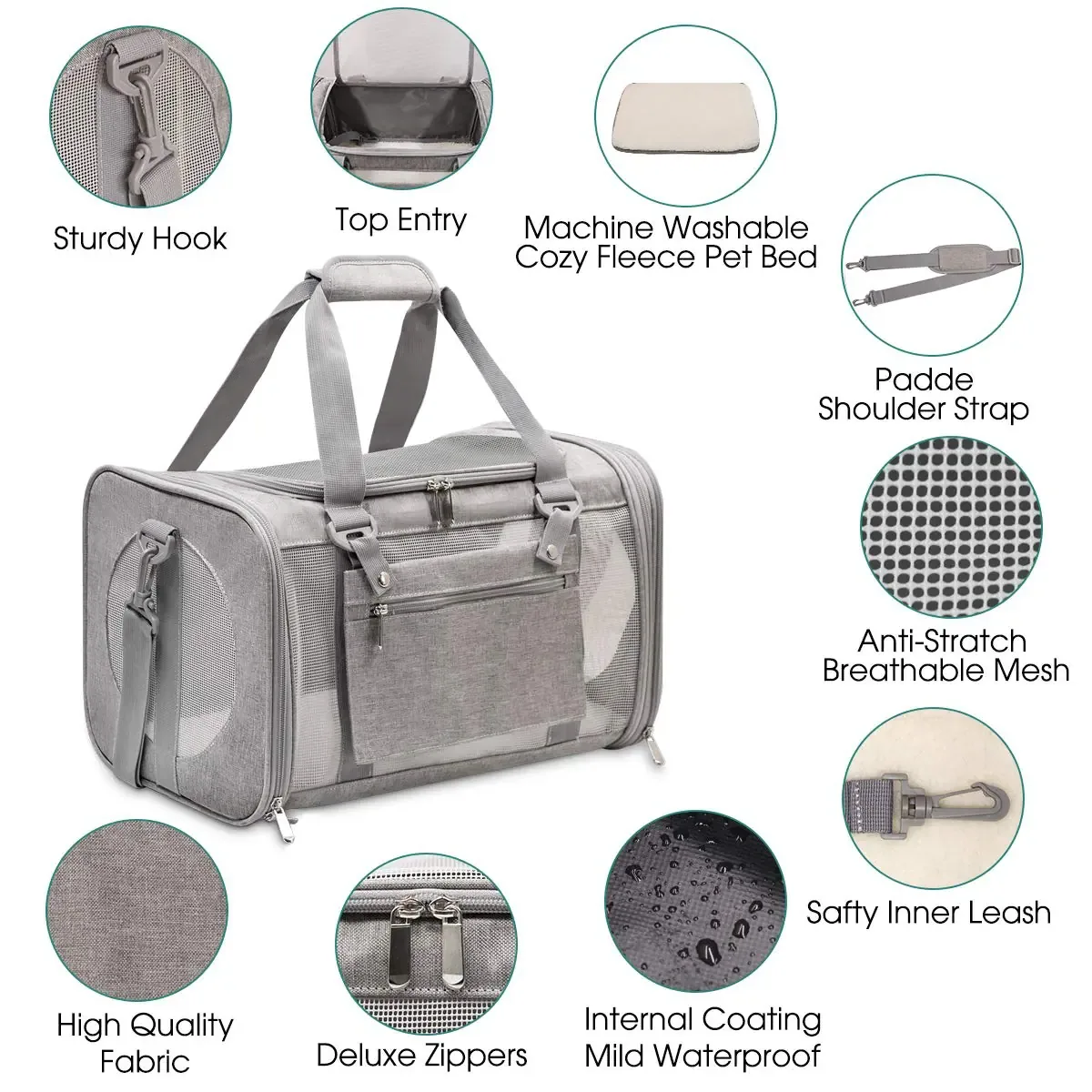
Specification baseline
| Item | Figure | Note |
|---|---|---|
| Shell fabric | 300D-900D polyester, nylon, canvas, leather options | Denier set by abrasion target |
| Coating | PU, PVC, TPU laminate, waxed finish | Hydrolysis resistance checked |
| Hardware | YKK / SBS zipper, acetal / zinc alloy buckle | Cycle and salt-spray tested |
| Mesh | 240-380 g/m² polyester | Open area specified per platform |
| Padding | 4-12 mm EVA or memory foam | Density set by weight class |
| MOQ | 500 pcs / colourway | Custom colourways need dyed minimums |
Fabric specification
Denier is the first number a buyer sees and the least useful on its own. What matters is the combination of yarn count, weave and coating weight, because a 600D polyester with a heavy PU backing can outperform a 900D with a thin one. We specify by target rather than by name: abrasion cycles to a stated endpoint, hydrostatic head where water resistance is claimed, and rub fastness where the fabric meets a light-coloured interior or a retail shelf. The table below is the starting library; every line has a tested alternative in case a dye lot or a freight budget moves.
| Material | Weight | Where it is used | Cost band | Typical programme |
|---|---|---|---|---|
| 300D polyester PU | 300 g/m² | Light lining and shells | Low | Entry price points |
| 600D polyester PU | 360 g/m² | General carrier shells | Medium | Most private-label programmes |
| 900D Oxford PVC | 480 g/m² | Abrasion-prone bases | Medium-high | Outdoor and working-dog lines |
| 420D nylon ripstop | 320 g/m² | Packable lightweight styles | Medium-high | Travel and airline lines |
| TPU laminate | 520 g/m² | Wipe-clean, hydrolysis resistant | High | Clinical and grooming channels |
| Canvas / waxed cotton | 400-560 g/m² | Heritage look, ages visibly | High | Design-led collections |
| PU or vegan leather | 450-600 g/m² | Structured premium look | Medium-high | Fashion-led purse styles |
Coatings, hardware and colour fastness
Coating choice is a durability decision disguised as a finish decision. PU backing is flexible and cheap but hydrolyses over years in humid storage; PVC is heavier and stiffer but more resistant; TPU laminate is the most durable and the most expensive, and it is the default for anything that has to survive machine washing or clinic disinfection. Hardware is specified by model rather than by description - a named reverse-coil zipper and a named acetal buckle - because unbranded hardware is the single largest cause of field returns in soft goods.
Colour is approved against the production substrate and then validated: rub fastness under ISO 105, light fastness where the product sits in a window, and a washed appearance check after 20 domestic cycles for anything removable. Restricted substances are checked against REACH Annex XVII and California Proposition 65, and any component that touches food or a pet's mouth is specified to food-contact requirements.
Fabric specification compared: 300D, 600D, 900D, nylon, canvas and recycled PET
Denier is the first number a buyer asks for and the least useful one on its own. What governs how a carrier performs is the combination of yarn count, weave and coating weight, and a 600D with a heavy backing will outwear a 900D with a thin one. We therefore specify fabric by target rather than by name: abrasion to a stated endpoint under ASTM D4966, hydrostatic head where water resistance is claimed, and ISO 105 rub fastness wherever a dark shell meets a light lining or a retail shelf.
| Fabric | Weight | Hand feel | Abrasion behaviour | Cost band | Where it earns its place |
|---|---|---|---|---|---|
| 300D polyester PU | 300 g/m² | Soft, drapes easily | Light duty | Low | Entry price points, linings and light shells |
| 600D polyester PU | 360 g/m² | Firm but pliable | Medium duty, the reference point | Medium | Most private label programmes |
| 900D Oxford PVC | 480 g/m² | Stiff, holds structure | Heavy duty | Medium-high | Abrasion-prone bases, working-dog lines |
| 420D nylon ripstop | 320 g/m² | Light, slightly slippery | High for its weight | Medium-high | Packable travel and airline lines |
| Canvas or waxed cotton | 400-560 g/m² | Dry, breaks in visibly | Medium, marks with use | High | Heritage and design-led collections |
| Recycled PET 600D | Same 360 g/m² construction | Close to virgin 600D | Comparable to virgin 600D | Medium-high | Sustainability-led ranges with documented claims |
| TPU laminate | 520 g/m² | Firm, wipe-clean | Very high, hydrolysis resistant | High | Clinical, grooming and machine-washed channels |
Recycled PET deserves a note because it is the most frequently misunderstood line in that table. In the same 600D construction at the same 360 g/m² it performs like the virgin equivalent: the same hand, the same abrasion profile, the same marker yield. What differs is documentation and shade range. A recycled-content claim has to be evidenced, which in practice means OEKO-TEX certification on the fabric and a chain-of-custody record behind the yarn, and the achievable shade range is slightly narrower because recycled feedstock takes dye less evenly. Our production team will tell you at brief stage whether a target shade is realistic on rPET before you design a range around it.
Fabric choice also reaches past the product into logistics. A heavier shell raises the landed weight per unit, changes the carton cube and, on a fold-flat design, changes whether the packed height still qualifies for the parcel class the brand is pricing against. That is why we quote a fabric change as a landed number rather than as a material surcharge: 900D on the base and 600D on the body is a common compromise that buys abrasion where it is needed without paying for it across the whole marker.
Compliance is checked on the fabric, not on the finished bag. Coatings and dyestuffs are screened against REACH Annex XVII and against California Proposition 65, and any fabric that carries a next-to-skin or pet-contact claim is specified to OEKO-TEX requirements. A fabric that passes on paper and fails at goods-in is the single most expensive way to learn this.
Colour development from Pantone TCX to bulk: lab dips, D65 and TL84, and the fastness gate
A Pantone reference is a starting point, not an approval. The same TCX number reads differently on 600D Oxford and on TPU laminate, and it reads differently again after a coating is applied, so colour is always developed on the production substrate and approved on a physical dip. The sequence below is the one we run, and each step exists because skipping it has a known failure mode.
First the reference is confirmed, including which Pantone TCX number is the target and which is the fallback if the substrate will not carry it. Second, lab dips are returned on the actual production fabric, not on a card. Third, the dip is evaluated under a D65 primary source. Fourth, it is re-checked under TL84 and under retail LED to catch metamerism before bulk. Fifth, a Delta E tolerance is agreed in writing. Sixth, the dye lot is booked and the trim programme is matched against the approved dip. Only then does bulk dyeing start, and the run is released after an AQL 2.5 pre-shipment inspection that includes a shade check against the sealed sample.
| Risk | Test | Method reference | What it protects | When it is run |
|---|---|---|---|---|
| Colour transfer | Rub and crocking fastness | ISO 105 rub fastness, AATCC 8 crocking | Light linings, retail shelves and light-coloured car seats | At dip approval, repeated on bulk |
| Washing and laundering | Accelerated laundering | AATCC 61 | Removable pads and machine-washable linings | Before bulk on any removable component |
| Fading in window light | Light fastness | ISO 105 light fastness | Retail window displays and bright interiors | On the first bulk lot of a new shade |
| Water and perspiration | Water and perspiration fastness | ISO 105 water and perspiration methods | Summer use and carry against the body | Where the shade is dark or saturated |
| Coating breakdown | Hydrolysis and coating adhesion | Internal ageing protocol, ASTM-referenced | Humid storage and long ocean transit | On every new coating and substrate pairing |
Certain shades are simply slower than others and it is better to know which before the calendar is set. Deep saturated tones, bright reds and anything on recycled PET or TPU laminate take more dip attempts to hit, and each attempt adds a revision round of 3-5 working days. None of them changes the commercial minimum, which stays at 500 pieces per colourway because the dye lot carries its own minimum regardless of how difficult the shade is, but a difficult shade can move the first sample from the early to the later end of the 6-10 working day window.
Compliance runs alongside the shade work rather than after it. Dyestuffs and auxiliaries are screened against REACH Annex XVII, fabrics intended for pet contact are specified to OEKO-TEX, and California-bound goods are checked against Proposition 65. Where a colour is being matched across a carrier and an accessory in the same range, both are dyed against one reference and approved together, because matching two items that were dipped in different weeks is how assortments stop looking like one brand.
Zippers, buckles and webbing: getting the trims to read as one colour
Three colour systems meet on one carrier and they do not behave the same way. Textile is dyed, moulded plastic is mass-pigmented, and metal is plated or anodised. Asking all three to land on a single Pantone number is the most common cause of a trim programme that never gets approved, so the practical target is a tone family: dye everything that can be dyed to one reference, and specify metal as a finish rather than as a colour.
| Trim | How it gets its colour | Match risk | Trade-off |
|---|---|---|---|
| Zipper tape | Dyed to the Pantone TCX reference | Low | Dyed to match costs little and reads clean; stock black is the cheapest and often looks deliberate |
| Zipper coil and teeth | Metal finish or painted coil | High | A coil cannot be dyed, so the tape matches and the coil is chosen as a finish that sits in the same family |
| Acetal buckle | Mass-pigmented before moulding | Medium | Colour is stable and cheap at volume, but the minimum lot is set by the moulding run, not by the bag order |
| Zinc alloy hardware | Electroplated or anodised finish | High | Plating gives depth and perceived value; it will never match a textile number and should be approved as gunmetal, brushed nickel or light gold |
| Webbing and binding | Dyed to the same dye lot as the shell | Medium | Same reference but different sheen, so the pair is judged together under D65 and TL84 |
| Sewing thread | Dyed, usually one shade off the shell | Low | An exact match hides the stitch; a shade darker reads as a design line and hides soiling |
Sheen is the part buyers forget. A dyed webbing and a dyed shell can sit on the same Pantone reference and still look like two colours, because the tighter weave reflects more light. That is why trim is never approved in isolation: the shell, the tape, the webbing and the thread are laid together and judged as one card, in one light booth, and then re-checked under TL84 before anything is booked.
Durability then decides between the two ways of colouring metal. Plating gives the deepest finish and the widest choice of tone, but it is a surface layer and it is what fails first in salt spray and in abrasion against a zip garage. Anodising and mass pigment colour the material rather than coating it, so they hold up better and offer fewer tones. Where hardware sits where an animal can reach it, the finish is also screened for nickel release against REACH Annex XVII and checked against California Proposition 65, which is a specification item rather than an afterthought.
Our vetted partner facilities book trims against the same dye lot as the shell, and the 500 pieces per colourway minimum applies to dyed trims exactly as it does to fabric, because a dye lot minimum does not distinguish between a metre of shell and a metre of tape. Zipper cycle testing and a hardware check at the AQL 2.5 pre-shipment inspection are the last gate: a trim programme that matched perfectly on the card and fails at cycle count is still a return.
Specification and engineering guides
All Material & Color Options articles
- Custom Pet Carrier Fabric Options: Complete Guide
- 600D Oxford vs 900D Oxford: Material Comparison
- 420D Nylon vs 600D Polyester: Which Is Better
- PVC Coated vs PU Coated: Waterproof Comparison
- TPU Liner vs PEVA Liner: Food Safe Options
- Mesh Fabric Types: Airflow and Durability
- YKK Zipper vs SBS Zipper: Quality Comparison
- Zinc Alloy Hardware vs Iron: Strength Guide
- Plastic Buckle vs Metal: Durability
- Foam Padding Density: Comfort Guide
- EVA Foam vs Memory Foam: Cushioning
- Sherpa Fleece vs Plush: Interior Lining
- Quilted Padding vs Flat: Design Options
- Reflective Webbing vs Plain: Safety
- RGB Color Matching: Pantone Color Guide
- Custom Color Options: Brand Identity
- Two-Tone Design: Color Blocking
- Gradient Color: Ombre Effect
- Camouflage Print: Military Style
- Plaid Pattern: Tartan Design
- Floral Print: Garden Style
- Geometric Print: Modern Design
- Striped Pattern: Classic Look
- Polka Dot: Playful Design
- Animal Print: Wild Style
- Cartoon Print: Kids Design
- Character License: Licensed Products
- Sports Team: Team Colors
- University: College Merchandise
- Brand Collab: Co-Branded Products
- Seasonal Design: Holiday Themes
- Limited Edition: Exclusive Drop
- Signature Series: Designer Collection
- Basic Line: Entry Level
- Premium Line: Luxury Collection
- Eco Line: Sustainable Materials
- Organic Cotton: Natural Fabric
- Recycled PET: Eco Friendly
- Bamboo Fabric: Sustainable
- Hemp Material: Eco Friendly
- Cork Fabric: Vegan Leather
- Apple Leather: Vegan Alternative
- Mushroom Leather: Bio Material
- Pineapple Leather: Piñatex
- Cactus Leather: Desserto
- Waterproof Canvas: Coated Fabric
- Waxed Canvas: Vintage Look
- Nubuck Leather: Suede Alternative
- Full Grain Leather: Premium
- Top Grain Leather: Quality
- Split Grain Leather: Budget
- Bonded Leather: Recycled
- Faux Leather: Vegan
- PU Leather: Synthetic
- PVC Leather: Durable
- Microfiber Leather: High Quality
- Nylon Webbing: Strap Material
- Polyester Webbing: Strength
- Cotton Webbing: Natural
- Polypropylene: Lightweight
- Elastic Webbing: Stretch
- Velcro: Fastening Options
- Snaps: Popper Buttons
- Magnetic Closure: Easy Access
- Bucket: Top Closure
- Drawstring: Cinch Closure
- Flap: Over Flap Design
- Zippered: Secure Closure
- Hook and Loop: Adjustable
- Carabiner: Quick Clip
- D-Ring: Attachment Point
- Loop: Webbing Loop
- Buckle: Adjustment
- Slider: Strap Adjuster
- Swivel: Anti-Twist
- Trigger Snap: Quick Release
- Gate Snap: Strong Clip
- Trigger Hook: Heavy Duty
- Snap Hook: Lightweight
- Climbing Hook: Carabiner Style
- Paracord: Survival Rope
- Reflective Thread: Visibility
- Glow in the Dark: Night Safety
- Heat Press: Printing Method
- Screen Print: Bulk Printing
- Dye Sublimation: Full Color
- Embroidery: Stitched Logo
- Woven Label: Fabric Tag
- Rubber Patch: PVC Patch
- Leather Patch: Debossed
- Metal Badge: Enamel Pin
- Hang Tag: Paper Tag
- Header Card: Retail Packaging
- Poly Bag: Bulk Packaging
- Box Packaging: Gift Box
- Mailer Box: Ecommerce Shipping
- Shoe Box Style: Rigid Box
- Folding Box: Collapsible
- Custom Rigid Box: Premium Packaging
- Custom Display Box: Retail Ready
- Choosing Shell Fabrics for a Custom Pet Bag
- Custom Pet Carrier: 600D vs 900D Shells
- Custom Pet Carrier TPU Lamination
- Custom Pet Carrier Mesh Specification
- Custom Pet Carrier Hardware Finishes
- Zipper Tape and Slider Choices for Pet Carriers
- Custom Pet Carrier Webbing Standards
- Custom Pet Carrier Foam Density Choices
- Custom Pet Carrier Baseboard Materials
- RPET and Recycled Shell Fabrics for Pet Bags
- Custom Pet Bag Lining Fabrics
- Custom Pet Bag Waterproof Coatings
- Custom Pet Carrier Eco Material Certification
- Custom Pet Carrier Odour Control Linings
- Custom Pet Carrier Vegan Leather Trim
- Reflective Webbing and Piping on Pet Carriers
- Plastisol vs Water-Based Ink on Carrier Panels
- Custom Pet Bag Structural Stiffeners
- Custom Pet Carrier Thread and Stitch Spec
- Salt-Spray and Plating Tests on Carrier Hardware
- Custom Pet Carrier Inspection Checklist
Frequently asked questions
What is the minimum order for a custom colourway?
500 pieces per colourway, because dyed fabric and coated runs have their own minimums. Stock materials can be used at lower quantities on request.
How do you verify colour fastness?
Rub and light fastness under ISO 105 methods, plus a washed-appearance check after 20 domestic cycles on any removable component.
Which coating lasts longest?
TPU laminate, followed by PVC, with PU backing the least durable in humid storage. We quote the three against the same brief and show the landed difference per unit.
How long does sampling take?
First prototypes ship in 6-10 working days after the tech pack is confirmed; revisions typically add 3-5 working days per round.
What about bulk lead time?
35-50 days after sample approval, depending on material availability and order size.
Planning a material & color options programme? MOQ 500 pieces per colourway, samples in 6-10 working days, bulk production in 35-50 days under AQL 2.5 inspection.
Request a quote Ask for samples