Bucket Top Closure for Custom Pet Carriers: Roll-Top Volume and Shape
A bucket top closure on a custom pet carrier should give three rolls of fabric above the load line, converting a fixed 28-litre shell into a usable 22-34 litre range, and it should still self-stand when empty. Specify a stiffened base panel, a coated shell with enough body to hold a roll, and a top closure rated to at least 150 N.
The bucket top is the most commercially forgiving closure in the custom carrier catalogue, because it solves a problem every brand has: one product that has to work for a 4 kg cat and a 10 kg terrier. Roll-top geometry converts fixed volume into variable volume without adding a second SKU, and it does it with a silhouette that photographs well and reads as designed rather than as adjustable. Our production team engineers bucket tops on four variables — roll count, shell stiffness, base panel rigidity and top hardware rating — and validates them loaded and empty, because a bucket that stands beautifully empty and collapses when loaded is the classic failure. Programmes run at MOQ 500 units per colorway, with samples in 6-10 working days and bulk across 35-50 days from approved sample and deposit. Finished goods are inspected to AQL 2.5, and each lot is checked for self-standing behaviour, roll retention and hardware pull in addition to the standard visual inspection, so the silhouette you approved in sampling is the silhouette that reaches the shelf.
Custom cat carrier shells come in soft, vacuum-formed and injection-moulded variants, and each one carries its own tooling and MOQ pool.
The Bucket Top as a Silhouette Decision, Not a Closure Decision
Most tech packs treat a bucket top as a way of closing a bag. That is the least interesting thing about it. The interesting thing is that a bucket top is the only closure that changes the product's silhouette between empty and loaded, and that change is either the strongest visual asset in the range or the fastest way to make a product look unfinished on shelf. A bucket top decides how tall the bag reads, how much it narrows toward the mouth, and how the light falls across the front panel in photography.
Designers who get this right treat the roll as part of the proportion system. A short, wide bucket with two rolls reads casual, retro and outdoorsy, and it suits a canvas or waxed-canvas material story. A tall, narrow bucket with four rolls reads technical and modern, and it suits coated nylon and colour-blocked panels. The same closure, two completely different brand positions.
There is also a practical merchandising argument. A bucket top compresses when the product is empty, which means more units per carton and lower freight per unit than a rigid-framed carrier of the same nominal volume. Over a container, that difference is real money, and it is one of the few structural decisions that improves both margin and shelf presence.
The caution is that silhouette is unforgiving. A roll-top that is even 15 mm out of proportion looks like a mistake rather than a style, and unlike a print or a colour, it cannot be corrected without a pattern change. Budget an extra sampling round for the bucket proportion specifically.
Proportion also governs how large a logo can be. On a bucket, the usable flat brand area is the lower band below the roll line, and its height is a direct function of the drop: a shallow bucket leaves a tall band and a deep bucket leaves a short one. Decide the mark size and the proportion together, because a logo approved before the proportion is set almost always needs rescaling later, and rescaling a brand mark late in a programme is avoidable work.
Roll-Top Mechanics: How Many Rolls, How Much Volume
A roll-top works by folding unused shell fabric down over the load line and fastening it to itself or to the body. Each roll consumes fabric height and removes volume, so roll count and volume range are two ends of the same measurement. A carrier with a 28-litre shell and 180 mm of usable roll height can compress to roughly 20 litres and expand to about 30 litres depending on how much fabric is committed to the roll.
Three rolls is the practical default. Two rolls is too loose to hold shape under movement; four rolls starts to look like a dry bag and pushes the fastening point above a comfortable reach for most owners. Three rolls at roughly 55-65 mm each gives a clean horizontal band that reads deliberately and stays reachable.
The roll has to be self-retaining. This is a fabric stiffness question rather than a hardware one: a soft, uncoated 420D shell will unroll under its own weight within seconds of being released, while a PU-coated 600D with a light interlining will hold the fold crisply. Specify stiffness explicitly — it is the variable most often left out of the brief and the one that determines whether the closure feels engineered.
Volume claims need to be honest and definable. State the compressed and extended figures, define whether mesh panels are included, and measure with a standard fill method rather than by eye. Inflated volume numbers on a roll-top product are easy for a reviewer to disprove with a tape measure.
| Roll count | Usable volume (28 L shell) | Shell height in roll | Silhouette reading |
|---|---|---|---|
| 2 rolls | 26-30 L | 110-130 mm | Casual, loose, retro |
| 3 rolls | 22-28 L | 165-195 mm | Balanced, classic |
| 4 rolls | 20-25 L | 220-260 mm | Technical, dry-bag |
| 5 rolls | 18-22 L | 275-325 mm | Expedition, oversized |
Roll height is a costing variable as much as a styling one. Every millimetre committed to the roll is shell fabric that cannot be used elsewhere, and on a coated 600D at volume that accumulates quickly. Ask for fabric consumption per unit at two or three roll heights during costing, because the difference between a two-roll and a four-roll pattern can be several percent of shell cost and it is invisible in a per-unit quote unless it is requested separately.
Structure Without a Frame: Base, Sides and Self-Standing Behaviour
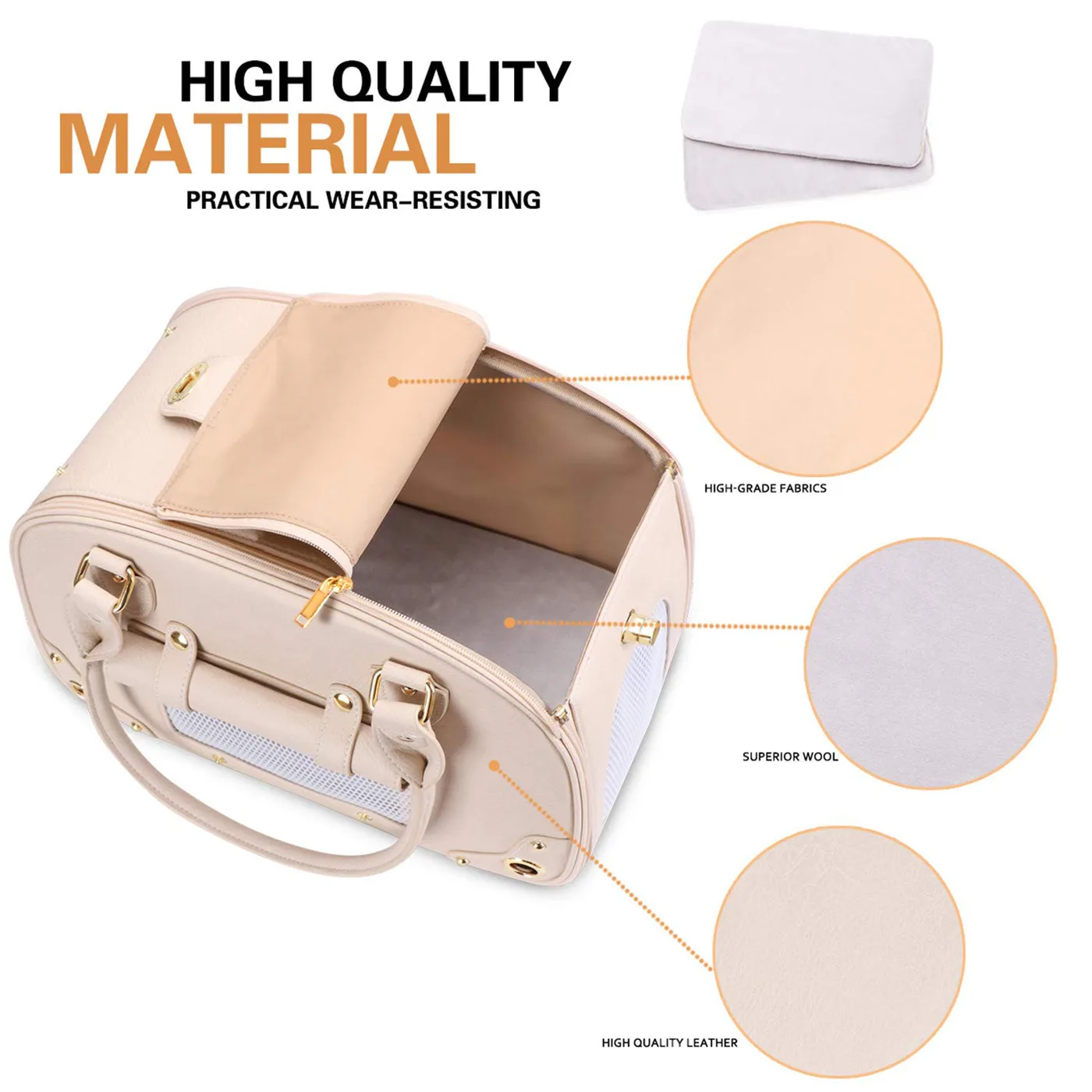
A bucket carrier has no frame, so all of its structural behaviour comes from material selection and seam engineering. The base panel does most of the work. A single layer of shell fabric will not stand; a base with a 3-4 mm EVA or a laminated board insert will. The insert has to be removable or at least accessible, because a board insert that cannot be taken out makes the product unwashable and unrepairable.
Side panels are the second contributor. Vertical seam placement adds stiffness: a bucket built with four vertical seams holds its cylinder better than one built with a single wrap seam, because each seam acts as a rib. Adding a top binding with a light stiffener completes the effect and gives the mouth a defined edge that holds against the roll.
Self-standing behaviour should be tested empty, half-loaded and fully loaded, and it should be tested after the product has been stored flat for a week, because fabric memory matters. A bucket that stands on day one and slumps after shipping has a stiffness problem that no amount of photography will hide.
There is a comfort trade-off worth naming. Structure that helps the bag stand also makes it heavier and less packable. For a travel-oriented line, accept a softer bucket that folds. For an everyday-carry line, prioritise standing behaviour. Decide which you are selling before you choose the base insert.
Base insert design deserves specific attention because it is the part owners will want to remove. A board insert sealed into a pocket cannot be taken out for washing, which makes the product effectively non-washable and is a common source of complaints on otherwise well-built buckets. Specify a hook-and-loop or zippered access flap sized to let the insert slide out, and state in the care instructions that it should be removed before washing, because small access details of this kind separate a product designed for ownership from one designed only for sale.
Closure Hardware at the Top: Buckles, Magnets and Hook Options
The top of a bucket has to do two things at once: close the roll and give the owner something to carry or clip. That dual duty is why hardware selection here matters more than on any other closure. The three credible options are a side-release buckle on a webbing strap, a magnetic pair set into the roll, and a hook-and-hook or hook-and-loop band across the mouth.
A side-release buckle is the most robust and the most legible. It carries load, it is rated, and it gives a natural grab point when the bag is picked up by the roll. It also reads slightly technical, which is either right or wrong depending on your line. Specify at least 150 N tensile on the buckle and a 25 mm webbing run to keep the pull comfortable in the hand.
A magnetic pair is the quietest and cleanest option and works well on a premium line, but it must be paired with a mechanical backup as with any magnetic closure. The useful configuration is a magnet to register the roll and a short strap to hold it, so the convenience is magnetic and the security is mechanical.
A hook-and-loop band across the mouth is the cheapest and the fastest to operate, and it is the correct answer for the entry tier of a range. It wears faster than the alternatives and it collects fur, so it should be specified on the low-contact side of the roll and replaced with a buckle as the tier rises.
The roll also functions as a handle, and customers usually discover this before designers intend it. A three-roll top is a natural grab point, so the fabric and stitching at the roll must tolerate being lifted repeatedly with the full weight of the pet inside. Reinforce the roll line with a bar-tack on each side and test by lifting a loaded sample by the roll twenty times, because an unreinforced roll is a failure waiting for the first customer who picks the bag up in the obvious way.
Ventilation and Sightlines in a Tall Opening
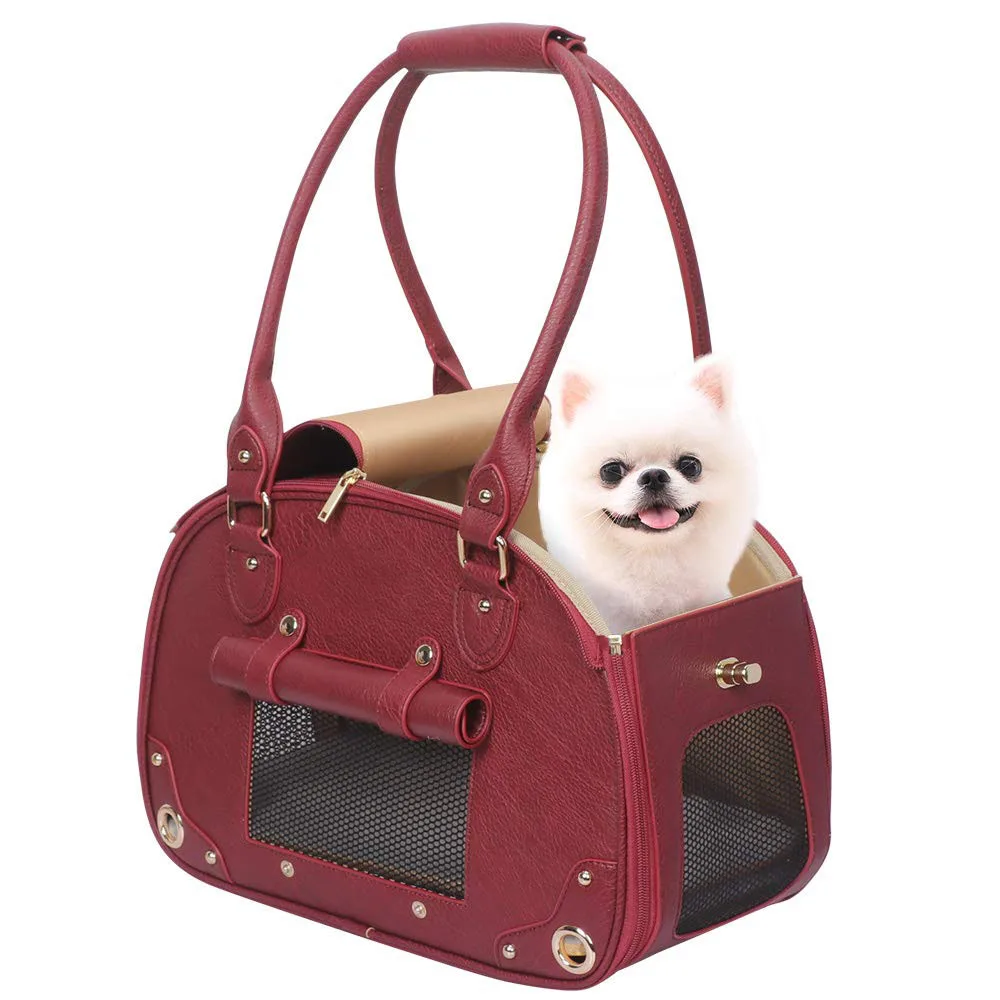
A bucket top creates a tall internal volume with a single opening at the top, which is the worst possible geometry for airflow if it is designed carelessly. Warm air rises and exits through the mouth, but it only exits if there is a low-level intake. The correct solution is a low intake vent on one side and a high exhaust through a mesh section near the roll line, which sets up a passive convection path.
Mesh placement on a bucket has an aesthetic constraint: the panel is tall and curved, so a rectangular mesh insert reads as a patch unless it is designed into the proportion system. A vertical mesh slot running the full height of the front panel reads as intentional and doubles as a sightline for the animal.
Sightlines matter commercially. Owners buy carriers they can see into, and pets settle better when they can see out. A bucket with a fully opaque wall is a harder sell than one with a mesh slot, even when the airflow is technically adequate through other means.
The roll itself should not be the airflow path. Because the roll folds fabric over fabric, it is a poor and unreliable vent — it varies with how many rolls the owner uses. Keep ventilation in fixed panels and treat the roll purely as a volume and closure device.
Mesh height should be set by the animal's eyeline rather than by the panel's proportions. A small pet lying down needs a low sightline, and a mesh slot placed high on a tall bucket gives the owner a view of the top of the animal's head and nothing more. Measure the eyeline of the target pet in a lying position and place the lower edge of the mesh just above it, which usually lands at 25-35% of panel height rather than wherever it looks best in a flat elevation drawing.
Weather Performance: Why Roll-Tops Outperform Flat Closures
A roll-top is the best-performing closure in the catalogue against rain, and the reason is geometric rather than material. Water running down the outside of a flat flap reaches the closure line and then finds the seam. Water running down a roll-top reaches the fold and continues downward on the outside of the roll, because the fold presents no upward-facing gap to collect it.
That advantage only holds if the shell fabric is coated and the roll is tight. A loose roll on an uncoated fabric will wick at the fold within minutes. Specify a coated face, a tight three-roll geometry, and a top edge binding that does not act as a wick — a hydrophobic binding rather than a cotton one.
The second weather advantage is splash resistance at the base. A bucket with a coated lower panel and a sealed base seam will sit in a puddle far more gracefully than a flat-closed carrier with a bottom zipper. For lines sold in wet climates, this is a genuine selling point that costs almost nothing to engineer.
Water resistance should be stated honestly. A roll-top is splash- and shower-resistant; it is not submersible. Claims should be supported by a documented spray test rather than by adjectives, and where relevant, coating performance can be validated against recognised ASTM test standards so the marketing language matches a real number.
Condensation is the weather problem roll-tops do not solve. A tightly closed coated bag on a cool morning with a warm animal inside accumulates moisture on the inside of the shell, and a fully sealed top makes it worse rather than better. Specify a small permanent vent high on a side panel, positioned under the roll so it stays protected from rain, and mention airflow alongside weather resistance in the product copy where both are true, because honest copy prevents the damp-interior complaint that sealed designs reliably generate.
Branding a Bucket: Print Placement on a Curved Tall Panel
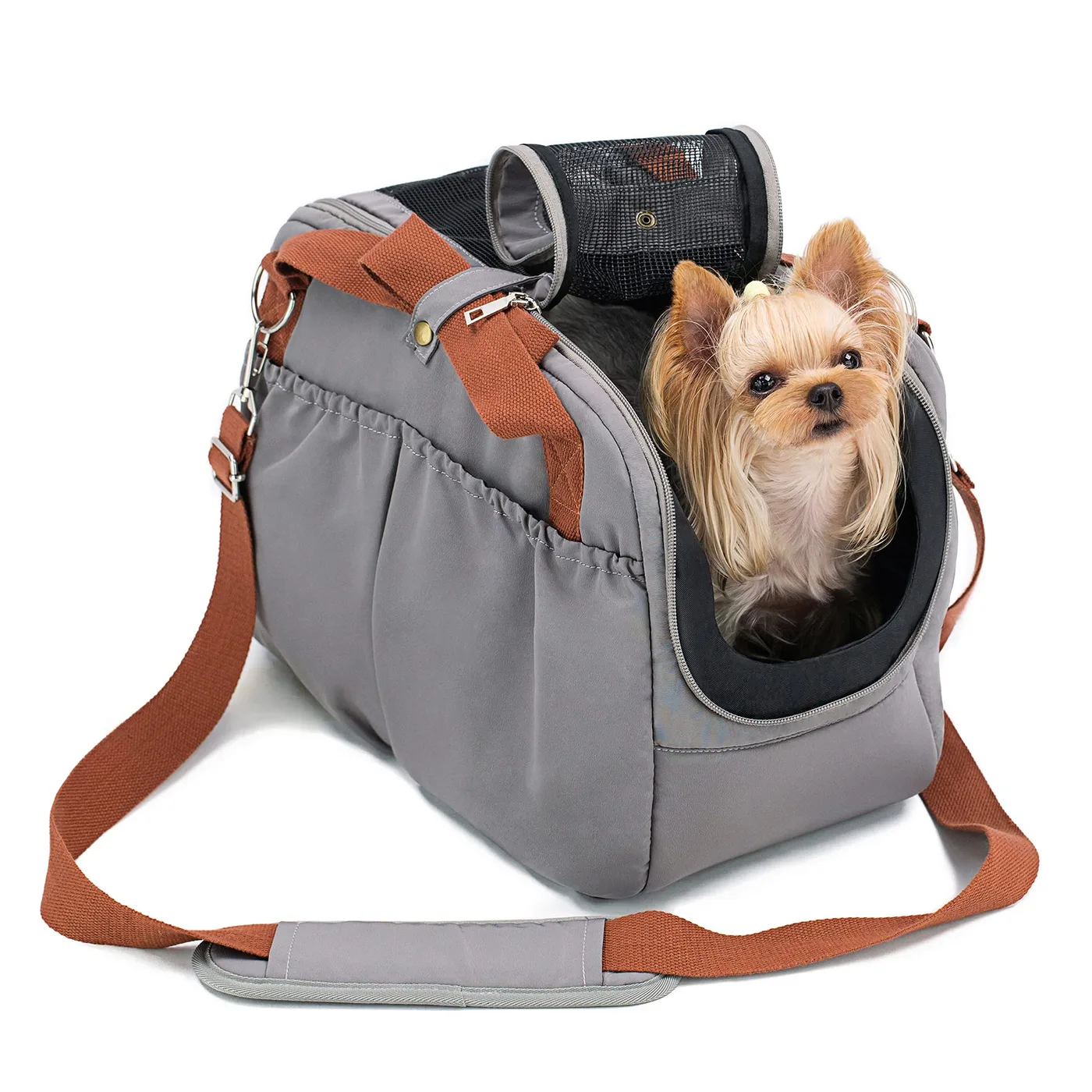
A bucket panel is a difficult printing surface and a very valuable one. It is difficult because it is curved and tall, so a large flat graphic will distort near the edges and will be interrupted by the roll. It is valuable because it is the largest uninterrupted brand surface on the product and it faces outward in every photograph.
The reliable placement strategy is a horizontal band. Put the primary mark in the lower third of the panel, below the roll line, where the surface is flattest and the logo is never covered. Use the upper third for a secondary element — a repeating motif, a colour block, or a woven label — knowing that it may be rolled out of view.
Print method follows from the substrate. Dye sublimation works on polyester and gives full-colour artwork that survives washing; screen printing is cheaper and better for a single-colour mark on coated fabric; a woven or rubber patch avoids the curvature problem entirely by sitting on top of it. For a premium line, a patch is often the better choice simply because it never distorts.
Colour on a coated shell behaves differently from colour on an uncoated one, and the roll line will show wear on any surface print. Brands running a bucket programme should approve artwork on the actual coated substrate and consider a tone-matched palette where a scuffed roll is less visible. Referencing a recognised colour system such as Pantone colour standards keeps that approval unambiguous across shell, print and trim.
A woven label is the most robust branding choice on a bucket and the most forgiving of curvature, because it sits on the surface rather than being printed into it. Placing it vertically along a seam, or horizontally just above the base panel, gives a durable mark that survives abrasion at the roll line. For lines that change artwork seasonally, a label also lets the shell stay generic while the brand element becomes the variable part, which reduces obsolescence risk on a slow-moving colourway.
Costing, MOQ and Sampling for Bucket-Style Programmes
Bucket carriers cost slightly more per unit than a flat-closed bag of the same nominal size, and the difference is entirely in material and stiffness rather than in labour. Coated shell, a base insert, a stiffened binding and top hardware together typically add a modest but real premium, offset partially by lower freight because the product packs flatter.
The sampling implication is that a bucket needs one more round than a flat bag. The first sample establishes the pattern; the second establishes the roll proportion and the standing behaviour. Brands that try to compress this into a single round almost always end up paying for it later, because roll proportion cannot be corrected after bulk cutting.
Commercial terms are consistent with the rest of the category: MOQ 500 units per colorway, samples in 6-10 working days, bulk across 35-50 days from approved sample and deposit, finished goods inspected to AQL 2.5. Each lot is additionally checked for standing behaviour, roll retention after twenty open-close operations and top hardware pull, because these are the attributes that differentiate a bucket from a sack.
The commercial case is strong. One bucket SKU can replace two fixed-volume SKUs, which simplifies forecasting, reduces inventory risk and gives the merchandising team a volume story to sell. Those savings usually exceed the unit-cost premium on the first reorder.
The SKU collapse is the real financial argument and it should be modelled rather than asserted. Compare one adjustable-volume bucket against two fixed sizes across tooling, forecasting error, markdown risk and warehouse lines. In most programmes the single adjustable product wins even at a higher unit cost, because inventory risk is where margin actually disappears. Present that comparison to the buying team with numbers, because finance teams respond to working capital rather than to design intent.
When Not to Use a Bucket Top
A bucket top is not the right answer for every line, and knowing when to avoid it is as valuable as knowing how to specify it. Avoid it for airline-compliant carriers, where under-seat dimensions are fixed and a compressible top makes dimensional compliance harder to guarantee and harder to demonstrate to a gate agent.
Avoid it for pets that need frequent access. A roll-top takes longer to open than a zippered panel, and if your use case involves reaching in repeatedly — at a vet clinic, at a grooming appointment — that friction becomes the product's defining characteristic in the customer's mind.
Avoid it where the interior needs structured organisation. A bucket is a single open volume; adding dividers, tether points and pockets to a roll-top interior is possible but awkward, because the usable height changes with the roll. If your concept depends on a fixed interior layout, a fixed-height closure is the better base.
Used where it belongs — everyday carry, outdoor use, variable pet sizes and weather-exposed markets — a bucket top is the most commercially efficient closure in the range. Used where it does not, it becomes a slow, awkward opening on a bag that will not hold its shape.
Where a bucket is wrong, the alternatives are clear and worth naming in the range plan. Airline compliance suits a fixed-height zippered panel, frequent access suits a magnetic or zippered door, and structured interiors suit a flat-closed clamshell. A coherent range usually needs two of these three, so the decision is rarely bucket versus nothing; it is which products in the line carry the bucket and which carry a fixed closure, and answering that during range planning avoids discovering it later in the returns data.
Production capability
- SGS-verified production space of 4,950 m², 149 machines, 7 assembly lines
- Pet carrier and pet bag output since 2014 from a 137-person team
- 200,000 units shipped monthly under BSCI and ISO 9001 systems
People Also Ask
What is a bucket top closure on a pet carrier?
A closure where the upper shell fabric is rolled down over the load line and fastened, converting fixed volume into a variable range while giving a tall, self-standing silhouette.
Is a roll-top better than a zipper for a pet carrier?
For weather resistance and variable volume, yes. For frequent access and guaranteed fixed dimensions, a zippered panel is better.
Why does my roll-top keep unrolling?
Because the shell fabric is too soft. Move to a coated fabric with a light interlining, and increase roll tightness rather than hardware strength.
How do you measure volume on a roll-top bag?
State compressed and extended figures, define whether mesh panels are included, and use a standard fill method so the claim is reproducible.
Can bucket carriers be printed with full-colour artwork?
Yes by dye sublimation on polyester. On coated or mixed substrates, a woven or rubber patch avoids distortion on the curved panel.
Do bucket carriers fold flat for storage?
A softer travel-oriented build folds; a structured everyday-carry build with a board insert does not. Decide which behaviour you are selling before choosing the base.
Frequently Asked Questions
How many rolls should a bucket top pet carrier have?
Three rolls of roughly 55-65 mm each is the practical default. Two is too loose to hold shape and four reads as a dry bag and pushes the fastening out of comfortable reach.
How much volume range does a roll-top give?
A 28-litre shell with about 180 mm of usable roll height typically compresses to around 20 litres and extends to roughly 30 litres, depending on how much fabric is committed to the roll.
Will a bucket carrier stand up on its own?
Only with a stiffened base. Specify a 3-4 mm EVA or laminated board insert, and test standing behaviour empty, half-loaded and after flat storage.
What hardware is best at the top of a bucket closure?
A 25 mm side-release buckle rated to at least 150 N is the most robust and gives a natural grab point. A magnetic pair is quieter but needs a mechanical backup.
Is a roll-top waterproof?
It is splash- and shower-resistant, not submersible. Performance depends on a coated shell, a tight roll and a hydrophobic binding rather than a wicking cotton one.
Where should my logo go on a bucket-style carrier?
In the lower third of the front panel, below the roll line, where the surface is flattest and the mark is never covered by the roll.
Does a bucket top provide enough ventilation?
Only if you design a low intake vent and a high exhaust mesh panel. The roll itself is an unreliable airflow path because it changes with the number of rolls.
Can a bucket carrier be airline compliant?
It is harder. Under-seat dimensions are fixed and a compressible top makes compliance harder to guarantee, so a fixed-height closure is usually better for airline-focused lines.
How is bucket standing behaviour tested before bulk?
Each lot is checked empty, half-loaded and fully loaded, plus roll retention after twenty open-close operations, in addition to the standard AQL 2.5 inspection.
Does a bucket design change freight cost?
It usually lowers it. A compressible top packs flatter than a framed carrier of the same nominal volume, which increases units per carton.
What fabric stiffness is needed to hold a roll?
A PU-coated 600D with a light interlining will hold a crisp fold; a soft uncoated 420D will unroll under its own weight. Specify stiffness explicitly in the brief.
Can I add interior pockets to a bucket carrier?
Yes, but keep them low and shallow. Usable height changes with the roll, so fixed interior organisation works better on a fixed-height closure.
Talk to QUANZHOU JUNYUAN BAGS about a pet carrier program: MOQ 500 pieces per colourway, samples in 6-10 working days, bulk production in 35-50 days under AQL 2.5 inspection.
Get a free quote Request a sample