Zippered Closure for Custom Pet Carriers: Security Engineering
A zippered closure on a custom pet carrier should use a #5 or #8 coil or metal chain rated above 300 N crosswise strength, run 5,000 open-close cycles without slider wear failure, and include a locking or garage detail at the primary opening. Specify a branded puller, a storm flap over the chain, and a reinforced stop at every termination point.
The zipper is the only closure in the custom carrier catalogue that genuinely resists a determined pet, which is why it remains the default at every primary opening despite decades of alternatives. It is also the most frequently mis-specified component in the bill of materials, because a tech pack will name a brand and a colour and leave the gauge, the chain type, the slider specification and the termination detail undefined. Our production team writes all four into the spec and validates them on finished panels, because zipper failures are almost never failures of the tape and almost always failures of the geometry around it. Programmes run at MOQ 500 units per colorway, with samples in 6-10 working days and bulk across 35-50 days from approved sample and deposit. Finished goods are inspected to AQL 2.5, and every zipper lot receives a cycle test, a crosswise strength check and a slider pull test before components are issued to assembly. That discipline is what turns a commodity fastening into the security story your product copy can defend.
Custom pet bag orders are quoted by unit and by filled container, because carton cubage decides the landed cost more often than the fabric does.
Security Architecture: What a Zipper Actually Guarantees
A zipper offers something no other closure does: continuous engagement along the entire opening. A snap holds at a point, a magnet holds across a face, a cinch holds around a circumference, and every one of them leaves a path that a persistent animal can exploit. A closed zipper leaves no such path, which is why it is the correct answer wherever containment is the primary requirement rather than a secondary one.
That guarantee has limits worth naming. A zipper resists push but not intelligence: a pet that learns to work a slider with its nose will eventually succeed if the slider is exposed. And a zipper resists push only as well as its weakest termination, which is usually the stop at the end of the run rather than the chain in the middle.
The architectural point is that a zipper should be specified as a system. Chain, slider, puller, stops, storm flap and backing reinforcement form one assembly, and the system is only as strong as its least specified part. Most field failures in our experience trace to a termination or a curve, not to the chain.
From a brand standpoint, a zipper also communicates competence. Customers associate a substantial, smoothly running zipper with a well-made product, and they test it in the first thirty seconds of ownership — in a shop, in an unboxing video, or on the first use. That first impression is disproportionately expensive to lose.
Zippers also carry a trust signal in travel contexts. Airline staff, hotel staff and clinic staff all read a zippered opening as secure, and a product that reads as secure to a third party is easier for the owner to use confidently in public. That social dimension rarely appears in a brief, but it is why zippered carriers dominate in transit settings despite faster closures being available elsewhere in the category, and it is worth weighing whenever the product is positioned for travel rather than for home use.
Choosing the Zipper: Coil, Metal and Reverse-Coil Options
Chain type is the first decision and it carries both functional and brand consequences. Coil chain, made from a spiral of polyester or nylon, is light, flexible, quiet and forgiving on curves. It is the default for soft carriers and the correct choice for any opening that turns a corner. Metal chain is heavier, stronger in crosswise terms, and reads as heritage and premium; it is also noisier and less tolerant of tight radii.
Reverse-coil chain puts the coil on the inside of the tape and the smooth face outside. It is the most weather-resistant and the cleanest-looking option, and it is the standard specification for any carrier with a water-resistance claim. It costs slightly more than standard coil and is worth it whenever the closure is exposed.
Gauge follows from scale. A #3 chain suits interior pockets and small accessory openings. A #5 chain is the general-purpose choice for a carrier door or top opening and balances strength with flexibility. A #8 chain is appropriate for large openings on big-dog carriers and reads visibly chunky, which can be either a premium cue or an awkward one depending on the line.
Tape colour and finish are brand decisions that cost almost nothing to customise. A tape dyed to match the shell makes the closure disappear; a contrast tape turns it into a design line. Both are legitimate; the mistake is a near-match that reads as an error.
Chain length and cut method are small costing decisions with a quality consequence. Pre-cut chain with pre-fitted stops is cleaner and more consistent than bulk chain cut on the line, and it removes one of the more common sources of stop failure. Where volumes justify it, specify pre-cut lengths with fitted stops and hold a small buffer of spare chain, so that a miscut never becomes a production delay or, worse, a silent substitution of a different chain partway through a run.
Gauge, Chain and Slider: The Numbers Behind a Smooth Zip
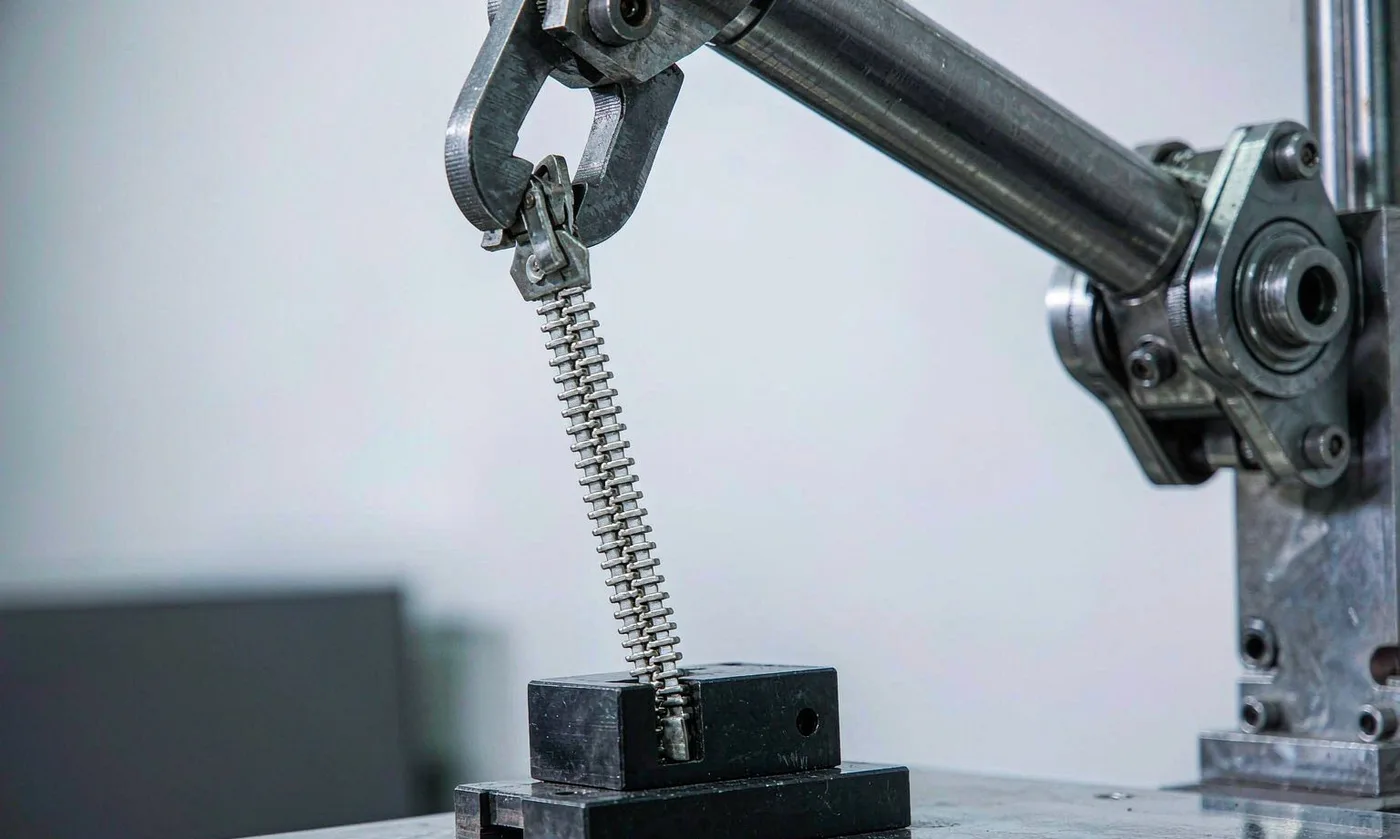
Smoothness is a slider specification, not a chain specification. The slider's body geometry, its spring tension and the finish on its internal channel determine how a zipper feels, and a premium chain with a cheap slider will feel worse than the reverse. Specify the slider as a separate line item with its own part number.
Crosswise strength is the number that governs containment. Measured by pulling the two tapes apart perpendicular to the chain, a #5 coil typically sits in the 300-400 N range and a #5 metal chain somewhat higher. Specify a minimum rather than a typical value, and test on the finished assembly because stitch tension changes the result.
Slider pull force is the comfort number. A slider that needs more than about 15 N to move feels stiff to a customer, and stiffness increases with use as the chain collects dust and fur. A slider with generous internal clearance and a well-finished channel starts smoother and stays smoother.
Cycle life should be specified to the same discipline as any mechanical part. Testing to 5,000 open-close cycles with no chain deformation, no slider wear beyond cosmetic, and no separation at the stops is a realistic bar for a daily-use carrier door. Test methods for these properties are standardised, and referencing recognised ASTM test standards removes ambiguity from the acceptance criterion.
Feel changes over the life of the product, and the direction of that change is itself a specification choice. A chain that starts very smooth often becomes loose and rattly; one that starts slightly firm usually settles into a consistent feel and stays there. Buy the second. Customers judge a zipper at the point of purchase and again at six months, and it is the second judgement that produces reviews, so specify for the settled state rather than for the showroom.
Zipper Geometry on a Carrier: Curves, Corners and Stress Points
Geometry causes more zipper failures than material does. A zipper running around a tight radius puts differential load on the two tapes: the inner tape is compressed and the outer tape is stretched, and the chain can separate under that differential. The practical rule is a minimum inside radius of 40 mm for a #5 coil and 60 mm for a #5 metal chain.
Corners are worse than curves. A sharp 90-degree turn concentrates all of the differential load at one point and almost always produces a separation failure within a few hundred cycles. If a design requires a corner, break it into two gentle curves with a short straight run between them, or end the zipper and restart it.
Terminations are the third risk area. Every zipper run needs a stop, and the stop has to be reinforced into the panel rather than simply clamped onto the tape. A metal stop crimped onto chain and left floating in soft fabric will be forced open by the slider's momentum within weeks. Bar-tack the termination into a reinforced patch.
The final geometry variable is the storm flap. A zipper without a cover collects water, fur and dust, and a zipper with a well-designed cover stays clean and looks considered. A 15-20 mm flap over the chain, held down by a light interlining rather than by stiffness alone, is the standard solution.
Bulk under the chain is the geometric problem most designers underestimate. A zipper sewn over a padded panel compresses the foam unevenly as it closes, which produces a closure that runs stiff and a panel that puckers along its length. Reduce foam density in a 15-20 mm band either side of the chain, or move the closure off the padded zone entirely, because a puckered panel around a zipper is visible from across a room and cannot be corrected after cutting.
Locking, Anti-Pick and Pet-Resistant Strategies
Pet resistance is mostly about slider management. A standard slider can be pushed open from inside by sustained pressure at the chain, and a determined animal can sometimes work it along. Three strategies address this, in ascending order of effectiveness and cost.
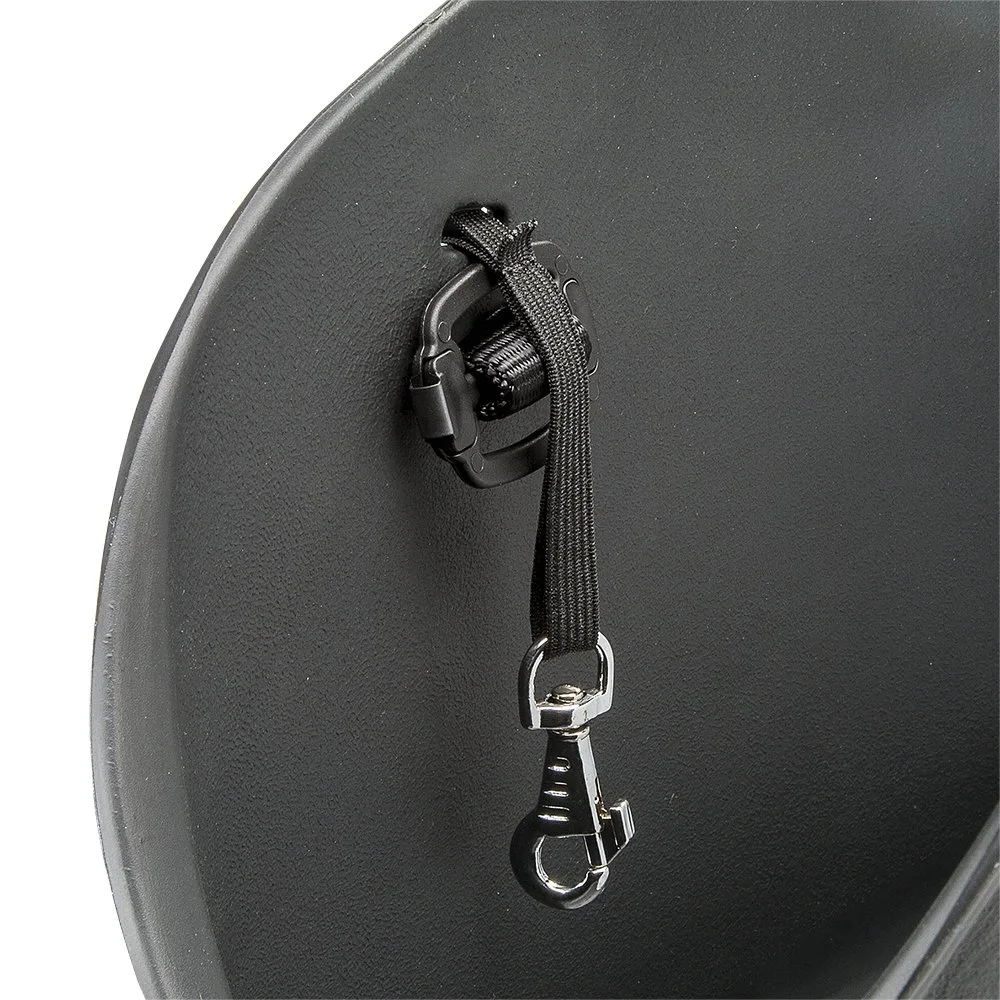
The first is a locking slider. A pin-lock slider engages the chain when the puller lies flat and releases when the puller is lifted, which defeats casual pushing and is invisible to the customer. It is the cheapest effective upgrade and it should be standard on any primary opening.
The second is a garage or park detail: a small fabric pocket or a covered channel that hides the slider when the zipper is closed. If the animal cannot reach the slider, it cannot work it, and the detail also protects the slider from damage in transit. A garage is a small pattern change with a large practical payoff.
The third is a mechanical backup across the opening — a strap with a side-release buckle, or a snap at each end — so that even a fully opened zipper does not release the pet. This is the configuration we recommend for carriers sold for animals known to be escape-artists, and it is the only one that addresses the failure rather than the mechanism.
Whichever strategy is used, it should be described accurately in product copy. "Locking zipper" means a specific mechanism; overclaiming here creates exactly the kind of expectation gap that generates returns.
Fur in the chain is a maintenance issue that deserves design attention. A zipper running through an interior where a pet sheds will collect hair in the coil, and a stiff zipper is usually a dirty one rather than a worn one. Provide a small cleaning brush with the product or note the care step clearly, and where the design allows, route the closure away from the areas where fur collects most heavily, typically the floor seam and the lower side panels.
Pullers as Brand Hardware
The puller is the most touched piece of hardware on a zippered carrier and the cheapest place to put a brand mark. A custom puller in a brand shape, a brand colour, or with a debossed or laser-etched mark turns a commodity component into a signature detail that appears in every close-up photograph of the product.
Metal pullers read premium and take engraving, anodising and plating well. They are heavier, they click against the bag when walking, and they cost more. Moulded pullers in TPU or silicone are quiet, light, available in any colour, and take a debossed mark; they read modern and slightly sporty.
Webbing pullers with a bound end are the softest and quietest option, suit a fabric-led design language, and can carry a woven brand label along their length. They are also the easiest to grip with a gloved hand or with a leash in the other.
One practical note: puller length affects leverage and therefore perceived smoothness. A puller that is too short makes a zipper feel stiff because the customer pulls at an angle rather than along the chain. Specify 25-35 mm of usable puller length on a #5 chain and test the feel rather than the specification.
Puller noise is a small irritation that customers reliably mention in reviews. A bare metal puller swinging against a D-ring or a buckle produces a persistent ticking while walking, and no amount of build quality compensates for it. A moulded or webbing puller removes the sound entirely, and where a metal puller is wanted for its finish, a small garage or a silicone sleeve solves the problem without changing the look that was chosen in the first place.
Testing Zippers: Cycle, Crosswise Strength and Slider Pull
Three tests cover the realistic failure modes and all three are inexpensive. Crosswise strength: pull the two tapes apart perpendicular to the chain on a finished assembly and record separation force. Set a minimum of 300 N for a #5 chain on a primary opening and treat anything near the floor as a reject.
Cycle testing: run 5,000 open-close cycles at a controlled rate, then inspect for chain deformation, slider wear and stop integrity. Cosmetic wear on the slider is acceptable; chain deformation or separation at a stop is not. This test catches geometry problems that a static strength test never will.
Slider pull force: measure the force required to move the slider along the chain, before and after cycling. A rise of more than about 40% indicates a clearance or contamination problem, usually caused by a storm flap pressing on the chain or by stitch tension distorting the tape.
| Opening type | Chain | Gauge | Min crosswise | Slider | Backup |
|---|---|---|---|---|---|
| Accessory pocket | Coil | #3 | 150 N | Standard | None |
| Mesh door panel | Reverse coil | #5 | 300 N | Locking | Garage |
| Top opening, small pet | Reverse coil | #5 | 300 N | Locking | Snap pair |
| Top opening, medium dog | Metal or coil | #8 | 400 N | Locking | Strap and buckle |
| Removable liner | Coil | #3 | 150 N | Standard | None |
Where a brand wants independent confirmation rather than internal data, zipper and hardware testing can be folded into an accessories programme run through an independent laboratory such as SGS third-party testing, scheduled alongside fabric testing so it adds no time to the critical path.
Finished goods inspection should include a full zipper run on every unit rather than a visual check alone. A chain can look perfect and still separate under load at a single tooth, and the only reliable way to find that is to open and close the product during inspection. It adds a few seconds per unit and removes the most common defect that escapes a standard visual pass on soft goods, which makes it the cheapest addition available to any inspection protocol.
Cost, MOQ and Lead Time for Branded Zipper Programmes
Zipper cost scales with chain type, gauge and puller rather than with length. A standard coil chain with a stock puller is the cheapest configuration; reverse coil adds a modest premium; metal chain and custom pullers add the most. Because the zipper is usually the longest single component on the product, even a small per-metre difference is visible in the unit cost.
Custom pullers carry a tooling cost and a lead time, and both are modest relative to the brand return. A custom puller is one of the few custom hardware items that appears in every product photograph and is touched on every use, which makes it a better investment than most cosmetic upgrades.
Commercials are stable: MOQ 500 units per colorway, samples in 6-10 working days, bulk across 35-50 days from approved sample and deposit, finished goods inspected to AQL 2.5. Zipper lots receive an incoming cycle test, a crosswise strength check and a slider pull measurement before components are issued, because a marginal zipper lot is invisible until it is in the field.
The commercial logic for investing here is straightforward. Zipper feel is tested within the first thirty seconds of product ownership, it is mentioned in reviews more often than any other hardware attribute, and it is relatively cheap to get right if it is specified properly.
Repairability is worth planning for as well. A zipper is the component most likely to need replacement over a long product life, and a design that allows the chain to be replaced without dismantling the bag turns a warranty cost into a service opportunity, or at least into a goodwill gesture. Specify accessible ends and standardised lengths so a repair is genuinely possible, and mention it in the product copy where the brand is building a durability or repair story rather than a disposable one.
When a Zipper Is the Wrong Answer
A zipper is not universally correct, and specifying it everywhere is a sign of an unexamined tech pack. Avoid a zipper where the opening is accessed constantly in a hurry: a top opening that is opened a dozen times per walk is better served by a magnetic or cinch closure, because zipper friction accumulates as an irritation over months.
Avoid a zipper where the opening is heavily curved in three dimensions. A closure running around a compound curve will separate regardless of chain quality, and the correct answer there is a gathered or flap closure that does not require continuous engagement.
Avoid a zipper in a product positioned on softness and quiet. Metal chain rattles, and even coil chain transmits a sound that undercuts a quiet-luxury story. For those lines, a magnetic closure with a mechanical backup is the better expression of the same function.
Used where containment matters and the geometry suits it, however, a well-specified zipper remains the most defensible closure in the catalogue. It is the only one that resists push along the entire opening, and that property is difficult to replicate any other way.
Hybrid designs are often the best answer to a difficult opening. A zippered primary door with a magnetic or cinch outer closure gives security where it matters and speed where it is noticed, and the combination photographs better than either alone because it shows two deliberate mechanisms rather than one compromise. The added cost is modest, and the product reads as considered, which is a difficult impression to achieve with any single closure on an awkward geometry.
Production capability
- SGS-verified production space of 4,950 m², 149 machines, 7 assembly lines
- Pet carrier and pet bag output since 2014 from a 137-person team
- 200,000 units shipped monthly under BSCI and ISO 9001 systems
People Also Ask
Are zippers safe for pet carriers?
Yes, and they resist a pushing pet better than any alternative because they engage continuously. Add a locking slider and a garage to defeat determined animals.
Why does my zipper feel stiff?
Usually slider clearance, storm flap pressure or stitch tension distorting the tape. Measure slider pull force before and after cycling; a rise above 40% indicates a geometry problem.
What does zipper gauge number mean?
It indicates chain size. #3 suits pockets, #5 is the general-purpose carrier gauge, and #8 suits large openings on bigger products.
Can a zipper be waterproof on a pet carrier?
Not truly waterproof, but a reverse-coil chain under a storm flap is highly shower-resistant. Claims should be supported by a documented spray test.
How do I stop a zipper from rattling?
Use coil rather than metal chain, add a moulded or webbing puller instead of a bare metal one, and add a garage that holds the slider when closed.
Should the zipper tape match or contrast the shell?
Either works deliberately. A matched tape makes the closure disappear and a contrast tape makes it a design line; avoid a near-match that reads as an error.
Frequently Asked Questions
What zipper gauge should I use on a pet carrier door?
A #5 chain suits most carrier doors and top openings, with a minimum crosswise strength of 300 N. Move to #8 for large openings on medium or large dog carriers.
Is coil or metal chain better for a pet carrier?
Coil is lighter, quieter and more forgiving on curves, which suits soft carriers. Metal reads premium and is stronger crosswise, but it is noisier and needs a larger minimum radius.
What is a reverse-coil zipper and when should I use it?
A reverse coil puts the coil on the inside and a smooth face outside, giving better weather resistance and a cleaner look. Use it whenever the closure is exposed or the product carries a water-resistance claim.
How do I stop a pet from pushing a zipper open?
Use a locking slider, add a garage that hides the slider when closed, and for escape-prone animals add a mechanical backup such as a strap and buckle across the opening.
What is the minimum radius for a zipper curve on a bag?
Approximately 40 mm inside radius for a #5 coil and 60 mm for a #5 metal chain. Avoid sharp 90-degree corners entirely; break them into two gentle curves with a short straight run.
Why does my zipper keep separating at the end?
Because the stop is not reinforced into the panel. Bar-tack every termination into a reinforced patch rather than relying on a crimped stop floating in shell fabric.
Can I have a custom branded zipper puller?
Yes, and it is one of the best value custom hardware investments. Metal takes engraving and plating; moulded TPU or silicone is quieter and takes any colour and a debossed mark.
How long should a zipper puller be?
Specify 25-35 mm of usable length on a #5 chain. A puller that is too short makes the zipper feel stiff because the customer pulls at an angle instead of along the chain.
How many open-close cycles should a carrier zipper survive?
Test to 5,000 cycles with no chain deformation and no separation at the stops. Cosmetic slider wear is acceptable; chain deformation is not.
Should a zipper have a storm flap over it?
Yes for any exposed closure. A 15-20 mm flap keeps water, fur and dust out of the chain and makes the closure look considered rather than exposed.
Does a custom zipper change the MOQ or lead time?
The standard MOQ 500 units per colorway applies, with samples in 6-10 working days and bulk across 35-50 days. Custom pullers add modest tooling and lead time.
Is a zipper always the most secure closure?
It is the most secure against pushing, because it engages continuously along the opening. It is not the fastest to operate and it is poor on compound curves, where a gathered or flap closure performs better.
Talk to QUANZHOU JUNYUAN BAGS about a pet carrier program: MOQ 500 pieces per colourway, samples in 6-10 working days, bulk production in 35-50 days under AQL 2.5 inspection.
Get a free quote Request a sample