Zinc Alloy Hardware vs Iron: Strength Guide
Zinc alloy die-castings with a quality finish typically reach 48-96 hours of neutral salt spray resistance and cost roughly 1.3-1.6 times stamped iron equivalents. Iron is stronger in raw tensile terms and cheaper, but it is heavier, corrodes quickly without plating and cannot hold fine detail. Specify zinc alloy for every visible load-bearing fitting; restrict iron to hidden, cost-critical reinforcements. Both are available at MOQ 500 per colourway and ship against AQL 2.5 inspection.
Executive Summary
Hardware is the jewellery of a pet carrier. It occupies a tiny fraction of surface area and weight, yet it appears at every stress point, every adjustment, and every place a customer's hand naturally lands. Getting it right is disproportionately visible; getting it wrong is immediately obvious in the same locations.
This guide compares zinc alloy — the Zamak family of die-casting alloys that dominate quality bag hardware — against stamped and cast iron, which remains common in entry-tier products and hidden reinforcements. We examine real strength rather than datasheet strength, corrosion behaviour as the actual failure driver, the design freedom each material permits, weight consequences, plating systems and colour consistency across a collection. Recommended placements and a specification checklist close it out. Commercials are constant throughout: MOQ 500 units per colourway, pre-production samples in 6-10 working days, bulk production in 35-50 days, final random inspection to AQL 2.5. Development runs through our production team and SGS-verified partner facilities under ISO 9001 process control.
Custom pet travel bag programmes are usually quoted with the airline dimension printed into the technical pack, so there is no argument at inspection.
Hardware Is the Jewellery of a Carrier
Every adjustment point, every attachment, every place where two parts meet is marked by hardware. Those points cluster exactly where customers look and touch: strap junctions, top handles, door reinforcement, base feet, the hook that clips to a lead. Together they form a visual punctuation across the product, and when that punctuation is consistent the whole design reads as deliberate.
Deciding hardware early pays a scheduling dividend as well. Finishes and custom tooling are usually the longest lead items in a development calendar, while fabric and colour can be adjusted relatively late without consequence. Selecting the hardware family first is how programmes protect their launch date.
Consistency is the operative word. A product can be beautifully designed and still look provisional if its hardware mixes finishes, gauges and shapes without reason. The eye reads this as unresolved even when it cannot articulate why, particularly in photography where metal is the brightest thing in frame and consequently dominates attention.
Weight distribution matters too. Poorly placed hardware makes a product feel unbalanced before it is even loaded, because metal mass concentrates at predictable points. Customers notice this immediately when lifting something that appears light, and their read of quality drops accordingly.
- Visibility: metal is the brightest element in frame and the first thing the eye lands on
- Touch points: every adjustment involves handling hardware, so finish quality is felt not just seen
- Balance: concentrated mass at corners changes how the empty product feels in the hand
- System reading: a consistent hardware family signals that the whole product was designed, not assembled
For private-label programmes the hardware decision also carries a cost asymmetry worth understanding. Spending an extra amount here buys genuine, felt quality; spending the same amount on fabric often cannot be perceived at all. It is one of the few places where additional cost converts almost entirely into perceived value.
Begin by selecting a hardware family before selecting individual parts. A coherent set — shared geometry, shared finish, shared visual weight — delivers more brand benefit than any single upgraded component, and it simplifies subsequent seasons.
Family selection also pays dividends in photography. Catalogues shot across several SKUs look cohesive when every fitting shares a finish and a language, and that cohesion is what makes a small range read as a considered collection rather than a series of unrelated products.
Zinc Alloy and Iron, Described Practically
Zinc alloy in this context almost always means one of the Zamak family: zinc with aluminium, copper and magnesium in controlled proportions, hot-chamber die cast into near-net shape. The process produces fine detail, tight tolerances and a surface that accepts plating extremely well.
Iron appears in two forms. Stamped iron is sheet material cut and bent into shape — hooks, plates, simple reinforcements — and it is the cheapest structural metal available. Cast iron appears occasionally in buckles and heavy-duty fittings where sheer mass is acceptable and detail is not required.
The functional distinction is that die casting produces three-dimensional parts with varying section and fine features, while stamping produces thin, largely two-dimensional formed shapes. Where a design needs anything with depth, a curve, a raised logo or a complex channel, zinc alloy generally wins outright.
Secondarily, iron must be protected. Unplated iron rusts visibly within days of exposure to humidity, and because it often sits hidden behind fabric, that corrosion appears as staining on the shell fabric before anyone sees the metal itself. This is one of the most avoidable defects in the category.
Both materials are then finished by plating, usually into nickel, chrome, gunmetal, antique brass, black nickel or a range of coloured electrophoretic coatings. Finish quality frequently matters more than base metal performance, and it is where the biggest quality gradients between suppliers actually sit.
It follows that two quotations can specify different base metals and produce nearly identical results, or specify the same base metal and differ entirely on longevity. Comparing quotation lines by alloy name tells you very little; the plating schedule and its verification tell you almost everything.
Tooling differs as well. Die casting requires a hardened tool costing meaningful money but producing hundreds of thousands of parts; stamping requires cheaper tooling but often several progressive stages for complex geometries. This shapes which material is economical at which volume.
Strength: Where Datasheet Numbers Mislead
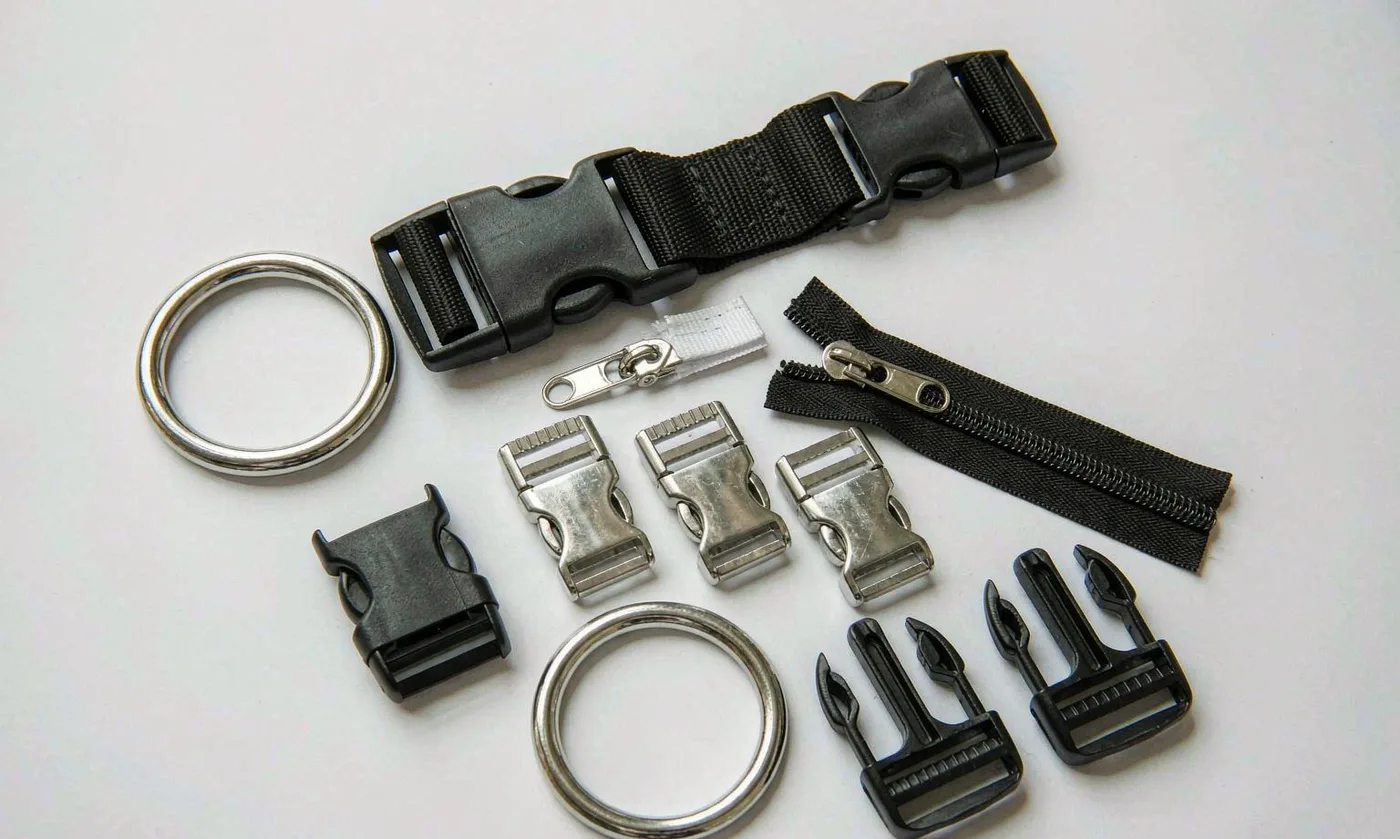
Iron is stronger than zinc alloy in almost every raw measure — higher tensile strength, higher yield point, greater hardness. If strength were the only criterion, iron would win decisively and there would be no discussion. But in practical hardware terms, raw strength is rarely the governing constraint.
What matters is performance at the section actually used, and here the picture changes. Hardware almost never fails because the material yielded; it fails because a thin section bent, a plating cracked and corroded, or a small feature deformed under a concentrated load. Shape efficiency therefore dominates material strength.
Die casting permits generous section where load concentrates and thin walls where it does not, so a well-designed zinc part frequently outperforms a cruder stamped part of nominally stronger material. The reverse is equally true: a badly designed zinc casting with thin walls at a stress point will fail where a simple iron stamping would have survived.
| Property | Zinc alloy, Zamak | Stamped iron | Meaning in practice |
|---|---|---|---|
| Tensile strength | 280-330 MPa | 350-500 MPa | Iron wins on paper; rarely decisive in service |
| Density | 6.6 g/cm3 | 7.85 g/cm3 | Iron is roughly 19% heavier for the same volume |
| Design freedom | High; three-dimensional, fine detail | Low; largely formed two-dimensional shapes | Determines whether your design is achievable at all |
| Plating adhesion | Excellent | Good with correct preparation | Affects corrosion life more than base metal does |
| Bare corrosion resistance | Fair; forms a passivating layer | Poor; rusts quickly | Iron must always be finished |
| Typical salt spray, quality finish | 48-96 hours | 24-48 hours | The specification that actually predicts field life |
| Tooling cost | Higher | Lower | Amortised quickly at production volumes |
| Cost index per part | 1.3-1.6 | 1.0 | Small absolute difference per unit |
Specify by test rather than by material name. A pull test to destruction on the finished assembly tells you whether the part performs; a datasheet number about the alloy does not.
Attachment deserves equal attention to the fitting itself. Most hardware failures in the field involve the fabric tearing or the webbing pulling free around an intact metal part, so reinforcement design around each fitting frequently delivers more improvement than upgrading the metal.
Corrosion: The Failure Mode That Actually Happens
Ask anyone who handles returns what killed the hardware and the answer is rarely overloading. It is corrosion — tarnish, white bloom, rust creep under a cracked edge, or discolouration bleeding onto adjacent fabric. In humid markets corrosion dispatches more hardware than any load ever will.
The mechanism is straightforward. Plating is a barrier; damage it and the base metal begins oxidising beneath it, spreading under the surrounding finish. Because pet products live in humid bathrooms, muddy hallways and damp vehicles, the conditions for this are consistently present.
Zinc corrodes more slowly than iron and forms a passivating layer that slows further attack. Iron rusts aggressively, and its corrosion products occupy more volume than the original metal, which is why it lifts plating and bleeds staining into fabric. That staining is what customers photograph.
Salt spray testing is the standard measure, exposing samples to a fine saline mist under controlled conditions and assessing appearance at defined intervals. Procedures are standardised — many are maintained by ASTM International — and specifying hours to a named method converts vague concern about rust into a testable requirement.
- 24-48 hours: economy finish, adequate for dry inland markets only
- 48-96 hours: good commercial finish, appropriate for general distribution
- 96 hours and above: premium finish for humid, coastal or tropical markets
- Sealing: a final electrophoretic or lacquer topcoat substantially extends any of the above
Match the specification to destination. A product selling into Southeast Asia deserves a different finish from one selling into a dry inland climate, and this is one of the few specification choices where geography genuinely should drive cost.
Storage before sale matters nearly as much as use. Products sitting in a humid warehouse for months before reaching a customer can arrive already tarnished, which is why appropriate vapour-phase protection in packaging and sensible warehouse rotation are worth specifying alongside the finish itself.
Design Freedom: What Each Process Allows You to Draw
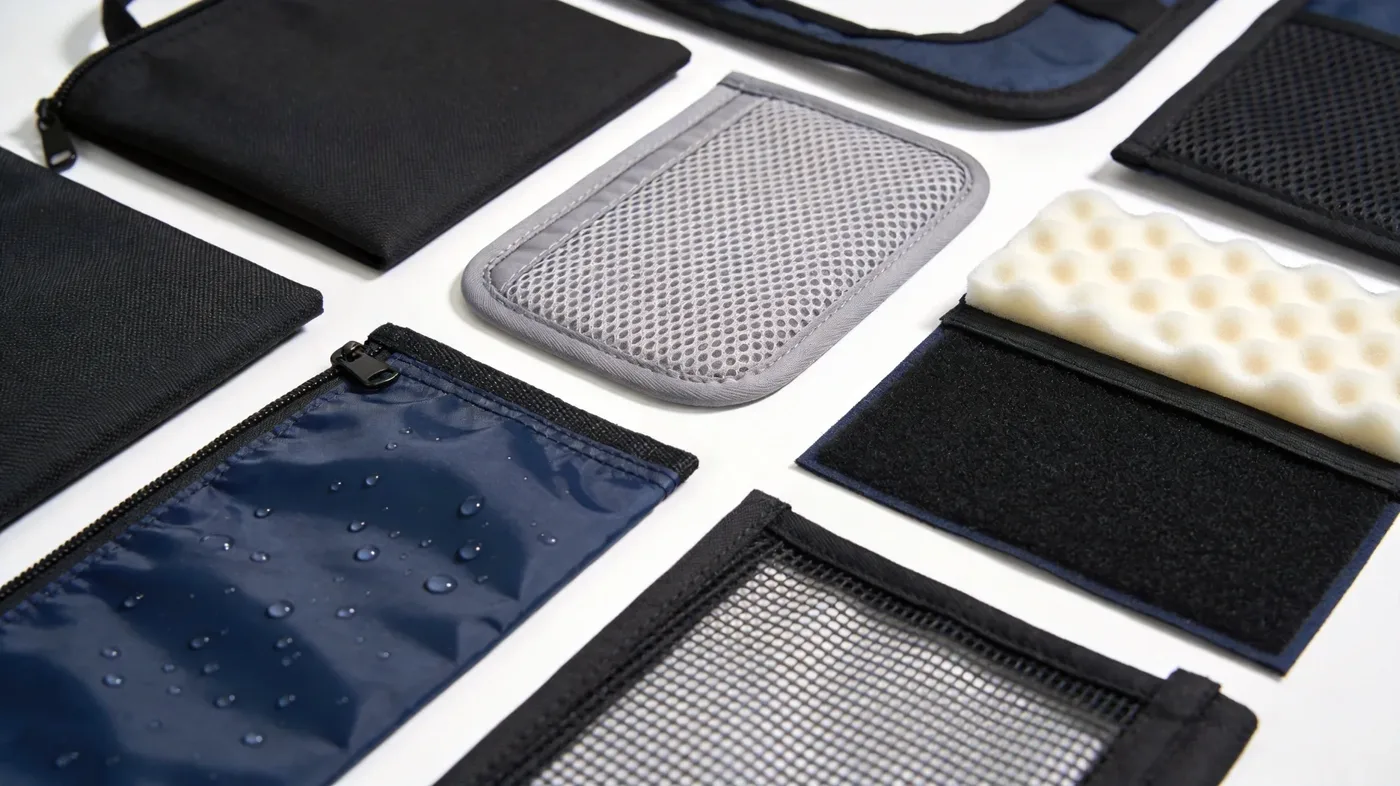
Material choice quietly determines what your designer is permitted to draw. Zinc die casting tolerates undercuts, varying wall thickness, integrated logos, curved channels and shapes that read as engineered objects. Stamped iron offers flat forms, simple bends and little else.
This has real consequence for brand work. Integrated logos — your mark cast into a buckle or D-ring rather than printed nearby — are among the strongest recurring impressions available, because they appear at every strap junction and are touched constantly. Achieving them requires die casting.
Surface finish follows the same logic. Cast parts take engraved texture, brushed directional finishing and two-tone treatments where highlights are polished after plating. Stamped parts generally present as flat and uniform, which can read as clean but rarely as considered.
There is a discipline to observe, however: design for uniform wall thickness. Thick sections in castings cool slowly, sink and occasionally show surface depressions; thin sections may not fill completely. Reviewing drawing with whoever will cut the tooling prevents most cosmetic disappointment.
Radius every internal corner and allow draft for release from the tool. These are not aesthetic suggestions but physical requirements, and honouring them makes the difference between a design that emerges from tooling as drawn and one requiring three revision rounds.
Plan revision rounds into the calendar rather than assuming they will not be needed. Nearly every original hardware silhouette benefits from one adjustment after trial shots, usually concerning either wall thickness or how the part sits against fabric. Expecting that iteration avoids the disappointment of a schedule built on optimism.
Weight: How Metal Mass Changes Product Feel
Iron is roughly 19% heavier by volume, and because hardware tends to be a specified volume — a given hook shape, a given plate size — that difference lands directly in the product. Across a dozen fittings, the accumulated effect is noticeable when lifting a product that appears light.
Placement amplifies perception. Mass at the top of a carrier makes it feel top-heavy and unstable when empty; mass at the base lowers the apparent centre of gravity and reads as planted and secure. Two designs using identical metal weight can feel completely different depending on distribution.
There is also a shipping consequence. Hardware is dense and concentrates weight where parcel cost cares least about volume — so it can push a unit across a weight breakpoint even where its effect on perceived bulk is minimal. Freight and foam disagree here, and it is worth checking both.
None of this argues against substantial hardware. Quite the opposite: appropriately placed weight reads as substance and reassurance, provided it is distributed thoughtfully and consistent with the product's stated positioning.
Most effective designs concentrate mass low and around the frame, leaving upper surfaces visually light. A carrier that feels planted when set down communicates stability, and that impression transfers to how safe owners believe the product is — the single most important unmeasurable in this category.
Watch the failure mode at the other extreme. Hardware that is too light, particularly in adjuster components, feels flimsy in exactly the way owners describe as making them nervous. There is a lower bound below which saving weight costs more credibility than it returns.

Cost, Tooling and Where Volume Changes the Answer
Per-part cost favours iron, generally by a meaningful margin, but total programme cost tells a different story. Die-cast tooling costs more initially and then produces parts at high speed with exceptional repeatability, so at production volumes the per-part premium narrows considerably.
Secondary operations matter as well. Stamped parts frequently need deburring, grinding and additional finishing that partly erodes their apparent advantage. Castings emerge closer to final shape, sometimes eliminating a step entirely and removing the associated handling cost.
Also worth counting is the cost of failure at each stage. A stamping whose edgework was skipped reaches assembly carrying a burr that damages webbing; a miscast part usually announces itself immediately at trial shot. Neither is recoverable cheaply once thousands of units are assembled.
Plating is the great equaliser. It is charged per surface area and per finish complexity, regardless of base metal, so an iron part needing extensive preparation may finish no cheaper than a zinc part plating cleanly. Every quotation we prepare breaks this out separately for exactly that reason.
- Small seasonal runs: stamped parts may hold a genuine cost advantage
- Repeat core programmes: casting amortises and usually wins on consistency
- Custom logo tooling: amortises quickly at MOQ 500 and above
- Finishing: quote separately from base metal to see where money actually goes
Finally, remember the return-cost asymmetry. Hardware failures generate returns, and a return costs many multiples of the per-part saving. Programmes that upgrade from iron to zinc alloy on visible fittings rarely reverse that decision.
Independent verification is available where a programme warrants it. Plating thickness, composition and salt spray results can be confirmed through third-party bodies such as SGS, which is frequently requested by retailers whose own compliance teams audit submissions rather than accepting declarations.
Finishes and Keeping Colour Consistent Across a Collection
Finish selection defines how a brand reads in metal. Polished chrome reads modern and clinical; brushed nickel reads contemporary and restrained; antique brass reads heritage; black nickel reads technical and urban; rose gold currently reads fashion-adjacent. None are wrong, but mixing them carelessly is the fastest route to an unresolved product.
Colour-matching metal to fabric is harder than matching textile to textile. Alloys shift hue subtly between production batches, plating baths drift over their working life, and unlike fabric there is no equivalent of a laboratory dip. Requesting a physical approval sample from the actual production batch is standard practice for a reason.
Electrophoretic coloured coatings expand the palette substantially and can be matched reasonably closely to textile references. They are generally durable, though abrasion resistance is lower than bare plating, so they suit low-contact locations better than a strap adjuster that rubs constantly.
Two-tone treatments — polished highlights against a matte ground — add perceived expense for modest additional cost and photograph exceptionally well. They do require masking in finishing, so expect slightly higher expense and confirm consistency before bulk.
Document every finish numerically where possible, including base metal, plating sequence, thickness and any topcoat, and retain a signed reference from each production lot. Metal finish drift is gradual, cumulative and impossible to argue about without a physical standard.
Establish the standard early by approving a master set of every fitting in one batch, signed and retained. Those become the reference for the life of the programme, and every future lot is judged against rather than against memory of the original.
Testing, Verification and the Mistakes We See Most
Specify hardware by test rather than description. Three tests cover the overwhelming majority of real risks, and none are expensive relative to their value.
Pull testing to destruction on the assembled product establishes whether the fitting and its attachment survive loads the product will encounter, plus a margin. Salt spray testing establishes corrosion resistance against a named method and duration. Abrasion testing establishes how a finish behaves where it rubs against fabric or another metal part.
- Pull to destruction: test the assembly, not the isolated fitting — attachment usually fails first
- Salt spray: name the method and the hours; match duration to destination climate
- Abrasion: particularly important for coloured coatings at contact points
- Nickel release: relevant where EU market access matters and components contact skin
The recurring mistakes are predictable. Specifying an alloy without specifying its finish. Approving the first sample rather than three consecutive ones. Forgetting that a fitting hidden under fabric will stain that fabric if it corrodes. And approving a hardware finish under showroom lighting rather than daylight, where it will actually be seen.
Keep metal decisions documented as thoroughly as fabric ones. A one-page hardware specification recording alloy, plating schedule, thickness, required test hours and the retained reference set prevents dozens of small inconsistencies accumulating until something visible goes wrong.
Close with the calendar. Pre-production samples arrive in 6-10 working days, bulk follows approval in 35-50 days, and finished goods clear AQL 2.5 inspection before release, with specific checks for plating defects, sharp edges, functional movement and colour against the retained standard.
Review annually in any case. Alloy sources and plating chemistry drift, and a specification that performed well for three seasons can quietly change in the fourth unless somebody checks.
Keep that review cheap by retaining reference sets and test reports per lot. Comparing this season against last takes an afternoon when documentation exists, and it takes an entire redevelopment cycle when it does not.
Production capability
- SGS-verified production space of 4,950 m², 149 machines, 7 assembly lines
- Pet carrier and pet bag output since 2014 from a 137-person team
- 200,000 units shipped monthly under BSCI and ISO 9001 systems
People Also Ask
Is zinc alloy stronger than iron?
Not in raw terms — iron has higher tensile strength and hardness. But hardware rarely fails by material yielding; it fails by thin sections bending or plating cracking, and die-cast parts handle load geometry more efficiently, so finished performance often favours the zinc part.
Which hardware resists rust best?
Zinc alloy with a good finish, typically reaching 48-96 hours of salt spray resistance against 24-48 hours for economy-plated iron. Any destination with humidity, coastal air or tropical conditions deserves the higher specification.
Why does zinc alloy cost more?
Die-cast tooling costs more and zinc alloy costs more per kilogram than steel sheet. However, plating is charged by surface area regardless of base metal, and castings need fewer secondary operations, so the real gap narrows at production volumes.
Can my logo be cast into hardware?
Yes, and it is among the most durable brand impressions available since these fittings are touched constantly. It requires die casting rather than stamping, so it also implies choosing zinc alloy for those components.
How much heavier is iron hardware?
Approximately 19% for the same volume. Because hardware is usually specified as a fixed shape rather than a fixed mass, that difference lands directly in the finished product and can affect parcel shipping weight tiers.
Which finish lasts longest?
Plating sequence and thickness matter more than colour choice. A sealed or electrophoretic topcoat over adequate base plating substantially extends life, particularly at contact points where abrasion would otherwise breach the barrier.
Frequently Asked Questions
What is the minimum order quantity for hardware?
MOQ is 500 units per colourway for standard fittings in either material. Custom die-cast tooling carries its own charge, which we quote separately from unit pricing so its amortisation is visible.
How long does hardware sampling take?
Pre-production samples take 6-10 working days using stock tooling. Custom tooling typically adds two to four weeks for cutting and trial shots before first sample assembly can begin.
What is the bulk production lead time?
Bulk production runs 35-50 days following sample approval and deposit. Electroplating schedules occasionally influence timing during peak season, which we factor into scheduling rather than discovering later.
How is hardware inspected before shipment?
Final random inspection follows AQL 2.5 for major defects. Hardware-specific checks cover plating defects and edge roughness, functional movement of every moving part, sharp edges, and colour against the retained physical standard.
Do all finishes cost the same?
No. Standard nickel and black nickel are typically most economical, while antique finishes, two-tone treatments and electrophoretic colour incur additional handling and masking charges quoted per part.
Can you match hardware to my fabric colour?
Reasonably closely using electrophoretic colour coatings, though metal will always read slightly differently from textile. Approve against a physical production sample rather than a reference chip, since plating batches drift.
Is custom tooling amortised or charged outright?
Charged once and then held for your programme, so subsequent orders carry no additional tooling cost. We quote it separately so you can see exactly what the tooling contributes per unit at your volumes.
What salt spray rating should I specify?
Match it to destination. Twenty-four to forty-eight hours suits dry inland markets, forty-eight to ninety-six hours suits general distribution, and ninety-six hours or more suits humid, coastal and tropical destinations.
Do you use third-party testing?
Yes. Where a programme or retailer requires independent verification of plating thickness, salt spray resistance or pull strength, this can be arranged through SGS or an equivalent accredited laboratory.
Can hardware be nickel-free?
Yes, and it is worth requesting for European market access where components may contact skin. Nickel-free plating systems are widely available and perform comparably to standard finishes.
Why did my last batch look slightly different?
Plating bath chemistry drifts gradually across lots, and alloy batches vary subtly. Retaining a signed physical standard from each approved lot is the only reliable way to detect and reject that drift.
Are there sharp-edge risks with castings?
There can be if secondary finishing is skipped. Specifying deburring and edge finishing explicitly prevents it, and it is one of the checks performed during final inspection before release.
Can I mix metals in one product?
You can, though it should be deliberate. Mixing finishes usually reads as unresolved rather than interesting, so if you combine them, do so systematically across the whole collection rather than arbitrarily per item.
What should be written into my hardware specification?
Record base alloy, plating sequence and thickness, any topcoat, required salt spray hours with method, permissible colour tolerance against the retained standard, deburring requirement, and pull strength of the assembled fitting.
Talk to QUANZHOU JUNYUAN BAGS about a pet carrier program: MOQ 500 pieces per colourway, samples in 6-10 working days, bulk production in 35-50 days under AQL 2.5 inspection.
Get a free quote Request a sample