Custom Pet Carrier builds custom pet carrier programmes for brand owners, private-label sellers and retail chains: logo application, packaging, material and size decisions handled in one tech pack. Programmes start at 500 pieces per colourway, samples take 6-10 working days and bulk production takes 35-50 days under AQL 2.5 inspection, shipped FOB Xiamen on T/T 30/70 terms.
Custom Design & Branding
Logo application, labelling and packaging programmes that turn a carrier platform into your own brand line.
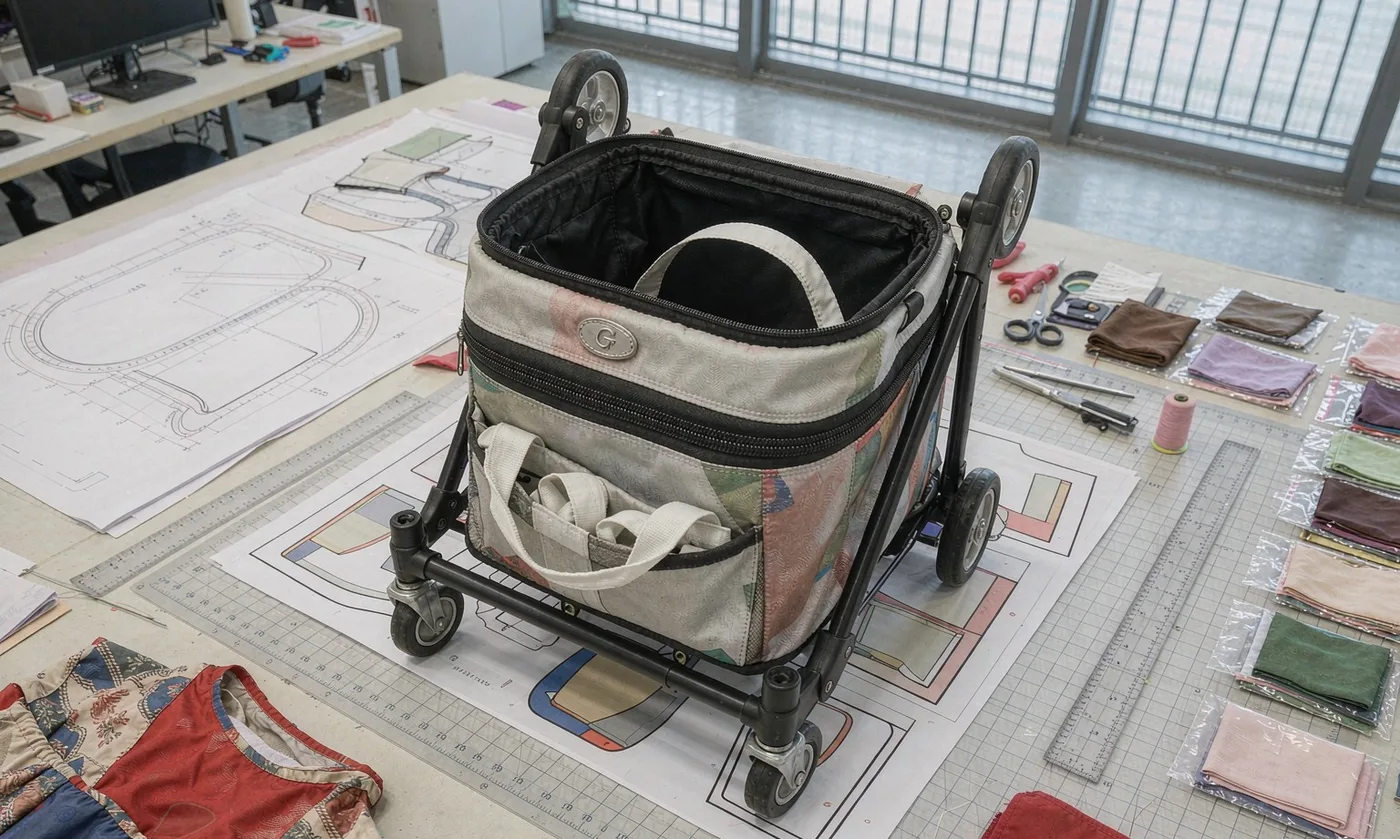
Material & Color Options
Fabric, coating, hardware and Pantone colour programmes specified once and shared across an assortment.
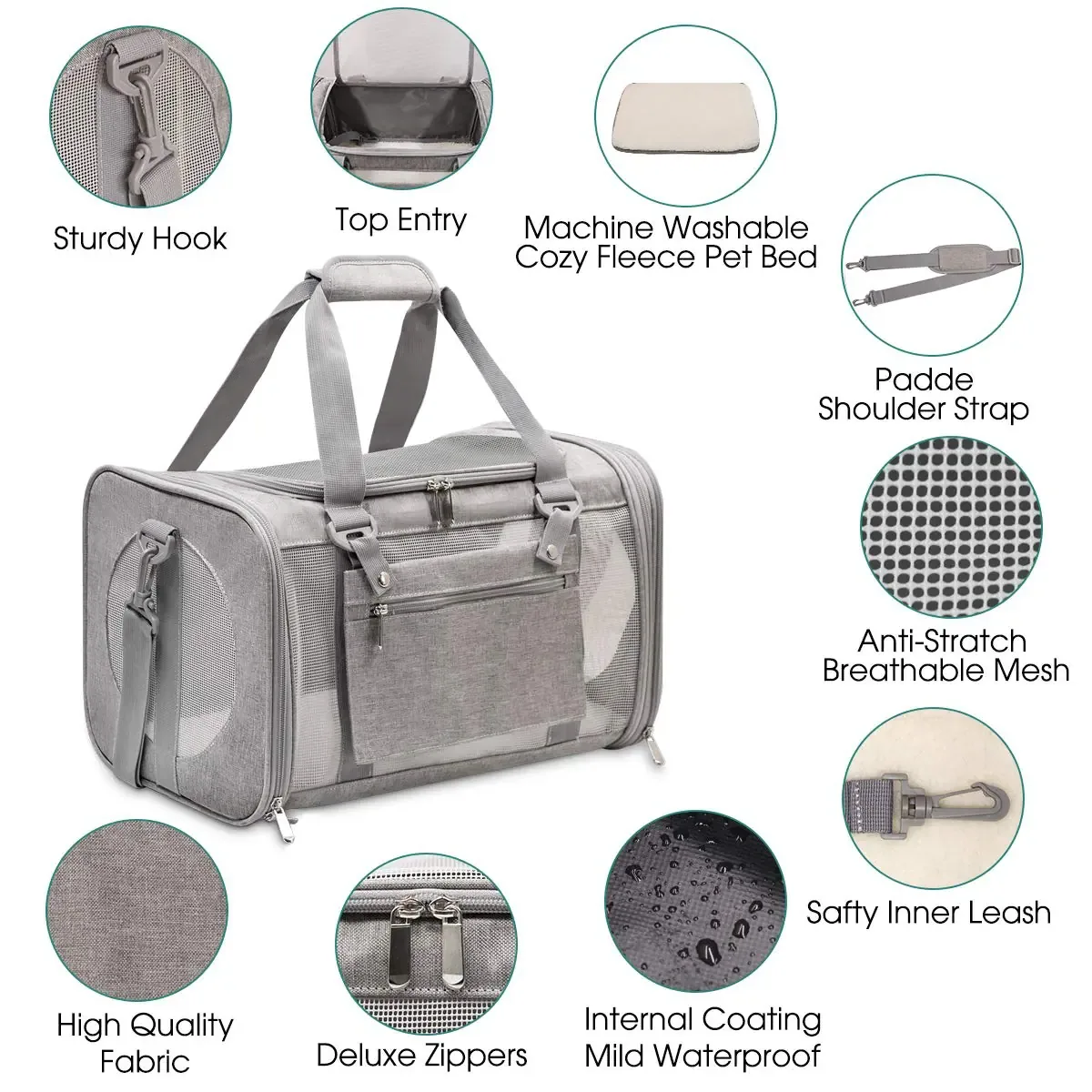
Size & Function Options
Size platforms, carry systems, convertible structures and tech add-ons built around real use cases.
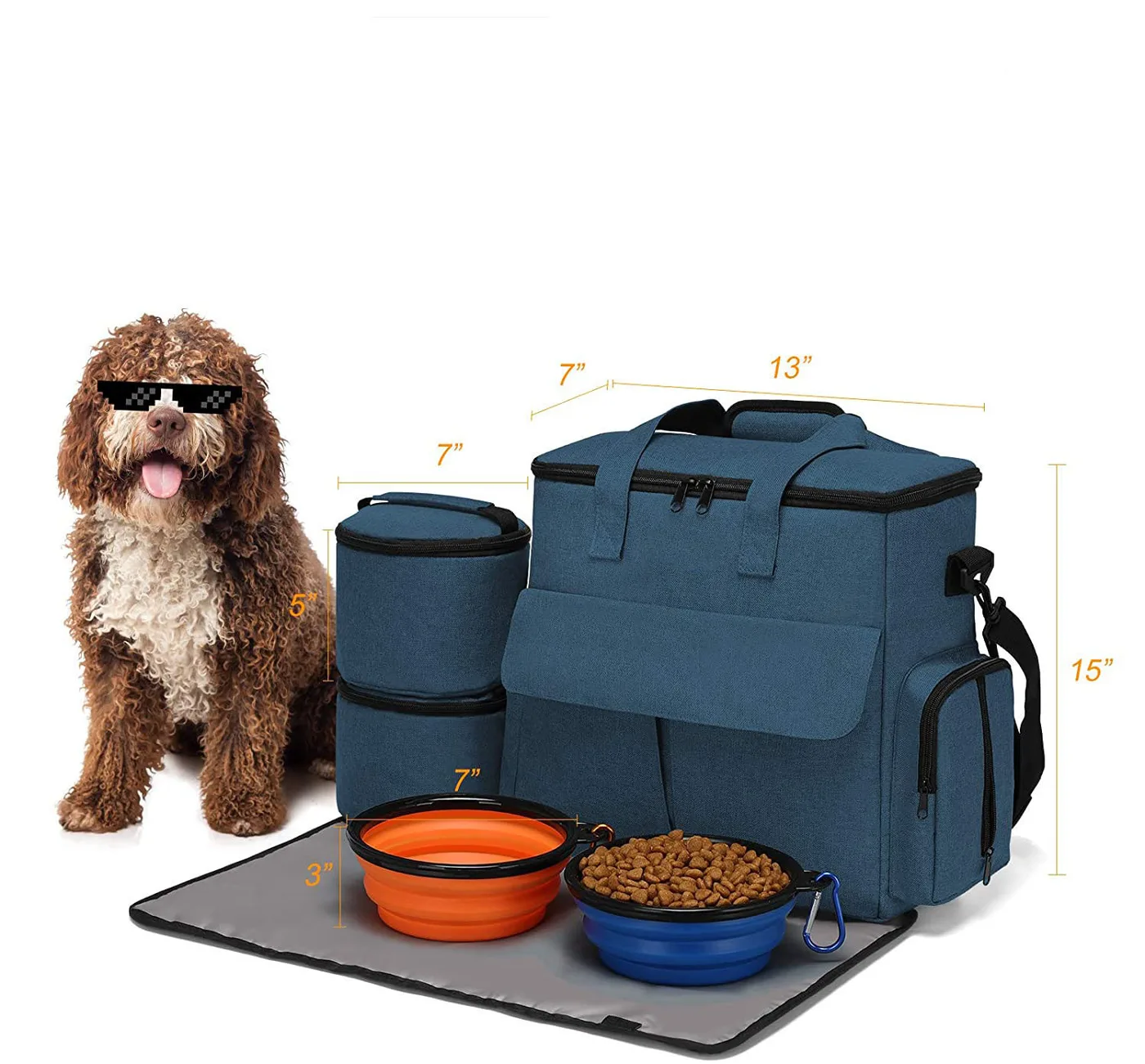
Programme pages
Custom Pet Carrier
Design and order process: sizing, materials, branding, sampling and bulk production in one path.
Private Label Pet Carrier
Brand programmes: logo assets, labelling, compliance documents, tooling ownership and unit economics.
Personalized Pet Carrier Programmes
Variable data and bespoke work: embroidery, patches, per-unit personalisation and packing.
Working terms
| Commitment | Detail | Standard |
|---|---|---|
| Colourway minimum | 500 units per verified colour; size splits inside one style count toward it | Yes |
| Colour matching | Lab dips on the actual substrate, not a paper swatch | Yes |
| Tooling | Owned by the buyer once paid for; never used for another client | Yes |
| Inspection access | Buyer or their nominated agency may attend the pre-shipment check | Yes |
| Documentation | Test reports tied to the exact dye lot and hardware batch shipped | Yes |
What we customise
A custom programme is built in four layers, and each one can be specified independently. The design and branding layer covers logo method, placement, label set, hang tag and retail packaging - the parts a shopper recognises as yours. The material layer covers shell fabric, coating, mesh, padding and hardware, specified to a tested standard rather than a trade name. The colour layer covers Pantone matching on the production substrate, with rub and light fastness validated before release. The size and function layer covers the three size platforms, the carry system, convertible structures and tech add-ons.
Because all four layers share one tech pack, a private-label buyer can lock a single fabric and colour standard across an assortment and keep the branding consistent between a carrier and the accessories sold beside it.
Materials and testing
Fabric options run from 300D and 600D polyester with PU backing to 900D Oxford, ripstop nylon, TPU-laminated shells and EVA moulded bodies. Hardware is specified by model - YKK or SBS reverse-coil zippers, Duraflex or equivalent acetal buckles - and every hardware batch receives cycle testing before cutting. Colour fastness is checked to ISO 105 rub standards, restricted substances against REACH Annex XVII and California Proposition 65 requirements, and US-bound children's product classifications against CPSIA limits.
Order flow
- Enquiry and brief. Send quantities, target price and reference images.
- Tech pack and costing. We return a BOM-based quote within the agreed window.
- Sampling. 6-10 working days for a first prototype.
- Revisions. Fit, structure, branding placement and labelling adjusted.
- Bulk production. 35-50 days after sample approval.
- Inspection and shipment. AQL 2.5 pre-shipment check, then loading FOB Xiamen or DDP.
Latest guides
- Custom Pet Carrier Programme Timeline
- Custom Pet Carrier Inspection Checklist
- Custom Pet Carrier Reorder Process
- Custom Pet Carrier Sample Approval Steps
- Splitting MOQ Across Sizes and Colourways
- Custom Pet Carrier Retail-Ready Packaging
- Export Carton Planning for Pet Carrier Orders
- Custom Pet Carrier Collar Attachment Points
- Custom Pet Carrier Safety Tethers
- Custom Pet Bag Convertible Carry Modes
- Custom Pet Carrier Pocket Layout
- Custom Pet Carrier Load Distribution
What moves the unit price most
Five line items account for most of the movement in a pet carrier quote, and they are worth understanding before a negotiation starts. Fabric is usually first: moving from 300D to 900D Oxford, or adding TPU lamination, shifts cost more than any other single choice. Hardware is second - a YKK reverse-coil zipper costs several times an unnamed equivalent and is the single most common cause of field returns when cut. Third is the base construction: moulded PP rail assemblies cost real money, while die-cut EVA does not. Fourth is branding method, because embroidery and silicone badges carry per-unit set-up that only amortises over volume. Fifth is packaging - retail box instead of bulk polybag changes both unit cost and carton count, and therefore freight.
| Cost driver | Impact | Note |
|---|---|---|
| Fabric and coating | High | 300D PU to 900D TPU laminate is roughly a 40-70% swing on the fabric line |
| Zippers and buckles | High | Branded versus unbranded hardware is the largest quality variable |
| Base construction | Medium | Die-cut EVA versus moulded PP rail assembly |
| Branding method | Medium | Embroidery and moulded badges need set-up amortised over quantity |
| Packaging | Medium | Retail box raises unit cost and carton count simultaneously |
| Print coverage | Low | Screen print cost is driven by colour count and placement difficulty |
| Label set | Low | Compliance labelling is a fixed cost per unit at this scale |
Typical order patterns by channel
A private-label brand launching three colourways usually starts at 1,500 pieces split across them, which is enough to clear the 500-per-colourway threshold without over-committing inventory. Pet specialty chains tend to order two sizes of one style at 2,000-5,000 pieces and repeat seasonally. Marketplace sellers often begin with the minimum and reorder faster, which is why we keep 500-piece programmes on standard materials available for faster restocking.
Programme shapes we support
Four buyer profiles account for most enquiries, and each one needs a different kind of help. Brand owners arrive with artwork and a price point but often without a tech pack, so most of the early work is specification. Retail chains arrive with a compliance manual and a delivery window, so the work is documentation and scheduling. Marketplace sellers need small quantities quickly, which favours existing patterns and stock materials. Clinical and grooming buyers prioritise cleanability above all else, which pushes toward coated shells, removable liners and wipe-down hardware.
| Buyer profile | Arrives with | What we solve first | Typical first order |
|---|---|---|---|
| Brand owner | Artwork and price point | Specification development and sampling | 1,500-5,000 pcs |
| Retail chain | Compliance manual and window | Documentation, testing, scheduling | 2,000-10,000 pcs |
| Marketplace seller | Speed and cash flow | Stock patterns, small runs, fast restock | 500-2,000 pcs |
| Clinical or grooming | Cleanability | Coated shells, removable liners, hardware choice | 500-3,000 pcs |
Wider range
Pet carriers are one part of a broader sewn-goods programme. Outdoor dry bags, travel packs and waterproof soft goods run through the same sourcing team, documented on our umbrella site junyuanbags.com.
Three depths of change: recolour, restructure, ground-up development
Every custom pet carrier programme opens with the same question: how much of the product is going to change. Depth drives minimum quantity, sampling rounds and calendar time more than fabric choice or logo placement does. We sort briefs into three depths and confirm which one you are in before quoting, because the distance between a recolour and a ground-up build is measured in weeks, not days.
All three depths ride on one commercial baseline: 500 pieces per colourway, a first sample in 6 to 10 working days, revision rounds of 3 to 5 working days each, bulk production of 35 to 50 days from sealed sample to cargo readiness, release against an AQL 2.5 pre-shipment inspection built on the ISO 2859-1 system, T/T 30/70 and FOB Xiamen. What shifts between depths is how much engineering sits in front of that window.
| Depth | What actually changes | Sample rounds | Added calendar time | Cost effect |
|---|---|---|---|---|
| Light | Colourway, shell fabric from the library, lining, zipper tape, branding placement | 1 to 2 | None beyond the standard window | Base unit price |
| Medium | Panel layout, pocket set, frame change, new buckle or slider tooling | 2 to 3 | Planning range: plus 1 to 2 weeks | Planning range: plus 6 to 15 percent |
| Deep | New silhouette, new patterns, die-cut or moulded parts, new validation loop | 3 to 4 | Planning range: plus 4 to 8 weeks | Planning range: plus 18 to 40 percent plus one-off development |
Light work is a colourway and trim change on a shape that already exists: new shell fabric from the library, new lining, new zipper tape and your branding. Colour is matched to a Pantone TCX reference under D65 and re-checked under TL84 so the pair does not flare under retail lighting, with a Delta E tolerance agreed in writing before the first cut. Medium work moves panels, adds a pocket set, changes the frame or specifies a new buckle, which usually means a cutting die and a fit test. Deep work is a new silhouette with new reinforcement and, often, moulded parts.
Choose depth deliberately. If the goal is a private label pet bag that lands next season, light work protects the calendar and keeps the first buy small. If the goal is a shape nobody else lists, only deep work gets there, and it should be planned as a project with its own critical path rather than as a purchase order. Where the carrier is intended for cabin use, dimensions are checked against the IATA Live Animals Regulations, and printed shell fabric is checked for colour transfer to AATCC 8 and, on washable builds, AATCC 61.
Branding methods compared: embroidery, print, woven label, metal and packaging
Branding is where a personalised pet carrier stops looking like a generic bag, and it is also the easiest place to lose three weeks if the method is chosen late. Each method has its own setup step, its own durability profile and its own effect on the sampling clock. The comparison below is the one we walk buyers through during the brief, before artwork is finalised, because the choice feeds back into panel layout and into which fabrics can be used.
| Method | Minimum | Durability | Cost level | Effect on lead time |
|---|---|---|---|---|
| Embroidery | 500 pieces per colourway | Highest; thread is part of the panel | Medium | Planning range: plus 2 to 4 working days for digitising |
| Silk screen print | 500 pieces per colourway per artwork | High on flat panels; checked to AATCC 8 | Low to medium | Planning range: plus 3 to 5 working days for screens |
| Heat transfer | 500 pieces per colourway | Moderate; avoid high-flex areas | Low | Planning range: plus 2 to 3 working days |
| Woven label | 500 pieces per colourway, labels ordered to cover the run | High; unaffected by washing | Low | Planning range: plus 5 to 8 working days |
| Hardware engraving or laser | 500 pieces per colourway | Highest on metal; not on plated soft alloys | Medium to high | Planning range: plus 7 to 12 working days |
| Hangtag and packaging | 500 pieces per colourway | Not applicable to the bag itself | Low to medium | Planning range: plus 7 to 14 working days |
Durability is the deciding factor more often than price. Embroidery puts thread into the panel, so it survives abrasion and repeated washing; we verify wash behaviour to AATCC 61 and light and rubbing behaviour to the ISO 105 series. Silk screen print gives cleaner small type but sits on the surface, so it is checked for crocking to AATCC 8. Heat transfer is the fastest route for photographic artwork and gradients, though it is a poor choice across a fold or a strap bend where the film will craze.
Two constraints catch buyers out. First, colour: every method reproduces a Pantone TCX reference differently, so we match under D65 and confirm under TL84 with an agreed Delta E tolerance rather than promising a perfect match across all six methods. Second, compliance: inks, coatings and label stock must clear the rules for your destination market, including CPSIA and Proposition 65 in the United States and REACH in the European Union, with OEKO-TEX certified inputs available where your retail channel asks for them. Packaging artwork is checked against GS1 barcode rules before it goes to print, because a barcode that fails at the receiving dock costs more than the whole print run.
From brief to cargo: the full timeline and where it stalls
A custom programme is a chain of gates, and the calendar slips at the gates rather than inside the stages. Buyers who plan around the total number still miss launch dates, because one missing artwork file or a late colour approval can idle the line while everything else looks on track. The sequence below is what our production team works to, with the four fixed numbers first and the rest given as a planning range.
| Stage | Duration | Gate that must close | How to compress it |
|---|---|---|---|
| Brief and quotation | Planning range: 1 to 3 working days | Depth confirmed, quantity per colourway confirmed | Send the brief complete rather than in fragments |
| Artwork and tech pack | Planning range: 2 to 5 working days | Vector artwork, Pantone TCX references, placement sheet | Reuse our base tech pack instead of building your own |
| First sample | 6 to 10 working days | Construction, fit and branding approved in writing | Approve materials from the library, not new developments |
| Revision rounds | 3 to 5 working days each | Changes listed in one consolidated round | Batch feedback; never send changes one item per day |
| Sealed sample sign-off | Planning range: 1 to 2 working days | Countersigned sealed sample held on both sides | Nominate one decision maker with authority |
| Bulk production | 35 to 50 days | Materials booked, line allocated, 30 percent deposit cleared | Book fabric at sample approval, not at purchase order |
| Pre-shipment inspection | Planning range: 2 to 3 working days | AQL 2.5 result inside acceptance limits | Agree the inspection checklist at sampling, not at packing |
| Balance payment and release | Planning range: 2 to 4 working days | T/T 30/70 balance cleared, FOB Xiamen handover | Schedule the transfer before the inspection date |
Three places account for most delays. Artwork is the first: raster logos, missing Pantone TCX codes and unconfirmed placement add days before anything is cut. Approval latency inside your own team is the second, where a sample sits waiting on one signature while the sample room has moved on. Material booking is the third, because a fabric outside the library carries a dye-lot minimum and a dyeing window no amount of urgency will shorten.
Compression works when it removes decisions rather than adding pressure. Choosing a library colourway, consolidating feedback into one revision round and booking materials at sample approval are the levers that reliably save weeks. Our vetted partner facilities run to 200,000 units a month across 7 assembly lines and 149 machines inside a 4,950 square metre SGS-verified floor space, so capacity is rarely the constraint; decision latency is. Goods are released against an AQL 2.5 inspection per ISO 2859-1, paid T/T 30/70 and handed over FOB Xiamen, with cabin carriers measured against the IATA Live Animals Regulations before packing.
Ready to start a pet carrier programme? MOQ 500 pieces per colourway, samples in 6-10 working days, bulk production in 35-50 days under AQL 2.5 inspection.
Request a quote Ask for samples