Private Label Pet Carrier: Full Brand Programme
A private label pet carrier programme starts at MOQ 500 pieces per colourway, takes 6-10 working days for the first sample round and 35-50 days for bulk production after approval, and ships only against a passed AQL 2.5 inspection. You own the brand assets and the tooling you paid for; the product is built to your written specification and repeated season after season.
QUANZHOU JUNYUAN BAGS has run pet bag programmes since 2014, and our founder has worked in the trade since 2004, so the numbers on this page are the ones we quote in writing rather than marketing round numbers. Programme floor is MOQ 500 per colourway. Development delivers samples in 6-10 working days per round, and bulk production 35-50 days is the standard window from sample sign-off and deposit clearance to cargo readiness. Every shipment is released against an AQL 2.5 inspection report, with a physically signed golden sample held as the reference. Commercial terms are T/T 30/70, FOB Xiamen. Capacity behind the programme is an SGS-verified production base of 4,950 square metres staffed by 137 people across 7 production lines and 149 machines, with 200,000 pieces of monthly output and audits to BSCI and ISO 9001. What separates a brand programme from a one-off purchase is scope: logo files, woven labels, hang tags, barcodes, retail packaging and instruction sheets are scoped, costed and scheduled in the same document as the bag itself, because those items are what turn an own brand pet carrier into an asset you can reorder, extend and eventually sell as a range.
Private Label, White Label and Full Custom: Three Routes, Three Cost Curves
A private label pet carrier programme sits between two other routes, and confusing the three is the most expensive mistake a new brand owner makes. White label means buying an existing, already-tooled product and applying your mark to it: the shell fabric, the pattern, the hardware and the colour range were all chosen by someone else, and your only real decision is where the logo goes. Private label means the product is built to your specification - your shell, your lining, your hardware finish, your size ladder - while the underlying pattern platform is an existing one already proven at rate. Full custom, or ODM, means a new pattern is drafted for you and, usually, new tooling is cut.
Cost and control move in opposite directions. White label can start below 100 pieces and ship within days of artwork approval because nothing needs setting up. A private label pet carrier programme starts at MOQ 500 per colourway because a fabric dye lot, a print screen set and a woven label run all have to be amortised into a workable unit cost, and it needs 6-10 working days per sample round plus 35-50 days of bulk production. Full custom adds tooling spend, two or three extra sample rounds, and the risk that a new pattern has never run at volume before.
The white label risk is rarely discussed at the point of sale. If a material supplier changes a fabric finish, or a hardware supplier substitutes a thinner plating, your product changes and you find out when the cartons land - by which point your photography, your size claims and your review base describe something else.
What specification control actually buys you
In a private label pet carrier arrangement, components are nominated by name in the tech pack: shell cloth by denier and finish, zip by brand and gauge, webbing by width, plating by salt-spray duration. That document is what bulk is inspected against and what makes a reorder six months later reproducible. Full custom is right when the silhouette itself is the differentiation; it is wrong while you are still validating a price band.
| Route | What you control | Start quantity | Development time | Tooling | Best for |
|---|---|---|---|---|---|
| White label | Logo and packaging only | 50-200 pcs | 3-7 days | None | Fast channel test |
| Private label | Shell, lining, colourway, hardware, size ladder | 500 pcs per colourway | 6-10 working days per sample plus 35-50 days | USD 300-4,500 | Repeatable brand programme |
| Full custom | Everything including the pattern | 500-1,000 pcs | 8-14 weeks | USD 1,500-8,000 | Silhouette-led differentiation |
Why the middle route is the default
For brand owners comparing routes, a private label pet carrier costs more per unit than a white label bag and lands eight to twelve weeks later - and is still the better commercial decision, because specification control turns a purchase into a line you can reorder, extend and defend on price.
The practical conclusion: if you plan to reorder and extend, private label pet bags give you specification control without ground-up tooling risk - which is why season two costs less than season one.
The Brand Asset Checklist: Files You Must Freeze Before Sampling
A private label pet carrier programme succeeds or fails on files. The bag is the visible part of the deliverable; the brand asset set is what makes it yours, and it is also the part that consistently arrives late. Our production team cannot cut a woven label, digitise an embroidery file or plate a retail box until artwork is frozen, and every late file costs one sample round.
Supply the primary mark as vector artwork in .ai, .eps or .svg with all text converted to outlines, plus a Pantone TCX reference for every colour. Vector is non-negotiable because one source file has to serve four processes: screen print separations, embroidery digitisation, woven label weaving and patch mould cutting. A 300 dpi raster file cannot be re-cut for a 12 mm woven label without redrawing, and redrawing introduces errors you discover on 500 finished units. Supply also a one-colour version, a reversed version for dark shells, and a clear-space rule.
Size matters too: embroidery loses legibility below roughly 8 mm cap height on a coated 600D shell, so small text belongs on a woven label. Where one mark runs across a size ladder, approve it on the smallest panel.
On-product brand marks
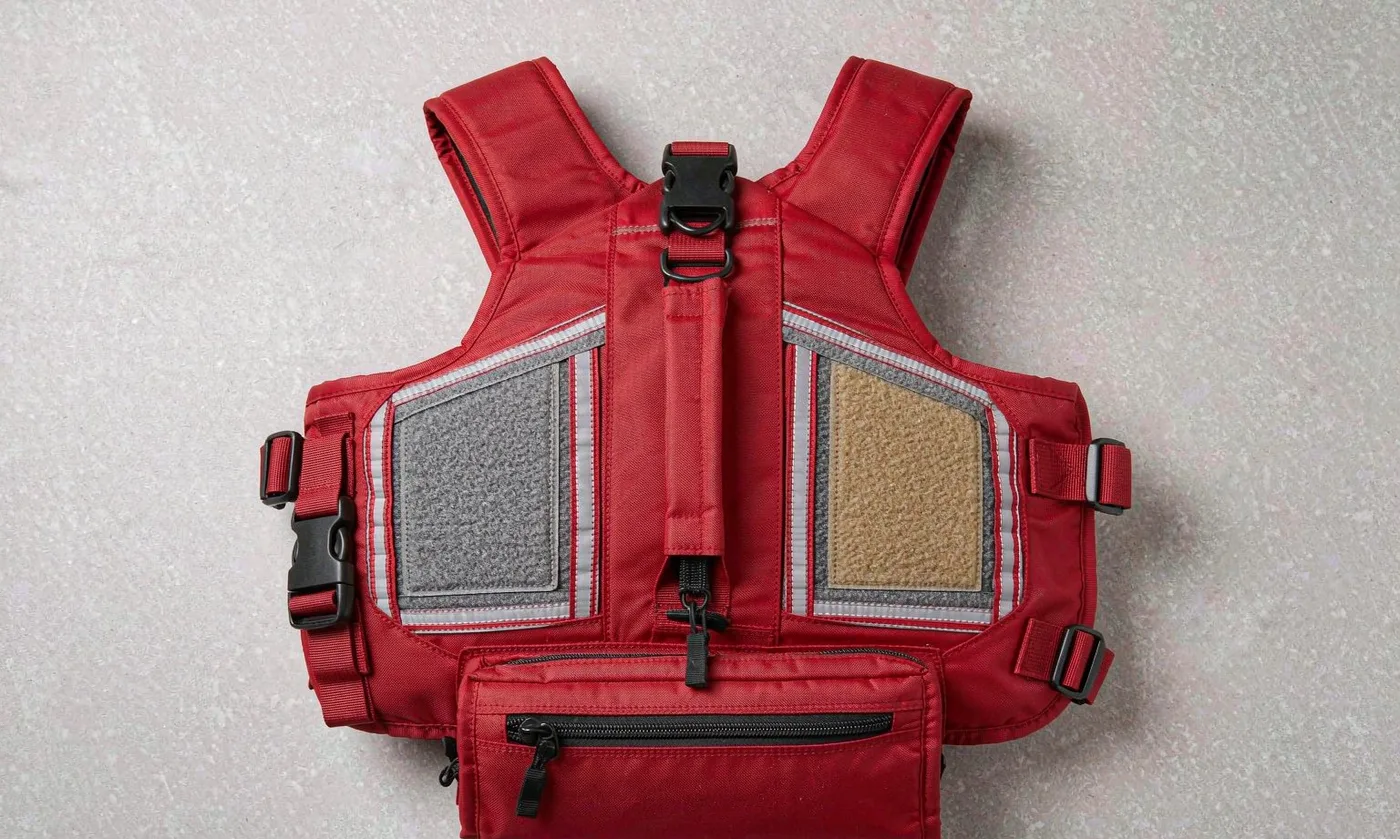
Private label pet bags usually carry the brand in two or three places, each with its own tooling. A damask custom woven label runs 12-25 mm wide, holds up to eight thread colours, and starts at 1,000-3,000 pieces per design because the loom set-up is fixed cost. A rubber or PVC patch adds a mould charge of roughly USD 150-400. Embroidery needs a digitised tape at USD 30-80 per design. A metal zip puller with an engraved logo is the most durable option and the most expensive, with a mould at USD 800-4,500 by cavity count.
Barcodes, hang tags and retail identifiers
The hang tag is the one asset that carries information rather than identity: fibre content, care instructions, country of origin, your barcode and any market warning text. On private label pet bags it is also where the origin statement and the barcode are reconciled with the box artwork - three documents that must agree before anything is printed.
Buy your own GS1 prefix and issue GTIN-13 or UPC-A numbers in your own legal entity. Never reuse a number issued to a distributor: marketplaces validate the registrant, and a mismatched barcode cannot be fixed after 2,000 units are printed.
| Asset | Specification required | Typical MOQ or tooling | Lead time if late |
|---|---|---|---|
| Vector logo artwork | .ai/.eps/.svg, text outlined | No charge | One sample round |
| Woven label | Width, fold, thread colours | 1,000-3,000 pcs per design | 10-15 days |
| Hang tag | Dieline, barcode, origin, care text | 500-1,000 pcs run | 7-12 days |
| Retail box | Dieline, board grade, print colours | Die tool USD 200-500 | 20-30 days |
| GS1 barcode | GTIN in brand owner name | Annual GS1 fee | Blocks packaging print |
Freeze the asset checklist in week one: private label pet bags are only as fast as their slowest brand asset.
Packaging and Print Collateral: The Second Product You Buy
Packaging is a second product with its own minimum quantity, its own tooling and its own lead time, and in a private label pet carrier launch it is the item most often forgotten until week nine. Budget 6-18 percent of unit cost depending on format, and note that the packaging supplier works to a longer calendar than the sewing line: while bulk production runs 35-50 days, a rigid box can need 25-40 days of its own and a printed mailer needs 12-20 days after artwork sign-off.
Three formats cover most programmes. A corrugated mailer in 200-350 gsm kraft suits direct-to-consumer dispatch and starts at 500-1,000 pieces because plate and die are fixed costs. A retail box - rigid or folding carton - suits shelf and gifting, carries a die tool of USD 200-500 plus print plates at USD 60-150 per colour, and is where most brand impression money goes. A printed poly bag is the cheapest option and the right one for bulk marketplace fulfilment, but it carries almost no brand value and, in the United States, must carry the required suffocation warning in the specified format and type size.
Format is a channel decision rather than a taste decision. If most units ship to a fulfilment centre for single-unit dispatch, the outer box does the work and the inner packaging is a dust cover. If the product sits on a shelf, the box is the advertisement and has to survive being handled, stacked and re-stacked. Flat-pack patterns reduce both packaging volume and freight cost, which is worth modelling before the dieline is frozen rather than after.
Insert cards and instruction sheets
For private label pet bags the insert set is where the brand earns its review score. A thank-you card, a care card, a warranty registration card and a QR code to a help page cost cents per unit in total and are the cheapest available lever on returns and repeat purchase. Keep copy short, print it in the languages of the destination market, and back any sustainability claim with a document - an FSC chain-of-custody reference for paper, or a certificate number for recycled fabric.
Instruction sheets are also where liability is managed. A pet carrier should state maximum pet weight, intended use, cleaning method, and that it is not a vehicle restraint unless tested as one. Two clear paragraphs cost nothing and materially reduce the argument that follows a damage claim.
The conclusion to carry into planning: packaging is not a finishing detail, it is a parallel workstream with its own supplier, its own tooling and its own approval date, scheduled backwards from the same cargo date as the bag.
Compliance, Labelling and Market Access
Compliance for a private label pet carrier is a first-season fixed cost, not a per-order variable, and the mistake that damages most launches is treating it as an afterthought once production has started. Three regimes matter for pet soft goods sold into North America and Europe, and each asks for a different document.
The Consumer Product Safety Improvement Act administered by the U.S. Consumer Product Safety Commission sets substrate limits - 100 ppm total lead and 0.1 percent for certain phthalates - and imposes tracking-label and certification duties on regulated categories. Pet carriers are not children's products, but most US retailers and marketplaces apply the same documentation expectation to any soft goods article with a coated textile or metal component, because their own compliance teams are audited against it. Practically, that means lead and phthalate tests on the coated shell, on printed areas and on plastic hardware, held on file with the test house report number. Check current CPSC business guidance before finalising any listing claim.
For private label pet bags sold into the European market, REACH requires that articles contain no SVHC candidate-list substance above 0.1 percent weight by weight without supply-chain communication, and restricts a longer list outright in Annex XVII. For California, Proposition 65 requires a clear warning unless exposure can be shown below the applicable safe harbour, and the list is revised regularly, so the warning decision must be revisited each season rather than made once.
Certification and origin marking
Two voluntary certifications appear in most briefs. OEKO-TEX Standard 100 certifies that every component of a textile article has been tested against a defined limit list, which answers a retailer questionnaire in one document. ISO 9001 certifies the quality management system behind the process rather than the product, and is why a documented inspection and corrective-action loop exists at all. ASTM International methods are the usual reference for hardware corrosion, zip cycling and colour-fastness work.
Origin marking is a customs matter and the source of the most avoidable delays. The statement must be permanent on the product, legible at point of sale, and consistent across the sewn label, hang tag, retail box, export carton, commercial invoice and packing list. If you print "recycled polyester" on the box, you need the transaction certificate behind it.
| Document | Covers | Cost per material | Validity |
|---|---|---|---|
| Lead and phthalate | Coated shell, print, plastic hardware | USD 120-260 | 12 months or on change |
| REACH SVHC screening | Shell, lining, webbing, trims | USD 180-400 | 12 months or on change |
| Azo dye and formaldehyde | All dyed textiles | USD 90-200 | 12 months |
| Nickel release and salt spray | Metal hardware and plating | USD 120-300 | 12 months or on change |
| OEKO-TEX Standard 100 | Whole article, all components | USD 900-2,200 | 12 months |
Plan USD 1,200-3,500 for a complete first-season compliance document pack covering shell, lining, webbing and hardware. Once a material set passes, reorders need no retest unless a material or its material supplier changes - a further reason to nominate components by name rather than by description.
Intellectual Property and Tooling Ownership
Tooling is the part of a private label pet carrier programme that behaves like intellectual property but is usually discussed like a purchase order line. It deserves better, because it is the cheapest clause to negotiate up front and the most expensive thing to argue about later. The tooling schedule also sits on the critical path alongside packaging: a mould ordered in week four rather than week one can move the whole launch by three weeks.
Tooling is anything made specifically for your programme that has no use to anyone else: the injection mould for a custom buckle or zip puller, the die-cut tool for a rubber patch, the steel die for a retail box, the embroidery digitisation file, the print screens, the heat-transfer film - and, less obviously, the tech pack, the graded pattern and the bill of materials themselves. Typical figures: hardware mould USD 800-4,500 by cavity count and steel grade, patch mould USD 150-400, box die USD 200-500, embroidery tape USD 30-80, print screen USD 25-60 per colour per placement. None is large alone, but a full asset set on a two-colourway launch lands between USD 1,500 and 6,000 before a single unit is sewn.
The market standard is straightforward: the brand owner owns the tools it paid for. What makes that real is documentation rather than intent.
Who owns what, written down
Require that every tool carry your style number, be photographed, and appear as a numbered line on the purchase order with the amount paid and the ownership statement attached. Require a stated storage period - 24 months of inactivity is normal - and a stated right to have tools transferred or destroyed on request. Without those three items an ownership claim is a conversation, not a contract. Pattern and design rights need the same treatment: negotiate assignment of design rights or a defined exclusivity naming the silhouette, territory, category and a start date tied to first shipment rather than to signature. "Exclusivity" written alone is unenforceable in practice.
On your side, register the trademark in every market before you print 5,000 units. Printing a mark you do not own, or one confusingly similar to a registered mark, is your liability - and a marketplace takedown on a container of finished goods is unrecoverable. Put an NDA in place before the tech pack is shared, and use coded style numbers in production documents so a specification sheet in the wrong hands does not name your brand.
The conclusion worth writing into every contract: tooling ownership, storage period and permitted use belong on the purchase order itself, not in an email thread, because the purchase order is the document both parties actually keep.
The Cost Model: Where the Money Actually Goes
A private label pet carrier programme has two cost structures running in parallel - a one-off structure amortised across units, and a unit structure that repeats on every order. Brands that plan only the second one are the brands that run out of money in season two.
Four one-off buckets. Tooling, typically USD 1,500-6,000 for a full asset set. Compliance testing, USD 1,200-3,500 for a first-season pack. Packaging tooling and plates, USD 300-900. Sample development, usually two to three rounds at USD 60-150 per sample plus courier at USD 60-120 per shipment each way. Add photography or 3D rendering if you need launch assets, which for an e-commerce-first brand is a real USD 500-3,000 rather than a nice-to-have.
The arithmetic that matters is amortisation. USD 5,100 of one-off cost spread over 1,000 units adds USD 5.10 to every unit; spread over 5,000 units across two seasons it adds USD 1.02. This is why first drop size is a margin decision rather than only a cash decision, and why season two is normally where a private label line becomes profitable.
Unit cost drivers and landed margin
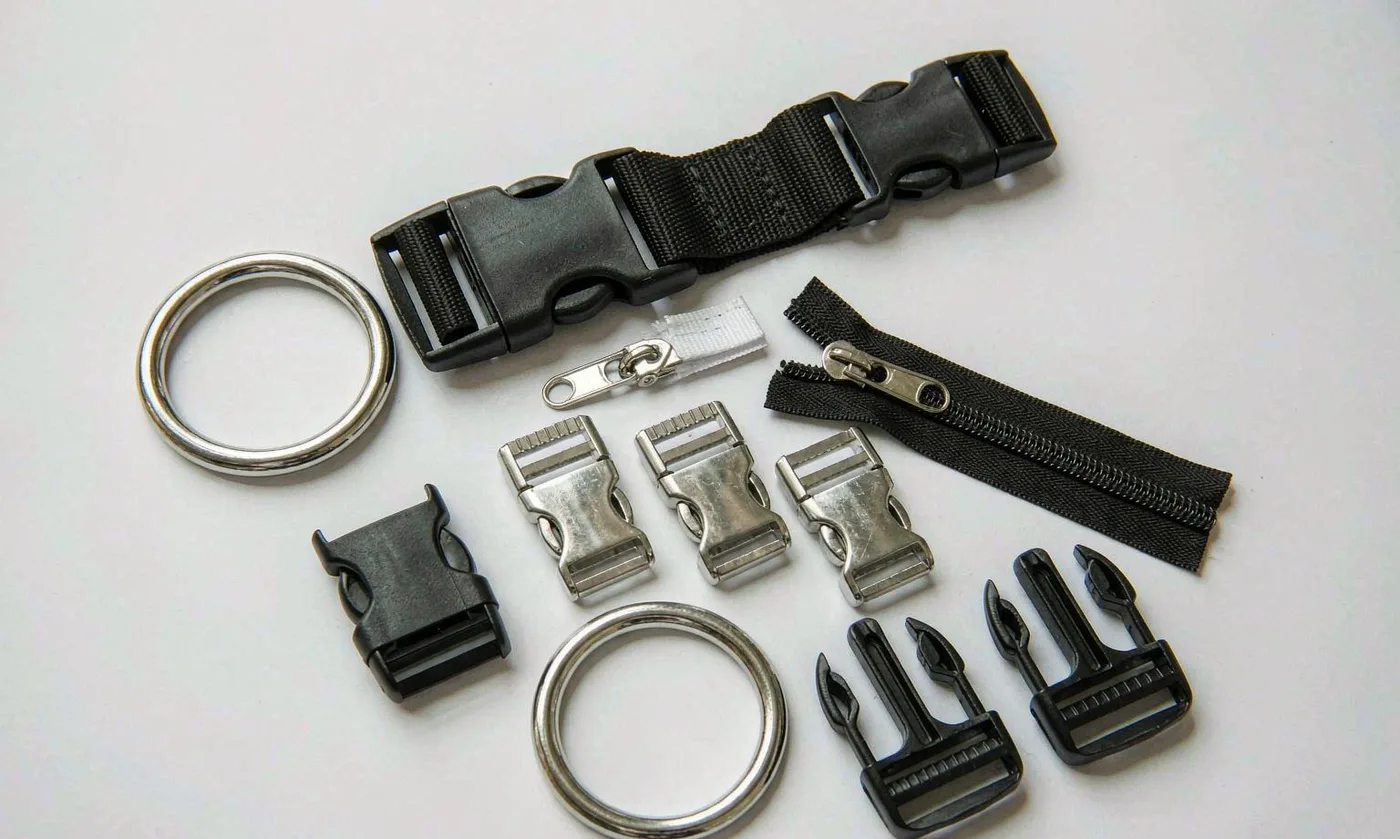
Five drivers, in descending order of impact. Shell fabric: 600D polyester at roughly USD 0.9-1.4 per metre against 900D at USD 1.3-1.9 moves unit cost more than most decoration decisions. Hardware: a named Japanese zip against a domestic equivalent is USD 0.30-0.90 per unit and is visible every time the product opens. Decoration: screen print USD 0.15-0.45 per placement, embroidery USD 0.35-1.20 by stitch count, woven label USD 0.06-0.18, rubber patch USD 0.35-0.90. Structure: a framed baseboard adds USD 0.80-2.50 and is what stops floor sag above roughly 10 kg. Packaging: USD 0.60-3.50 by format. On a custom pet carrier, the frame and the hardware are the two lines that move most, and both belong in the brief rather than in the quotation.
| Line | Illustrative figure | Note |
|---|---|---|
| Tooling and asset set | USD 2,600 | Patch mould, tape, screens |
| Compliance testing | USD 2,400 | Shell, lining, webbing, hardware |
| Packaging tooling and plates | USD 600 | Mailer die, two-colour print |
| Samples and freight | USD 900 | Three rounds, courier both ways |
| One-off amortised per unit | USD 3.25 | Over 2,000 units |
| FOB Xiamen unit price | USD 18.40 | 600D shell, named zip, two placements |
| Freight, duty and inland | USD 3.60 | Sea LCL basis |
| Landed unit cost | USD 25.25 | Including amortised one-offs |
| Retail price | USD 79.99 | 68 percent gross margin before fees |
| Contribution per unit | USD 32.74 | After channel fees, before advertising |
Sea freight runs roughly USD 60-120 per cubic metre on LCL at the time of writing and air freight roughly USD 4.5-7.5 per kilogram, which is only rational for a launch drop where the stockout cost exceeds the premium. A private label pet carrier programme rarely fails on unit price; it fails because one-off costs were not amortised across enough units in the first two seasons. Run a full unit economics model before the brief is signed, not after the first container ships.
Launch Timing: First Drop, Reorder Cadence and Dye Lot Control
Timing is where private label pet carrier programmes are won or lost, because the calendar is longer than most brand owners assume and is set by the slowest workstream, not the sewing line.
MOQ 500 applies per colourway, which is the most frequently misread number in this industry: it is not 500 across the whole order. One silhouette in two colourways is 1,000 pieces; a three-step size ladder in one colourway is 1,500; two sizes in two colourways is 2,000. Where quantities can be split across sizes and colourways within one fabric run, do that - the dye lot is shared, so the effective minimum is per colourway rather than per size, and mixing sizes inside a colourway costs far less than adding a second dye lot.
A realistic first drop for a brand launching into one channel is 1,000-2,000 units: enough to amortise one-off costs into a defensible landed price, enough to generate a review base, and small enough that a slow first quarter does not trap all the working capital. Buy less only when the objective is explicitly a market test rather than a margin.
Reorder cadence and the real lead time
The reorder pattern for private label pet bags has to run on the calendar rather than on sell-through. Add 35-50 days of bulk production to 30-35 days of sea transit and 10-14 days for clearance and fulfilment receiving, and the realistic figure is 75-100 days from purchase order to sellable inventory. If cover drops below eight weeks before you order, you will stock out; the usual trigger is a reorder placed at 10-12 weeks of remaining cover. Cash matters as much as calendar: with T/T 30/70, most of the cash is committed before a single unit sells.
Dye lot and component continuity
Colour continuity is a controlled process, not a hope. Approve lab dips against a Pantone reference under a D65 light box, seal a retained swatch, and compare it against a cutting swatch at inspection. Delta E of 1.0-1.5 is a realistic tolerance on coated polyester; anything looser shows when a season-one and a season-two unit sit together on a shelf. Order 3-5 percent extra fabric on the first run, and re-approve the dye lot whenever the fabric mill changes. Lock the zip brand, webbing supplier and plating specification into the tech pack - if any change, salt spray, nickel release and colour fastness must be repeated.
| Week | Workstream | Deliverable |
|---|---|---|
| 0 | Brief and asset freeze | Signed spec, vector artwork, Pantone refs |
| 1-3 | Sampling | Prototype in 6-10 working days, two to three rounds |
| 3-5 | Packaging and compliance | Dieline approved, test pack submitted |
| 5 | Golden sample sign-off | Physical reference sealed, deposit cleared |
| 5-11 | Bulk production 35-50 days | Cutting, sewing, decoration, packing |
| 11 | AQL 2.5 inspection | Written report, release or corrective action |
| 11-15 | Transit and receiving | Freight, clearance, delivery to channel |
| 22 | Reorder decision | Second drop placed on cover, not on sell-out |
A reorder placed at sell-out is a stockout: buy on cover, and build the plan around 75-100 days door to door.
Seven Mistakes That Delay a Private Label Launch
Every one of the following costs a minimum of 6-10 working days and a maximum of a full 35-50 day production slot. All seven are procedural rather than technical, which is what makes them avoidable - private label pet bags fail procedurally far more often than they fail technically.
First, artwork arrives as a JPEG or a screenshot and has to be redrawn before a woven label, an embroidery tape or a print screen can be made: one full sample round lost. Second, the brand owner has not registered the trademark or bought a GS1 prefix by the time packaging goes to print, so the print run is held while a barcode is issued. Third, colour is approved on a laptop screen rather than under a controlled light box against a sealed swatch, which guarantees a delta E argument at bulk with no document to resolve it. Fourth, a decoration method is added after sampling has started - a rubber patch in week four, say - which triggers a new mould, a new attachment test and another round.
Fifth, hardware is described rather than nominated: "black metal zip" instead of a named brand, gauge and plating duration, which permits a substitution at bulk that no inspection can reject because nothing was specified. Sixth, MOQ 500 is read as a total order quantity rather than a per-colourway minimum, so the brand discovers at quotation stage that three colourways is three times the fabric commitment budgeted. Seventh, compliance testing is not budgeted, so the test pack is ordered after production begins and the launch slips a full cycle while reports are issued.
The eighth item that matters most
No golden sample is physically signed and retained. Without one, "bulk does not match the sample" is two opinions rather than a measurable difference, and there is no reference against which an inspection checklist result can be judged.
The mitigation is unglamorous and effective for any brand programme: one frozen specification, one signed golden sample held under controlled conditions, one named decision maker on the brand side, and one shared calendar that treats packaging and testing as workstreams with their own due dates.
Season Two: Turning One Product into a Brand Programme
The commercial test of a private label pet carrier programme is not whether season one sells out. It is whether season two is cheaper, faster and less risky than season one. If it is not, the brand assets were never really built.
Adding a third size is the cheapest growth available: the pattern is graded rather than drafted, the shell fabric, hardware set and decoration files are reused, and the only genuinely new tooling is a packaging size. Marketing value is disproportionate to cost, because a three-step ladder lets a retailer list a range rather than a single SKU and lifts average order value without touching the supply chain. Plan the ladder in season one - grading rules and packaging nest are far easier to design together than to retrofit.
Keep one core colour in continuous production and rotate one or two seasonal colours around it. The core colour carries reorder volume and protects the dye lot relationship with the mill; the seasonal colours create marketing moments without committing to 500 pieces of an unproven shade. Gift sets and limited drops are how private label pet bags extend a range without new tooling, because every component already exists.
What actually gets cheaper
In season two the woven label artwork, hang tag dieline, retail box die, instruction copy and compliance reports for an unchanged material set are all reusable assets, which typically removes 40-60 percent of development cost and two to four weeks from the calendar. Sample rounds usually drop from three to one, because the platform, the fit and the decoration behaviour are already known.
Every custom pet carrier platform that reaches season two should be cheaper to develop than it was to launch. That is the real argument for private label over white label, and the reason to insist on owning your tooling and documentation from the first order. An own brand pet carrier is not a product you bought; it is a specification, an asset set and a set of test reports you own - and those three things are what make the second season a brand programme rather than a repeat purchase.
SGS-verified production base
- SGS-verified production floor of 4,950 m², 149 machines, 7 assembly lines
- 137-person team running pet carrier programmes since 2014
- 200,000 units monthly, audited to BSCI and ISO 9001
People Also Ask
What is a private label pet carrier?
A private label pet carrier is a bag built to your written specification - shell fabric, lining, colourway, hardware finish and size ladder - and branded entirely with your marks, while using an existing, proven pattern platform rather than a ground-up design. You own the brand assets and the tooling you paid for.
What is the difference between private label and white label pet bags?
White label means applying your logo to an existing product that someone else specified, with no control over fabric, hardware or colour. Private label pet bags are built to your specification, so components are nominated by name in a tech pack and bulk is inspected against that document.
What is the minimum order quantity for a private label pet carrier?
MOQ 500 pieces per colourway, because the fabric dye lot, print screen set and woven label run have to be amortised. It is not 500 across the whole order: two colourways is 1,000 pieces and a three-size ladder in one colourway is 1,500 pieces.
How long does a private label pet bag programme take?
Allow 6-10 working days per sample round, 35-50 days for bulk production after sample sign-off and deposit clearance, and 30-35 days of sea transit. Door to door, plan 75-100 days from brief to sellable inventory.
Who owns the moulds and tooling in a private label programme?
The brand owner owns the tooling it paid for, provided that is documented. Insist that every tool carries your style number, is photographed, and appears as a numbered line on the purchase order with the amount paid, the ownership statement and a stated storage period.
How much does a private label pet carrier programme cost to start?
Budget USD 1,500-6,000 for tooling, USD 1,200-3,500 for first-season compliance testing, USD 300-900 for packaging tooling and plates, and USD 60-150 per sample plus courier. Those one-off costs are amortised across the first two seasons.
Frequently Asked Questions
Can I put my logo on an existing bag design instead of developing one?
Yes. That is the fastest route to market: an existing pattern platform, your chosen fabric, your colourway, and your logo applied by print, embroidery, woven label or patch. It still runs at MOQ 500 per colourway because the dye lot and the brand asset runs are the fixed cost, not the pattern.
Do I need my own GS1 barcode?
Yes, and it should be issued in your own legal entity name. Marketplaces increasingly validate the registrant against the brand on the listing, and a barcode issued to a distributor or a trading partner is a listing-level failure that cannot be corrected after packaging is printed.
Can I order fewer than 500 pieces for a first test?
Below 500 pieces per colourway the dye lot, print screens and label runs cannot be amortised, so a branded programme does not work at that scale. If the objective is a channel test rather than a margin, a white label route at 50-200 pieces is the appropriate tool.
Can the 500-piece minimum be split across sizes?
Yes, within one colourway, because the dye lot is shared - a three-size ladder at 500 pieces per colourway is 1,500 units, not 500. Splitting across two colourways does not work the same way, since each colourway carries its own dye lot and its own minimum.
Which file formats do you need for my logo?
Vector artwork in .ai, .eps or .svg with all text converted to outlines, plus a Pantone TCX reference for each colour. One source file then serves screen print separations, embroidery digitisation, woven label weaving and patch mould cutting without redrawing.
Can you work from a JPEG or a photo of my logo?
Only for heat transfer or sublimation, and only at 300 dpi or higher at final print size. For embroidery, woven labels or a patch mould the artwork has to be redrawn as vector first, which costs one sample round plus the risk of interpretation errors on the finished run.
Do you arrange compliance testing, or do I?
Either arrangement works, but the reports should be issued to your legal entity because you are the brand owner placing the goods on the market. We coordinate the test pack through accredited laboratories and supply the material set; the brand owner holds the certificates.
Can you supply OEKO-TEX certified fabrics?
Yes, where shell, lining and webbing come from material suppliers holding current certificates. Request it at brief stage rather than at sampling, because certified materials carry their own minimum quantities and can add two to three weeks to material lead time.
Will you sell my design to another brand?
Not the tooling you paid for, and not a pattern developed exclusively for you. Decoration artwork, custom hardware moulds and commissioned patterns are held against your style number; shared platform silhouettes stay available to other programmes unless an exclusivity clause names the style, territory and period.
Do you sign an NDA before I share my tech pack?
Yes, and we recommend it before any specification is exchanged. We also use coded style numbers in production documentation so that a specification sheet does not identify your brand if it circulates.
Can I audit the production facility?
Yes. The SGS-verified production base is 4,950 square metres with 137 people across 7 production lines and 149 machines, audited to BSCI and ISO 9001, and brand owners or their appointed inspection firms are welcome by appointment. Existing audit reports can be shared before a visit.
What payment terms apply to a first order?
T/T 30/70: thirty percent deposit at order placement, seventy percent against the shipping documents. FOB Xiamen is the standard quotation basis, so freight, duty and inland delivery sit with the brand owner or its appointed forwarder.
Can you ship to Amazon FBA or a third-party logistics provider directly?
Yes. Carton quantities, label placement and pallet configuration are planned to the receiving requirements of the destination, and FNSKU labelling can be applied at packing. Give the receiving specification at quotation stage because it affects carton count and packing cost.
Who is responsible for country of origin labelling?
The brand owner is responsible for the statement, and we are responsible for applying it consistently to the sewn label, the hang tag, the retail box and the export carton. Origin text must also match the commercial invoice and packing list, so it is written once and reused across every document.
How do you keep colour consistent between my first and second order?
Lab dips are approved against a Pantone reference under a D65 light box, a retained swatch is sealed, and every bulk run is compared against it at inspection. Delta E of 1.0-1.5 is a realistic commercial tolerance on coated polyester, and the dye lot is re-approved whenever the fabric source changes.
What happens if bulk production does not match the approved sample?
The comparison is made against the physically signed golden sample and the written specification, not against a photograph. Where a defect rate exceeds the AQL 2.5 acceptance threshold the shipment is held for rework or replacement before release, and the corrective action is documented.
Can I change packaging artwork for the second season?
Yes, and it is usually cheaper than expected because the dieline and die tool already exist - only the print plates and the print run change. Keep the dieline stable and an artwork refresh stays in the hundreds rather than the thousands.
Do you offer dropshipping or single-unit fulfilment?
No. This is a bulk brand programme with a 500-piece per colourway floor, quoted FOB Xiamen and shipped by carton or container. Single-unit fulfilment belongs with your own 3PL or a marketplace fulfilment service.
Talk to QUANZHOU JUNYUAN BAGS about a custom pet carrier programme: MOQ 500 pieces per colourway, samples in 6-10 working days, bulk production in 35-50 days under AQL 2.5 inspection.
Get a free quote Request a sample