Custom Pet Carrier: Design and Order Process
A custom pet carrier programme runs in eight steps and about 8 to 12 weeks from signed brief to loaded container: brief, size and structure, fabric and hardware, branding, sampling at 6-10 working days, approval, bulk production at 35-50 days, then AQL 2.5 inspection and FOB Xiamen shipment. Minimum order is 500 pieces per colourway. Most first programmes land between USD 9 and USD 26 per unit, ex-factory, before freight.
Executive summary
This page is written for brand owners, retail buyers and marketplace sellers who already know what they want to sell and now have to get it built. It follows one order from the first conversation to the second season and names the numbers that decide a programme: what a brief must contain, how interior dimensions derive from a weight band, which fabric and hardware choices move cost by dollars rather than cents, and what a sampling round can and cannot prove.
The recurring failure in this category is not quality. It is sequence. Brands approve a silhouette before they fix a weight band, and choose a shell fabric before deciding whether the bag has to survive a washing machine. Every one of those inversions costs a sampling round, and every sampling round costs 10 to 15 calendar days.
Commercial terms are constant across our custom programmes: MOQ 500 pieces per colourway, samples in 6-10 working days from a confirmed tech pack, bulk production 35-50 days after approval sample sign-off, and AQL 2.5 inspection on every shipment before release. Payment is T/T 30/70 and the default trade term is FOB Xiamen. Our production team builds these programmes through an SGS-verified production base audited to BSCI and ISO 9001, benchmarking welfare expectations against guidance from the American Veterinary Medical Association.
Start With the Brief: Animal, Scenario and Channel
Every custom pet carrier programme that runs badly starts the same way: with a reference photograph and a target price. Both are useful inputs and neither is a brief. A brief that a production team can act on answers three questions before any pattern work begins — which animal, which scenario, and which channel. Answer those three in writing and the remaining decisions, from fabric weight to closure type to logo method, largely resolve themselves. Skip them and you will spend two sampling rounds discovering that a bag designed for a 4 kg cat in an apartment does not work for a 9 kg terrier in an airport terminal.
Brief quality is also the only variable in the whole programme that the brand controls completely. Everything after it — material availability, lab queues, vessel space — is shared risk. That asymmetry is worth taking seriously, because the cost of a weak brief is not abstract. It is a rejected first sample, a re-cut pattern, a second set of courier charges and 10 to 15 calendar days that no amount of urgency later in the process can recover.
The three questions below are the ones we work through in the first conversation. None of them requires technical knowledge, all three require a decision, and the order matters: animal first, scenario second, channel third. Reversing that order is how programmes end up with a beautiful sample that nobody can sell at the price the buyer quoted.
A brief is one page. It is not a specification — the specification comes later, in the tech pack — and it should not contain fabric codes or stitch counts. It contains three decisions, the reasoning behind each, and the commercial frame: target quantity, target retail price and ship window. One page, three decisions.
Weight band before breed name
Breed names are a marketing decision; load is an engineering one. A "French bulldog carrier" and a "pug carrier" are the same product with different hang tags, because both animals sit in roughly the same weight band with the same chest-depth-to-length ratio. What actually changes the pattern is body geometry: a long-backed, short-legged animal needs floor length and a low entry height, while a deep-chested, tall animal needs interior height and a lower centre of gravity so the bag does not tip when the animal shifts its weight. Two animals of identical weight can need completely different floor plans.
So write the brief as a weight band plus a dimension envelope, not as a breed name. Then design the floor panel to the upper part of that band, because a bag that is slightly generous reads as comfortable while a bag that is slightly tight reads as a defect the moment the consumer tries it at home. In practice we recommend designing the floor to roughly the 75th percentile of the band and the entry opening to the 90th, which means measuring both.
The measuring instruction is simple and worth doing yourself rather than copying from a competitor listing: measure the animal standing, from the base of the tail to the shoulder blade, for length; measure at the widest point of the ribcage for width; and measure from the floor to the top of the head, or to the top of the ear if the ears stand, for height. Add 5 to 8 cm to length and 3 to 5 cm to width and height. That result is your interior envelope, and it is the single most useful number you can bring to the first conversation.
Scenario before silhouette
Scenario is the strongest predictor of structure, and it is where most first-time programmes guess wrong. A bag built for a veterinary reception area spends its life stationary on a floor or a bench, needs a wide or full opening so a clinician can see the whole animal, and needs a lining that survives disinfectant wiped over it several times a day. A bag built for cabin air travel spends its life under a seat, needs a compressible frame, a soft upper edge, and a ventilation layout that still works when the bag is wedged into a 20 cm gap with a seatbelt strap across it.
A bag built for urban everyday use is carried on a shoulder for 30 minutes at a time, so strap geometry, padding and weight distribution matter far more than opening width. A bag built for car and hiking use sees longer durations, more motion and more dirt, which pushes towards a washable lining, a drainage-friendly base and abrasion resistance on the underside rather than on the front panel. A bag built for grooming or professional handling is used by someone who is being paid and who will judge it in the first ten seconds.
Pick one primary scenario and one secondary, and write both down. A product that is genuinely good at three scenarios is usually mediocre at all three, and the returns data will say so within a season. Where a range has to cover several scenarios, the honest answer is usually two sizes of the same pattern rather than one product that compromises on everything.
Channel before cost target
Channel sets tolerances that have nothing to do with the animal. Marketplace sellers need a product that photographs well at 45 degrees, ships in its own mailer without a second box, and survives a returns cycle — which in practice means a structure that does not permanently crease in transit and a baseboard that can be straightened. Specialty retail needs shelf presence, a hang tag that carries a barcode and a fibre-content statement, and a silhouette that reads from three metres. Veterinary and grooming channels need documentation and cleanability. Promotional programmes need a hard landed cost and are far less tolerant of structural complexity.
State the channel in the brief because it determines packaging, labelling and carton planning, all of which have lead times of their own and all of which are easy to forget until week five.
The same logic applies to the species split. A custom cat carrier sold through a veterinary clinic behaves like medical-adjacent equipment and is judged on cleanability and calm, while a custom dog carrier sold through a pet specialty chain is judged on silhouette and strap comfort. The brief should say which of the two the first order is actually for, because trying to serve both with one specification usually produces a product that is wrong for each.
The takeaway to quote internally: a brief that fixes weight band, primary scenario and sales channel in writing removes roughly one full sampling round, which is 10 to 15 calendar days and one set of courier costs.
Sizing and Structure: Where a Custom Pet Carrier Succeeds or Fails
Sizing is the decision with the longest memory. Once a pattern is cut, the floor panel dimension propagates into the baseboard, the foam insert, the carton, the retail box and eventually the shipping cube of a container. Changing it in week six is possible; changing it cheaply is not. On a custom pet carrier programme that is meant to repeat across seasons, the pattern is the asset — the first order is only the first use of it.
That propagation is why we push sizing decisions to the front of the process even when the buyer would rather start with colours. A 2 cm change to the floor panel sounds trivial and is not: it changes the board, the foam insert, the lining panel, the shell panel, the carton dimension, the number of units per carton and therefore the number of cartons per container. None of those is expensive individually. Together they are the reason a "small tweak" requested after approval tends to be quoted as a full re-development.
The three decisions in this section are the dimensions themselves, the travel constraints that may override them, and the structure family. Work through them in that order, and record the answers in the tech pack rather than in an email thread, because the tech pack is what the pattern is cut from. Where a dimension has to be changed later, change it there and nowhere else, and expect the knock-on list above to follow. A tolerance written once is worth more than three emails confirming a number.
Specify interior dimensions, not exterior ones
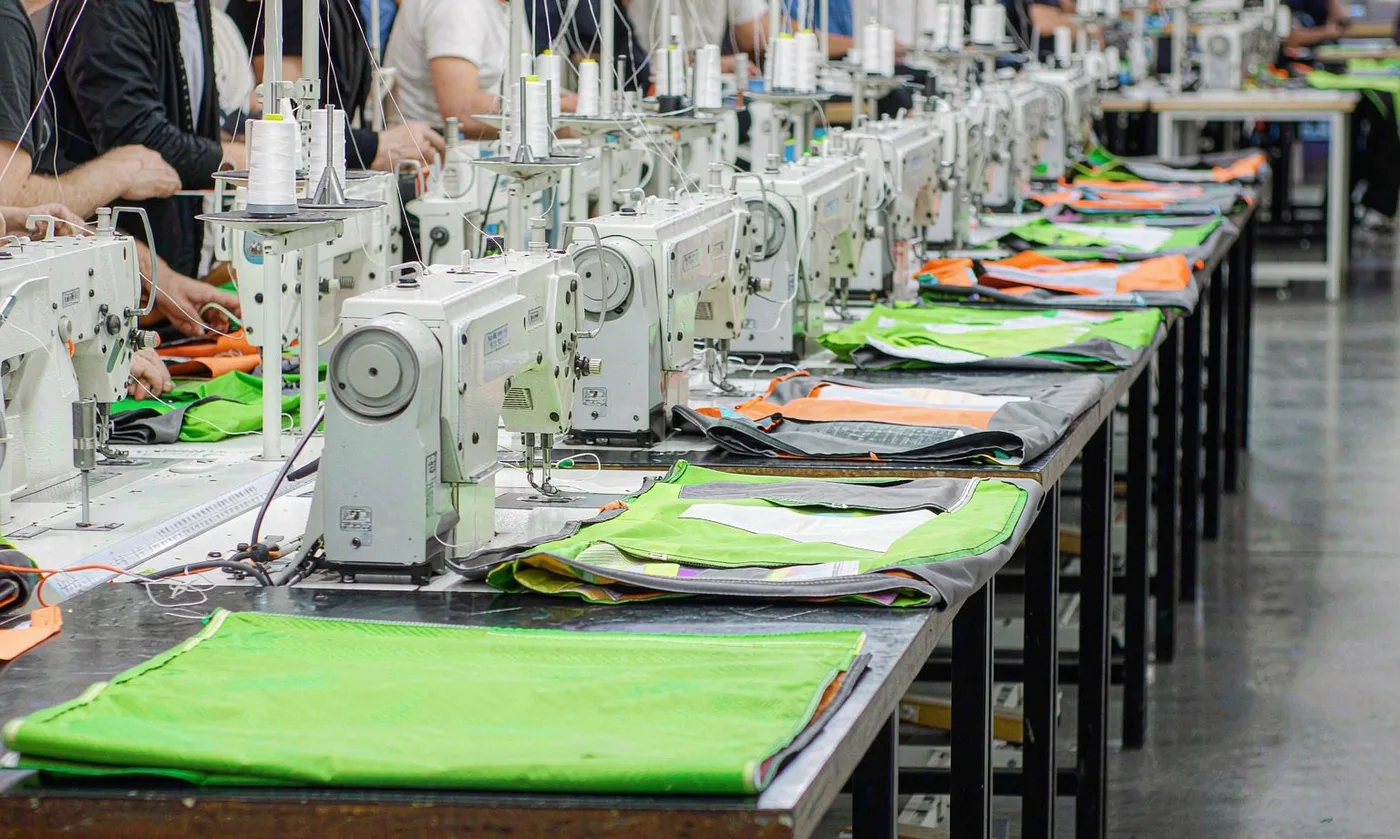
The number that matters to the animal is the interior floor and interior height. Exterior dimensions are a consequence, and they grow by roughly 15 to 25 mm per side once shell fabric, foam and lining are stacked. A brief that says "45 cm wide" without saying which one is measuring will produce a sample that is 4 cm narrower inside than the buyer imagined, and that gap is the most common single cause of a rejected first sample in this category.
Write the spec as three numbers plus a tolerance: interior length, interior width, interior height, each with a plus or minus 5 mm band. Add a separate note for entry opening width, which is measured open and is rarely the same as interior width, and a note for the usable floor area once the baseboard sleeve and any internal tether anchor are accounted for.
| Weight band | Interior L x W x H | Recommended shell | Base construction | Typical primary scenario |
|---|---|---|---|---|
| 0-3 kg (teacup, small cat) | 38 x 24 x 24 cm | 300D-420D polyester, light frame | 3 mm PE board, removable | Cabin travel, short urban trips |
| 3-6 kg (most cats, toy breeds) | 45 x 28 x 28 cm | 600D Oxford or RPET equivalent | 4-5 mm PP board with foam | Everyday carry, clinic visits |
| 6-10 kg (terrier, spaniel) | 52 x 32 x 32 cm | 900D Oxford or coated canvas | Reinforced PP board plus perimeter wire | Car travel, weekend trips |
| 10-15 kg (small medium breeds) | 60 x 36 x 36 cm | 900D Oxford, structured side panels | Honeycomb board plus aluminium edge | Ground transport, grooming |
| 15-25 kg (large breeds) | 68 x 40 x 40 cm | Hard shell or hybrid shell | Moulded base with drainage channel | Crate alternative, professional use |
Read the table as a starting envelope rather than as a standard. It reflects what we see working across several hundred programmes, and it will be wrong for any animal at the extremes of a band — a very long-backed 6 kg dachshund needs the length of the band above it, and a very compact 12 kg bulldog needs the height of the band below.
Cabin and airline programmes carry their own constraints
If the product is sold as cabin-capable, the constraint is not a standard — it is a set of airline policies that overlap but do not agree. Soft-sided construction, a compressible upper section and a leak-proof floor are the three features that appear across most policies; maximum under-seat height typically falls between 20 cm and 25 cm, and the animal is generally expected to be able to stand and turn around. Build the pattern with a compressible top so the stated height is met when the bag is loaded rather than when it is empty on a bench, because a bag that only fits while it is empty is a bag that will be refused at the gate. Two further constraints recur across policies and are worth designing to: the bag usually has to fit entirely within the under-seat footprint, which rules out rigid framing at the corners, and the animal is expected to be able to stand and turn without the fabric distorting.
Ventilation layout changes too. On a cabin product the mesh cannot sit only on the front face, because the front face is frequently the face that ends up against the seat in front. Distribute open area across at least two faces and one upper surface.
Confirm the current text before you print the claim on a hang tag. Our own reference points are the live-animal guidance published by IATA and the passenger-facing rules for US carriers administered by the FAA; the commercial detail, including fees and kennel dimensions, sits with each carrier and changes without notice. For a programme where cabin use is the core selling proposition, the sizing and documentation work is substantial enough to justify its own track — see our dedicated page on custom pet travel bag airline compliance.
Structure families and what each one costs you
Five families cover most of the market: the structured tote, the backpack, the sling, the weekender duffel and the hard-shell hybrid. Structured totes are the cheapest to develop and the most forgiving in sampling. Backpacks add strap geometry, load distribution and back-panel airflow, which typically adds USD 2.40 to 5.80 per unit but roughly doubles the usable weight band because the load moves to the wearer's skeleton. Slings are cheap per unit and narrow in use case, effectively limited to animals under about 5 kg. Weekenders carry the most volume and are the strongest format for a custom pet travel bag positioned at longer trips. Hard-shell hybrids add mould cost and are only justified above roughly 2,000 units per shell.
There is a second cost that rarely appears in a quote and should: development time. A tote can usually be sampled once. A backpack with a shaped back panel and a load-bearing strap system frequently needs two rounds, because the first round proves the bag and the second proves the fit on a human body. Budget the calendar for it rather than discovering it.
When you are building more than one size, treat it as a ladder rather than as separate products: a shared shell fabric, a shared hardware set and a shared brand block across three sizes is what makes a 500-piece-per-colourway minimum commercially workable. The mechanics of that are set out in our material on custom pet bag size ladders, and the breed-band logic behind a dog-focused range is covered under custom dog carrier size programmes.
Quote this internally: interior dimensions with a written tolerance, plus a compressible top for any cabin claim, prevent more first-sample rejections than any other single decision in a custom pet carrier brief.
Shell Fabric, Lining and Hardware: Specifying the Parts That Fail
Material selection is where a custom pet bag either earns its price point or quietly loses it. The failure modes in this category are unglamorous and specific: mesh torn by a claw within three weeks, a baseboard that creases permanently after one wash, a zipper that splits at the curve, a plated hook that turns black in a coastal climate. Each of those has a specification answer, and each answer has a cost.
The reason to be rigorous here is that material faults are the ones that surface after the customer has the product. Construction faults are caught in inspection; a fabric that abrades badly or a plating that tarnishes only appears after weeks of use, at which point it is a review and a return rather than a defect report. The spend is therefore disproportionately worth it: the difference between an adequate and a good specification on this section is typically USD 3 to 6 per unit, which on a product retailing at USD 60 to 90 is not the margin the buyer thinks it is.
Work through the four material groups in order — shell, mesh, internals, hardware — and then deal with the compliance constraints that may override any of them depending on destination market. The ordering is deliberate: shell and mesh are what the customer sees and the animal touches, internals are what determines whether the product still looks right after a month, and hardware is what fails publicly. If the cost has to come out of somewhere, take it out of the internals last.
Shell fabric: choose by abrasion and by hand, in that order
The two numbers that matter on a shell are abrasion resistance and coating type. For soft-sided carriers, 600D Oxford with a PU backing is the commercial default and performs adequately for animals up to about 10 kg; 900D Oxford adds roughly USD 0.85 to 1.60 per unit and is the right call when the custom pet carrier will be dragged, checked as luggage or used professionally. Coated canvas reads more expensive and photographs better but gains weight quickly, which matters on a cabin product where the weight budget is already tight. Microfibre leather gives the strongest visual upgrade with a modest weight penalty and is the usual choice for a fashion-led custom pet carrier.
Coating matters as much as the base cloth. A PU coating gives water resistance and wipe-clean behaviour at low cost; a TPU laminate is more expensive, more durable and more resistant to hydrolysis, which is the failure that shows up as a shell that goes sticky or flaky after a year in a humid warehouse. If the goods will be shipped by sea into a humid market and stored, specify accordingly rather than optimistically.
Hand-feel is the second decision and it is a brand decision, not a technical one. Two fabrics with identical abrasion numbers can read ten dollars apart on a shelf. Ask for both in the sampling round and make the buyer choose with the physical sample in hand, not from a swatch card, because hand-feel is the attribute most often mis-specified remotely and the one most often raised as the reason a first sample is rejected.
Mesh, ventilation and the airflow number nobody prints
Ventilation is usually specified as "mesh panels on three sides", which is not a specification. The useful measure is open area as a percentage of total surface above the floor line, and in this category the workable range is roughly 25 to 35 percent. Below about 20 percent the bag reads closed and reviewers notice; above about 40 percent the structural panels stop doing structural work and the bag slumps. A custom cat carrier sees more claw contact per kilogram of occupant than almost anything else in the category, which is why the mesh specification matters more there than the shell specification does.
Mesh choice follows from that. A fine monofilament mesh resists claw damage well and blocks visibility least, which helps both the animal and the product photography. A heavier textilene-style mesh survives abrasion far better but darkens the interior and complicates photography. Layered constructions — a decorative outer mesh over a finer structural mesh — solve both problems and add about USD 1.10 per unit.
Placement is the part that gets missed. Mesh behind a strap, mesh at floor level where it will be blocked by bedding, and mesh that is covered when the bag is carried against a body all count towards the specified percentage on paper and contribute nothing in use. Draw the panels in the tech pack, not just the count.
Both the open-area calculation and the abrasion comparison are covered in more detail elsewhere on this site; for the purposes of a first brief, what matters is that the two numbers are written down rather than left to the sampling round to reveal.
Lining, padding and the baseboard
Three components below the shell decide whether the product survives contact with an animal. The lining should be a wipe-clean 210D or 420D with a TPU or PEVA face for any programme sold into a clinic, grooming or puppy channel; a plain polyester lining is cheaper and perfectly acceptable for a general retail product. Padding density in the 20 to 28 kg/m3 range gives shape retention without turning the bag into a brick — below 18 the bag collapses in transit photography, above 30 the shipping cube grows and freight per unit climbs.
The baseboard is the least glamorous and most returned-upon component in the entire product. A 4 to 5 mm PP board with a sewn-in sleeve is the standard; a honeycomb board is lighter and stiffer and worth the roughly USD 0.70 premium above the 10 kg band; a fully moulded base with a drainage channel is what a professional-use product needs. Whatever you choose, specify whether it is removable, because washability is a review driver and a fixed board in a washable bag is a contradiction the consumer will find.
One detail that separates a considered specification from a copied one: the sleeve. A board in a sleeve with no closure walks out of position in the wash and comes back at an angle, which is exactly the review photograph nobody wants. Specify a hook-and-loop or a stitched closure on the sleeve opening and the problem disappears for cents.
Lining colour is a real decision and is usually made by default, which is a mistake. A light lining makes the interior visible in photography and makes the bag read larger; a dark lining hides soiling between washes. For a retail product photographed on a marketplace, light usually wins; for a professional-use product, dark does.
Hardware, zippers and finishes
Zippers fail at the curve, not on the straight. Specify a branded zipper for any programme above USD 18 retail equivalent; the cost delta between a YKK and an unbranded equivalent on a carrier this size is typically USD 0.60 to 1.20 per unit, and it is the single cheapest insurance against a review that says "broke in a month". On metal parts, zinc alloy is the sensible default for hooks, adjusters and D-rings because it holds a plated finish and takes thread load well; plain iron is only appropriate where the part is hidden inside the construction.
Zipper gauge matters as much as brand. A #5 coil is the standard for a product this size, and stepping to a #8 on the main opening adds visible bulk and cost but roughly doubles the cycle life. On adjusters, a moulded plastic slider is lighter and cheaper, while a metal one reads better and is the right choice above the mid price point.
Finishes need a test, not a description. A salt-spray result of 24 hours is the minimum we will accept on an exposed metal part for a general retail programme, and 48 hours for anything sold into a coastal market or shipped by sea in peak humidity. Plating faults are also the most common cause of a failed final inspection, because they only appear after the goods have sat in a sealed carton for three weeks in transit humidity.
Name the components on the trim card. A specification that says "metal hook, silver" cannot be repeated, and a second season built on an unnamed part is how a programme quietly drifts away from the approved sample over two or three orders. We name the hardware and material supplier for every component for exactly this reason.
Compliance-facing material decisions
If the goods are going into the EU, the UK or a US retailer with a restricted-substance list, the material decision is made for you before aesthetics enter the room. Textile components destined for skin contact in this category are normally specified to OEKO-TEX STANDARD 100; chemical obligations for substances of very high concern are governed by REACH under ECHA; US market programmes should be checked against the children's-product and general-use rules administered by the U.S. Consumer Product Safety Commission; and California sales add the warning obligations listed by OEHHA under Proposition 65.
The practical instruction is simple: decide the destination market before you approve the trim card. A plating finish or a dyed webbing that is fine for one market can require a full re-sampling in another, and a re-sampling is 10 working days plus a courier.
Two substance groups cause more re-sampling than all the others combined: plasticisers and heavy metals in coatings and in printed inks. If the programme includes a printed panel, a coated base fabric or a coloured metal part, specify those against the destination list up front rather than discovering them at the test report stage.
Retain the certificates. A marketplace or a retailer will ask again in twelve months, and re-testing to answer that request is a cost that a filed folder would have avoided. Keep the test reports with the approval sample record rather than with the commercial paperwork, so that the technical file stays complete when the people who built the order move on.
Branding: Logo, Labels, Tags and Packaging
Branding on a soft good is not a single decision, it is a stack of them, and each layer has its own minimum, its own lead time and its own failure mode. A custom pet carrier typically carries four to seven brand elements: a primary logo on the hero panel, a woven label at a seam or zipper end, a hang tag with retail data, a care label with fibre content and origin, a printed or embossed zipper pull, and the retail or mailer packaging itself.
What makes branding expensive is not the individual elements — most are cheap — but the sequencing. Woven labels have a loom queue, hang tags have a print queue, packaging has both a print queue and its own minimum quantity, and none of those queues cares that the bag is ready. The most common avoidable delay in a first programme is not the bag at all; it is a hang tag ordered after approval.
Brand elements are also where a range either looks like a range or looks like four unrelated products. The discipline is a shared brand block: the same logo position, the same label position and the same hang tag architecture across every size and colourway, so that the shelf reads as one family. It costs nothing to do and it is the difference between a programme and a set of one-off orders. One caution on count, though: more brand elements is not more brand. A carrier with five identity marks reads as unsure of itself, and every additional element is another thing that can be misplaced in production.
Treat brand elements as parallel work, not as a finishing step. Everything in this section can be started during the sampling round, and all of it should be.
Choosing the logo method by panel, not by preference
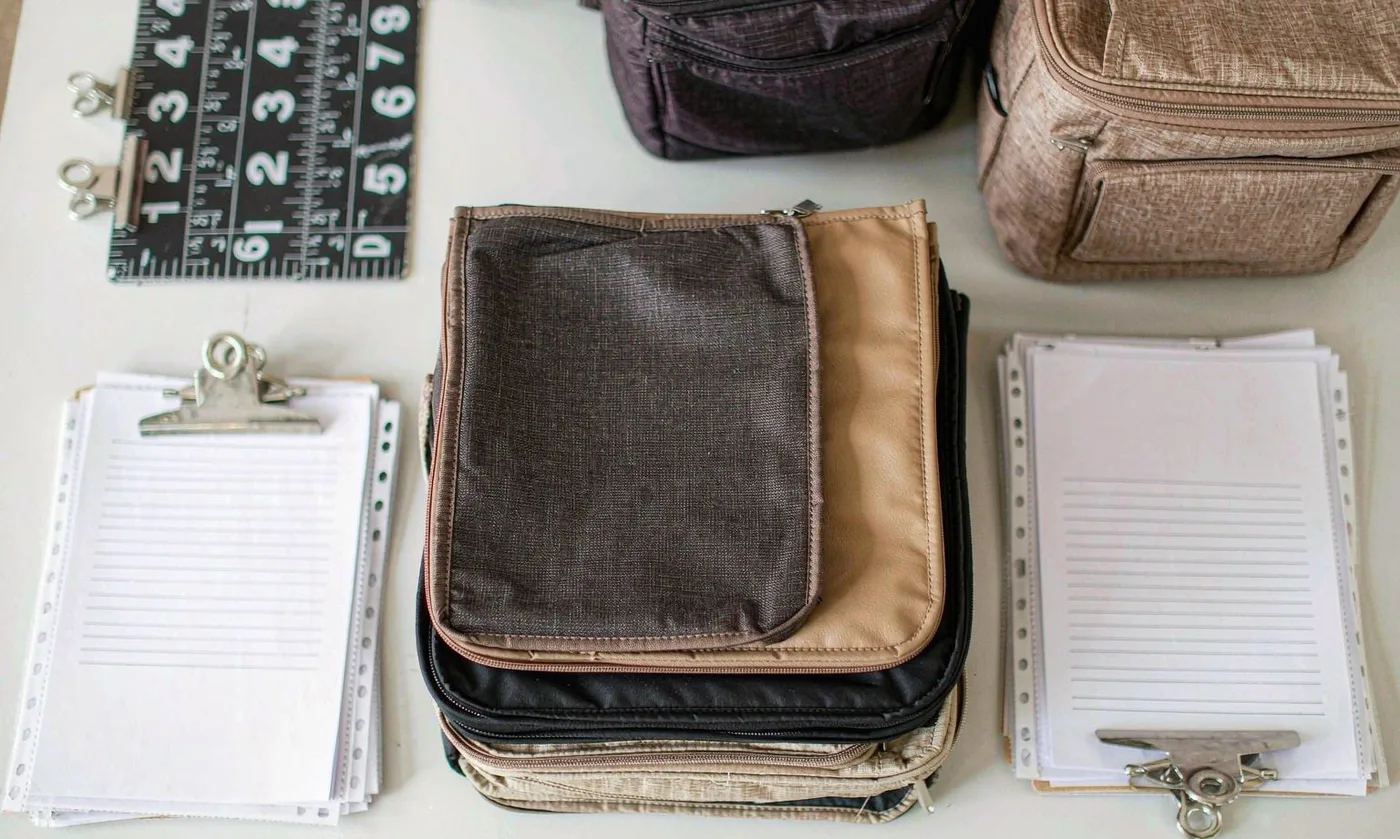
The panel decides the method. Flat, taut panels take embroidery well; padded or quilted panels do not, because the needle has nothing stable to bite into and the stitch will pucker. Curved panels and small areas favour a woven label or a heat-transfer print. Large single-colour marks on a flat face are the cheapest of all and usually the cleanest.
Approximate cost behaviour, per unit at 500 pieces: a flat embroidery of 6,000 to 9,000 stitches runs USD 0.45 to 0.95; a woven label sewn into a seam runs USD 0.12 to 0.30; a silicone or rubber patch runs higher and needs its own tooling; a sublimation print on a white polyester panel costs little per unit but only works on light grounds and needs a dedicated fabric. Setup and digitising charges are one-off and typically USD 40 to 120 per design, charged once and reused on reorders.
Two rules hold across every method we have run. First, keep the mark away from the entry opening: a zipper that runs through a logo is a logo that will never line up twice. Second, keep it away from the base: anything at floor level is on the ground within a week of the customer receiving it. A custom pet carrier is carried at hip height and set down repeatedly, so the hero panel position is roughly the upper third of the front face and nowhere else.
Cost also scales with placement count rather than with design complexity: the same mark in two positions is roughly two logo applications, and a mark that has to align with a seam or a panel edge costs more to place than one centred on a flat face. If the budget is tight, one mark in one strong position beats two in weak ones.
Labels, hang tags and the printed compliance block
Woven labels are the most durable identity element on the product and the cheapest place to put a brand name that will still be legible two years later. They are also the element most often ordered too late, because the loom has its own queue. Plan label artwork in parallel with the sampling round, not after it.
The hang tag is a compliance document as much as a marketing one. It needs the brand block, a scannable barcode with a valid GTIN, the item number, the fibre composition of shell and lining, the country of origin, care instructions and any safety statement your channel requires. Miss the origin statement and the goods can sit at import while the retailer's compliance team asks for it, which is a delay measured in weeks and charged in demurrage.
Placement inside the product matters as much as the artwork. The most durable and most visible position for a woven label is at a zipper end or along a side seam, where it is read every time the bag is opened and is not abraded by the floor. A label sewn flat into the lining is cheaper and is rarely seen again.
The care label sewn into the product carries a shorter version of the same information and must survive washing. Two practical notes: get the fibre percentages right on the first print run, because a corrected label on a finished shipment is a hand-sewing job; and decide whether the label is in one language or several, because a multi-language label is physically larger and needs a seam position planned for it in the pattern rather than added later. Decide the care symbols at the same time — a care label that promises something the construction cannot do is a warranty claim waiting to happen.
Packaging: retail box, mailer and export carton
Packaging is three separate products that people conflate. The retail box or header card is a design deliverable with a print lead time and its own MOQ, usually 500 to 1,000 units. The mailer is a logistics deliverable and only matters if you ship direct to consumer. The export carton is a freight deliverable, and getting the carton count wrong is the most expensive cheap mistake in the whole programme: a 2 cm error in carton dimension across a 40-foot container is a measurable change in landed cost per unit.
Fix all three before the bulk production window opens. Carton specification, pallet pattern and container loading are the kind of work that feels administrative until it costs money, and on a custom pet bag programme it is the export carton, not the retail box, that quietly decides landed cost per unit.
For mailers, the specification that matters is board grade and closure type rather than print, because a mailer that arrives creased defeats the purpose of the printing on it. For poly bags, the requirement is a suffocation warning and, in several markets, a specific print size and language — a compliance detail that is easy to miss and expensive to fix once 5,000 bags are printed.
One more distinction that saves money: retail packaging is where brands overspend on a first order, and protection is where they underspend. A rigid box looks right and adds USD 1.80 to 4.50 per unit; a carton with insufficient board strength saves cents and costs a season of damage claims. Spend on the box if the channel demands it, but never at the expense of the carton.
Sampling: What the First 6-10 Working Days Actually Produce
Sampling is the only phase of a custom pet carrier programme where information is cheap. Everything after it costs tooling, fabric commitments and line time. It is worth being precise about what a sample round can prove and what it cannot, because the most expensive sampling outcome is not a rejected sample — it is an approved sample that was reviewed against the wrong criteria.
The clock is also frequently misunderstood. Six to ten working days is the build time for a sample from a confirmed tech pack; it is not the elapsed time from first enquiry to first sample in a buyer's hands, and the gap between those two figures is almost entirely made of unanswered questions about artwork, hardware references and colour references. All three are things the brand already has. Send them with the first message and the calendar behaves as expected.
Two rounds is normal and three is not a failure. What is worth avoiding is the fourth, which almost always means the brief was never settled rather than that the product is hard. If you find yourself in round three, go back to the three questions in the first section before commissioning another sample. Sample cost itself is modest and is credited against the first bulk order in the standard arrangement; the real cost of a sampling round is the calendar, so treat the 6-10 working days as a scarce resource and spend it on the questions only a physical sample can answer.
The four items below cover what to send, how to read what comes back, the corrections that recur, and how the approved piece becomes the standard.
What a usable tech pack contains
The 6-10 working day sample clock for a custom pet carrier starts when the tech pack is confirmed, not when the first email arrives. A pack that lets the production team start immediately contains: interior and exterior dimensions with tolerances; a material specification for shell, lining, mesh, foam and baseboard; hardware references or an accepted equivalent; vector artwork for every brand element with Pantone references; the target quantity per size and colourway; the destination market; and any test requirement the channel imposes.
Six of those eight items are usually available on day one. The two that delay programmes are hardware references and Pantone references, and both are things the brand already has. Send them with the first message.
Two of the items are worth expanding on. "Hardware references or an accepted equivalent" means that if you do not have a brand and part number, say so and accept a named substitute — an unnamed substitute is how a second season drifts away from the first. "Target quantity per size and colourway" matters more than buyers expect, because a pattern that will be cut in three sizes is balanced differently from one that will be cut in one.
A dimension drawing is worth more than a dimension table. A single page with three arrows and a note about where the opening is will settle more questions than two paragraphs of text. Finally, the eighth item — test scope — is the one most often left blank, and it should not be: if you know the market and the channel, you know the test list.
What the first sample proves, and what it does not
A first sample proves geometry, proportion, hand-feel and whether the brand elements land where you imagined them. It proves that the interior floor fits the animal in the target band and that the opening is wide enough for a real hand with a real animal inside. It is the right moment to put the bag on a floor, load it with the correct weight in sandbags or an actual animal, and carry it for ten minutes.
Do the unglamorous tests at this stage while they are free. Zip and unzip it fifty times. Set it down loaded on a hard floor and see whether it holds shape. Lift it by one strap and see whether it lists. Pour 200 ml of water into the interior and see where it goes. Every one of those takes two minutes and each of them has killed a design that looked correct in photographs.
If you can test with an actual animal in the target band, do — it answers the question the sandbags approximate. If you cannot, sandbags at the top of the band are a better proxy than the middle, because the failure you are looking for is the one at the limit. Photograph the sample in the position you intend to sell it in as well, at this stage: a product that photographs badly will need better photography forever, and that is a design problem rather than a marketing one.
What it does not prove is durability. A single hand-made sample built by the most experienced person available will not tell you how the run behaves on line seven at week three, and no one should sign off a durability claim from one piece. That is what pre-production samples, test reports and the AQL inspection are for.
The corrections that come up most often
After several hundred programmes the list is stable. Interior height comes in 2 to 3 cm short because exterior dimension was specified instead of interior. The opening is too narrow for a hand plus an animal. The baseboard is too soft and creases when the bag is lifted loaded. The mesh panel is placed where the strap covers it, which cancels the airflow you paid for. Strap length is wrong for the largest wearer. The logo sits across a seam. The zipper pull is on the wrong side for the majority of users.
Two more belong on the list because they are cheap to miss and expensive to find later. Thread and webbing colour: a shade that is correct on screen and a full shade off on the finished product is the most common avoidable mismatch in the category, and the fix is a physical shade band rather than a reference number. Hardware mismatch: a sample built with whatever was on the bench will not match a bulk order built to the trim card, which is why the trim card has to be confirmed at sampling rather than after it.
Every one of those is a one-line correction on paper and a 6-10 working day correction in reality, which is why the first sample should be reviewed hard rather than quickly. The instinct to approve quickly because the calendar is tight is self-defeating: the second round takes the same time whether it is caused by a real problem or by a problem that was visible on day one and not looked for.
Log corrections in a single numbered list, not across several emails. A numbered list can be ticked off; a thread cannot, and the missing item is always the one that was mentioned in passing.
Approval sample and golden sample
Once corrections are made and the revised piece is accepted, that piece becomes the approval sample. It is referenced in the production file, photographed, signed, and — critically — retained as the physical standard against which the bulk is inspected. Ask for two: one for you, one for the production file. A programme without a retained approval sample has no defence when the bulk is disputed, and disputes in this category are almost always about hand-feel and stitch density rather than about anything measurable.
Photograph the sample properly before it is filed: full front, full back, interior, base, and a close-up of every brand element and hardware part. That set of images is what the inspection team compares against, and it is worth more than a written description of the same features.
Version it. The approval sample should carry a date and a revision note, and any subsequent change — however small — should create a new version rather than being applied on the understanding that it is "the same". The most common source of a bulk dispute is a change agreed verbally after sign-off and never recorded. Confirm what the approval covers, too: the approved construction, the approved materials and the approved brand application. A change to any one of the three after sign-off is a new approval.
The full sign-off sequence, including what to check before you sign and how corrections are logged, is documented under custom pet carrier sample approval steps.
Quote this internally: review the first sample for geometry and fit, not for durability — durability is proven by test reports and inspection, and conflating the two wastes the only cheap phase of the programme.
From Approval to Bulk: The 35-50 Day Critical Path
Bulk production time is not a single block of waiting. It is a sequence of dependent steps, and the ones that slip are almost never the sewing. Understanding where the 35 to 50 days actually go is what lets a buyer distinguish a real delay from a normal one, and it also tells you which of the stages you can influence.
The short version: only 12 to 18 of those days are assembly. The remaining time is material procurement, pre-production sampling and testing, finishing, inspection and packing. Two of those five are materially influenced by decisions the brand made before day one, and one of them — testing — is frequently not decided at all until it is urgent.
Begin with the mechanics. The 30 percent deposit is what releases materials, so the clock effectively starts on payment rather than on approval — a distinction that catches first-time buyers by several days. Before that, the production slot has to be booked, and in peak season the slot is the scarce item rather than the materials.
Between approval and bulk sits the pre-production sample, which is the piece built from bulk materials on production tooling. It is the last chance to catch a material behaviour that the hand-made sample could not show, and it is the piece the test reports are usually run on. Skipping it to save five days is a false economy on any programme above 1,000 units. None of this means the timeline is fragile — it means the timeline is legible, and a legible timeline is one you can plan a launch around rather than react to.
The critical path, week by week
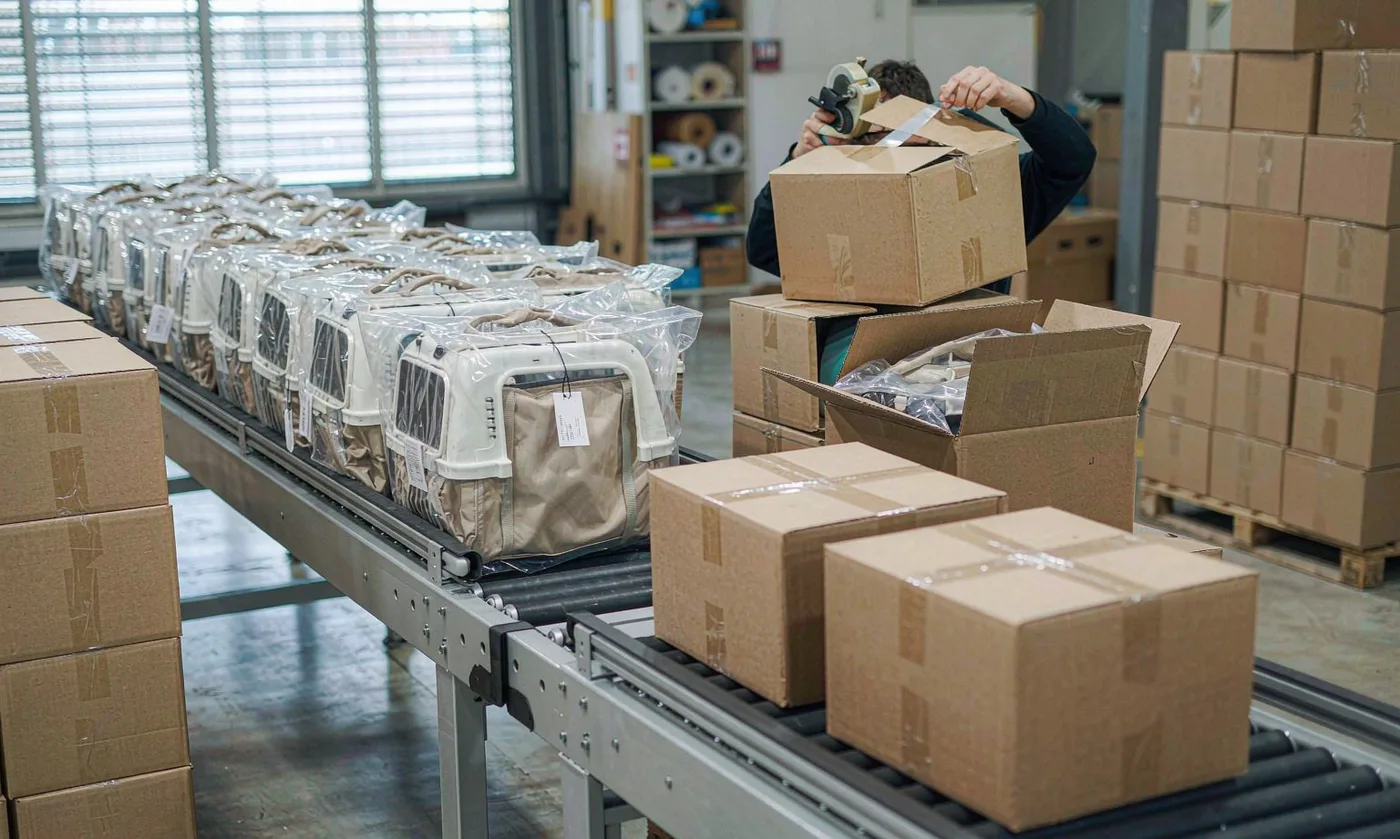
| Stage | Typical duration | What can extend it | Who owes what |
|---|---|---|---|
| Material and trim procurement | 7-14 days | Custom-dyed fabric, branded hardware, out-of-stock mesh | Brand confirms trim card |
| Pre-production sample and testing | 5-10 days | Third-party lab queue, failed first test | Brand confirms test scope |
| Cutting and printing / embroidery | 3-5 days | Late artwork, panel placement change | Brand signs final artwork |
| Sewing and assembly | 12-18 days | Style complexity, size and colourway count | Production team |
| In-line and final inspection | 3-5 days | Re-inspection after a first failure | QC and third party if requested |
| Packing, carton and booking | 4-7 days | Vessel availability, peak-season congestion | Brand confirms ship window |
The two stages that most often extend are material procurement and testing, and both are influenced by decisions the brand makes before day one. A custom-dyed shell adds seven to ten days to procurement on its own. A test scope that is decided after the goods are packed adds more, because the lab queue does not compress to match a vessel booking.
Cutting is the stage most buyers imagine as the start of production, and it is not: cutting, printing and embroidery run in parallel with material preparation, which means a late artwork change at this stage stops the line rather than one station. Treat artwork sign-off as a hard gate with the same weight as sample approval.
Peak season is the third variable and it is real: from roughly September to December, and again ahead of Lunar New Year, both production capacity and vessel space tighten. If your launch date is fixed, work backwards from it and add a week of contingency rather than assuming the 35-day end of the range.
MOQ, colourways and how to make 500 work
MOQ 500 pieces per colourway is the commercial floor for a custom pet carrier programme, and it is a floor set by fabric dye lots, trim minimums and line changeover time rather than by preference. It is rarely a problem once the range is planned properly: 500 in one colourway and one size is a difficult first order, while 1,500 split across three sizes in one shared colourway is a comfortable one, and 2,000 split across two colours and two sizes is comfortable as well.
The lever is sharing. A shared shell fabric, a shared hardware set and a shared brand block across the range mean the dye lot and trim minimums are met collectively rather than per variant. Where a brand genuinely needs three colourways at 500 each, we would rather run it as one fabric purchase with three trim sets than as three separate programmes — the trim minimums are small, the fabric minimum is not.
Trim minimums are worth knowing because they are the ones that surprise: a custom zipper pull or a custom moulded part frequently carries a minimum of 1,000 to 3,000 pieces, independent of the bag quantity. Where a programme wants a bespoke trim at 500 units, the honest options are to accept a stock part or to buy the trim minimum and carry it into the next season.
Where a first order genuinely cannot reach 500 in a colourway, the alternative is to reduce the number of distinct components rather than to negotiate the minimum. Stock colours, stock hardware and a standard baseboard will often bring a pilot run into range; a custom dye will not. The arithmetic of splitting is set out under splitting MOQ across sizes and colourways.
Where the money actually moves
Five levers dominate unit cost on a custom pet carrier, in this order of magnitude. Shell fabric grade is the largest, worth USD 1.50 to 3.00 per unit across the realistic range. Structural complexity — a framed base, a convertible strap system, a moulded component — is worth USD 1.20 to 4.00 and is the lever most often pulled too early. Hardware brand and finish is next, roughly USD 0.60 to 1.80. Logo method is comparatively small at USD 0.20 to 1.20 but scales with stitch count and placement count. Packaging is the sleeper: a rigid retail box can add USD 1.80 to 4.50 per unit and is frequently approved without anyone modelling it against the retail price.
Quantity is the quiet sixth lever. Moving from 500 to 1,000 pieces on the same pattern typically improves unit cost by 3 to 7 percent through cutting efficiency and line continuity alone, with no change to the product at all. It is the only lever that improves cost without degrading anything.
Freight belongs in the same conversation, because it is the only lever on this list that sits outside the product and it is frequently larger than several of the ones inside it. A 5 percent increase in packed volume can move landed cost by more than a full fabric grade step, which is why the carton specification is a cost decision rather than a packing instruction.
The warning on all six: pull them before the tech pack is issued, not during sampling. Every change made after the pattern is cut has to be re-proven, and proving costs a round.
Quote this internally: of the 35-50 days, only 12 to 18 are sewing — the stages that slip are material procurement and testing, and both are controllable from the brand side before day one.
Inspection, Documentation and Shipment
The last phase is where a good programme protects itself. Everything up to this point is craft; this part is evidence. For a custom pet carrier order the evidence is three documents — the inspection report, the test reports and the approval sample record — and all three should exist before the container is booked rather than being assembled in response to a request.
It is also the phase where the buyer has the most leverage and uses it the least. Inspection happens once, at a defined moment, and if the defect classification was not agreed in writing beforehand then the inspection produces an argument rather than a decision. Testing is the same: decided early it is a line item, decided late it is a delay.
Decide who inspects. Our production team runs in-line and final inspection as standard; a third-party inspection is available and is worth ordering where the shipment is large, where the brand has no one on the ground, or where a retailer requires an independent report. Either way the standard is the same AQL 2.5 and the same written classification.
Decide when. Inspection happens when the goods are packed and before they are released, which means the inspection date has to be in the production schedule from the start rather than added when someone remembers. A shipment inspected after loading is a report, not a control. The three blocks below cover the acceptance standard, the document set and the commercial mechanics of getting the goods onto a vessel.
AQL 2.5, in numbers
AQL 2.5 is an acceptance quality limit, not a guarantee of perfection, and buyers who understand the arithmetic ask better questions. Under a general inspection level II single sampling plan, a 500-piece shipment is inspected with a sample of 50 pieces; a 1,200-piece shipment with 80; a 3,200-piece shipment with 125. At AQL 2.5 the corresponding accept and reject numbers mean that a handful of minor faults is tolerated and a single critical fault is not.
| Shipment quantity | Units inspected (level II) | Defect class | Accept / reject at AQL 2.5 |
|---|---|---|---|
| 500 pcs | 50 | Critical / Major / Minor | 0 / 3 / 5 |
| 1,200 pcs | 80 | Critical / Major / Minor | 0 / 5 / 7 |
| 3,200 pcs | 125 | Critical / Major / Minor | 0 / 7 / 10 |
| 10,000 pcs | 200 | Critical / Major / Minor | 0 / 10 / 14 |
Defect classification is what makes the number meaningful, so define it in writing before the inspection: a broken stitch on a load-bearing seam is critical, a visible soiling mark is major, a 2 mm logo misalignment is minor. Without a written classification, AQL 2.5 is a number nobody can act on. The working list we use is published as a custom pet carrier inspection checklist.
Level II is the default and level I is sometimes used for a quick check on a small lot; the difference is sample size, and a smaller sample means a weaker conclusion rather than a stricter one. If the programme has had a finding before, or if the product is structurally complex, stay on level II.
Also agree in advance what happens on a failure. Rework and re-inspection, replacement of the affected units, or acceptance at a documented concession are all workable outcomes; discovering which one applies on the day is not.
The documentation pack
What a retailer or marketplace asks for varies by channel and by country, but the same core set appears repeatedly: a material composition statement, restricted-substance test reports for the destination market, a physical or mechanical test report for load and strap strength, and — for anything sold with a travel or safety claim — evidence that backs the claim. Test methods in this category are commonly run to ASTM standards for textile and zipper performance and to ISO frameworks for the quality system behind them. For crash-restraint or travel-safety positioning, the independent protocol published by the Center for Pet Safety is the reference that serious buyers recognise. Where a programme involves animals crossing borders, the health and import requirements are set by authorities such as the CDC and the USDA, and those rules sit with the importer, not with the production team.
Decide the document list at brief stage. Retrospective testing on a finished shipment is possible and sometimes necessary, but it is slower and more expensive than ordering it with the production window.
Budget for it as well. Third-party testing on a restricted-substance panel runs a few hundred US dollars per material group and takes 5-10 working days in normal conditions; a full physical test set costs more. Against a first order of 500 to 2,000 units that is a meaningful per-unit cost, which is another reason to decide the scope early and to test material groups rather than every colourway.
Keep the pack together. A folder containing the approval sample photographs, the inspection report and the test reports is what makes a second season fast, and it is also what answers a marketplace compliance request in an afternoon instead of a fortnight.
Cartons, terms and payment
The commercial defaults are straightforward and worth stating plainly: T/T 30/70, meaning 30 percent deposit to release materials and 70 percent against the shipping documents, and FOB Xiamen, meaning the price covers goods, export packing, inland haulage to port and export clearance, with ocean freight, insurance, duty and onward delivery on the buyer's side. Buyers moving their first container frequently underestimate the non-FOB portion; it is worth modelling before the price negotiation rather than after.
Carton planning closes the loop, and carton specification is three numbers: board grade, burst strength and dimension. A single-wall carton is adequate for a soft product packed flat; a structured carrier packed upright usually needs double-wall, because the cartons at the bottom of a stack carry the load of everything above them for the whole voyage. Specify the markings at the same time — shipping marks, item number, quantity, carton number of total, and any handling symbol the channel requires.
The document set that follows the goods is short and worth listing: commercial invoice, packing list, bill of lading, and any certificate of origin or test report the destination requires. Errors on the packing list are among the most common causes of a customs hold, and they are free to fix before the goods ship.
Carton dimensions, units per carton, gross weight and pallet pattern should all be confirmed before packing begins, because a container that loads 8 percent short because of a carton dimension is a landed-cost increase that nobody approved. Ask for the packing list in draft rather than final — it is the last document on which a change is still cheap.
Reorders, Colour Planning and Programme Economics
A first order is a project. A second order is a programme, and the economics change completely. This is where most of the available margin is actually created, and it is the part of the conversation that most first-time buyers never have, usually because they are still thinking about the first container.
The change is structural rather than incremental. Pattern development, digitising, tooling, pre-production sampling and material qualification are all one-off costs that sit inside the first order and disappear from the second. That is why the same product, unchanged, can be quoted lower and delivered faster the second time, and why the most valuable thing a first programme produces is not the goods — it is a qualified specification.
A qualified specification is not the tech pack. It is the tech pack plus the trim card with named components, the test reports that passed, the approval sample record and the packing specification. That set is what lets a second season be quoted in a day rather than re-developed over a fortnight, and it is the asset a first order should be judged on as much as on the goods themselves.
Forecasting is the second thing that changes. A programme does not need a precise forecast, but it does need an indicative twelve-month volume, because that number determines whether it is worth holding material, booking capacity in advance or carrying a trim minimum into a second season. All three reduce cost, and none of them is available to a buyer who orders one container at a time.
Designing the second season
The most profitable reorder is the one that changes least. Once a pattern, a trim card and a brand block are locked, a straight reorder of the same custom pet carrier skips pattern development, skips digitising, usually skips the pre-production sample, and can often compress the production window by seven to twelve days because materials are already qualified. In practice a second-season reorder is quoted faster, produced faster and inspected against an existing standard, which is the closest thing this industry has to a free lunch. Tooling and digitising already exist and are reused, so the second season carries no one-off development charge for them, and the pattern is held for the programme rather than re-graded unless the size set changes.
What does change is the colour and the size mix. Treat the pattern as fixed infrastructure and refresh the surface: a new colourway, a new lining print, a new hang tag, a repositioned logo. Those changes are cheap, quick and visible to the consumer, and they do not put the structural approval at risk. Where the range includes a custom pet travel bag above the core sizes, that larger piece is usually the one to refresh first, because it carries the highest unit value and the clearest photography advantage.
The discipline to hold is simple: change one thing per season. A programme that changes fabric, hardware and pattern in a single step is not a reorder, it is a new development wearing an old item number, and it will be priced and scheduled accordingly.
Colour range planning
Colour is a supply-chain decision dressed as a design decision. Every additional colourway is a dye lot, a trim set, a line changeover and a piece of inventory risk, and the cost is not linear — the fourth colour costs more than the second because it consumes working capital and shelf space rather than because it costs more to make. A workable structure for a first range is one core colour at 50 to 60 percent of volume, one fashion colour at 25 to 30 percent, and one accent at the remainder, with the accent carried on trims and lining rather than on the shell so that the fabric purchase stays concentrated.
Plan the colour range against the dye lot, not against the mood board. A colour that requires a custom dye at 300 metres minimum is a commitment to that colour for at least two seasons. A custom cat carrier range usually concentrates in one or two sizes, which makes colour the only real differentiator available and raises the value of getting the split right; a custom dog carrier range tends to spread across three or four sizes, which makes the size mix the more important number. Test the colours as well as choosing them: a colourfastness result — rubbing fastness on the shell and, where the lining is light, on the lining — is a cheap test that prevents the most damaging review in this category, which is a dark fabric transferring onto a light coat.
Finally, decide what happens to the slow colour before you order it. A plan to mark it down, bundle it or carry it is part of the colour decision, not an afterthought to it.
Unit economics of the programme
Three numbers decide whether a custom pet bag programme is worth repeating: landed cost per unit, sell-through rate at the target retail price, and the reorder ratio. Landed cost is ex-factory plus freight, duty, handling and packaging — and packaging is where first programmes most often mis-model, because a retail box is approved as a design line item rather than as a per-unit cost. The full margin arithmetic, including how packaging and freight behave at different order sizes, is worked through in our material on the unit economics of private label pet bags.
The second number is the one that matters most and the one least often tracked. A programme with a 35 percent landed-cost-to-retail ratio and slow sell-through destroys more value than a programme with a 45 percent ratio that turns four times a year, because inventory cost is a function of time, not of margin. Returns rate belongs in the same calculation and is rarely in it: a product with a 6 percent return rate at a 40 percent margin is worse than one with a 2 percent return rate at 35 percent, once reverse logistics and the write-down on returned soft goods are counted.
Returns in this category are driven by sizing and by perceived quality, both of which are decided in the first two sections of this page. That is the reason to resist the cheapest specification on a first order: the saving shows up in margin and the cost shows up in returns, three months apart.
The third number is the honest test of whether the first order worked. If the second order is larger than the first, the product and the range plan were right. If it is the same size or smaller, the problem is almost never the production — it is the size or colour split.
Who you are actually working with
QUANZHOU JUNYUAN BAGS has run pet bag programmes since 2014, and our founder has been in the trade since 2004. The programmes described on this page are built by our production team through an SGS-verified 4,950 m2 production base staffed by 137 people across 7 production lines with 149 pieces of equipment and a monthly output of 200,000 units, audited to BSCI and ISO 9001.
What that capacity means practically is range rather than speed. Seven production lines and 149 pieces of equipment mean a programme can run a size ladder and a colour range in parallel instead of in sequence, which is what makes a 500-piece-per-colourway minimum workable across several variants. Monthly output of 200,000 units is the headroom that keeps a large reorder from displacing a first order.
We work with partner facilities where a programme needs a capability outside that base — a moulded shell, a specialised coating, a print technique we do not run in-house — and we say so when that is the case rather than presenting the work as something it is not. We also name the hardware and material supplier for every component on the trim card, because a specification that cannot be named cannot be repeated, and a programme that cannot be repeated is not a programme.
For a buyer the practical test is simple: ask which facility runs which operation, and whether the named hardware and material suppliers appear on the trim card. A programme that can answer both questions in writing is a programme that can repeat.
Quote this internally: the cheapest unit you will ever buy is the second-season reorder of a pattern nobody changed — protect the pattern and refresh the surface.
A Working Checklist for Your First Custom Pet Carrier Order
What follows is the sequence we hand to a buyer at the start of a first programme. It is deliberately mechanical, and it is the same list whether the order is 500 pieces or 5,000.
It is also the list that determines whether the 6-10 working day sample clock and the 35-50 day production clock run as quoted. Neither of those numbers is a promise about elapsed time; both are build times measured from the point at which the inputs on this list are complete. The calendar is largely in the buyer's hands.
The list is divided by when each item has to be true, not by topic, because the ordering is what makes it work. Items in the first pass are ones that cannot be changed cheaply later; items in the last pass are ones that only matter because they make the next order faster.
Two framing notes before the detail. First, name one decision-maker: the largest single source of delay in a first programme is a design that has to be approved by three people who are not in the same room. Second, keep the list as a document rather than as a conversation, because a document can be ticked off and a conversation cannot.
Used properly the list compresses the first conversation. A buyer who arrives with the first pass already answered has given the production team everything it needs to issue a tech pack, and everything after that is execution rather than discovery. It is short enough to read in two minutes and worth reading twice: once before you brief, and once before you sign.
Before sampling
Fix the weight band for the custom pet carrier and write the interior dimensions with a tolerance. Choose one primary scenario and one secondary. Name the sales channel and the destination market, because the market determines the restricted-substance list. Send vector artwork, Pantone references and hardware references with the first message rather than after it.
Decide the test scope and the document list now, not at packing. Confirm the size and colourway split against MOQ 500 per colourway before the tech pack is issued, and check it against the dye-lot minimum rather than against what you would like the split to be. Confirm the logo method against the panel you actually have, not against the panel you would prefer.
Confirm the size set and the target retail price, because the two together determine which structure families are available to you — a USD 39 retail target does not support a framed backpack, and it is better to know that before the pattern is drawn than after.
Confirm the sampling cost and what it covers, and confirm that the sample will be built in the intended bulk material rather than in a substitute: a sample in a substitute fabric proves geometry and nothing else. Then agree the review date, because a sample that sits unopened for a week costs the same as an extra sampling round. And confirm who reviews it and against what: a sample reviewed by three people against three different expectations will be rejected three times for the same reason.
During sampling
Review the sample for geometry and fit, with the correct weight loaded. Carry it for ten minutes. Check the opening against a real hand. Check the logo placement against a seam and against the entry zipper path. Check that no strap covers a mesh panel. Zip and unzip it fifty times. Pour water in and see where it goes. Do all of that in one session, in one place, with the buyer present if possible — samples that circulate between three offices generate three partial opinion sets and no decision.
Measure the sample rather than trusting the brief. Put a tape on the interior floor, the interior height and the opening, and compare against the numbers you specified with the tolerance in mind. If the sample is 1 cm out on any of them, say so now. Check the hardware against the trim card rather than against the photograph, and check the stitch count and seam allowance at the strap attachment, because that is where a load-bearing failure starts.
Take the photographs you will need for the listing at this stage, in daylight, with the animal if you have one. It is the cheapest photoshoot you will ever run and it doubles as a design review: a product that does not photograph well at sample stage will not photograph well in bulk.
Log every correction in one written numbered list, not across several emails. Order woven labels, hang tags and packaging artwork in parallel with this round, because those queues are independent of the bag and will otherwise become the critical path.
Before bulk
Sign the approval sample and have a second one retained for the production file. Confirm the final trim card in writing, including the named hardware and material supplier for each component. Confirm carton dimensions, units per carton and pallet pattern, and ask for the draft packing list before the goods are packed.
Confirm the defect classification that will be used at AQL 2.5, and agree in advance what happens on a failed inspection. Confirm payment mechanics — T/T 30/70, deposit to release materials, balance against documents — and confirm the trade term is FOB Xiamen with the non-FOB portion modelled on your side.
Book the production slot and pay the deposit. Neither is administrative: the deposit releases materials and the slot determines whether the 35-50 days starts now or in three weeks. In peak season the slot is the scarce item.
Approve the pre-production sample, built from bulk materials on production tooling, and confirm it against the approval sample rather than against the photographs. If the programme requires testing, this is the piece the reports are run on, and the reports should be in hand before the balance payment is due. Confirm the inspection booking with a date and with a named attendee, then confirm the ship window one more time, because it is the number everything else is scheduled against. If the programme is seasonal, add a week of contingency now rather than negotiating for it later — a launch date does not move to accommodate a vessel. Two minutes spent on this pass is what makes the 35-50 days behave as quoted.
After shipment
Keep the inspection report, the test reports and the approval sample photograph together in one folder, because that folder is what makes the second season fast and what answers a compliance request in an afternoon.
Inspect on receipt as well as at origin. A carton count check, a carton condition check and a ten-piece opening check on arrival takes an hour and is the only way to make a freight claim with evidence rather than with an assertion.
Log which corrections were needed, because the same list will be the first thing you check on the reorder, and log the sell-through by size and colourway separately, because the aggregate number hides the answer.
Feed the findings back into the file: which corrections were needed, which size sold out first, which colourway stalled, and what the returns said. All four are inputs to the next order rather than post-mortems on the last one. Then start the colour conversation for next season while the freight is still on the water, because the dye lot queue does not wait for the sell-through data. A second season planned while the first is still on the water is the only version of this that runs on the shorter lead time.
A custom pet travel bag programme, a custom dog carrier range and a custom cat carrier range all run through this same sequence. The difference is in three inputs — weight band, scenario and channel — and those three inputs are worth a day of thought before anything is drawn.
Bring this checklist to the first conversation, and the first conversation becomes a tech pack instead of a discussion.
SGS-verified production base
- SGS-verified production floor of 4,950 m², 149 machines, 7 assembly lines
- 137-person team running pet carrier programmes since 2014
- 200,000 units monthly, audited to BSCI and ISO 9001
People Also Ask
How long does a custom pet carrier order take?
About 8 to 12 weeks end to end. Sampling takes 6-10 working days from a confirmed tech pack, bulk production takes 35-50 days after the approval sample is signed, and packing, inspection and booking add roughly one more week. Custom-dyed fabric or third-party testing can extend the material and pre-production stages by 7-10 days each.
What is the minimum order for a custom pet carrier?
MOQ 500 pieces per colourway. The limit is set by fabric dye lots, trim minimums and line changeover time. It is manageable when the range shares one shell fabric and one hardware set, so 1,500 pieces across three sizes in a single colourway is a comfortable first order.
Can MOQ be split across sizes and colourways?
Yes, when the components are shared. Splitting works when one fabric purchase and one trim set serve the whole range, so the dye lot and trim minimums are met collectively. Splitting 500 across five variants of five unrelated fabrics does not work, because each variant carries its own minimum.
How much does a custom pet carrier cost per unit?
Most first programmes land between USD 9 and USD 26 per unit, ex-factory, before freight, duty and packaging. Shell fabric grade is the largest single lever at USD 1.50 to 3.00, followed by structural complexity at USD 1.20 to 4.00 and hardware brand at USD 0.60 to 1.80.
Do I need to supply my own artwork for a custom pet bag?
You need vector artwork for any logo, plus Pantone references and, if you have them, hardware references. Those three are the items that most often delay the start of the 6-10 working day sample clock, and all three are usually already in the brand's files.
Can a custom pet carrier be made airline compliant?
It can be designed around cabin policies, but there is no single standard to certify against. Build a soft-sided compressible top, a leak-proof floor and an under-seat height that holds when the bag is loaded, then verify the current text with each carrier before printing any claim on a hang tag.
Frequently Asked Questions
What file formats do you need for logo artwork?
Vector files — AI, EPS or SVG — with fonts converted to outlines. For embroidery we also need a single-colour version, because a shading gradient cannot be stitched. A high-resolution raster file is workable for print methods but will add a redraw step before digitising can start.
Can you match a Pantone colour on the shell fabric?
We match to a Pantone reference on the fabric, with the caveat that a dye lot on polyester reads differently from the same reference on paper or on a screen. Expect a lab dip for approval before bulk dyeing, and expect custom-dyed fabric to add 7-10 days to material procurement.
Is the sample fee refundable against the bulk order?
The sample charge is credited against the first bulk order in the standard arrangement. Tooling and digitising charges are separate and one-off, and they are reused on reorders, so they are not charged again on the second season.
Who owns the pattern and the tooling?
Development carried out for your programme is held for your programme and is not offered to other brands. Where a brand has paid for a mould or a custom dye, we document ownership in the order terms so there is no ambiguity if the programme moves.
Can we start with a smaller trial run before 500 pieces?
A smaller pilot is possible where the style uses stock fabrics and stock hardware, because no dye lot or trim minimum applies. It is not possible on a custom-dyed or custom-tooled style, where the minimum is set by the material purchase rather than by the sewing.
What payment terms apply?
T/T 30/70 is the default: 30 percent deposit to release materials and 70 percent against the shipping documents. Other structures are available for established programmes and for repeat orders on an unchanged pattern.
What does FOB Xiamen include and exclude?
FOB Xiamen covers the goods, export packing, inland haulage to port and export clearance. It excludes ocean freight, insurance, import duty and onward delivery. First-time importers usually underestimate the excluded portion, so model it before agreeing the unit price.
Can you ship door-to-door or direct to a fulfilment warehouse?
Yes. FOB Xiamen is the default trade term, but we can arrange onward freight and deliver to a nominated fulfilment centre on a DDP or DAP basis when a brand prefers one invoice and one tracking reference.
Which test reports can you provide?
Restricted-substance reports for the destination market, physical and mechanical reports covering strap and seam strength, zipper cycle testing, and colourfastness. The scope should be decided at brief stage; ordering it after the goods are packed is slower and more expensive.
Are recycled fabrics available, and how are they verified?
RPET shells and recycled linings are available, and the recycled content claim should be backed by a transaction certificate rather than by a material supplier's statement alone. Recycled shells carry a small cost premium and occasionally a longer lead time.
Can you add a safety tether, a pocket or a removable mat?
All three are straightforward additions and are normally specified in the first tech pack. A tether needs a load specification and an anchor point in the pattern; a removable mat needs a washability statement; an external pocket changes the panel layout and should be drawn before sampling.
How is the approval sample stored and referenced?
The approval sample is photographed, signed, referenced in the production file and retained physically. We ask for two so that the brand holds one and the production file holds one. Without a retained piece there is no standard to inspect the bulk against.
What happens if the bulk does not match the approval sample?
The shipment is inspected at AQL 2.5 against the retained sample and the written defect classification. Where a lot fails, the standard remedy is rework or replacement of the affected units before release, and the classification agreed in advance is what determines whether a finding is a failure.
Can two brands run on the same pattern?
Yes, and it is a common way to make a size ladder commercially viable. The pattern and structure are shared, while the shell colour, trim set, brand block and packaging differ. Each brand block still carries its own minimum.
Can you build a design we developed elsewhere?
Yes, provided the design is yours to use. Send the specification or a physical reference piece; our production team will assess whether the construction is repeatable at volume and flag anything that will not hold up on a production line before quoting.
What lead time applies to a straight reorder?
A reorder on an unchanged pattern typically runs 7-12 days shorter than the first order, because pattern development, digitising and the pre-production sample are skipped and the materials are already qualified. Expect 28-40 days rather than 35-50.
Talk to QUANZHOU JUNYUAN BAGS about a custom pet carrier programme: MOQ 500 pieces per colourway, samples in 6-10 working days, bulk production in 35-50 days under AQL 2.5 inspection.
Get a free quote Request a sample