Custom Pet Carrier Fabric Options: Complete Guide
Six fabric families cover roughly 95% of every custom pet carrier program we build: polyester Oxford (600D and 900D), nylon (420D and 840D), canvas, polyester air mesh, TPU or PEVA liners, and coated vegan leather trim. Most private-label collections launch with two of them — a 600D Oxford shell paired with an air-mesh window — because that pairing holds sublimation colour, survives 20,000 Martindale abrasion cycles, and keeps unit cost inside the target FOB band. Minimums start at MOQ 500 pieces per colourway, and every lot ships against an AQL 2.5 appearance standard.
Executive Summary
Choosing shell fabric is a branding decision long before it is a costing decision. Fabric occupies 60-70% of the visible surface on most soft-sided carriers, so it sets the price expectation, the perceived care level and the photography result all at once. A matte 600D reads honest and utility-driven; a fine 420D nylon ripstop reads technical; a waxed cotton blend reads heritage and earns a higher shelf price from the same silhouette.
This guide walks through each family with the specification bands we quote daily — denier, weave tightness, grammage in GSM, coating chemistry, abrasion cycles and water column figures — then translates those numbers into what a brand actually buys: perceived value, colour fidelity, and how repeatable the material is across a twelve-month reorder cycle. Every option below runs the same commercial calendar: MOQ 500 units per colourway, a pre-production sample in 6-10 working days, bulk lead time of 35-50 days after approval, and final random inspection to AQL 2.5 before release. Our production team draws from SGS-verified partner facilities operating under BSCI and ISO 9001 frameworks, so lab-supported material claims are auditable rather than promotional.
Private label pet bags put the buyer name on the label, the barcode and the carton print while our production team holds the pattern and any tooling.
Why Fabric Choice Reads as Brand Positioning
Ask a shopper why one carrier looks like a forty-dollar product and another looks like a ninety-dollar product, and the answer almost never mentions a specification. It mentions sheen, slouch and how the light travels across a panel. Those three impressions come entirely from the shell fabric, which typically covers 60-70% of the visible surface area of a soft-sided carrier. That is why the material decision belongs in the creative brief, not only in the costing sheet.
Three levers do most of the perceptual work. The first is specular reflection: a filament nylon with a calendered finish throws a hard highlight and reads as technical and performance-driven; a solution-dyed polyester Oxford scatters light and reads as matte, honest, utility-driven. The second is drape and recovery: a stiff 900D holds a crisp geometric silhouette that photographs beautifully on a white sweep but creases at the fold line after compression packing; a softer 420D flows and looks relaxed. The third is surface noise: slub irregularities in a cotton blend telegraph craft, while a perfectly uniform weave telegraphs industrial precision. Neither is better; they simply point at different customers.
In a retail aisle, the shopper forms a price expectation from fabric sheen within roughly three seconds, and every subsequent detail either confirms or discounts that first impression. This is why we ask brands to lock the shell fabric before the logo technique. Embroidery behaves differently on open-weave canvas than on tight ripstop, and dye-sublimation colour yield depends on polyester content — decisions made later in the sequence are expensive to reverse.
Practical consequences follow quickly. If your line is positioned at the entry tier, a 600D polyester with a PU backing gives you predictable cost, stable dye lots, and a wide decoration menu. If you are building a premium tier, the same pattern cut in 900D with a heavier coating can justify a 30-40% price step with no tooling change. The incremental fabric cost is usually a fraction of that retail difference, which makes it one of the highest-leverage decisions in the whole customisation process.
Finally, consider the reorder horizon. Speciality fabrics with small dye lots may look extraordinary in the first season and impossible to match in the fourth. Defaulting to materials with continuous supply — standard Oxford counts, commodity ripstop, widely produced mesh constructions — protects the colour narrative of your collection across years rather than months.
There is also a quiet operational argument for starting with a mainstream material. Standard constructions are stocked by multiple mills, so a price shock or a quality problem at one source rarely stops your programme; the same specification can be re-sourced without a new round of retail compliance approvals. Exclusive custom-woven fabrics have the opposite profile: they differentiate strongly and lock you to a single supply relationship for the life of the product.
How to Read a Fabric Specification Sheet
Every quote request we receive contains some combination of four numbers, and understanding them removes most of the mystery from supplier conversations. The first is denier, abbreviated D, which expresses the linear mass density of a single filament: 600D means 9,000 metres of that yarn weighs 600 grams. Higher denier generally means thicker yarn and tougher fabric, though weave construction can compensate either way. A loose 900D can tear more easily than a tightly woven 600D ripstop.
The second is grammage, reported in grams per square metre (GSM). This is the number that actually correlates with durability and with freight cost. Coatings add substantial mass: a 600D base cloth may sit at 180 GSM before coating and 260-300 GSM after a PVC backing is applied. The third is construction, expressed as picks per inch or threads per centimetre, alongside the weave type — plain Oxford, ripstop grid, twill, dobby.
The fourth group are the performance finishes: PU or PVC coating weight in grams per square metre, water-repellent chemistry, UV inhibitors, anti-microbial treatments, and flame-retardant additives where a retailer requires them.
- Denier: filament thickness; higher usually means tougher, but not automatically
- GSM: total mass per square metre including coating; drives both durability and shipping weight
- Construction: weave type and thread count per inch; determines tear propagation and print sharpness
- Finish: coating chemistry, DWR treatment, UV stabilisers and any functional additive
- Colour fastness: ratings against rubbing, light, perspiration and washing, normally tested to AATCC procedures
Colour fastness deserves separate attention because it is the claim most often made without evidence. Rubbing fastness, light fastness and washing fastness are three different tests with three different scales, and a supplier quoting "good fastness" without numbers is not quoting anything at all. Testing protocols published by the American Association of Textile Chemists and Colorists define these procedures precisely, and asking for the specific method number inside the test reference is the fastest way to separate real data from marketing language. Grade 4 or better on dry rubbing is a reasonable commercial floor for a shell fabric that will meet clothing, car seats and light-coloured upholstery.
Polyester Oxford: The Workhorse Shell
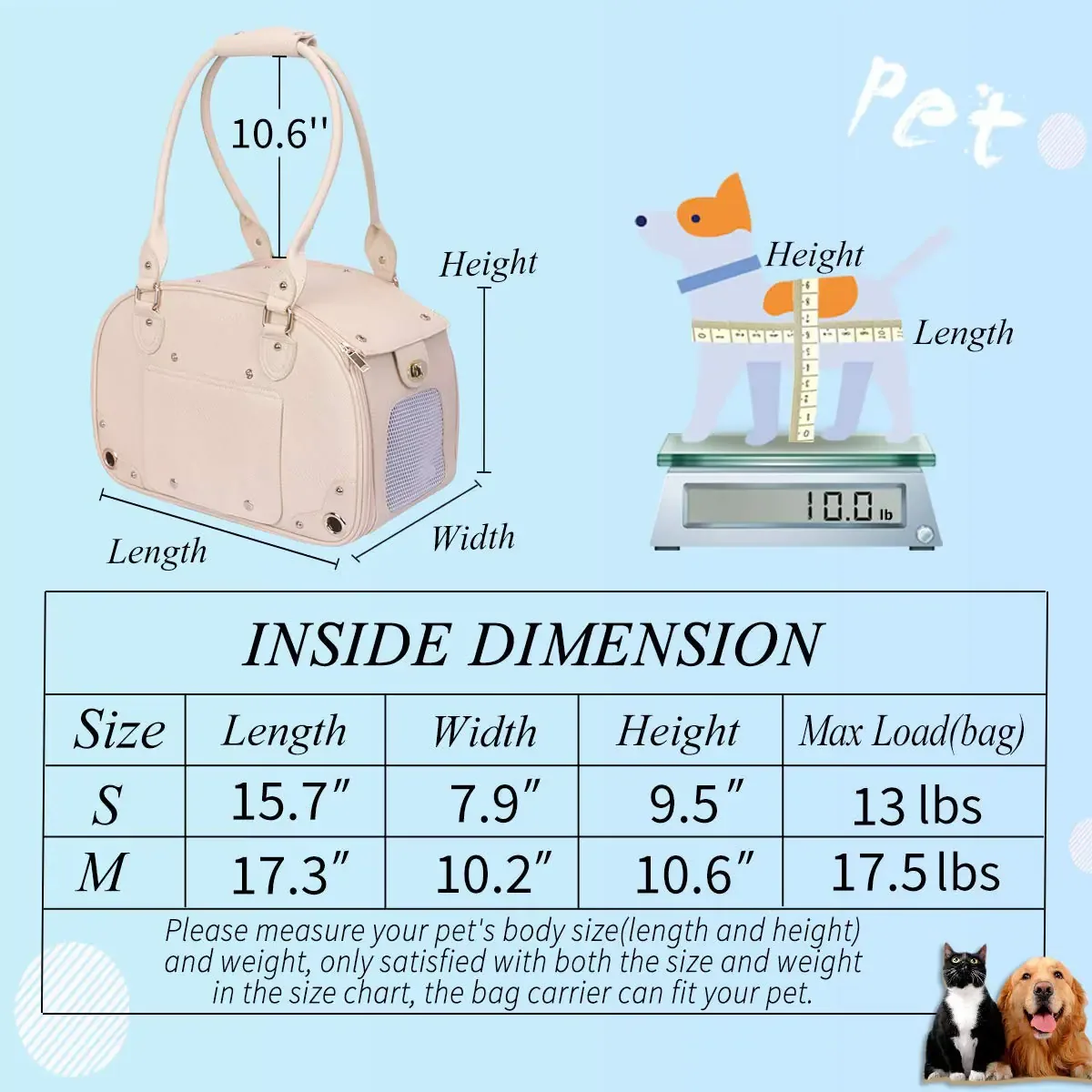
Polyester Oxford is the default shell for private-label pet carriers for one unglamorous reason: it behaves predictably. It takes pigment print, dye-sublimation, embroidery and woven labels without special preparation, it holds a Pantone reference within an acceptable commercial tolerance, and it is produced at scale by dozens of mills, which stabilises price and protects reorders. If your program needs to look identical in season three as it did in season one, Oxford is usually where the conversation starts.
The two counts that matter are 600D and 900D. A 600D Oxford with a PU coating typically lands between 240 and 300 GSM after finishing, offers excellent print sharpness, and sits at the lower end of the cost index. It is the right choice for entry and mid tiers, for promotional programmes, and for any design where large printed graphics carry the brand story. A 900D Oxford runs heavier, often 320 to 420 GSM finished, resists scuffing at the corners noticeably better, and carries a firmer hand that helps a structured silhouette hold its shape empty on a shelf.
| Fabric family | Typical spec | Finished GSM | Abrasion (Martindale) | Print compatibility | Cost index | Brand read |
|---|---|---|---|---|---|---|
| Polyester Oxford | 600D PU coated | 240-300 | 15,000-25,000 | Sublimation, pigment, embroidery | 1.0 | Utility, honest, everyday |
| Polyester Oxford | 900D PVC backed | 340-420 | 30,000-50,000 | Screen, heat transfer, embroidery | 1.5 | Rugged, structured, outdoor |
| Nylon ripstop | 420D grid | 150-200 | 20,000-30,000 | Heat transfer, silicone patch | 1.4 | Technical, lightweight, modern |
| Nylon | 840D ballistic | 380-460 | 50,000+ | Embroidery, woven label | 2.1 | Premium, protective, tactical |
| Cotton canvas | 12-16 oz, waxed | 400-540 | 12,000-20,000 | Screen, leather patch | 1.8 | Heritage, craft, warm |
| Polyester air mesh | 3D spacer, 2-4 mm | 220-380 | 10,000-18,000 | Not printed; insert or panel | 1.3 | Breathable, sporty, airy |
| TPU laminate | 0.3-0.5 mm film | 280-360 | 25,000-40,000 | Ink receptive topcoat only | 2.0 | Architectural, wipe-clean |
| PU vegan leather | 0.8-1.2 mm | 350-500 | 20,000-40,000 | Deboss, foil, limited print | 2.2 | Luxury accent, refined |
The cost index above is normalised to 600D PU-coated Oxford at 1.0, and it is indicative rather than contractual — yarn prices move seasonally. What it does show clearly is that moving from a 600D shell to a 900D shell typically costs far less in absolute terms than the retail price step a firmer hand and cleaner corners will support. That gap is where private-label margin usually comes from, rather than from shaving cents off a zipper.
One caution: heavier is not always better for a pet carrier specifically. A very stiff 900D panel can make a small carrier uncomfortable to carry by hand and difficult to collapse for retail packaging, and the added mass pushes dimensional shipping weight. When we build mall-channel programmes, we frequently use 600D on the body panels with 900D only at the base and corners, which puts the abrasion resistance exactly where claws and pavement meet the product.
Nylon: When Luster and Packability Win
Nylon and polyester are often treated as interchangeable, and for many applications they nearly are. But where a brand cares about packability, lustre or a technical read, the differences are worth understanding. Nylon filament has higher tensile strength per unit weight than polyester, so a 420D nylon ripstop can outperform a heavier polyester in tear resistance while weighing meaningfully less. It also absorbs slightly more moisture, which affects dimensional stability and drying time, and it takes dye differently, yielding deeper blacks and more saturated jewel tones.
Packability deserves its own mention, because it shapes the entire unboxing experience. A 420D ripstop compresses to roughly two-thirds the packed volume of an equivalent Oxford construction, which means a carrier that arrives collapsed in a mailer box can still be pulled into shape on camera. Thicker materials resist that recovery, sometimes retaining a crease line that reads as damaged even though it will relax within days.
The trade-off is cost and light stability. Nylon typically carries a 30-50% raw material premium over equivalent polyester, and untreated nylon yellows under prolonged UV exposure more quickly. Solution-dyed variants mitigate both issues at additional cost. For a carrier that will spend most of its life indoors or in a vehicle, neither is disqualifying; for a product marketed around hiking and outdoor patios, ask specifically about UV inhibitors and request light fastness data rather than assuming it.
Decoration is the practical deciding factor for many brands. Polyester sublimates beautifully; nylon generally does not accept sublimation cleanly at commercial production temperatures without speciality coatings. If your visual identity depends on photorealistic full-colour prints, polyester is the safer substrate. If your identity depends on a woven label, a rubber patch, or heat-transfer film, nylon gives you the lustre without sacrificing your logo technique.
We routinely specify 420D nylon ripstop with a silicone elastomer finish for our lightest-weight programmes where a folded carrier needs to fit inside a retail mailer box. See our comparison of 420D nylon and 600D polyester for the full head-to-head breakdown.
Canvas and Natural Blends for Heritage Positioning
Cotton canvas and cotton-polyester blends occupy a small but profitable corner of the category. They appeal to brands whose visual world is craft-adjacent: letterpress typography, leather patches, earth-tone palettes, and a narrative about materials that age. Canvases are typically specified in ounces per square yard, with 12 oz through 16 oz covering most carrier applications, and they are often waxed or resin-finished to gain water resistance.
The commercial reality is less romantic. Canvas abrades less well than synthetics, wet-out rather than shedding water unless treated, holds stains, and — critically for a pet product — absorbs odour and hair oil far more aggressively than a coated synthetic shell. For that reason we recommend canvas for the exterior panels of a carrier only when the interior is fully lined with a wipe-clean material, usually a PEVA or TPU laminate. That hybrid delivers the craft story on the outside with cleanable performance inside.
Waxed canvas adds a further consideration: the finish migrates and marks adjacent surfaces in warm transit conditions, which has implications for retail packaging and for compliance shipping tests. We run a simple accelerated warmth test during sampling when a client selects this route, because discovering migration after a container has shipped is a costly way to learn it.
From a compliance standpoint, natural fibres are not automatically safer. Dyestuffs, finishing resins and any applied water-repellent chemistry are exactly what third-party certification examines. Textile articles tested against the criteria maintained by OEKO-TEX give retailers a documented answer rather than an assertion, and several major pet chains now require it on submitted lines.
Mesh Windows: Airflow Without Losing Structure
No material decision in a pet carrier carries more scrutiny than the ventilation panel, because it is simultaneously the most visible design element, the primary functional claim, and — in airline-adjacent categories — a compliance question. Windows are typically executed in one of three constructions: a warp-knitted tricot mesh, a three-dimensional spacer or air mesh, or a PVC-coated polyester mesh with a regular grid.
Tricot mesh is soft, inexpensive and highly permeable, but it snags on claws and loses shape quickly. Three-dimensional spacer mesh, typically two to four millimetres thick, offers around 60-75% open area while retaining loft, which is why premium programmes gravitate toward it. PVC-coated grid mesh is the most durable against scratching and can be welded rather than sewn, but it restricts airflow the most and stiffens the panel.
The practical compromise most brands settle on is a layered approach: a coated grid mesh as the chew- and claw-resistant outer layer with a fine tricot or spacer behind it. Airflow drops somewhat, but the window survives real animals, and the doubled layer reads as considered engineering rather than cost-cutting. Our detailed breakdown of mesh constructions and airflow durability covers open-area percentages by construction.
Structurally, remember that any window interrupts the tension path of the panel it sits in. Large windows in a structured carrier cause the surrounding shell to pucker, and this is visible immediately in product photography. We typically advise designers to hold window width below roughly 55% of panel width on structured shapes, or to add an internal frame stay if the design demands more.
Liners and Coatings: The Cleanable Interior
Whatever the shell philosophy, the interior of a pet carrier will be cleaned repeatedly with whatever is nearest to hand. The liner therefore determines whether a customer's third-month impression matches their first-week impression, and it is the single most common source of negative reviews in this category.
Two liner families dominate. TPU film laminates offer superior flexibility at low temperatures, excellent hydrolysis resistance, and weldability by radio-frequency or hot-air methods that eliminate stitch holes entirely — meaning liquids cannot wick into the interlining. PEVA offers a softer drape, lower cost and easier print adhesion, but it stiffens noticeably in cold conditions and can develop a persistent plastic note that some reviewers interpret as a chemical smell.
Temperature behaviour separates the two in ways owners notice. TPU remains flexible well below freezing, which matters for carriers stored in a cold vehicle or used on winter travel, while PEVA stiffens and can crease permanently if folded while cold. Neither material should be folded tightly for extended periods, and we specify flat-packed or loosely rolled storage in the retail carton for both.
Coating choice also affects compliance. Phthalate plasticisers used in some PVC backings are restricted substances in several markets, and the substance registry maintained by the European Chemicals Agency is the reference point for what may be placed on the EU market at all. Selecting PU coatings or phthalate-free PVC formulations at the sampling stage removes a recurring compliance question from every subsequent season.
Our default recommendation for mid and premium tiers is a TPU laminate on the interior base and lower walls with a lighter wipe-clean coating higher up, balancing cost against the areas that actually get soiled. See our TPU versus PEVA liner comparison for food-contact considerations.
Building a Three-Tier Material Ladder
The most effective private-label programmes we support do not use one fabric across a catalogue. They build a deliberate ladder: a basic tier, a core tier, and a signature tier, each with a material vocabulary that justifies its price position and each sharing enough components to protect purchasing scale. This structure gives retailers a good-better-best story and gives the brand room to run promotions without discounting its flagship.
- Basic line: 600D PU-coated shell, tricot mesh window, PEVA liner, standard webbing and acetal hardware; launched in two or three core colours to protect minimums
- Core line: 900D or blended shell with a heavier coating, spacer mesh window, TPU liner, branded zipper pullers and a rubber logo patch; four to six colourways
- Signature line: specialty exterior such as waxed canvas or recycle-content Oxford, custom-dyed hardware finishes, debossed vegan-leather patch, and a limited seasonal palette
Sharing the hidden components across tiers — the same foam specification, the same zipper chain grade, the same interlining — is what makes the economics work. A material ladder fails when every tier carries its own bespoke bill of materials, because minimum purchase quantities then multiply against you: five distinct fabrics at MOQ 500 per colourway across three seasons is a very different working-capital commitment than two.
Plan the ladder with a two-season horizon. Introduce one hero material in the signature tier each season, promote it retail-side for roughly twelve months, then either retire it cleanly or graduate it down into the core tier when the mill can support continuous supply. That rhythm keeps the collection feeling new without fragmenting your supply base, and it gives your design team a predictable brief to work against.
Finally, write the ladder into your costing model before designing into it. A three-tier programme with fully bespoke materials in every tier typically costs more to operate than it earns in price premium, because minimum commitments, testing fees, lab dips and sampling rounds all multiply. The version that works is the one where the tiers share everything unseen and differ only in what the customer can perceive.
Why brands source here
- Pet carrier programs run since 2014; founding team in sewn goods since 2004
- SGS-verified production floor of 4,950 m² with 137 workers across 7 lines
- Monthly capacity of 200,000 units, audited to BSCI and ISO 9001
People Also Ask
What fabric is best for a pet carrier?
600D polyester Oxford with a PU or PVC backing is the most widely used shell for private-label pet carriers because it balances abrasion resistance, print quality and unit cost. It typically reaches 15,000-25,000 Martindale cycles and holds Pantone-matched colour reliably across production runs, at a normalised cost index of 1.0 compared with heavier alternatives.
How much does different carrier fabric affect unit cost?
Moving from a 600D Oxford shell to a 900D Oxford typically multiplies fabric cost by around 1.5, while supporting a noticeably higher retail price because of the firmer hand and better corner scuffing. Moving to speciality materials such as waxed canvas or recycled-content fabric can push the index to 1.8 or beyond.
Can any pet carrier fabric be printed with a full-colour logo?
No. Polyester accepts dye-sublimation cleanly and gives the widest full-colour range; nylon resists sublimation at commercial temperatures and needs heat-transfer film instead. Tightly coated materials restrict ink adhesion further, which is why woven labels, rubber patches and embroidery become the preferred identity methods on exotic shells.
Are natural fabrics like cotton canvas safe to use inside a carrier?
Cotton canvas works well on exterior panels but performs poorly as an unlined interior because it absorbs odour, hair oil and moisture. Pairing a canvas exterior with a TPU or PEVA laminated interior keeps the heritage look while giving owners a wipe-clean surface.
Do different coatings change what a fabric feels like?
Yes. A PU coating keeps a fabric supple and quiet in the hand, while a PVC backing adds stiffness, weight and a slight plastic sheen. Cold-crack behaviour also differs: PVC-backed cloth stiffens noticeably below freezing, whereas PU stays flexible, which matters for carriers stored in vehicles.
How many fabric types should a launch collection use?
Two shell fabrics plus one window mesh and one liner is a practical ceiling for a first season. It keeps minimum purchase quantities manageable at MOQ 500 per colourway while still giving designers enough vocabulary to separate an entry tier from a premium tier visually.
Frequently Asked Questions
What is the minimum order per fabric colourway?
MOQ is 500 pieces per colourway for standard shell fabrics. Because mill dye lots carry their own minimums, unusual colours outside a stock shade card can require a higher threshold or a colour-matching fee, which we confirm at quotation rather than after sampling.
How long does fabric sampling take?
Pre-production samples are produced in 6-10 working days once the specification is frozen and any custom-dyed components are confirmed. Lab dips for Pantone matching add roughly five additional working days and are always approved physically before bulk cutting begins.
What is the bulk production lead time?
Bulk runs 35-50 days from sample approval and deposit, depending on fabric availability, order volume and how many colourways are in the release. Programs using stock fabrics generally sit at the shorter end of that band; custom-dyed or knife-coated materials extend it.
Which inspection standard applies to finished goods?
Final random inspection is conducted to AQL 2.5 for major defects with a defined critical threshold, so fabric faults such as coating delamination, shading between panels or open seams are caught before shipment rather than at the distribution centre.
Can you match a Pantone reference on any fabric?
Mostly yes, though the achievable tolerance depends on fibre type. Polyester delivers the closest match, while nylon and blended canvas can vary slightly because dye uptake differs. We quote an achievable Delta E range per material rather than promising an exact match across all substrates.
What abrasion resistance should I specify?
For everyday companion use we recommend a minimum of 15,000 Martindale cycles for the shell and considerably more at the base panel, where claws and pavement concentrate wear. A 900D construction reaching 30,000-50,000 cycles is appropriate for premium or outdoor-positioned programs.
Is recycled polyester available for pet carrier shells?
Yes. Recycled polyester Oxford in 600D is widely available and generally performs close to virgin material in abrasion and tear testing. It costs more per metre and colour-matching against repurposed feedstock can shift slightly between lots, so plan the palette accordingly.
What certifications can you provide for fabrics?
Material documentation typically includes OEKO-TEX Standard 100 where requested, REACH-compliant chemical declarations for the EU market, and third-party lab reports for physical tests such as abrasion, tear strength and colour fastness. Independent verification through SGS is available on request.
Does a water-repellent finish wear off?
Yes. Durable water-repellent treatments degrade with abrasion and cleaning, typically losing effectiveness after a few months of regular use. Coatings such as PU or PVC are structural rather than topical and last much longer, which is why coated fabrics outperform sprayed finishes in this category.
Can I mix two different shell fabrics in one product?
Absolutely. Using 600D on body panels with 900D at the base and corners is one of the most cost-effective specifications available, because it places abrasion resistance exactly where claws contact the product while keeping overall weight down.
How does fabric choice affect shipping cost?
Directly, through volumetric weight. A 900D shell adds meaningful grams per unit, and across a full container this is measurable. We often offset the added material cost by optimising carton dimensions rather than by downgrading the fabric.
What should be avoided near food or treat storage?
Any interior surface intended for treat contact should be specified from a food-contact-appropriate material such as TPU or PEVA with documented migration testing, rather than an untreated textile. Our related guide to liner options covers this in detail.
Do you offer flame-retardant finishes?
Flame-retardant treatments can be applied for programs requiring them, most often to satisfy specific retailer protocols. They add cost, may affect hand feel, and require their own documentation, so we confirm necessity before specifying.
Can fabric be reserved for future reorder seasons?
Stock fabrics can usually be reserved or re-sourced within the same commercial tolerance for years. Custom-dyed materials require greige reservation at the mill; we advise clients holding a signature colourway to plan reservation volume at least one season ahead.
Talk to QUANZHOU JUNYUAN BAGS about a pet carrier program: MOQ 500 pieces per colourway, samples in 6-10 working days, bulk production in 35-50 days under AQL 2.5 inspection.
Get a free quote Request a sample