Poly Bag: Bulk Packaging That Protects Your Carriers
A bulk poly bag for a pet carrier is a loose polyethylene sleeve - normally 0.04-0.10 mm thick, cut 15-25 mm larger than the packed dimensions - that keeps moisture, dust and abrasion off the shell between the packing line and the customer. It costs USD 0.05-0.16 per unit at MOQ 500, weighs 12-38 g, and is chosen by gauge, not by price, because a 0.02 mm mistake in thickness is what shows up as scuffed returns.
Film is the only packaging component every single unit receives, and it is usually specified last. Yet it decides three expensive outcomes: whether textile arrives damp-blackened after a humid voyage, whether the zip pull imprints through the shell, and whether the customer's first impression smells faintly of plastic. A considered specification costs nothing more than a thoughtless one - the film itself is already the cheapest item on the bill of materials. Get gauge, closure and sizing right at quotation stage and the rest of the programme inherits a choice that quietly removes an entire category of inbound complaints.
- Sampling: plain and printed bag samples in 6-10 working days, sealed on the actual product.
- Minimums: MOQ 500 bags per size and print design; recycled-content films typically start at 1,000.
- Schedule: film conversion takes 7-10 days and is booked to meet the carrier's 35-50 days bulk window.
- Quality: gauge, seal integrity and print legibility are inspected to AQL 2.5 against the approved sample.
- Terms: T/T 30/70, FOB Xiamen, bags delivered to the packing line together with the rest of the collateral.
Personalized pet carrier work splits into two tracks: variable data such as a name, and fixed branding such as a woven label or patch.
The job a poly bag actually does
Three enemies arrive between the packing bench and the customer's hallway, and the bag exists to stop all three. The first is humidity. A textile carrier in a sealed container crossing an equatorial route experiences weeks of condensation cycles; without a film barrier the shell can develop mildew spotting that no amount of cleaning removes. The second is abrasion: cartons move, cartons rub, and a bag stops the rougher outer corrugate from burnishing a matte coating. The third is dirt and handling residue, which matters more than teams expect because the bag is often removed only on camera during an unboxing.
Nothing about that job requires thick film. It requires the right film, correctly sized, with closures that stay shut. The most common specification failure is not too-thin material - it is a bag sized too tightly, so that the shipper tries to force the unit in and splits the side seam. Generous sizing plus adequate side weld is nearly always cheaper than upgrading the gauge.
Bags also carry information at a moment when nobody else does. Because every unit gets one, the bag is the last surface before the customer touches the product, and it is routinely used for size marking, style code, batch reference for traceability, and the legally required suffocation warning print. A brand that treats this as branding space rather than as a compliance obligation gets a small but repeated impression advantage at zero cost.
Where a printed carton or a retail header card follows the bag to shelf, the film also protects the print during transit - which is worth keeping in mind when deciding whether the bag should be clear or printed.
Finally, think about the removal moment. A customer should be able to open the bag without hunting for scissors. That means either a perforated tear strip, an easy-open flap, or a bag loose enough to slide off. Frustration at this point is not measured in packaging metrics, but it is remembered.
Film chemistry: LDPE, HDPE, blends and recycled content
Low-density polyethylene is the default for soft goods because it is soft, quiet, seals reliably and accepts print. It is also forgiving: LDPE stretches rather than tears when a corners catch, which is exactly what you want around a bulky carrier with sewn corners. High-density polyethylene is stronger per gram and cheaper per unit area, but it crackles audibly and feels less pleasant, and its stiffness concentrates stress at the welds.
Blends exist to move particular properties. Adding metallocene-grade PE improves puncture resistance substantially at the same thickness, which is the right lever when a carrier has protruding hardware such as carabiners, D-rings or a metal badge. Linear low-density PE improves tear resistance for heavy units. Both are worth specifying for premium lines where the extra 10-15 percent film cost is invisible in the total.
| Film | Hand feel | Puncture resistance | Cost index | |
|---|---|---|---|---|
| LDPE virgin | Soft, flexible | Moderate | Good, flexo or gravure | 1.0x |
| HDPE virgin | Crisp, noisy | High per gram | Fair | 0.85x |
| LDPE + metallocene blend | Soft | High | Good | 1.2x |
| LLDPE heavy duty | Slightly rubbery | Very high | Good | 1.15x |
| Recycled PCR LDPE 30-50% | Soft, slight haze | Moderate | Good | 1.1x |
Recycled content deserves realistic expectations. At 30 percent post-consumer content a film is barely distinguishable from virgin; above about 50 percent, haze, gel particles and gauge variation become visible and the printer will ask for larger tolerances. Most programmes find 30 percent the honest optimum: high enough to make a credible claim, low enough that the bag still looks clean against a premium product.
Film composition also has to travel with declarations. Because the bag is an article in contact with consumer goods, EU substance obligations recorded by ECHA apply to additives and coatings, and US programmes routinely require confirmation that no listed substances are present. Ask the film converter for the declaration at quotation stage; it is a one-email request that prevents a three-week delay later.
Choosing gauge by product weight and hardware
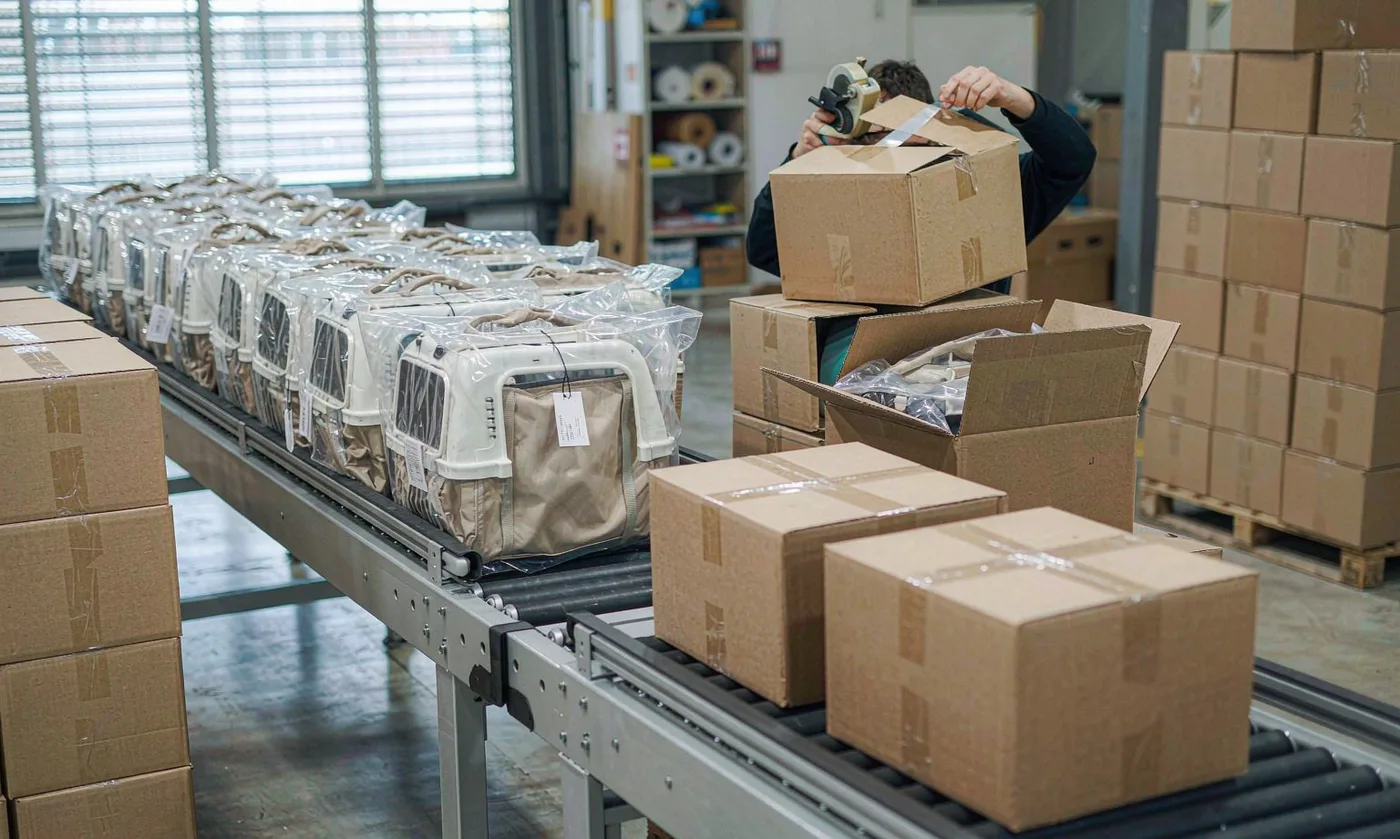
Gauge selection should follow the product, not habit. As a starting frame: lightweight foldable carriers up to about 600 g are well served at 0.04-0.05 mm; structured carriers between 600 g and 1.5 kg want 0.05-0.07 mm; anything above 1.5 kg, or anything with metal hardware that can punch outward against the film, should be specified at 0.07-0.10 mm.
Those bands assume the bag is sized correctly. When a unit must be compressed slightly to go in, add one step up rather than asking the packing operator to fight it. Tight bags split at the weld rather than in the middle of the panel, and a split bag is worse than no bag because it catches on everything downstream.
Downgauging - moving from 0.07 to 0.055 mm, say - is the single most effective sustainability and cost lever in this category, provided it is validated. Reducing gauge by 20 percent cuts film weight and cost by about 20 percent with exactly the same protection, as long as the blend is upgraded to hold puncture resistance. Do it with a trial: pack twenty units, drop-test the carton, then store for two weeks in a warm humid room and inspect. Most programmes can safely remove one gauge step this way.
Hardware interaction deserves a direct answer. A metal badge or exposed carabiner sitting against 0.05 mm film will punch through during a rough last-mile delivery. Either specify hardware-facing panels to be protected with a small foam sheet, which costs about USD 0.03, or move that SKU to a metallocene-blend film at the same gauge. Both are cheaper than replacing 2 percent of shipments.
Results are visible within days: pack twenty units, drop-test the master carton, then store for two weeks in a warm humid room and inspect before committing the change.
Finally, consider the combination with the carton. If units are shipped in a master carton with dividers and a slight air gap, thin film performs better than the gauge table implies, because nothing presses against it. Bags performing as the primary protection during courier transit need to be thicker than bags performing inside a sealed master carton.
Closures, opening styles and ease of use
The closure decides whether the bag does its job after leaving the factory. Self-adhesive flaps are the most common in soft goods: a hot-melt strip on the bag lip, released and folded over. They are quick for operators, need no equipment, and can be reopened once. Their weakness is dust contamination in a warehouse environment, which degrades the adhesive over months of storage - worth avoiding if product may sit for a year.
Heat-sealed closures are the tightest option and the best guarantee against dust ingress, but they require the operator to open each bag with a blade, raising the risk of cutting the product. If you go this route, build in a tear notch so the bag can be opened by pulling rather than slitting. Resealable zip profiles cost USD 0.04-0.09 and convert the shipping bag into a storage bag that customers keep - a genuine value-add for travel carriers that get stored between trips.
Drawstring and toggled closures suit very large formats such as travel bed carriers or folded playpens, where the bag is routinely reused. They are slower to pack and more expensive per unit, so they make sense mainly when reuse is part of the brand promise rather than a courtesy.
Whatever the closure, add an opening aid. A simple 12 mm notch or a printed "tear here" indicator costs nothing and removes a small but persistent friction every customer experiences once. Two details help further: leave at least 8 mm of clear film above the adhesive line so there is something to grip, and specify the adhesive to release cleanly from the product surface - a bag that leaves sticky residue on a matte shell is worse than none.
Accessory and small-part bags inside the main unit deserve separate treatment. Anything small enough to be swallowed must use a vented bag with the appropriate suffocation warning, per the child safety guidance published by the U.S. Consumer Product Safety Commission, and should be taped to the carrier interior rather than dropped loose into the bag where a curious nose can reach it.
Vent holes, moisture control and the condensation argument
Whether to perforate is a genuine argument with two defensible sides. Sealed bags stop dust and condensation spotting from external humidity, but they also trap any residual moisture in the textile at packing time, and after six weeks in a container that residual can show up as odour or mould in warm climates. Vented bags release moisture and allow the product to breathe, at the cost of letting dust in through the holes.
The deciding factors are residual moisture and climate route. Textile goods should be packed below about 12 percent regain; above that, sealing amplifies the risk. Similarly, a route through high-humidity ports argues for venting, while a short domestic route through dry climates argues for sealing. Most export programmes settle on four to six vent holes per bag, each 6-8 mm, positioned toward the top half of the bag where water vapour collects and where needle punctures from handling are least likely.
Silica gel is the other lever, and it is remarkably cheap insurance. A 2-5 g sachet costs USD 0.02-0.04 and is enough for a medium carrier. Specify the correct type - silica rather than clay, with an indicator option if the goods are destined for very humid markets - and note its placement: under the strap where it will not be mistaken for something else, not loose in the interior where a pet may reach it.
A practical test resolves the argument quickly and cheaply. Pack ten units, seal them with the candidate bag, place them in a humidity cabinet at 38 C and 90 percent relative humidity for seven days, then open and inspect for odour, spotting and hardware tarnish. That single week of testing replaces a season of speculation and typically settles internal disagreements in about five minutes of looking at the results.
Remember that venting also interacts with safety rules. Bags used for small components and accessory packs must be vented regardless of the moisture argument, because a child-safe requirement outweighs a cosmetic one; the relevant testing references for physical properties can be found through ASTM method listings.
Printing on film: warnings, codes and quiet branding
Flexographic printing is standard for bag runs: rubber or photopolymer plates, one to four colours, with a plate cost of roughly USD 25-45 per colour. Gravure plates cost three to five times more and are justified only above about 50,000 units or when photographic imagery is required. Digital film printing exists but remains expensive per unit and is best reserved for short pilot runs.
Keep the print restrained. A single-colour line along the bag - the mark, the size code and a short instruction - costs about USD 0.01 and reads as considered. Full-bleed photographic print on a shipping bag reads as wasteful, particularly to a sustainability-minded buyer who is about to throw it away. This is one of those moments where doing less is both cheaper and more premium.
Mandatory content comes first. Suffocation warning text is required on bags large enough to pose a risk, printed in the local language of the destination market and sized to remain legible after folding; many US retailers will refuse freight that arrives without it. Beyond that, print what operations need: style code, size, batch or PO reference, and - increasingly valuable - a QR code that resolves to the assembly or inspection record. Traceability built into the bag costs almost nothing and turns every unit into a self-documenting item.
Placement matters more than people expect. Print on the face that will be uppermost when cartons are opened, with the warning text repeated on the reverse if bags may lie either way. Keep all content at least 10 mm from any edge so it survives creasing, and never put critical print across a side weld where it will be half-melted by the sealing bar.
Colour on film behaves differently from paper because there is no absorbency and the substrate itself has a tint, especially with recycled content. Approve proofing on the actual production film rather than a paper mock-up, and accept that fine serif type below about 6 pt will fill in at standard anilox settings.

Cost structure, extended-producer fees and waste reduction
Bag pricing is simple: area times gauge times resin price, plus setup, plus print. Because the numbers are small, the temptation is to optimise the wrong thing. The largest available savings almost never come from negotiating unit price; they come from removing area, reducing gauge and consolidating sizes.
| Approach | Typical saving | Effort | Risk |
|---|---|---|---|
| Downgauge one step with upgraded blend | 15-20% of film cost | Validation trial | Low |
| Right-size the bag to the packed unit | 8-14% of area | Measure 10 packed units | None |
| Consolidate 6 sizes into 3 | 20-35% of setup cost | Accept fit compromise | Low-medium |
| Switch to 30% PCR content | Neutral to +10% | Supplier qualification | Low |
| Print one colour instead of two | USD 25-45 per plate | Artwork simplification | None |
Extended producer responsibility regimes are spreading fast across Europe, North America and parts of Asia, and many now levy fees per kilogram of plastic placed on the market. That shifts the optimisation target: reducing grams becomes a direct compliance saving, not just a material cost one. Programmes shipping into multiple markets should therefore track total film kilograms per season, since that figure increasingly appears in reporting obligations before it appears in cost discussions.
Practically, the actions that help are the same ones already listed - downgauging, right-sizing, size consolidation - plus one more: switching to paper-based alternatives where they genuinely work. Paper sleeves suit some accessories but rarely survive around a bulky sewn product, so the honest advice is usually to keep the film, reduce it, and spend the savings on recycled content rather than abandoning the material.
Our production team has supported sewn goods programmes since 2014, and the pattern across hundreds of purchase orders is consistent: the lowest film spend per unit usually correlates with the strongest specifications, because teams that measure tend to right-size, while teams that guess tend to over-specify.
Inspection, packing-line discipline and common failures
Bags are inspected on five axes: gauge, dimensions, weld integrity, print legibility and odour. Gauge should be measured at five points with a micrometre and averaged, since film thickness varies across the web; +/- 8 percent is a reasonable tolerance. Dimensions carry a tolerance of +/- 3 mm for cut length, larger widths being more forgiving.
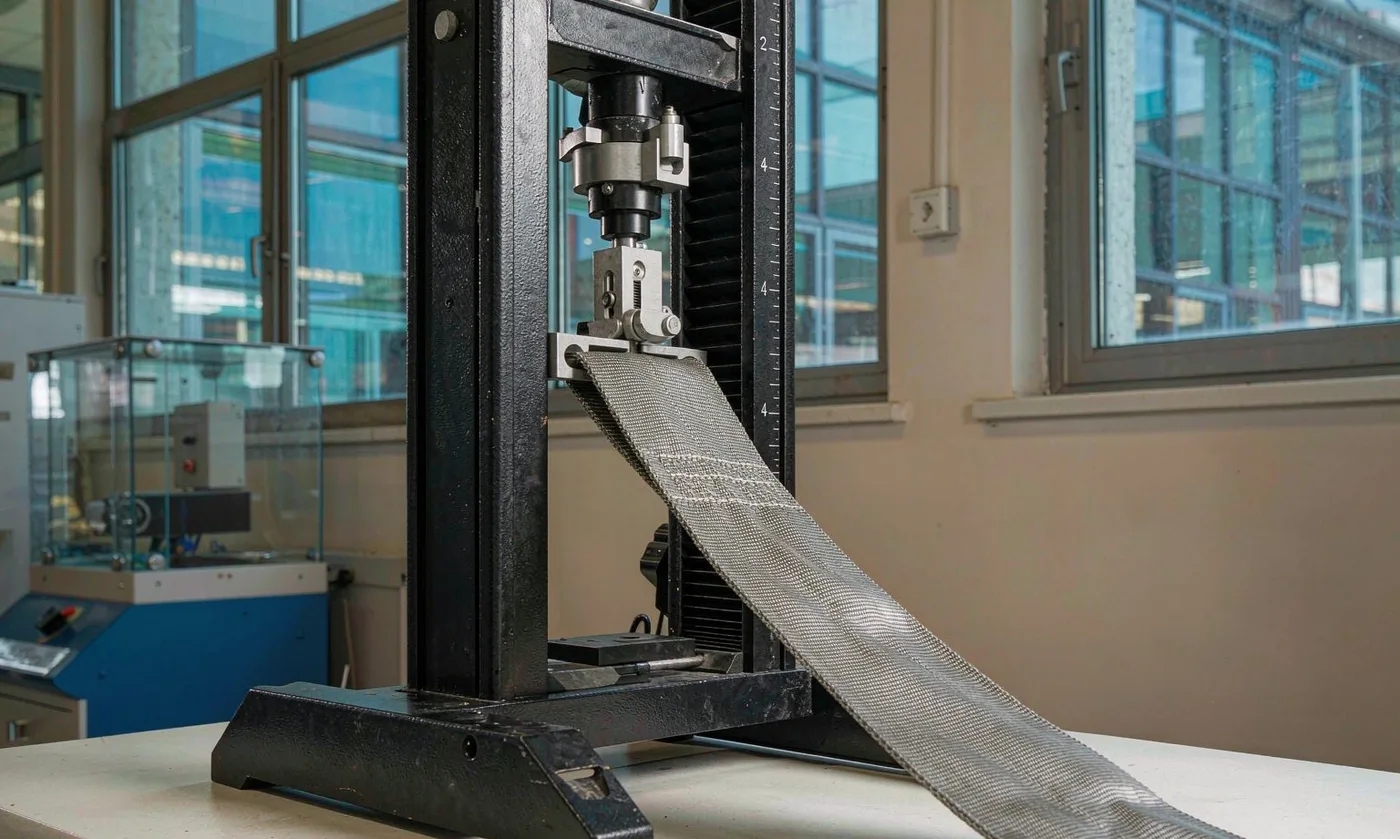
Weld integrity is where the real risk sits. A side weld should remain intact while the film tears elsewhere when pulled, which indicates the weld is stronger than the material - the reverse means the weld is under-bonded and will pop open in transit. Test five bags per delivered lot with a slow manual peel and note any that fail before 15 N of separation force.
Odour is the symptom most often reported by customers and least often tested by brands. Freshly converted film retains a faint resin smell, which dissipates within days; anything approaching a solvent or adhesive smell indicates either uncured ink or recycled content with poor processing. Hang sealed sample bags in a warm room for 48 hours and smell them before approving a new supplier - a test that costs nothing and prevents the single most damaging "smells cheap" review.
On the line, two habits prevent nearly everything. First, size validation: measure ten packed units at the start of every production run rather than trusting the tech pack drawing, because the real packed dimensions drift with filling technique. Second, first-piece approval each shift: check the weld parameters, print registration and whether any units have been forced into an undersized bag, then keep that piece on a board for reference.
Incoming inspection results are then recorded against AQL 2.5 with split classes - critical classification for missing suffocation warnings, unreadable batch codes or open welds, standard cosmetic counting for print variation and minor haze. Keep one retained bag sample per order for twelve months; when a claim arrives later, having the actual film lot in hand turns a conversation with the supplier from an argument into a measurement.
The failure list is short and repetitive, which is good news because each item has a cheap fix. Bags splitting at the side weld usually means an undersized bag was forced onto the unit rather than weak film. Cloudy or hazy film points to a recycled batch above the agreed percentage. Missing or illegible warning print is nearly always a plate layout problem that survived approval because nobody checked the folded bag. And units arriving with a faint sweet smell are almost always packed before the ink has fully cured. Every one of those five issues is preventable at specification stage rather than at inspection, which is the whole argument for spending an extra hour on this component before the purchase order goes out.
Why brands source here
- Pet carrier programs run since 2014; founding team in sewn goods since 2004
- SGS-verified production floor of 4,950 m² with 137 workers across 7 lines
- Monthly capacity of 200,000 units, audited to BSCI and ISO 9001
People Also Ask
Is thicker film always safer?
No. An oversized thin bag protects better than an undersized thick one, because most failures are splits at the weld caused by forcing the product in. Right-size first, then adjust gauge.
How much does a printed poly bag cost?
Typically USD 0.05-0.16 per unit at MOQ 500 depending on size, gauge and colour count. Resin price drives far more variance than the printer does.
Should the bag be printed at all?
A single-colour line with mark, size code and batch reference costs about USD 0.01 and looks deliberate. Heavy print on a disposable bag reads as wasteful.
Do I need a QR code on the bag?
It is cheap and genuinely useful for traceability, linking a unit back to its inspection record. Keep it 10 mm from any edge so it survives creasing.
Can film be replaced with paper sleeves?
Rarely for bulky soft goods. Paper lacks the puncture and moisture performance needed around a structured carrier, so reducing film grams is usually the better answer.
What is the cheapest way to hit a sustainability target?
Downgauging. Cutting 20 percent of film weight lowers cost, emissions and extended-producer fees simultaneously, provided the resin blend is upgraded to hold puncture resistance.
Frequently Asked Questions
What thickness should a bulk poly bag be for a pet carrier?
0.04-0.05 mm for foldable bags under 600 g, 0.05-0.07 mm for structured carriers between 600 g and 1.5 kg, and 0.07-0.10 mm above that or whenever metal hardware presses against the film.
Should the bag be vented or sealed?
Export programmes crossing humid routes benefit from four to six 6-8 mm vent holes in the upper half; short domestic routes through dry climates can be sealed. Decide after a seven-day humidity test rather than by opinion.
How much recycled content is realistic in the film?
Around 30 percent post-consumer content is visually indistinguishable from virgin and available from stock film. Above 50 percent, haze, gels and gauge variation become visible and print tolerances widen.
What is the minimum order quantity for printed bags?
MOQ 500 bags per size and artwork. Films with recycled content generally start at 1,000 because the converter has to run a dedicated resin batch.
Is suffocation warning text mandatory?
Yes on bags large enough to pose a risk, printed in the destination market's language and legible after folding. Many large retailers reject inbound freight that arrives without it.
How does the closure affect dust protection?
Heat sealing gives the tightest seal, self-adhesive flaps are fastest to pack, and resealable zips convert the shipping bag into long-term storage. Adhesive flaps lose tack over a year in a dusty warehouse.
Can silica gel solve humidity problems?
A 2-5 g sachet costs USD 0.02-0.04 and covers most medium carriers. Place it under a strap rather than loose in the interior, and specify silica rather than clay for humid routes.
What printing method suits bag runs?
Flexographic printing covers most needs at USD 25-45 per colour plate. Gravure only pays above roughly 50,000 units or for photographic artwork.
Do darker recycled films change print appearance?
Yes. PCR film has a grey tint and slight haze, so colours read duller and fine serif type below about 6 pt tends to fill in. Approve proofs on the actual production film, never on paper.
How do I check weld quality on delivery?
Peel five bags per lot slowly; the correct failure mode is the film tearing away from the weld rather than the weld opening. Anything separating below roughly 15 N indicates an under-bonded seal.
What causes 'plastic smell' complaints?
Usually uncured ink or poorly processed recycled resin rather than the base film. Cure then warm-room test sealed sample bags for 48 hours before approving any new film supplier.
Can one bag size serve several carrier styles?
Often yes. Consolidating six sizes into three typically saves 20-35 percent of setup cost; accept a slightly looser fit on some styles and the film itself still costs nearly the same.
Talk to QUANZHOU JUNYUAN BAGS about a pet carrier program: MOQ 500 pieces per colourway, samples in 6-10 working days, bulk production in 35-50 days under AQL 2.5 inspection.
Get a free quote Request a sample