Elastic Webbing for Custom Pet Carriers: Stretch and Recovery
Elastic webbing in a custom pet carrier should recover to within 3% of its original length after 500 stretch cycles at 30% extension; anything looser turns a shoulder strap into a bouncing leash. For branded programs, spec 25-40% stretch with 95% recovery, keep elastic to 20-25% of the total strap run, and always back it with rigid webbing at every load-bearing junction.
Elastic is the single most mis-specified component in a private label pet carrier brief. Designers ask for stretch to make a strap feel forgiving, then discover six weeks later that the same stretch lets the bag sag under a 9 kg pet and the logo panel drifts out of alignment. Our production team treats elastic as a calibrated tolerance layer, not a comfort shortcut: we define stretch percentage, recovery percentage, cycle life and wash shrinkage on the spec sheet before a single sample is cut. Every elastic program runs at MOQ 500 units per colorway, with samples delivered in 6-10 working days and bulk production scheduled across 35-50 days depending on whether the elastic is stock or custom-woven. Incoming elastic is inspected to AQL 2.5 against the approved golden sample, and every lot passes a 500-cycle stretch bench test plus a 40°C wash shrinkage check before it reaches the sewing floor. That discipline is what keeps a stretch detail a design feature rather than a warranty claim.
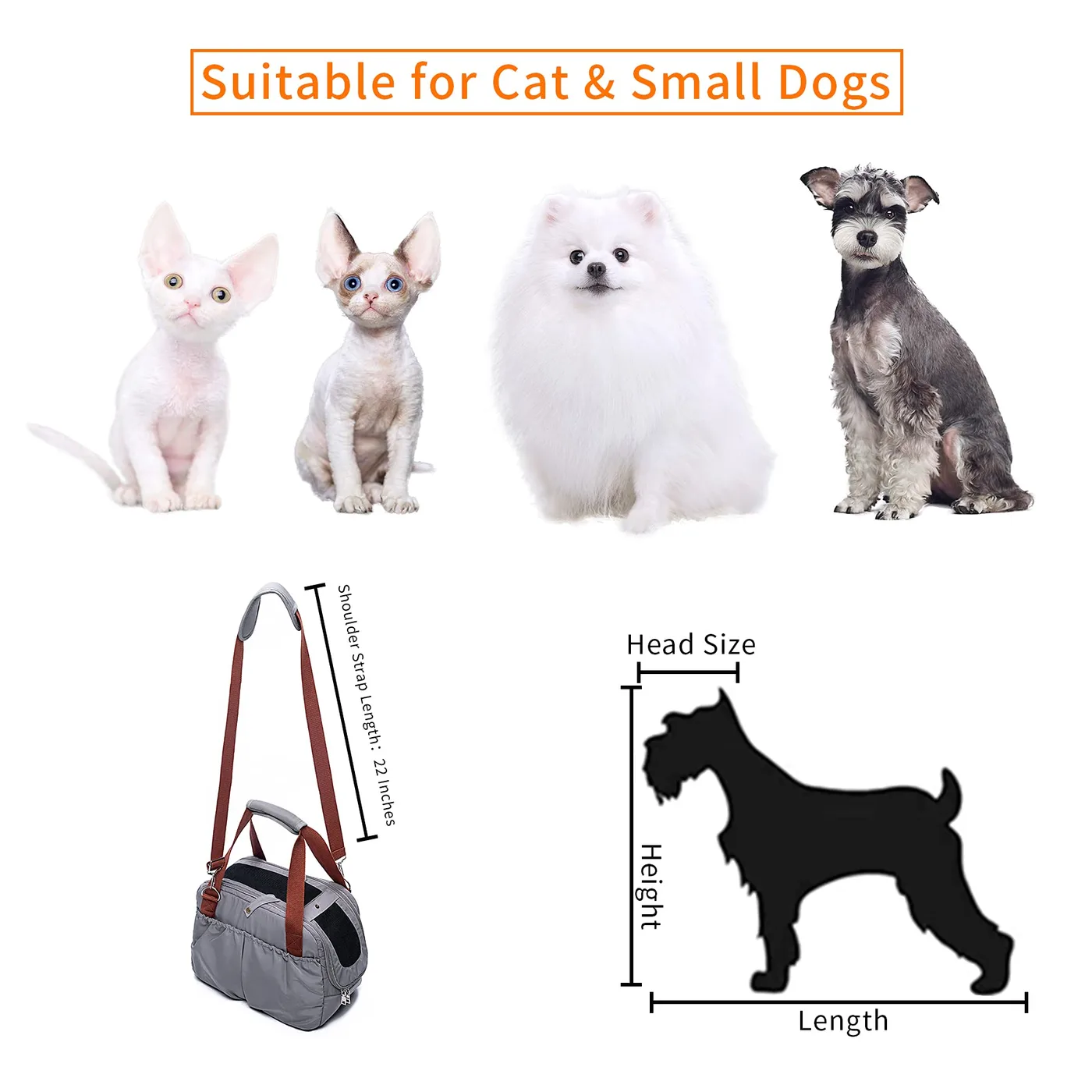
A custom dog carrier brief starts with the weight band, not the colour: strap width, base board thickness and mesh ratio all follow from how heavy the dog actually is.
What Elastic Webbing Actually Does Inside a Custom Pet Carrier
Elastic webbing is not a softer version of nylon webbing. It is a mechanical tolerance layer that absorbs the difference between a static pattern and a moving body. A pet shifts weight constantly — standing, turning, lying down, pressing against a mesh panel — and every shift sends a small impulse through the strap system. Rigid webbing transmits that impulse straight into the wearer's shoulder. Elastic converts part of it into stored energy and releases it slowly, which is why a well-tuned elastic insert makes a 9 kg carrier feel noticeably calmer than the same carrier built fully rigid.
The mistake most first-time private label programs make is treating elastic as a comfort material and stretching it across the entire strap. That decision removes all structural reference from the pattern. The bag no longer has a defined carrying geometry: it lengthens under load, the top opening twists, and the pet's weight line moves away from the wearer's center of gravity. The result reads as sloppy rather than premium, and it is almost always diagnosed too late — after bulk fabric has already been cut.
A better model is to think of elastic as a hinge. A hinge needs two rigid arms and a flexible joint. In carrier terms, the rigid arms are the structural webbing runs that define length and carry load, and the flexible joint is a short elastic segment — typically 80-150 mm — placed where shock absorption is useful and geometry drift is harmless. Placed with intent, elastic improves perceived quality; placed indiscriminately, it destroys silhouette.
From a brand-consultant view, elastic also solves a sizing problem that rigid construction cannot. A carrier sized for a 7 kg cat and a 10 kg small dog usually needs two SKUs. A tuned elastic yoke lets one shell flex across that range without the panel distortion that a pure stretch fabric would produce, which protects both your SKU count and your margin.
Stretch Percentage and Recovery: Reading the Numbers Before You Sample
Elastic suppliers quote two numbers, and only one of them is the number that matters. Stretch percentage tells you how far the webbing extends before resistance climbs steeply. Recovery percentage tells you how much of that extension it gives back. A webbing that stretches 40% and recovers 82% is worse in service than one that stretches 28% and recovers 97%, because the first one permanently lengthens and the second one does not.
For pet carriers, our production team specifies 25-40% working stretch and a minimum 95% recovery measured after 500 cycles at 30% extension. That band is wide enough to absorb movement but narrow enough to keep panel alignment inside ±2 mm across a standard shoulder run. Below 20% stretch the insert is decorative; above 45% the geometry drift becomes visible on shelf because the bag hangs differently from the one photographed for your listing.
Recovery is not a static property. It degrades with heat, chlorine, UV and repeated washing. A webbing that recovers 97% when it leaves the loom can recover 88% after thirty domestic washes if the elastomer core is a low-grade spandex. This is why we specify the elastomer, not just the stretch figure, and why the golden sample is retained as a physical reference rather than a photograph.
Testing is straightforward and cheap. Clamp a 300 mm sample, extend to 30%, cycle 500 times on a bench rig, rest for 30 minutes, and measure. If permanent set exceeds 3% of original length, reject the lot. Pair that with a 40°C wash test at five cycles and a 40-hour UV exposure check, and you have covered the three failure modes that actually generate returns.
Temperature is the variable most elastic specifications omit. Elastomer recovery falls as temperature drops and rises with heat, so a webbing tuned at 20°C behaves differently in a cold climate or in a hot car. Where a line will be sold across wide climate ranges, specify recovery across a 5-40°C band rather than at ambient alone, and reject lots that only meet the number at room temperature.
Elastic Versus Rigid Webbing: Assigning Each One a Job
The cleanest way to brief a closure and strap system is to assign every run of webbing a job title: structural, transitional or absorptive. Structural runs carry weight and set geometry — they are rigid, they are sewn with a box-X stitch, and they never stretch. Transitional runs manage routing and angle — usually rigid, sometimes semi-elastic. Absorptive runs handle shock and fit variance — these are the only runs that should be elastic.
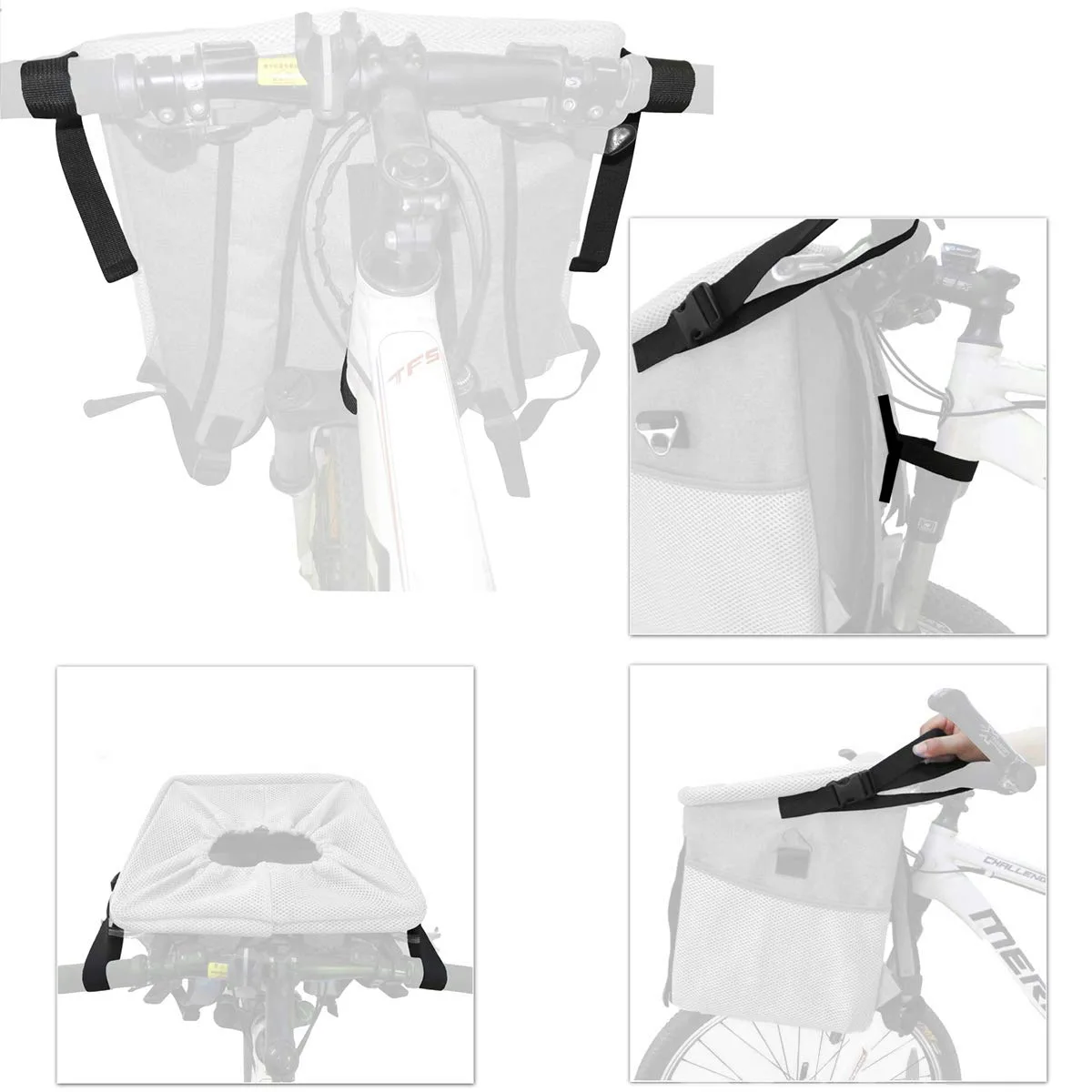
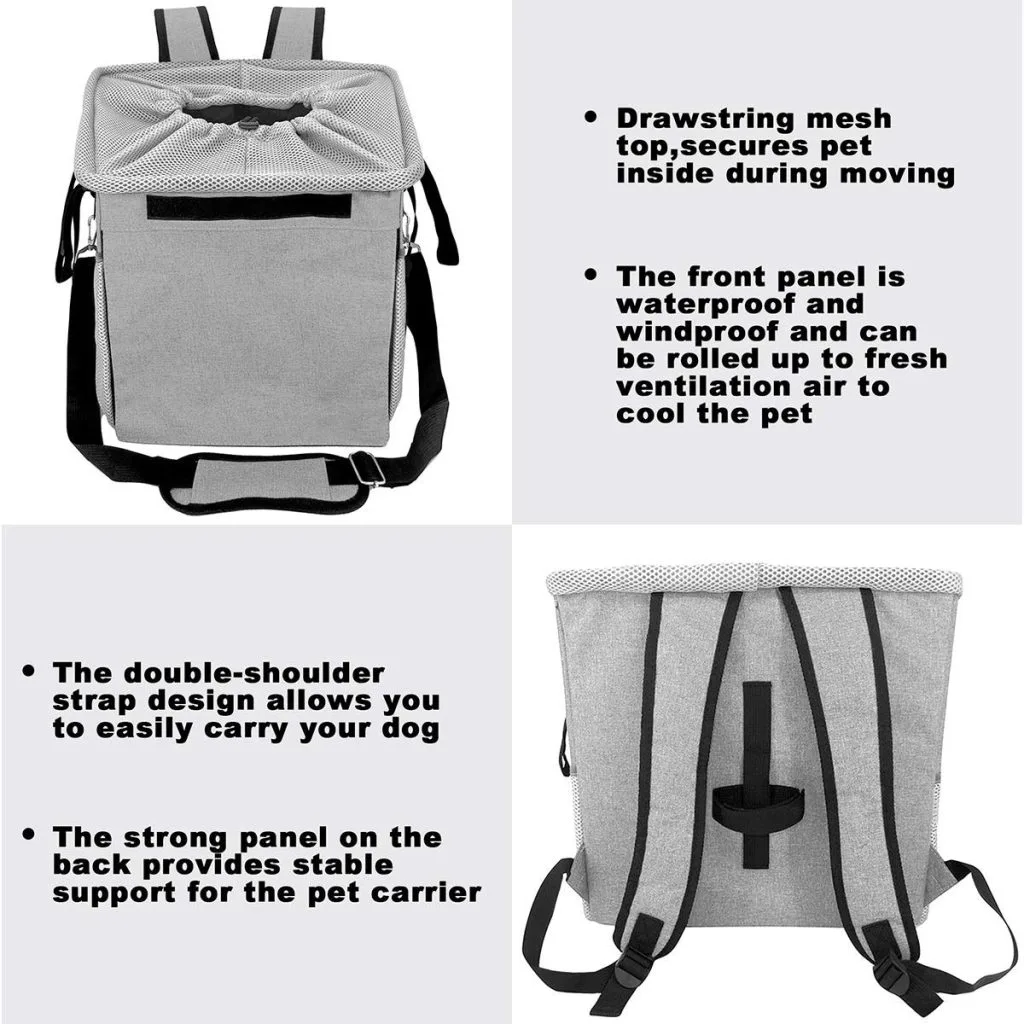
On a typical backpack-style custom pet carrier, the absorptive zones are the shoulder strap upper segment, the sternum strap bridge, and occasionally the interior tether that clips to a harness. On a tote-style carrier, the useful absorptive zone is far smaller: usually just the handle wrap or a short segment near the top opening. On a sling carrier, elastic earns its place in the body-contouring panel rather than the strap at all.
The rule we give brand teams is the 20-25% rule. Elastic length should never exceed a quarter of the total strap run. Inside that limit the wearer perceives forgiveness; outside it the wearer perceives instability. This is also the limit at which a logo jacquard woven into the elastic stays legible, because beyond roughly 30% extension the weave geometry distorts enough to visibly skew letterforms.
There is a second reason to cap elastic length: retail photography. A bag shot on a mannequin under studio lighting hangs under its own empty weight. If elastic is over-used, the empty bag hangs differently from the loaded bag, and your product photography will not match what the customer experiences in week one. That mismatch is a review-score problem, not a design problem, but it starts as a spec decision.
The transition between rigid and elastic is where assemblies actually fail. Two materials with different elongation sewn together concentrate strain at the stitch line, so the joint needs a stepped transition: a 10-15 mm overlap, a zigzag or chain stitch that permits movement, and a bar-tack on the rigid side only. A butt joint between webbing of different stretch tears within weeks of normal use, and the failure always looks like a substrate problem rather than a specification one.
Comfort Physics: Load Transfer, Shoulder Pressure and Pet Stability
Comfort in a pet carrier is mostly a pressure-distribution problem. A 9 kg load on a 25 mm strap generates roughly 3.5 N/cm² of contact pressure at the shoulder; widen the strap to 38 mm and the same load drops to about 2.3 N/cm². Elastic changes this picture in a less obvious way: it lowers peak pressure during dynamic events — a step off a curb, a sudden pet movement — by extending the time over which the impulse is transferred.
That time extension is the whole point. Peak force on the trapezius during a walking step can be 1.4-1.8 times static load with rigid webbing. A properly placed elastic segment at 30% stretch brings that peak closer to 1.15-1.25 times static load. The wearer does not consciously notice the difference; they describe the bag as "easy to carry," which is exactly the language you want in a review.
Pet stability is the counterweight. Too much elasticity lets the carrier body oscillate, and oscillation is genuinely unpleasant for the animal — it is the same vestibular input that makes some pets carsick. We therefore decouple the two: elastic in the strap where it helps the human, rigid in the base and side panels where it stabilizes the pet. The floor panel of every carrier we build stays non-elastic and reinforced, because a pet that feels a firm floor settles faster.
Tuning, then, is a two-variable problem with a clear priority order: stabilise the pet first, then comfort the wearer. Brand teams sometimes invert this because wearer comfort is easier to demo in a showroom. The returns data says otherwise — the majority of comfort complaints on carriers trace back to the animal refusing to settle, not to shoulder fatigue.
Specifying Elastic Webbing: Fiber, Weave, Width and Finish
An elastic webbing spec has four independent axes, and each one is a place where a program can quietly lose money. Fiber: polyester sheath with spandex core is the default; nylon sheath gives a softer hand and better abrasion resistance at roughly 12-18% higher cost; a natural rubber core is cheaper but ages badly and should be avoided in any product with a two-year brand promise. Weave: plain weave is stable and cheap, twill gives better recovery, and jacquard allows branding at a real tooling premium.
Width is the axis most often chosen for looks rather than function. A 25 mm elastic looks delicate and is fine for a sternum bridge; a 38 mm elastic is the right width for a shoulder insert because it spreads pressure; a 50 mm elastic webbing should be reserved for waist belts on larger dog carriers. Note that elastic behaves differently from rigid webbing at the same nominal width: it necks down under extension, so a 38 mm elastic at 30% stretch is effectively closer to 34 mm at the contact surface. Specify the width you need at stretch, not at rest.
Finish matters for brand perception more than designers expect. A matte-finish elastic reads as technical and outdoor; a glossy finish reads as fashion; a brushed finish reads as soft-goods premium. Because elastic is often the only webbing the customer touches directly on a sling, its hand is a disproportionate share of perceived quality.
Colour is the fourth axis and the one most likely to fail. Elastic is dyed in a stretched-relaxed state that differs from rigid webbing, so a Pantone match approved on rigid webbing will not automatically match on elastic. Our process is to approve elastic colour on its own lab dip, at rest and at 30% extension, before approving any adjacent rigid component.
Branding on Stretch: Jacquard, Print and Colour Matching
Branding elastic is tempting because it sits at eye level on the shoulder. It is also the hardest surface to brand cleanly. A jacquard-woven logo holds up beautifully at rest and distorts under extension — which is acceptable if the logo sits in a low-stretch zone and unacceptable if it sits across the elastic insert itself.
Our recommendation for private label programs is a two-surface approach. Put the primary brand mark on a rigid webbing run or a woven label adjacent to the elastic, and use the elastic for a secondary, repeating pattern — a micro-repeat of a brand glyph, a stripe sequence, or a tone-on-tone wordmark that tolerates distortion. A repeating motif survives stretch because the eye reads rhythm, not letterform precision.
Screen printing on elastic is possible but generally a poor investment: the ink film cracks at extension unless you use a high-elongation plastisol, and even then cycle life is limited. Heat transfer performs slightly better on flat elastic and worse on tubular. Silicone printing is the durable option and costs roughly 2.5-3 times a standard transfer, which is why we reserve it for premium lines rather than entry tiers.
Colour matching deserves its own line item. Elastic substrates shift under tension because the surface weave opens and reveals more of the core. Approval should therefore be done against a physical standard under controlled lighting, and should reference an established colour system rather than a printed swatch. For programs where colour accuracy is contractual, we align to a recognised standard such as Pantone colour standards and record the match on both relaxed and stretched samples.
There is a care-communication angle that brands routinely overlook. Customers do not expect elastic to need maintenance, and an elastic insert that has been tumble-dried hot will lose recovery quickly regardless of how well it was specified. A single line on the hang tag — reshape damp, dry flat, low heat — costs nothing and protects a comfort claim that would otherwise fail through no fault of the component.
Durability Testing: Cycle Counts, Wash Shrinkage and UV Exposure
Elastic fails in three predictable ways, and each has a cheap test. The first is permanent set — the webbing stops returning to length. Bench-test 500 cycles at 30% extension, rest 30 minutes, and reject anything above 3% residual elongation. The second is core degradation from heat and chemicals. A 40°C wash cycle repeated five times, then re-measured for recovery, catches cheap spandex cores almost every time.
The third failure is UV. Carriers used for outdoor walks put elastic in direct sun for hundreds of hours per year. A 40-hour accelerated UV exposure followed by a recovery measurement is enough to separate a polyester-sheath elastic with a UV-stabilised core from one that will chalk and lose 15% of its recovery within a season. We run this test on any elastic destined for an outdoor or travel line.
Abrasion is the fourth check and the one most programs skip. Elastic rubbing against a metal slider or a D-ring loses sheath filaments long before it loses recovery. A simple Martindale-type rub against the actual hardware specified for the program — not a generic counter-surface — tells you whether the slider geometry needs a radius change. Hardware choice and elastic choice are one decision, not two.
| Test | Method | Acceptance | Typical failure at 12 months |
|---|---|---|---|
| Cycle stretch | 500 cycles at 30% extension, bench rig | Residual set ≤3% | Strap lengthens, panel drifts |
| Wash shrinkage | 5 cycles at 40°C, line dry | Recovery ≥92% | Permanent sag after laundering |
| UV exposure | 40 hours accelerated, then recovery check | Recovery loss ≤5% | Chalking, colour fade, core embrittlement |
| Hardware abrasion | Martindale rub against specified slider | No sheath filament loss at 5,000 rubs | Fuzzing at slider contact point |
| Colour fastness | Crocking and wash, grey scale | Grade 4 minimum | Dye transfer onto lining |
Colour fastness against the lining is the quiet killer. An elastic that bleeds onto a light sherpa interior produces a defect that is invisible in bulk inspection and obvious in the customer's hands. Test the assembly, not just the component, and consider referencing textile test methods from bodies such as AATCC textile test methods when you write the spec.
Cost, MOQ and Sampling Timeline for Elastic Webbing Programs
Elastic changes the cost model of a carrier program in two ways. Directly, custom-woven elastic costs more per metre than stock elastic and carries a weaving minimum. Indirectly, elastic adds a component-qualification step that has to happen before bulk cutting, which means your critical path is set by the elastic, not the shell fabric.
Practically, that means sequencing matters. The moment you decide on a custom elastic, the loom booking becomes the longest lead item in the bill of materials. Our production team books elastic weaving in parallel with shell fabric rather than after it, which is the single most effective way to protect a launch date on a stretch-detailed program.
Commercial terms are stable across our programs: MOQ 500 units per colorway, samples in 6-10 working days, and bulk production across 35-50 days from sample approval and deposit. Inspection is to AQL 2.5 on the finished goods, with the elastic-specific bench tests run as an incoming lot check before components are issued. Where a brand wants third-party verification, we coordinate testing through an independent laboratory such as SGS third-party testing and report results against the approved golden sample.
The commercial upside of getting elastic right is a range that fits more pets with fewer SKUs, a strap system that reads as engineered rather than assembled, and a comfort story your retail copy can actually defend. The downside of getting it wrong is a sagging silhouette that no amount of photography will fix.
Freight and packing are affected as well. A strap with elastic inserts coils more tightly and reduces carton volume, which partly offsets the component cost on export orders, but it also complicates automated packing because the strap does not lie flat. Flag elastic-detailed products to the fulfilment team when the specification is written rather than when the first container is booked, because small notes of this kind are what separate a smooth launch from a scramble.
Design Checklist: Briefing Elastic Webbing for a Private Label Line
A useful elastic brief fits on one page and answers six questions. Where does the elastic sit, and what is its exact length at rest? What is the specified working stretch and minimum recovery? What is the sheath fibre, core fibre and weave? What is the width at stretch, not at rest? How is it branded, and how is it colour-approved? And which hardware does it contact?
The second half of the brief is the exclusion list, and it is where experienced programs separate from first launches. State explicitly that elastic is not used in any structural run. State that floor and side panels are non-elastic. State that the elastic insert is capped at 20-25% of the strap run. State that any logo on elastic must be a repeating motif rather than a primary mark. These four exclusions prevent the majority of elastic-related engineering changes.
Finally, decide the tier logic early. A three-tier range usually works best: an entry tier with stock elastic in a brand-adjacent colour and no branding on the stretch; a core tier with custom-dyed elastic and a woven adjacent label; and a premium tier with a custom jacquard motif and tuned stretch by size. This gives your merchandising team a real ladder to sell up, and it gives the production team three repeatable specifications instead of ten bespoke ones.
Elastic is a small component with an outsized influence on how a carrier feels, hangs and photographs. Specified as a tolerance layer and tested as a mechanical part, it is one of the cheapest ways to make a private label pet carrier feel like a designed product rather than a sewn bag.
Finally, retain the golden sample physically. Photographs and measurements do not capture hand, and hand is the attribute that drifts first across production lots. A retained reference, stored away from light and humidity and re-checked at every reorder, is the cheapest quality instrument available and the one most programmes forget to budget for until a dispute arises.
Why brands source here
- Pet carrier programs run since 2014; founding team in sewn goods since 2004
- SGS-verified production floor of 4,950 m² with 137 workers across 7 lines
- Monthly capacity of 200,000 units, audited to BSCI and ISO 9001
People Also Ask
Is elastic webbing durable enough for pet carriers?
Yes, when specified as a tolerance layer. A polyester-sheath, spandex-core elastic tested to 500 stretch cycles with under 3% residual set will outlast the shell fabric on a typical carrier.
Why does my carrier strap keep stretching out?
Permanent set is usually caused by low-grade elastomer core or by over-length elastic in a structural run. Re-spec to 95% minimum recovery and cap elastic length at a quarter of the strap.
What is the difference between stretch and recovery in webbing?
Stretch is how far the webbing extends under load; recovery is how much of that extension it returns. Recovery is the number that predicts long-term sag and should drive your specification.
Can elastic webbing be colour matched to Pantone?
It can, but elastic shifts tone when stretched because the weave opens. Match on a dedicated lab dip and record the reference at both relaxed and extended states.
Should a pet carrier floor panel ever use elastic?
No. The floor and side panels should stay rigid and reinforced so the animal has a stable surface. Elastic belongs in the strap and tether zones where it benefits the wearer.
How much does custom elastic webbing add to unit cost?
Custom-dyed elastic typically adds a modest per-metre premium over stock; custom jacquard weaving adds more because of loom setup. The bigger cost risk is schedule, not unit price.
Frequently Asked Questions
What stretch percentage should I specify for pet carrier elastic webbing?
Specify 25-40% working stretch with a minimum 95% recovery after 500 cycles at 30% extension. Below 20% the elastic is decorative; above 45% the carrier silhouette visibly changes between empty and loaded.
Does elastic webbing reduce the load rating of a strap?
Not if it is correctly placed. Elastic reduces peak impulse load but should never carry static load alone. Keep it as a short insert in an otherwise rigid run and back every junction with box-X stitching on rigid webbing.
Can my logo be woven into elastic webbing?
Yes, as a jacquard motif, but keep the primary brand mark on rigid webbing or a woven label. On elastic use a repeating micro-motif, because letterforms distort visibly above roughly 30% extension.
How long can an elastic insert be before the bag feels unstable?
Cap elastic at 20-25% of the total strap run, which on a shoulder strap is typically 80-150 mm. Past that limit the carrier oscillates under movement, which is uncomfortable for the pet and reads as low quality.
Will elastic webbing lose stretch after washing?
A polyester sheath with a quality spandex core loses under 8% recovery across five 40°C washes. Cheap natural rubber cores can lose 20% or more. Always require a five-cycle wash and re-measure before bulk approval.
Is nylon or polyester sheath better for elastic webbing?
Nylon gives a softer hand and better abrasion resistance at roughly 12-18% higher cost. Polyester is the default for most programs because it holds colour better under UV and costs less.
What width of elastic webbing should I use on a shoulder strap?
Use 38 mm for a shoulder insert and remember that elastic necks down under load, so a 38 mm elastic behaves like roughly 34 mm at 30% stretch. Specify the width you need at stretch.
How is elastic colour approved against rigid webbing?
Approve elastic on its own lab dip because the substrate shifts under tension and rarely matches a rigid-webbing dip exactly. Approve at rest and at 30% extension under controlled lighting.
What tests should be in an elastic webbing spec sheet?
Include a 500-cycle stretch bench test, a five-cycle 40°C wash recovery check, 40 hours accelerated UV with recovery measurement, an abrasion rub against the actual slider, and crocking fastness against the lining.
Does elastic webbing change the MOQ for a custom carrier order?
Stock elastic keeps the standard MOQ 500 units per colorway. Custom-woven or custom-dyed elastic carries a loom minimum, so book weaving in parallel with shell fabric to protect the launch date.
Can elastic be used on the interior tether of a pet carrier?
Yes, a short elastic segment on an interior safety tether is one of the best uses of the material. It absorbs sudden movement without transferring a jerk to the animal's harness.
How do I stop elastic webbing from fuzzing at the slider?
Test the elastic against the exact slider specified, increase the slider contact radius, and choose a twill or tighter weave. Most fuzzing complaints are a hardware geometry problem, not an elastic problem.
Talk to QUANZHOU JUNYUAN BAGS about a pet carrier program: MOQ 500 pieces per colourway, samples in 6-10 working days, bulk production in 35-50 days under AQL 2.5 inspection.
Get a free quote Request a sample