Nylon Webbing for Pet Carriers: Specifying the Strap
Specify nylon webbing by tensile rating and dye route, not by width alone. A 25 mm strap rated 900 kgf break strength, loaded at a 5:1 safety factor, comfortably carries a 10 kg pet; the next decision is whether solution-dyed yarn or piece-dyed webbing better fits your branding and colour-fastness budget.
Executive summary
Nylon webbing carries most of what matters on a pet carrier: shoulder straps, handle anchors, attachment loops and any point where load transfers from the shell to the person. Getting the specification right is therefore an engineering decision rather than a trimming one.
Four variables decide performance. Filament construction sets strength and abrasion behaviour, weave type determines hand and hardware grip, the dye route controls colour-fastness and cost, and width distributes load across skin contact. Shopping on width alone is how weak straps get specified.
Programme terms are straightforward and easy to plan around: MOQ 500 pieces per colourway, samples in 6-10 working days once the strap specification is frozen, bulk production 35-50 days after approval, inspection to AQL 2.5, T/T 30/70 terms and FOB Xiamen shipment.
Verification follows recognised test methods. Breaking strength and elongation are assessed under ASTM International methods, colour fastness under widely used textile procedures, and restricted-substance screening through accredited laboratories such as SGS before the first production roll is cut, because strap testing delayed to the end frequently pushes a whole launch date by several weeks, which is easily avoided when the plan anticipates it.
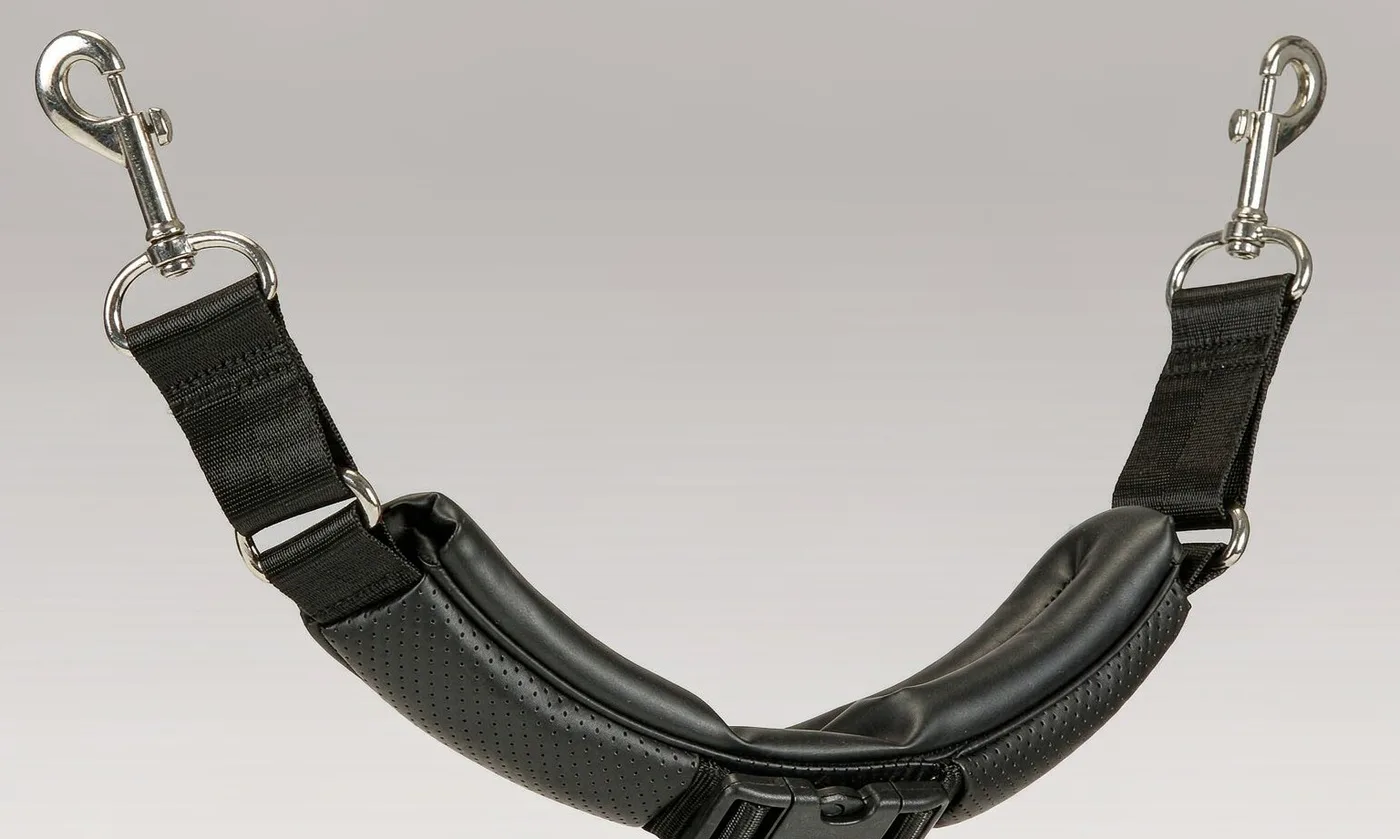
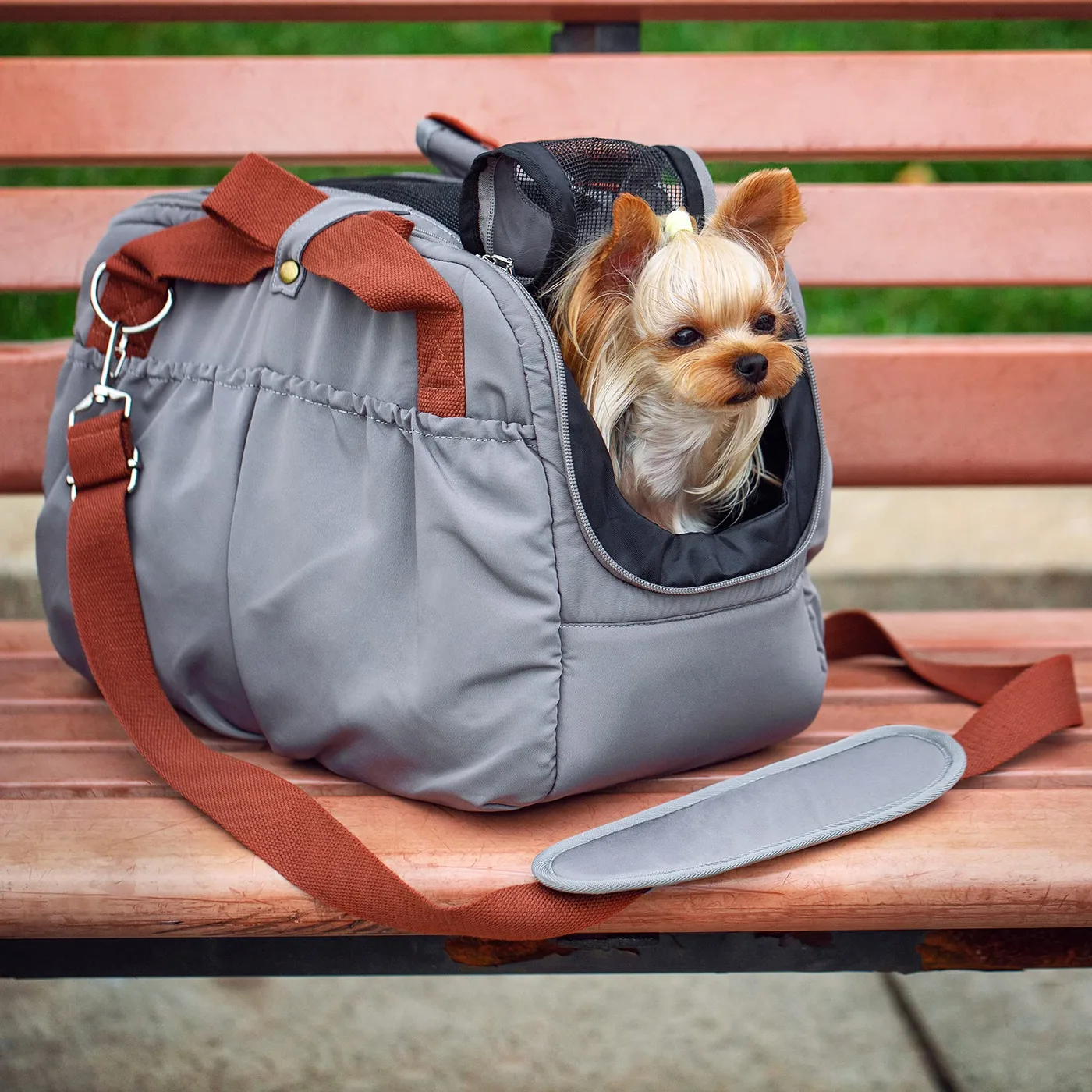
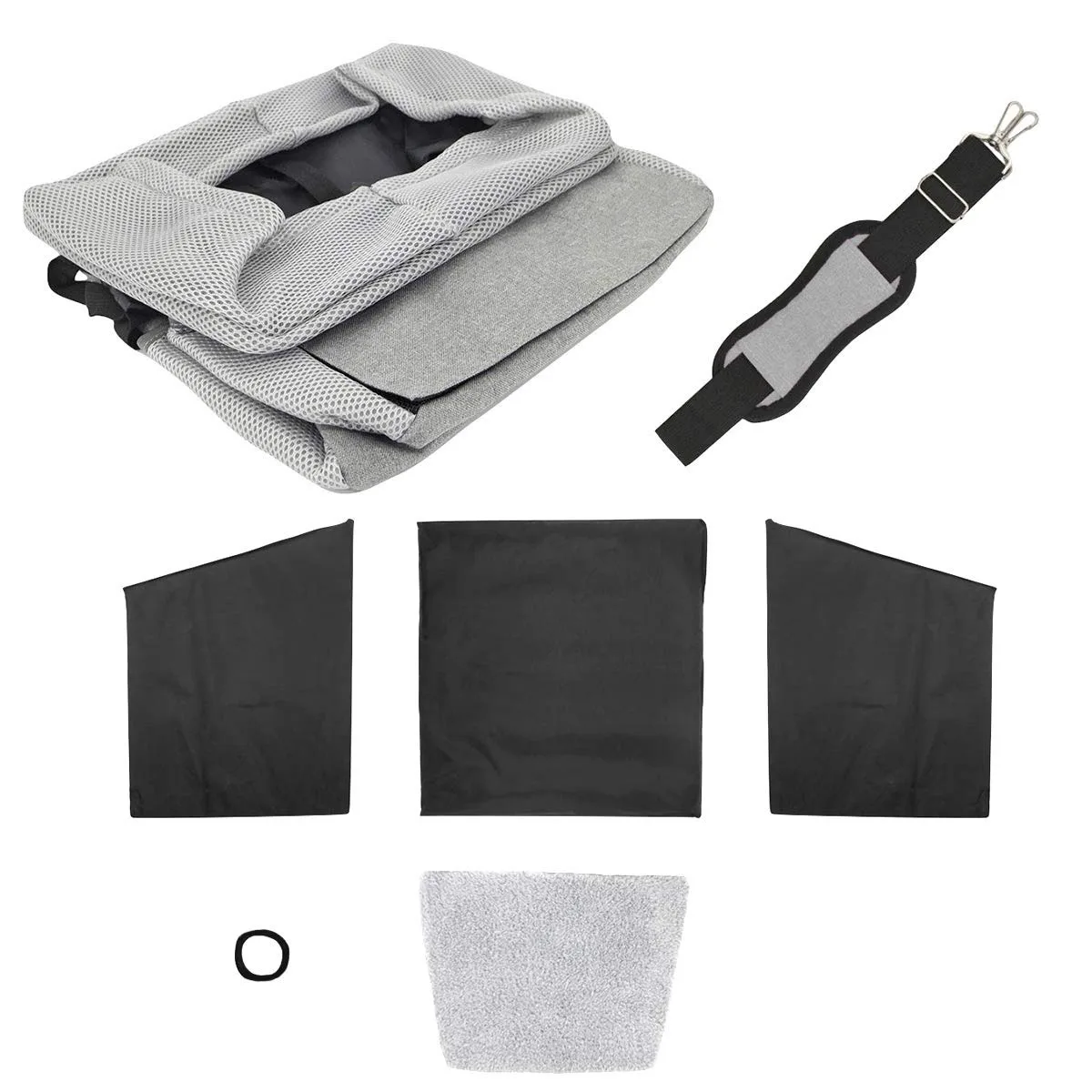
For a custom pet tote or backpack carrier, strap geometry is the first thing to fix - width, padding and load-lifter position decide how the bag carries.
Filament grades and how strength is built
Nylon 6 and nylon 6,6 dominate the webbing market, and the difference between them matters more than most specifications acknowledge. Nylon 6,6 has a higher melting point and slightly better abrasion resistance, while nylon 6 takes dye more readily and costs marginally less.
Within each chemistry, filament quality drives performance. Virgin filament yarn delivers predictable tenacity, whereas reprocessed filament is cheaper but varies more between lots, which shows up as inconsistent stretch rather than visible defects.
Twist level within the yarn is the quiet variable. Higher twist improves abrasion resistance because individual filaments support one another, while lower twist gives a softer hand and brighter dye appearance.
Weave construction then converts yarn properties into strap behaviour. A plain weave produces a firm flat strap with excellent hardware grip, whereas a twill pattern gives a smoother surface and slightly more diagonal flex.
Tubular constructions deserve their own mention. Woven as a flattened tube, they feel softer against skin and work well for narrow carry handles, though they perform less predictably in load-holding adjusters.
Denier, the yarn weight, interacts with everything above. Higher-denier yarns in a tighter weave deliver the highest strength-to-width ratios, which matters when a strap must stay narrow for aesthetics.
Finally, remember that strength comes from construction rather than coating. A finishing treatment can improve water behaviour but cannot rescue an under-built weave, which is why the two should never be traded against each other.
Treat these choices as one interconnected system. Change the weave and the suitable hardware changes too, so strap specification should always be reviewed alongside every component touching it.
Supply reality also shapes options. Some constructions are stock items available in dozens of shades, while others require loom time and minimum metres, so checking availability early prevents late redesign.
Finally, keep the number of distinct constructions low. Using one or two qualified weaves across a range simplifies testing, purchasing and spare-stock management without limiting how the product looks.
Nylon does absorb several percent of its own weight in water, which changes dimension slightly and must be accounted for in adjustable designs.
Finally, remember the strap is usually the first component owners touch. Its feel sets expectations for everything else they encounter afterwards.
Reading tensile data and choosing safety factors
Webbing suppliers quote breaking strength, usually in kilograms-force or newtons, measured on straight pulls of new material. That number is a laboratory result rather than a working figure, and using it directly is the most common specification error in this category.
Working from break strength downwards, three reductions apply. A safety factor accounts for dynamic loading, shocks and unknowns; a seam efficiency factor accounts for strength lost where the strap is stitched; and an ageing allowance covers UV and abrasion through the product's life.
A practical frame for pet carriers looks like this: take the maximum designed load, multiply by five for dynamic shock, then confirm that the sewn assembly still exceeds that figure after testing rather than assuming it.
| Strap width | Typical break strength | Recommended max load | Safety factor | Common use |
|---|---|---|---|---|
| 15 mm | 500 kgf | Up to 8 kg total | 5:1 | Attachment loops, light handles |
| 20 mm | 700 kgf | Up to 10 kg total | 5:1 | Carry handles, chest straps |
| 25 mm | 900 kgf | Up to 12 kg total | 5:1 | Shoulder straps, main anchor points |
| 38 mm | 1,400 kgf | Up to 18 kg total | 5:1 | Heavy-duty shoulder harness |
| 50 mm | 1,800 kgf | Up to 22 kg total | 5:1 | Large-breed support platforms |
Seam strength deserves separate treatment. A box-X stitch pattern with adequate bite typically retains 60-80% of webbing strength, whereas a poor pattern drops well below that, so always test assemblies rather than trusting raw webbing figures.
Testing protocols then follow. Breaking strength and elongation assessed under ASTM methods, plus a cyclic load test to 1.5 times rated weight for 500 cycles, together present a realistic picture of how the strap will behave in service.
Finally, document the assumption chain. Writing down every factor used to reach a working load gives future teams something to check rather than guess at when the line changes.
Dynamic loading deserves emphasis here. A carrier swinging during a walk generates momentary peaks well above static weight, which is exactly what the safety factor absorbs and what break-strength figures alone never capture.
Finally, test after ageing as well as new. UV exposure and abrasion reduce retained strength progressively, so a strap that passes new condition may fall short after realistic simulated use.
Hardware geometry contributes its own derating. Sharp-bar adjusters concentrate stress far more than radiused ones, which quietly reduces the effective strength of an otherwise well-rated strap.
Finally, require retest samples from bulk rather than from development stock. Small differences between lots are normal, and verifying periodically protects both sides from unpleasant surprises.
Traceable test records also support retailer audits, which increasingly ask evidence rather than assurances for load-bearing components.
Finally, share the results with both teams. Understanding real numbers changes design behaviour more effectively than any written guideline.
Dye routes and colour-fastness behaviour
Nylon takes acid dyes beautifully, which produces brilliant colours at low cost and explains why piece-dyed nylon dominates the market. Colour is added after weaving, so the palette is flexible and minimum quantities are modest.
The trade-off is fastness. Some brilliant shades, particularly fluorescent orange and bright red, fade faster under sunlight and crock more readily onto light fabrics, which is why bright fashion colours need test-backed specifications.
Solution-dyed yarn offers the alternative. Pigment is added to the polymer before extrusion, producing colour that runs through the filament, which dramatically improves light-fastness and eliminates most crocking risk.
Cost structure differs between routes. Solution dyeing needs higher minimum volumes per colour but removes a dyeing step, so it frequently wins for core shades that repeat annually, while piece dyeing suits seasonal accents.
Colour matching across components again requires discipline. Nylon absorbs differently from polyester, so a strap dyed to a name-matched shell will often sit a shade off, which is why matched sets should always be dyed against one physical card.
Wet fastness deserves special attention for pet products. Saliva, rain and cleaning all touch the strap, so wet crocking assessment prevents colour transfer onto linings, clothing and light-coloured upholstery.
Finally, plan UV exposure honestly. AATCC test methods quantify fade resistance well, and results should drive decisions about which shades can appear on straps that spend hours in direct sun.
Inventory logic matters too. Piece-dyed webbing allows small seasonal runs, so planners can test demand before committing to the larger quantities solution dyeing requires.
Finally, consider how the strap meets its neighbours. A bleeding strap can ruin a light liner faster than any amount of wear, so always test combinations rather than components in isolation.
Acid dye level also affects crocking. Poorly controlled baths leave unfixed dye on filament surfaces, and that residue transfers readily onto pale materials when warm and damp.
Finally, ask how the dyer controls pH. Substantial bath variation between lots is the usual explanation when identical shades behave differently season to season.
Drying method also matters. Heat-set webbing stabilises dimensions better and reduces subsequent shrinkage in adjustable assemblies.
Woven-in branding and decorative options
Jacquard weaving places a brand name directly into the strap as it is constructed, producing a mark that cannot peel, crack or fade separately from the material. For logo-forward programmes it is genuinely the most durable route available.
Costs must be understood before committing. Jacquard requires its own loom setup with a meaningful minimum, typically several thousand metres, so it suits recurring core programme straps rather than one seasonal colourway.
Contrast possibilities are broader than most teams expect. Tone-on-tone gives discreet refinement, while a contrasting weft yarn produces high-recognition straps that photograph well and read clearly across a shop.
Stitch-free decoration has real advantages beyond aesthetics. Since no ink or coating is involved, there is nothing to migrate onto adjacent materials, and nothing added to screen for restricted substances beyond the yarn itself.
Screen printing onto webbing is the low-volume alternative. It requires flexible inks and careful curing, and it performs best on flat portions that do not pass repeatedly through adjuster hardware.
Reflective yarn offers another route with genuine functional value. Woven into the strap edge or centre, it raises night visibility without changing how the strap behaves, which matters for anyone walking near traffic.
Finally, keep the strap pattern hierarchy simple. One decorative treatment per programme reads deliberate; three competing patterns on one product looks confused and weakens brand recognition.
Washing behaviour differs by technique. Woven-in pattern survives repeated cleaning unchanged, whereas printed decoration gradually dulls, which matters for products owners genuinely wash rather than wipe.
Finally, ask for a loom swatch before committing. Photographs flatten woven detail, and many patterns read noticeably coarser or finer once produced at scale.
Repeat spacing deserves attention too. Patterns that tile every few centimetres read as branded, while long repeats can hide the mark entirely on short visible strap sections.
Finally, plan around lead time. Loom setup and approval add weeks compared with plain webbing, so lock seasonal deadlines assuming the longer route.
Inventory risk also differs between routes. Woven-in branding cannot be applied to generic stock later, so forecast accuracy matters more than with undecorated straps.
Hardware compatibility and grip behaviour
A strap is only as good as the hardware holding it. The interface between webbing weave and adjuster determines whether a shoulder strap stays put or slowly creeps downward during a walk, and that behaviour depends on both components.
Nylon's relatively smooth surface can grip poorly in some adjusters. Selecting hardware with sufficient tooth depth, or specifying a slightly firmer weave, resolves slipping without resorting to oversized components.
End treatment deserves equal attention. Heat-cut ends prevent fraying on synthetic webbing but leave a hard edge that can scratch skin, whereas a folded and stitched return feels better and distributes load more generously.
Stitch density at hardware attachments then determines strength retention. Too few stitches concentrate load at one line, while too many perforate the webbing, particularly with high-twist yarn constructions.
Testing assemblies is not optional. Steady-state pull testing plus a cyclic creep check through the actual adjuster reveals failures that neither component would show measured alone.
Finish treatments change grip too. Silicone or resin finishes intended to reduce water absorption often make webbing slip in adjusters, so any finish decision must be validated alongside hardware.
Finally, keep one hardware family across the programme. Mixing component geometries across SKUs creates unexpected behaviour differences and complicates both testing and spare-part inventory.
Field adjustment matters more than laboratory grip. Owners adjust straps while wearing a loaded bag, so hardware should move smoothly under tension without collapsing once released.
Finally, review grip after finishing. Any water-repellent treatment changes friction, so retest slip behaviour whenever the strap finish specification changes.
Buckle geometry also influences wear patterns. Sharp internal radii abrade strap edges far faster than radiused channels, and this wear usually appears before any other component issue.
Finally, consider how quickly components can be replaced. Designs allowing strap replacement without returning the whole product earn significant goodwill at very low cost.
Stitching thread choice affects longevity too. Bonded polyester with adequate UV stability outlasts cotton-wrapped alternatives considerably in outdoor use.
Water, drying and outdoor behaviour
Nylon absorbs water, typically taking in several percent of its own weight when fully wet, and that absorption has three practical consequences for pet carriers: dimensional change, slower drying and temporary strength reduction.
Length change is small but noticeable on long straps. A shoulder strap can lengthen slightly enough to alter fit after heavy rain, so adjustable hardware with generous travel makes designs forgiving in real conditions.
Drying behaviour then matters for storage. Straps packed away damp develop mildew smells and can transfer colour into adjacent materials, which is why care cards should always mention full drying before storage.
Strength returns fully once dry, so this is not a durability problem. It does mean the product's weakest moment arrives immediately after submersion, which is worth remembering when setting test standards.
Mould resistance improves with cleanliness. Mud, spilled food and saliva all feed surface growth, so water-resistant finishes help indirectly by making the strap easier to wipe clean after an outing.
Freezing introduces another wrinkle. Wet webbing stiffens considerably in cold conditions, and any adjuster mechanism with tight tolerances may seize, so specify generous clearances for winter markets.
Finally, consider the whole wet-experience chain: strap, lining and padding all dry at different rates, and slowest-drying component determines when the product is ready to use again.
Salt exposure deserves a mention for coastal markets. Dried salt crystals abrade filaments during flexing, so rinsing advice belongs on care cards alongside drying instructions.
Finally, remember that colour transfer is worst when wet. Dark straps resting against pale linings while damp produce exactly the complaint brands hear about most.
Padding helps here as well. A slim foam sleeve inside a handle both spreads load and accelerates drying, since it prevents two wet surfaces pressing together for hours.
Finally, note that mildew smells are storage problems rather than material failures, so ventilation guidance genuinely reduces returns.
Temperature also plays a role. Warm damp conditions accelerate both odour development and colour transfer, making summer shipping the season most worth monitoring closely.
Cost architecture and order planning
Webbing cost is quoted per metre and reflects four drivers: filament quality, weave complexity, dye route and width. Understanding the relative weight of each allows trade-offs that protect performance while controlling spend.
| Cost driver | Low option | High option | Effect on performance | Spend impact |
|---|---|---|---|---|
| Filament grade | Reprocessed yarn | Virgin filament | Consistency of stretch | 15-25% |
| Dye route | Piece-dyed standard | Solution-dyed yarn | Light-fastness, crocking | 20-40% |
| Weave type | Plain weave | Twill or jacquard | Hand feel, branding | 10-60% |
| Finish | None | Water-repellent treatment | Drying, cleanability | 8-15% |
| Width | 15 mm | 50 mm | Strength, comfort | Proportional |
Programme terms then frame scheduling: MOQ 500 pieces per colourway, samples in 6-10 working days, bulk in 35-50 days after approval. Strap colourways frequently drive schedule risk, so freezing them early protects the launch date.
Jacquard minimums deserve explicit budgeting. Loom setup costs real money and only pays back across larger runs, so seasonal experiments should use printed or plain straps with separate decorative elements.
Finally, remember the total strap metres per unit. A design using short webbing segments in several places often costs more than one longer, better-quality strap that also performs more predictably.
Waste from cutting also belongs in the calculation. Tight angles and short pieces raise offcut proportion noticeably, so pattern layout should be reviewed with someone who cuts straps daily.
Finally, track the yearly total rather than the unit saving. Consolidating two similar constructions into one frequently produces larger annual savings than any individual negotiation.
Freight deserves a note here too, since webbing is dense and ships by weight as well as length.
Finally, plan colour consolidation alongside supplier consolidation, because both concentrate volume in ways suppliers price more favourably.
Sampling, testing and quality gates
Webbing development begins with a specification sheet rather than a sample. Filament grade, construction, width, break strength, dye route, finish reference and colour standard should all be written before anybody cuts anything.
- Breaking strength and elongation assessed by recognised method
- Colour fastness to rubbing and light, with the method named
- Adjuster slip test using production hardware and webbing
- Seam pull test on the actual box-X stitch pattern
- Cyclic load to 1.5 times rated weight for 500 cycles
- Restricted-substance screening for the destination market
Then build five proof assemblies and test them to destruction. The spread between those results tells the team more about process consistency than any single figure, and outliers usually indicate a tooling rather than material issue.
Inspection planning follows the usual pattern. An AQL 2.5 plan with written definitions for weaving faults, colour variation and stitching errors removes ambiguity at final audit.
Packing considerations are simple but easy to overlook. Webbing should ship flat rather than tightly coiled to avoid permanent kinking, particularly for wider structural straps used in premium programmes.
Finally, retain samples from every approved lot. A short labelled length per colourway is enough to resolve any dispute about shade or stiffness months later.
Pilot runs remain the best predictor of bulk reality. Twenty assembled units reveal adjuster stiffness, stitching pucker and end-finish issues invisible in a single carefully made sample.
Finally, record every result against the specification version it tested. Programmes that track this detail diagnose problems far faster when a later batch behaves unexpectedly.
Finally, keep strap lots traceable to finished cartons wherever possible, since that traceability shortens every future investigation considerably.
Finally, schedule one full review each season. Comparing received goods against the original approved reference keeps gradual drift from becoming a visible quality problem.
Matching strap specification to application across a range
A single strap specification rarely serves a whole product range well, and the programmes that run most efficiently define two or three strap classes and apply them consistently. Each class has a width, a construction, a rating and a dye route, and every product in the range draws from one of them.
The lightest class handles attachment loops, small tie-downs and decorative straps. It is narrow, economical and never the primary load path, which means the dye route rather than the tensile rating is the specification that matters most.
The primary class carries handles, shoulder anchors and any strap that transfers load to the person carrying the product. This is where width, filament grade and safety factor all have to be right, and it is the class that should be tested as a sewn assembly rather than as raw webbing.
| Strap class | Typical width | Construction | Break target | Common application |
|---|---|---|---|---|
| Light attachment | 10-15 mm | Plain weave, piece dyed | 200-400 kgf | Loops, tags, light anchors |
| Standard load | 20-25 mm | Plain or twill, solution dyed | 600-900 kgf | Handles, shoulder anchors |
| Heavy load | 32-50 mm | High-tenacity weave | 1,200 kgf and above | Large-breed carriers, base anchors |
| Contact comfort | 25-38 mm | Soft-hand speciality weave | Matches standard | Padded shoulder zones |
The heavy class exists for large-breed products and safety-critical anchors, and it is the one most often omitted from a first specification. Adding a 38 mm high-tenacity strap at the design stage costs far less than retrofitting one after a field failure.
A contact comfort class is worth defining wherever straps touch skin directly. It uses a softer weave at load-bearing widths so the product feels considered without changing the structural specification underneath.
Consolidating to three classes reduces minimum-buy problems, simplifies testing and makes every future reorder faster. Ranges that specify a different webbing for every product carry more complexity than their customers ever notice.
Document each class once, with its width tolerance, construction, rating, dye route and approved colour references, then reference the class in every product tech pack rather than repeating the detail each time.
Order and quality terms
- MOQ 500 pieces per colourway; samples in 6-10 working days
- Bulk production 35-50 days after approval; AQL 2.5 inspection standard
- T/T 30/70 terms, FOB Xiamen, full document set per shipment
People Also Ask
What is nylon webbing made of?
It is a woven narrow fabric made from nylon filament yarn, usually nylon 6 or nylon 6,6. The filaments are woven into flat or tubular narrow strips in various weaves, strengths and widths for load-bearing applications.
How strong is 25 mm nylon webbing?
Typically around 900 kgf breaking strength when new, though designs should apply a 5:1 safety factor and test sewn assemblies, since stitching commonly reduces retained strength by 20-40% depending on pattern.
What is the difference between nylon 6 and nylon 6,6 webbing?
Nylon 6,6 has a higher melting point and slightly better abrasion resistance. Nylon 6 accepts dye more readily and generally costs less, making it popular for fashion-forward colour programmes.
Does nylon webbing stretch?
Yes, modestly. Nylon has more natural elongation than polyester, which improves shock absorption but means straps feel slightly springy. That behaviour suits dynamic loads and works against precise length retention.
Why does nylon webbing feel stiff or soft?
Weave density, twist level and any finishing treatment determine hand. Tight weaves feel firm and grip hardware well, while looser constructions and soft finishes feel more comfortable against skin.
Can printed logos survive repeated washing?
Printed marks fade faster than woven ones. For long-term legibility choose jacquard weaving, since the pattern is structural and cannot rub away with cleaning or abrasion.
Is nylon webbing safe around pets?
Yes when specified and screened correctly. Choose smooth weaves without loose filaments, avoid brittle finishes, and request restricted-substance screening appropriate to the destination market.
How do I stop webbing from fraying at the ends?
Heat-cut synthetic ends seal the filaments, while folded stitched returns offer superior comfort and load distribution. Both work; the choice depends on strap position and expected handling frequency.
Frequently Asked Questions
What nylon webbing width suits a pet carrier shoulder strap?
Use 25 mm for pets up to about 12 kg total load and 38 mm above that. Narrower straps feel less comfortable because load concentrates on a smaller contact area, so width should follow both strength and carrying comfort.
How much weight can nylon webbing hold?
A standard 25 mm strap typically breaks near 900 kgf, though working limits should be far lower. Apply a 5:1 safety factor, then verify that stitched assemblies still exceed the target after seam efficiency is accounted for.
Does nylon or polyester webbing resist water better?
Polyester absorbs less water and dries faster, while nylon is stronger for the same width and more abrasion resistant. Choose nylon where maximum strength matters and polyester where damp performance is critical.
Can brand names be woven into the webbing?
Yes. Jacquard looms weave text and repetition patterns directly into the strap, producing a mark that cannot peel or fade separately. Minimum quantities apply, so it suits core programme straps rather than short runs.
Why do straps slip through adjusters?
Usually mismatched hardware and weave. Smooth-finish webbing in shallow-tooth adjusters creeps under load. Test with actual production components, since either part alone often appears perfectly acceptable.
Does nylon webbing fade in sunlight?
It can, particularly bright reds and fluorescent shades. Solution-dyed yarn improves light-fastness dramatically. Request measured fastness results and choose the dye route based on the product's real exposure.
Should strap ends be heat-cut or stitched?
Heat-cut ends resist fraying but leave a hard edge that some people find scratchy. Stitched returns feel softer and distribute load better, so they suit shoulder straps while heat-cut ends suit light attachment loops.
Does wet nylon lose strength?
Temporarily, yes. Fully saturated nylon loses a modest amount of tensile strength and regains it completely on drying. Sealed-wet-condition testing is therefore a conservative but honest evaluation approach.
What testing methods should be used?
Breaking strength and elongation per ASTM methods, colour fastness under AATCC procedures, and product-level cyclic load testing using the real adjuster hardware. Standard methods make results comparable between suppliers.
What is the minimum order quantity?
MOQ 500 pieces per colourway, with webbing usually purchased by the metre. Jacquard patterns carry loom minimums, commonly several thousand metres, so plan those separately from standard plain weaves.
How long do samples and production take?
Samples take 6-10 working days from a frozen strap specification and bulk runs 35-50 days after approval, inspected to AQL 2.5 with T/T 30/70 terms and FOB Xiamen shipment.
Does nylon webbing contain restricted substances?
Quality yarn should not. Request screening for the destination market, particularly azocolourants and heavy metals in dyed batches, since those remain the most common causes of failed compliance reviews.
Can nylon webbing be colour matched to the shell?
Yes, but nylon absorbs dye differently from polyester fabrics, so identical names do not guarantee matched results. Always dye against one physical reference card and approve the assembled sample under retail lighting.
How should I clean nylon straps?
Use mild soap, cold water and a soft brush, then air dry fully before storage. Avoid bleach and high heat, both of which degrade nylon filaments and shorten usable life noticeably.
Talk to QUANZHOU JUNYUAN BAGS about a pet carrier program: MOQ 500 pieces per colourway, samples in 6-10 working days, bulk production in 35-50 days under AQL 2.5 inspection.
Get a free quote Request a sample