Swivel Anti-Twist Hardware in Custom Pet Carrier Design: A Spec Guide
An anti-twist swivel is a rotating joint that lets a leash or tether turn without winding the webbing, and it should be specified by rotation smoothness under load, cycle life and side-load behaviour rather than by size. The working private label spec is a riveted or ball-bearing swivel rated to a stated pull value that still rotates freely after a declared number of cycles.
Rotation is one of those product behaviours nobody praises and everybody notices when it is missing. A tether that winds itself into a twisted cord looks untidy in photographs, feels wrong in the hand and eventually weakens the webbing it is made from. A swivel removes the whole problem for a small addition to the bill of materials.
Our production team works to a fixed commercial envelope on custom programmes: MOQ 500 units per colourway, samples in 6-10 working days, bulk production in 35-50 days after written sample approval, and inspection at AQL 2.5. Terms are T/T 30/70 against FOB Xiamen, and mechanical test methods referenced throughout this guide follow the standards catalogued by ASTM International. Every swivel route described below fits inside that envelope, so the decision stays a design one rather than becoming a schedule negotiation. Rotation drawings record the swivel reference, finish code and mating tape together, and cycle and side-load reports are filed against the lot. A substitute that looks identical still has to repeat both tests before it can enter production.
Private label pet bags and carrier programmes share one packaging standard here, so a mixed order does not add a second carton size or handling charge.
The Anti-Twist Problem: Why Rotation Matters More Than Strength
Strength is the specification everyone writes and rotation is the one everyone forgets, yet the two rarely fail in the same order. A tether strong enough to hold ten times its working load will still be returned if it winds itself into a knot, because the customer experiences the twist every single day and only ever infers the strength. Designing for rotation first is therefore the more commercially honest approach.
The mechanism of the problem is simple. Every time an animal turns, the tether accumulates a half turn of twist. Without a rotating joint somewhere in the chain, that twist travels up the webbing, and the webbing responds by folding, which is what the customer eventually sees and photographs. A swivel placed near the attachment point releases the twist before it can travel.
There is a safety dimension too. A wound tether shortens effectively, changes the geometry of the attachment and can load the anchor point sideways rather than along its intended axis. Side loading is the condition most hardware is least designed for, so a component chosen for straight pull can behave poorly once twisting has reoriented the load.
The design rule that follows is straightforward: if a component in your range rotates relative to the body during use, it needs a rotating joint, and the joint should be specified with as much care as the webbing around it.
That rule has an exception worth naming. Very short tethers and fixed handles do not accumulate meaningful twist, and adding a swivel there adds cost and a rattle without solving anything. Apply the rule where rotation actually occurs, which in practice means tethers, long leads and any strap that crosses a moving joint.
The citable conclusion for a tech pack is this: twisting is a geometry problem solved by a rotating joint, not a strength problem solved by thicker webbing, and specifying it correctly costs less than the alternative.
The commercial case for rotation is easiest to see in review language, which is where these decisions eventually surface. Customers almost never write that a product has a good swivel; they write that a lead stays flat, that nothing tangled, that the bag still looks tidy after a month. Those sentences are the visible output of an invisible component, and they are the difference between a listing that converts on its own merits and one that needs a discount. Because the component cost is small and the review effect is large, rotation is one of the highest-return specifications available in a private label brief.
Photography makes the same point visually and should be planned into the shoot rather than improvised. A single detail frame showing a tether hanging flat and untwisted communicates the benefit in a second, while a wide shot of the product on a model communicates almost nothing about it. Book one macro frame per style for the rotation point and the mechanism sells itself on the listing page.
Swivel Construction: Riveted, Ball-Bearing and Forged Designs
Three constructions dominate the category and each behaves differently after a season of use. A riveted swivel is a simple post through a base, which is cheap, quiet and adequate for light loads, but it tends to stiffen once grit enters the joint. A ball-bearing swivel places a ring of bearings between the two halves, which stays smooth under load and is the correct answer for anything dynamic. A forged or box swivel is a one-piece body with an internal rotating eye, which is the strongest option and the one used where side loading is expected.
Rotation quality is the specification that separates them in practice. A cheap riveted joint feels smooth in the hand on day one and stiff after a month outdoors; a bearing joint feels similar on day one and stays similar far longer. That difference is what you are paying for, and it is worth testing rather than assuming.
| Construction | Rotation under load | Side-load tolerance | Cost index | Best placement |
|---|---|---|---|---|
| Riveted post | Fair, stiffens with grit | Low | 1.0 | Light tethers, short leads |
| Ball bearing | Excellent, stays smooth | Medium | 1.9 | Dynamic everyday tethers |
| Forged box | Good, very robust | High | 2.3 | Heavy or side-loaded points |
| Plastic body | Fair, lightest | Low | 0.7 | Accessories, light use |
Break strength is the other number on the drawing and it should be stated as a working load rather than a marketing figure. A component rated to hold a large static load can still fail early under repeated side loading, so the tech pack should name both the straight-pull value and the side-load value.
Corrosion behaviour follows material choice and matters more here than on most components, because a swivel has moving surfaces that must stay free. A joint that has begun to corrode will seize long before it looks damaged from the outside, so salt spray testing is more predictive on this component than appearance inspection.
Noise is worth specifying too. A loose swivel rattles against a metal D-ring, and that sound is disproportionately annoying because it happens on every step. A polymer washer or a slightly tighter tolerance removes it, and neither costs much.
Acoustic behaviour deserves a line in the brief because it is disproportionately annoying when wrong. A loose joint clicking against a metal ring is heard on every step and is the kind of detail that ends up described in a review as cheap, even though nothing about the product is actually failing. The remedies are unglamorous and effective: a tighter tolerance band on the joint, a polymer washer between the two metal parts, or a finish that reduces metal-to-metal contact. Any of the three costs very little and removes a complaint category entirely.
Warranty and service language is the final place this decision shows up. A product that has been specified with a tested, documented joint can carry a confident statement about intended use, because there is a report behind it. A product specified by eye cannot, and the absence of that confidence eventually shows in how customer service handles the first claim.
Where a Swivel Belongs in a Custom Pet Carrier Range
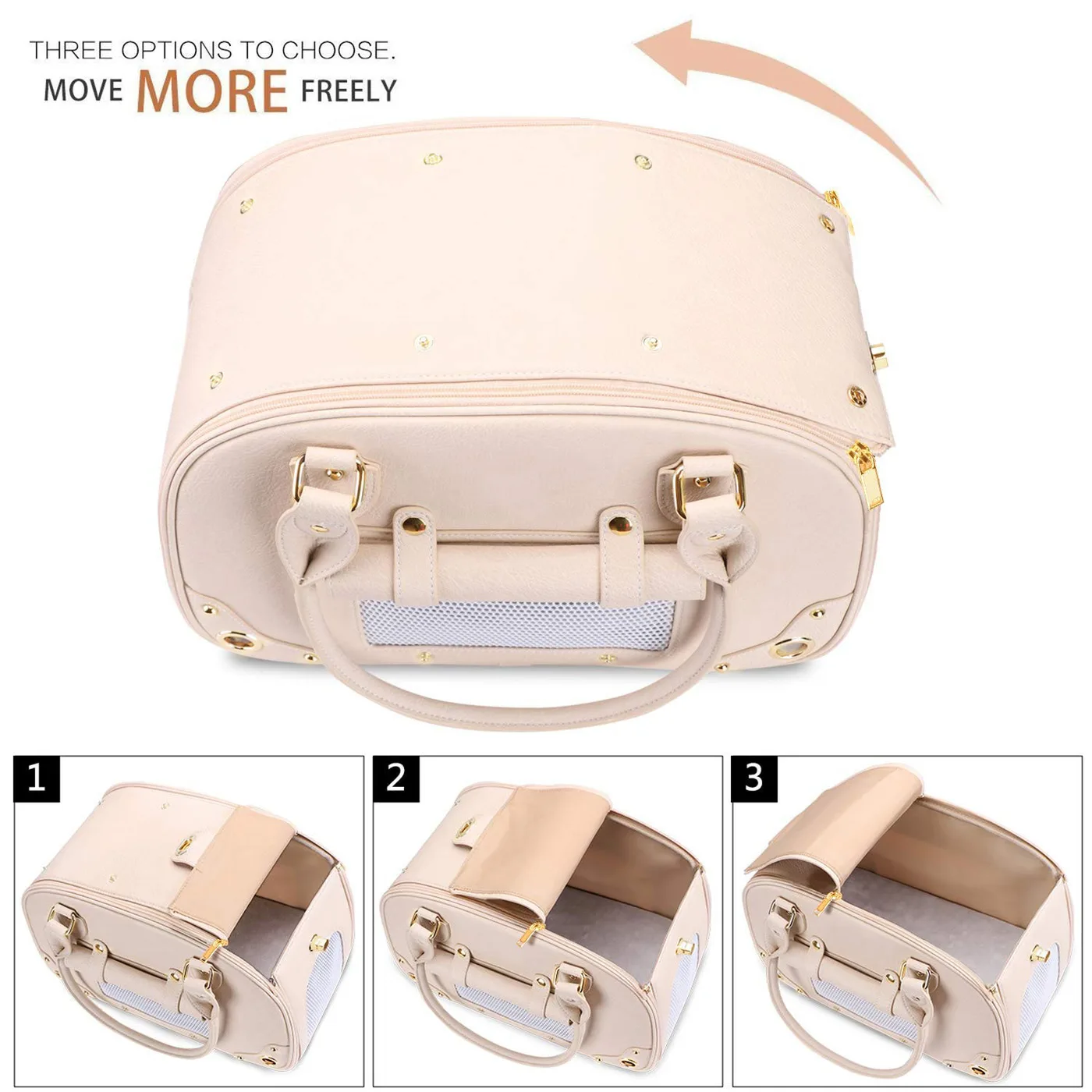
Placement is more consequential than selection. A swivel at the bag end releases twist before it reaches the shell, which protects the anchor and keeps the tether flat. A swivel at the collar end releases twist before it reaches the animal, which is the kinder placement but puts more hardware near the body. Many ranges use one at each end, and that is usually the right answer on a longer lead.
On the carrier itself, the swivel belongs at the interior tether point where a clip attaches to the harness. This is the highest-movement joint in the whole product and the one where twist accumulates fastest, so it is also where the benefit is most visible to the customer.
Shoulder straps are the placement to avoid. A rotating joint in a load-bearing strap introduces a point where the strap can flip, and a flipped strap is worse than a twisted tether. Keep rotation in the tether system and keep strap systems fixed.
Accessory attachments are the second good location. A waste-bag holder or a treat pouch that swings freely is easier to use and looks tidier, and the swivel cost on a small accessory is negligible relative to the perceived quality it adds.
Finally, consider the display context. A product hanging on a retail fixture with a swivel in the system will settle flat rather than twisting, which matters more than it sounds when a whole wall of product is judged at a glance.
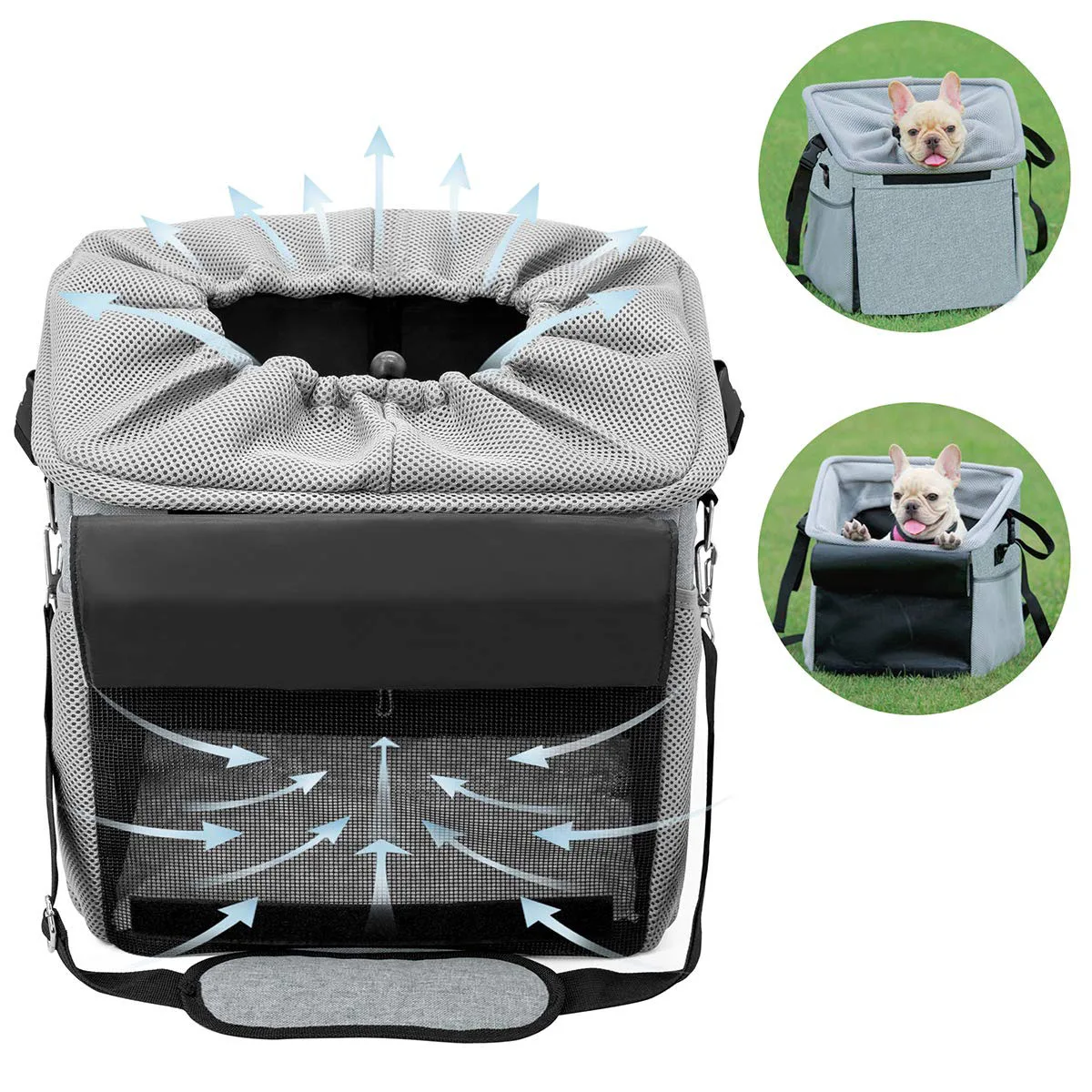
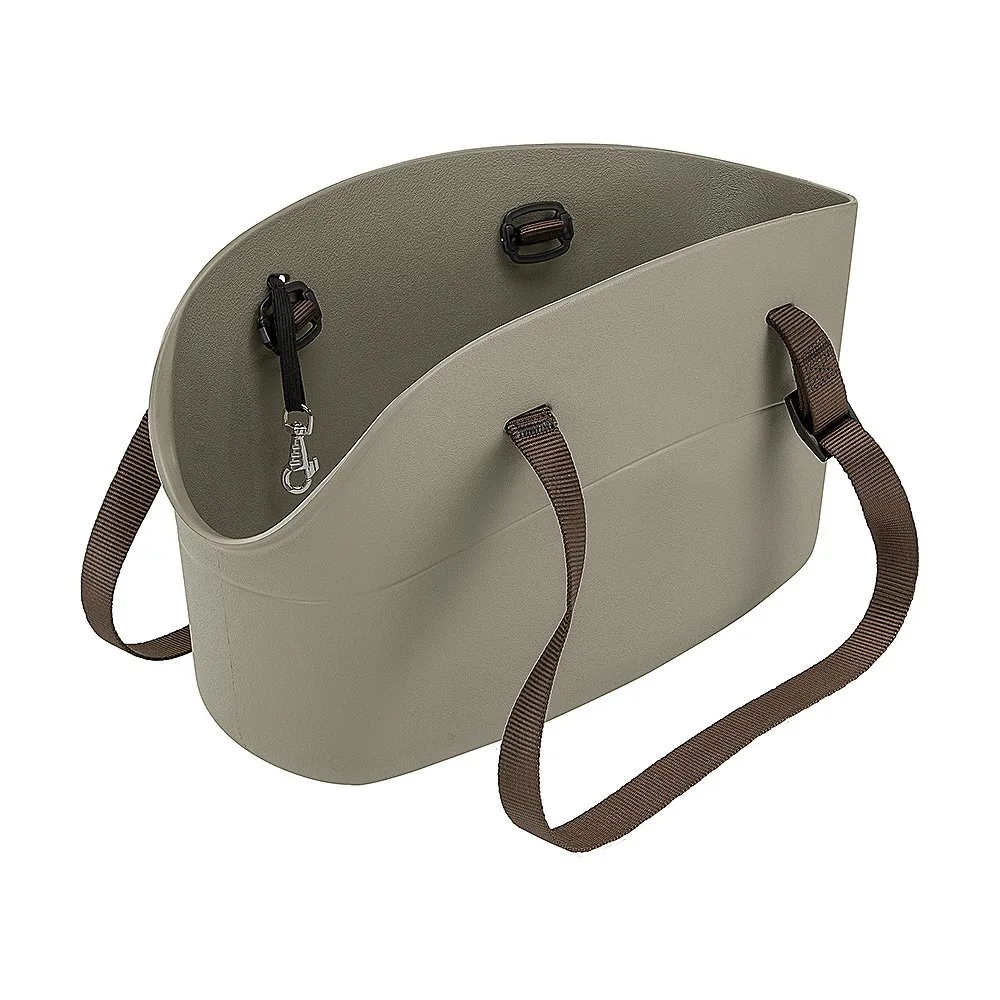
Different product categories in the same range will need different answers, and that is worth planning rather than discovering. A structured backpack-style carrier places the tether high and close to the body, where twist accumulates quickly and a swivel pays back immediately. A soft tote-style carrier with a short interior tether may not need one at all. A sling sits somewhere between the two. Mapping rotation requirements by category at the line-plan stage prevents both over-specifying, which wastes money, and under-specifying, which generates the complaints described above.
Size range matters as well. A larger carrier with a longer interior tether accumulates more twist per turn than a small one, so the requirement is not constant across the range even when the construction is. Set the rotation requirement per size rather than per style, and record it in the line plan so a size extension does not inherit a specification that was never tested for it.
Material and Finish: Brass, Zinc and Stainless in Rotation
Material choice on a swivel is a trade between corrosion resistance, weight and cost. Zinc alloy is the default for plated decorative bodies and is perfectly adequate in dry use. Brass has natural corrosion resistance and a warm tone that suits heritage-styled ranges, and it ages in a way many brands consider a feature. Stainless is the strongest and most corrosion resistant, and it is the correct choice for coastal markets or for any product that will be washed frequently.
Finish interacts with rotation. A thick decorative plate can build up on the moving surfaces and change tolerances, which is why plating thickness should be specified with the joint in mind rather than for appearance alone. A thin, even deposit performs better mechanically than a heavy one.
Colour matching follows the rest of the trim. Once the swivel tone is chosen it dictates the D-ring, the slider and the end caps, so it should be decided as part of the hardware system rather than component by component. Colour standards are maintained by Pantone, and naming a code in the tech pack prevents the usual argument about whether the sample matches.
Weight is the recurring objection to stainless and brass. Both are meaningfully heavier than zinc or polymer, and on a small accessory that difference is felt. Decide where weight is acceptable and where it is not, and let that decide the material rather than defaulting to the cheapest option everywhere.
Plating thickness is the specification that most often conflicts with function on this component. A heavy decorative deposit looks good and builds up on the moving surfaces, changing the clearance the joint was designed around, and the result is a swivel that feels stiff from new. A thin, even deposit specified with the joint in mind performs better mechanically and still looks correct. Say so on the drawing, because the default instruction on a plating line is to make it look good rather than to make it turn.
Washing behaviour is the practical test most brands forget to run. A product that will be machine washed needs a joint that survives detergent, agitation and heat without seizing, and the only way to know is to wash a sample five times and then cycle it. That test takes a week and prevents a season of returns from customers who did nothing unusual.
Testing Rotation: Cycle Counts, Grit and Side Load
Three tests predict almost everything about how a swivel will behave. A cycle test rotates the joint under load for a stated number of turns and then checks for play and roughness. A grit test introduces fine particulate and repeats the cycle, which is what actually happens outdoors. A side-load test pulls at an angle rather than straight, which is the failure condition most hardware is least prepared for.
Write all three into the tech pack with numbers: turns, load, acceptable play in millimetres, and the grit specification if you want to be thorough. Those lines convert an aesthetic judgement into a measurable one and give an inspector something to check on a random draw.
Conditioning matters on this component more than most. A joint tested dry in a sample room will behave differently after humidity and salt exposure, so a short conditioning step before testing catches the failures that otherwise appear in the second month of ownership.
Sampling should be lot-based. Five units drawn at random from production, cycled and then inspected, will catch a systematic problem in the bearing, the rivet or the plating. Independent verification is available through SGS, and a report tied to a lot number is the cleanest evidence if a claim is ever raised.
The paperwork that makes all of this enforceable is short. One test note per reference, naming the straight-pull value, the side-load value, the cycle count, the conditioning step and the acceptable play after cycling, attached to the purchase order and referenced on the golden sample card. Five lines, written once, and every subsequent argument about whether a delivery is acceptable becomes a comparison against a document rather than an exchange of opinions.
Re-order discipline follows naturally from that note. Require that any substitution of the swivel reference triggers a repeat of the cycle and side-load tests rather than a visual approval, because substitute components routinely look identical and behave differently. Most quality regressions in this category happen on re-orders, not on first buys.
Branding and Packaging a Mechanism Customers Never See
A swivel is a mechanism, and mechanisms are difficult to merchandise because the benefit is the absence of a problem. The way to sell it is to name the behaviour rather than the part: say the tether stays flat, say it will not wind, say it rotates freely under load. Those are claims a customer can verify in the shop, and they read as confidence.
Photography helps. A short sequence showing a tether that stays untidy without rotation and flat with it communicates the point in seconds, and it can be shot as a detail frame in a session that is already booked. One frame is enough and it does more than a paragraph of copy.
Packaging is the other placement. A header card line naming the rotation test, the cycle count and the material turns an invisible component into a reason to believe, and it also documents intended use in a way that is useful later.
Physical branding on the component is limited but possible. A laser mark on the flat of a forged body survives well; a mark on a rotating surface will be rubbed away. Keep any mark on a non-rotating face and keep it small.
Copy discipline matters here because mechanism claims are easy to overstate. Say what was tested and what the result was, and stop there. A line stating that the joint completed a stated number of cycles under a stated load is credible and checkable; a line claiming it will never tangle is neither. Retailers increasingly read packaging copy for supportable claims, and an honest, specific sentence survives that review while a broad one invites it.
MOQ, Sampling and Scheduling for Swivel-Equipped Styles
Swivels are stock components in most finishes, which means they rarely drive the schedule. The exception is a custom finish or a custom body, both of which add time and both of which should be booked before sample approval rather than after. Our commercial envelope is MOQ 500 units per colourway, samples in 6-10 working days, bulk in 35-50 days after written approval, inspection at AQL 2.5, T/T 30/70 and FOB Xiamen.
Assembly is where the real cost sits. Adding a swivel means adding an operation, and if the tether is sewn rather than clipped, it means an extra folded and stitched termination. Those operations are cheap individually and add up across a range, so decide which styles genuinely need rotation rather than fitting it everywhere.
Documentation prevents drift. Record the swivel reference, the finish code and the test result against the style, and require a repeat of the cycle test after any substitution. Most regressions on this component appear on re-orders rather than first buys, because a substitute that looks identical in a photograph can behave very differently after a season.
Finally, plan the buy by reference rather than by style. If three styles share one swivel, buy them together to reach a better price break, and keep the reference stable across seasons so the buy compounds.
Assembly cost is worth modelling before the decision is final, because it is the part that does not appear on a component price list. Adding a swivel to a tether means an extra termination, and a sewn termination means an extra fold, an extra bar tack and a few seconds of operator time on every unit. Across a five-style range at volume that becomes a real line in the conversion cost, which is why the recommendation is to fit rotation where it earns its place rather than everywhere it could technically go.
Series Planning: One Rotation Language Across a Launch Calendar
Rotation is a system decision that should be made once for the whole range. Choose one construction, one material and one finish, then apply them to every tether, lead and accessory attachment in the collection. The customer learns the behaviour once, and the range reads as designed rather than assembled.
A launch calendar benefits from that consistency in a specific way: a capsule added mid-season can use the same swivel reference already bought for the core range, which removes a first-article approval from an already compressed schedule. Standardisation is schedule insurance as much as it is design discipline.
Tiering is the planned exception. A premium tier can carry a forged or bearing swivel in a matched finish while the core tier carries a riveted body, and the difference is legible to a customer who handles both. One deliberate tier difference reads as range architecture; unplanned variation reads as drift.
The final discipline is restraint over time. Rotation hardware does not trend, and changing it annually spends money on approvals and photography without giving the customer anything they asked for. Decide the language once, record it in the line plan, and spend the creative budget on the parts of the product that customers actually see.
Capsule and collaboration drops benefit most from a fixed rotation language, because they are usually developed on compressed calendars with no room for a new component approval. If the core range has already established one swivel reference, the capsule inherits it, and the only new decisions are colour and packaging. That inheritance is worth designing for deliberately: choose the reference that will still be right in two years, not the one that is cheapest this season.
The final recommendation is to treat rotation as part of the brand's fit story rather than as a component line. When the whole range rotates freely, stays flat and photographs tidily, that consistency becomes part of how the brand is described, and it is a claim competitors cannot easily copy because it is the result of dozens of small decisions rather than one feature.
Order and quality terms
- MOQ 500 pieces per colourway; samples in 6-10 working days
- Bulk production 35-50 days after approval; AQL 2.5 inspection standard
- T/T 30/70 terms, FOB Xiamen, full document set per shipment
People Also Ask
What is a swivel clip used for?
It connects a lead or tether while allowing rotation, so the webbing cannot wind itself into a twisted cord.
How do you stop a leash from twisting?
Put a rotating joint in the chain, usually at the bag end and at the collar end, so accumulated twist is released before it travels.
Are ball-bearing swivels better than riveted ones?
They stay smooth under load for far longer, which is why they suit dynamic everyday tethers.
What causes a swivel to rattle?
Loose tolerance against the metal part it is clipped to. A tighter tolerance or a polymer washer removes it.
How strong is a swivel compared with a fixed ring?
A fixed ring is stronger in straight pull; a swivel is specified for rotation and should be rated for side load as well.
Can swivels be colour matched to other hardware?
Yes, through plating or anodising, referenced to a standard colour code in the tech pack.
Should every strap have a swivel?
No. Only components that rotate during use need one, and shoulder straps are better kept fixed.
Frequently Asked Questions
What does an anti-twist swivel actually do?
It releases the half turns of twist a tether accumulates each time the animal turns, so the webbing never winds into a folded cord.
Which swivel construction lasts longest?
A ball-bearing or forged body. A riveted post is adequate for light use but tends to stiffen once grit enters the joint.
Where should a swivel go on a pet carrier?
At the interior tether point and at the lead end. Avoid placing one in a load-bearing shoulder strap.
Do I need two swivels on a long lead?
Usually yes, one at each end, because twist accumulates from both the animal and the handler.
Why does my swivel seize after a few months?
Corrosion or grit in the moving surfaces. Salt spray testing and a grit cycle test predict this before production.
Is stainless worth the extra weight?
For coastal markets or frequently washed products, yes. For dry indoor use, zinc or brass is usually sufficient.
Can a logo be marked on a swivel?
Yes, but only on a non-rotating face. A mark on a rotating surface will rub away quickly.
What are the MOQ and lead times?
MOQ is 500 units per colourway, samples take 6-10 working days and bulk production runs 35-50 days after approval.
What does AQL 2.5 check on swivels?
Finish conformance, rotation smoothness, dimensional checks and a random draw for cycle testing.
Should I test swivels after salt exposure?
Yes. Conditioning before testing catches the corrosion failures that otherwise appear in the second month of ownership.
Does adding a swivel lengthen production?
Rarely, unless the finish or body is custom. It adds an assembly operation rather than a material lead time.
Can one swivel reference serve several styles?
Yes, and it should. Buying by reference rather than by style reaches better price breaks and stabilises re-orders.
Talk to QUANZHOU JUNYUAN BAGS about a pet carrier program: MOQ 500 pieces per colourway, samples in 6-10 working days, bulk production in 35-50 days under AQL 2.5 inspection.
Get a free quote Request a sample