PVC Leather Pet Carriers: Specifying Wipe-Clean Durability
PVC leather wins where carriers get dirty. It survives repeated wiping, shrugs off water and costs 20-35% less than mid-grade PU, but it weighs 15-25% more and stiffens near freezing unless the grade is cold-crack tested to minus 20 degrees Celsius. Specify the grade, not just the family.
Executive summary
Polyvinyl chloride leather, sometimes called vinyl, is a plastisol coating fused to a textile backing. Because the film is thick and non-porous, it handles the realities of pet transport better than almost anything else at its price: mud, drool, spilled water and disinfectant wipes all leave no trace.
The three decisions that matter are plasticiser system, weight and cold flexibility. Modern phthalate-free formulations satisfy European and Californian requirements while retaining the softness people expect, and they should be named explicitly rather than assumed.
Programme terms stay practical. MOQ 500 pieces per colourway, samples in 6-10 working days once the grade is frozen, bulk production 35-50 days after approval, inspection to AQL 2.5, T/T 30/70 terms and FOB Xiamen shipment.
Screening and documentation run alongside development. Restricted-substance conformance is reviewed against both European and Californian frameworks, using accredited laboratories for verification before any roll is cut, which keeps compliance off the critical path. Teams that treat those documents as development milestones rather than final paperwork rarely lose a launch date to testing, and they negotiate from a stronger position with retail technical teams who review files before listing decisions.
A custom pet travel bag has to reconcile two limits at once: the airline under-seat envelope and the ventilation the animal actually needs.
Where PVC outperforms every alternative
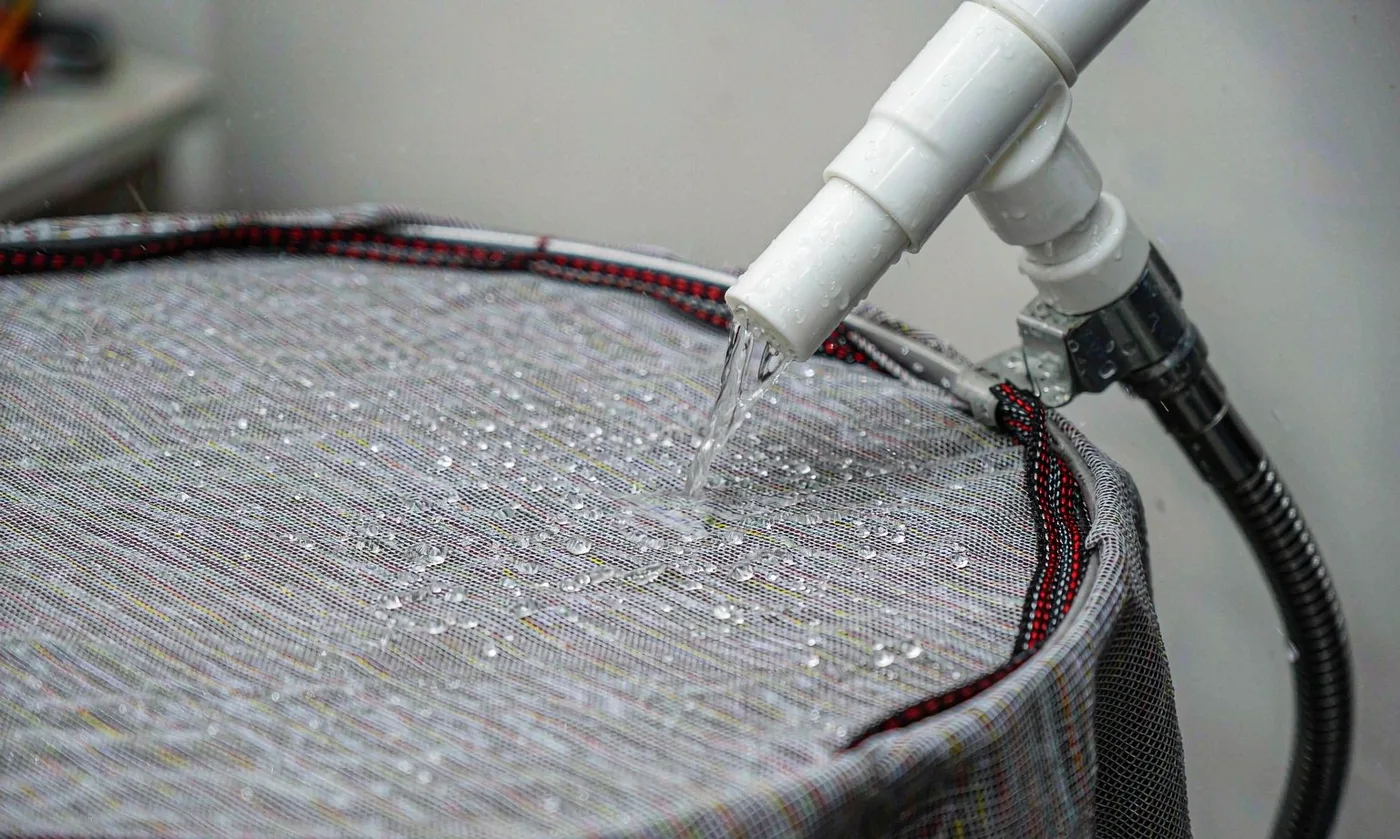
PVC's advantage is absorptive behaviour, or rather the lack of it. A non-porous plastisol film cannot take liquid inward, so anything that lands on the surface stays there until wiped. For a product that meets wet pavements and muddy paws, that single property simplifies ownership dramatically.
Chemical resistance is the second strength. Owners clean pet carriers with whatever is nearest, including disinfectant sprays that would haze a polyurethane topcoat. PVC tolerates most of them, which reduces the number of "ruined after cleaning" complaints.
Abrasion performance at base edges is genuinely strong. The thick film resists scuffing against floors and car boot lips far better than thin coatings, and because the colour runs through rather than sitting on top, scratches stay less visible.
Emboss retention is another quiet advantage. Deep patterns pressed into PVC hold their shape for years rather than flattening at contact points, so the visual identity survives alongside the physical one.
Price is where it becomes attractive for value tiers. Landing typically 20-35% below an equivalent mid-grade PU per square metre, it gives designers room to spend elsewhere in the build without leaving the coated-material aesthetic.
Finally, colour options are broad and stable. Pigments disperse evenly, repeat well across lots and resist the yellowing that affected earlier generations, particularly in mid tones where the effect used to be most visible.
None of this makes PVC the universal answer. It is the right answer when the product's job is to get dirty and come back clean, which describes a large share of the market.
Rental and multi-pet households value that behaviour most, and they tend to write reviews focused on cleaning rather than aesthetics, which is exactly where this material performs.
Finally, weigh the choice against positioning. A brand promising heritage patina should specify something else, while one promising practical ownership is telling the truth with vinyl.
Plasticiser chemistry and compliance reality
A PVC sheet is rigid polymer plus plasticiser, and the plasticiser is where nearly all regulatory attention falls. Older orthophthalate systems are restricted in Europe and require warnings in California, so any modern programme should specify phthalate-free from the start.
Two substitution families dominate. DOTP and similar terephthalate systems keep flexibility while avoiding the restricted list. Bio-based plasticisers derived from vegetable oils perform similarly at slightly higher cost and offer a stronger environmental claim.
Documentation belongs in the tech pack, not in an email. Ask for a declaration naming the plasticiser system, supported by screening results for European and Californian obligations, then file it where the next buyer can find it.
| Checkpoint | What to request | Typical acceptance | Failure symptom |
|---|---|---|---|
| Plasticiser declaration | System named by the mill | Phthalate-free stated | Inconsistent softness between lots |
| Restricted substances | Screening under EU rules via ECHA | Pass against SVHC list | Blocked customs clearance |
| California warnings | Proposition 65 review via OEHHA | No required warning | Retail delisting |
| Cold flexibility | Cold-crack at target temperature | No cracking at -20 C | Splitting in winter transit |
| Migration test | Contact with adjacent materials | No tackiness after ageing | Sticky patches appearing in store |
Migration deserves more attention than it usually receives. Plasticiser can travel into adjacent materials in contact, leaving tacky patches or hazing nearby coatings, so multi-material builds should include a contact trial.
Odour is the practical complaint that follows. Some sheets carry a characteristic vinyl smell that clears within days of airing; building that airing step into packing instructions prevents it reaching customers.
None of these requirements are exotic. They are simply easier and cheaper to satisfy during development than to retrofit after a season has shipped.
Season-over-season consistency deserves one more mention. When documented constraints live in the tech pack, subsequent buyers inherit clear boundaries instead of rediscovering them after a failed shipment.
Finally, treat declarations as living documents. Ask suppliers to reissue whenever regulation changes, since a perfectly valid file from two years ago may no longer reflect current obligations.
Cold crack and temperature performance
All PVC stiffens as temperature falls, but the temperature at which it cracks varies enormously by formulation. Standard grades lose flexibility somewhere near freezing, whereas cold-crack grades reach minus 20 degrees Celsius and sometimes lower.
The choice should follow geography rather than habit. A programme shipping mainly to mild climates is overspending on cold-crack chemistry, while one heading to northern markets needs it or will be dealing with split panels after winter transit.
Storage during transit matters as much as destination. Containers crossing cold oceans arrive cold, and unpacking straight into a warehouse rarely gives enough time to acclimatise before handling, so specify a conditioning step.
High-temperature behaviour is the opposite risk. Vinyl softens in a hot car, and some lower-grade films take a permanent impression from anything pressing against them, including hardware that ships assembled in the same carton.
Testing therefore should bracket both ends. A cold-crack assessment plus a heat ageing check at the upper expected temperature takes under two weeks and removes an entire category of seasonal complaint.
Practical construction helps too. Rounded corners distribute stress better than sharp ones, and allowing a little slack across large panels prevents the taut drum effect that encourages cracking when materials contract.
Shipping notes close the loop: advise customers to let the carrier reach room temperature before folding, which takes minutes and prevents most cold-related damage.
Airlines add their own twist. Cabin-hold temperatures in some aircraft storage areas drop well below those on the ground, so a bag that performs perfectly in a northern warehouse can still be exposed to unexpected cold.
Finally, set expectations in copy honestly. Telling owners that a winter-grade panel stays flexible is a competitive advantage worth stating, and it positions the product above generic vinyl competitors.
Insurance and warranty claims follow this pattern too. Seasonal returns concentrate in the first cold weeks, so a correct grade choice visibly protects margin during exactly the period retailers watch most closely.
Finally, record the decision. Noting which markets required cold-crack chemistry prevents a future buyer quietly downgrading the specification to save a few cents per unit.
Managing the weight penalty
PVC is heavy, typically 15-25% more than an equivalent PU construction, and shoppers notice the difference on the shoulder long before they read a specification. Every programme using it should therefore plan compensation somewhere else.
The first compensation is placement. Restricting PVC to base panels, lower side walls and wipe-clean linings keeps the benefits where mess happens while allowing lighter materials on upper surfaces that rarely get dirty.
The second is substrate selection. Modern backings have become considerably lighter, so specifying a lightweight knit rather than a standard woven base can reclaim a surprising share of the difference without affecting surface performance.
Third, cut the gauge intelligently. Moving from 1.2 mm to 0.9 mm on vertical panels saves weight with little loss of perceived quality, while keeping fuller gauge at the base where structure genuinely helps.
Freight economics deserve quantification before committing. Heavier builds cost more per container to move, so a slightly more expensive but lighter alternative sometimes lands at the same total cost once shipping is included.
Finally, set a unit weight target at the start and hold every material decision against it. Programmes that track grams from concept deliver products that feel appropriate at their retail price.
Hardware choices contribute their share. Every metal buckle, foot and keeper adds grams, so a lighter vinyl programme benefits from switching decorative components to engineered polymers where strength allows.
Structural design helps too. Supporting large panels with a frame or a reinforced base allows thinner material elsewhere, distributing weight where it aids rigidity instead of simply adding it everywhere.
Finally, communicate honestly with customers. Listing a realistic carry weight rather than omitting it builds trust, and heavier fabrics rarely trouble buyers who understood the trade-off before purchase.
Accessory additions also compound weight. Removable trays, padded mats and treat pouches can add another 150 grams before anyone notices, so accessories should be counted against the same target.
Finally, check balance rather than total alone. A slightly heavier shell carried close to the body often feels lighter than a marginally lighter bag whose contents sit far from the spine.
Designing for genuinely easy cleaning
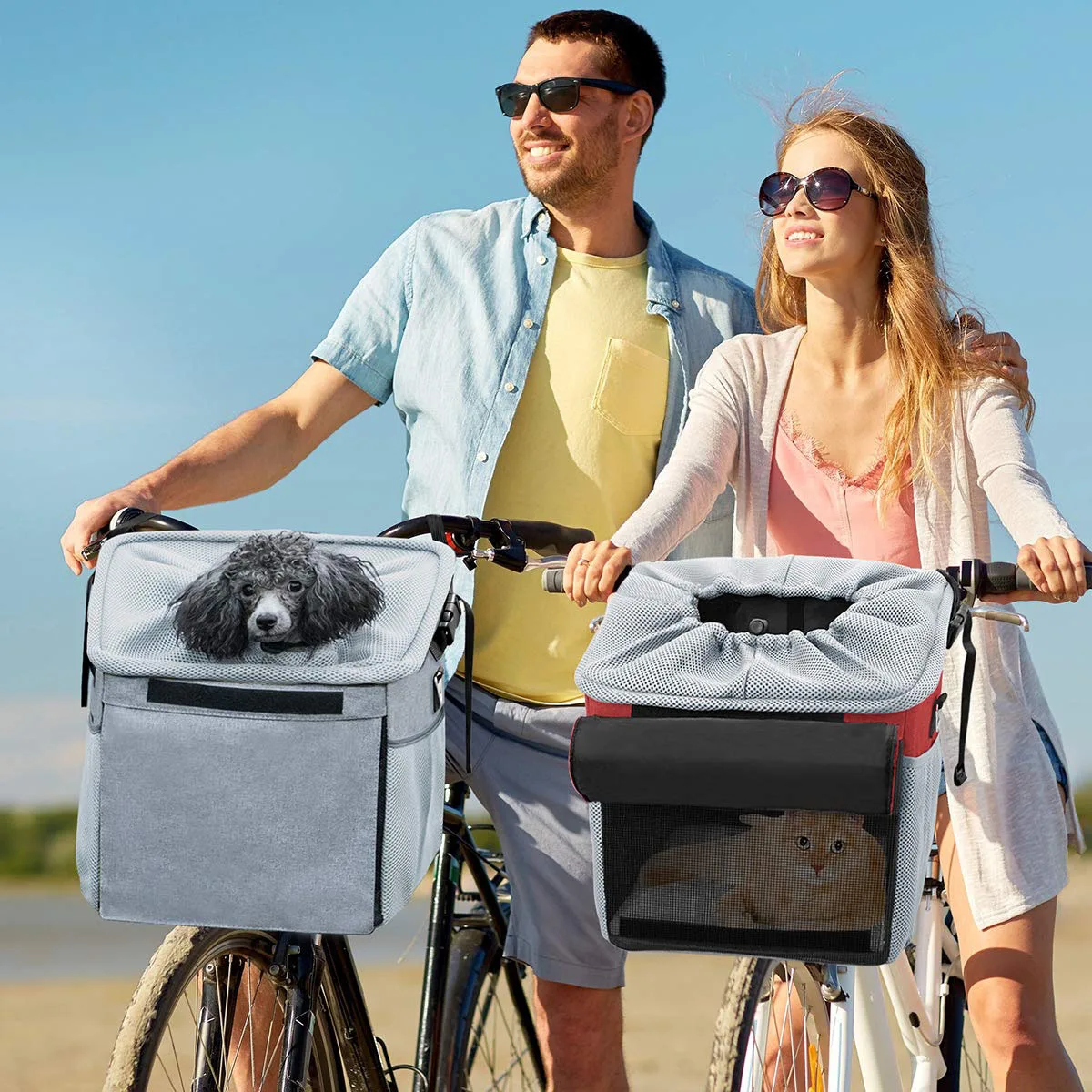
Wipe-clean claims should be engineered, not just written. The four obstacles to easy cleaning are exposed seam allowances, textured crevices, absorbent thread and hardware pockets where residue collects, and all four are design problems rather than material ones.
Seam strategy comes first. Bound or turned seam allowances leave a smooth continuous surface that wipes in one pass, whereas raw edges trap moisture and lint. The small cost of binding pays back many times in perceived cleanliness.
Texture choice interacts directly. Deep pebbled embosses look appealing but hold dirt in their valleys, so reserve them for upper panels and use finer grains anywhere near the base or entrance opening.
Thread matters more than most teams expect. Standard polyester thread absorbs liquid and stains visibly, while a filament or bonded finish resists absorption and keeps seams looking clean over time.
Interior geometry deserves equal care. Rounded internal corners, minimal panel junctions and a single-piece liner floor remove the places where hair accumulates, which is why removable tray-style linings work so well in this category.
Cleaning instructions then follow the build rather than contradicting it. Say plainly that the surface takes a damp cloth and mild disinfectant, warn against solvents and solvents-based sprays, and note lined areas separately.
Finally, test with the real mess. Wiping dried mud, pet hair and a spilled water bottle off production samples tells the truth about a design faster than any specification review.
Mesh adjacency also influences cleaning. Fabric ventilation panels sit alongside vinyl for good reason, but they need a bound edge transition so dirt does not collect in the seam between materials.
Finally, consider future-proofing. Owners replace linings and trays far more readily than shells, so designing those parts as interchangeable items extends perceived product life significantly.
Liners deserve special consideration. A removable, washable vinyl tray turns deep cleaning into a ten-second job, and it also protects the structural floor from moisture that would otherwise reach the core materials.
Access points influence how often cleaning actually happens. Wide openings with smooth returns allow a hand or cloth inside, while narrow tapered corners quickly become areas owners stop trying to reach at all.
Finally, include a cleaning card in the box. Simple, specific instructions measurably improve long-term appearance and reduce negative reviews that blame the material for a design shortfall.
Cost comparison across coated families
Per square metre PVC usually lands below PU and well below silicone, though the gap narrows once weight and freight are included. A realistic comparison therefore models the whole unit rather than just the material line.
| Family | Weight index | Wipe-clean | Cold behaviour | Material cost index | Best role |
|---|---|---|---|---|---|
| PVC (phthalate-free) | 115-125 | Excellent | Stiffens from about 0 C | 100 | Bases, linings, value shells |
| PVC cold-crack grade | 118-128 | Excellent | Flexible to -20 C | 115-130 | Northern markets, winter lines |
| Mid-grade PU | 100 | Good | Stays flexible | 130-160 | Structured panels, wraps |
| PU polyether | 100-105 | Good | Stays flexible | 165-200 | Humid markets, warranty lines |
| Silicone-coated textile | 105-115 | Very good | Stays flexible | 190-240 | Touch points, premium tiers |
Use that table per component rather than per programme. Base panels and linings almost always favour PVC, whereas shoulder contact zones and any large overhead panel usually justify something lighter.
Hybrid builds frequently win on total landed cost. By putting PVC only where the mess happens and a lighter family elsewhere, unit weight drops and freight savings partly offset the higher per-metre price of the other material.
Long-run economics favour consistency too. Qualifying one PVC grade and reusing it across several SKUs reduces minimum-buy problems and keeps colour matching straightforward for seasonal recolours.
Finally, remember the procurement calendar. Expect 6-10 working days for samples, 35-50 days for bulk, and MOQ 500 pieces per colourway when building the launch plan backwards from a retailing date.
Sensitivity analysis helps teams decide with confidence. Modelling unit cost at two exchange rates and two freight levels reveals whether a cheaper material still wins once a shipment is actually moving.
Finally, keep one version of the costing sheet. Multiple spreadsheets circulating between departments are the most common reason a quotation and a later purchase order disagree.
Reorder economics deserve equal attention. Repeating a qualified grade avoids repeat testing and shortened approval cycles, which frequently saves more money than any renegotiated unit price.
Sensitivity analysis also helps teams decide confidently. Modelling unit cost at two different exchange rates and freight levels shows whether a cheaper material actually survives contact with real-world shipping costs.
Finally, keep one version of the costing sheet. Multiple spreadsheets circulating between departments are the most common reason a program's quote and its actual purchase order disagree.
Branding methods that suit vinyl
PVC accepts decoration well, but the method must suit a non-porous, heat-sensitive film. High-frequency welding, screen printing and heat transfer are the main routes, and each leaves a different impression.
High-frequency welding is the standout. Radio-frequency tooling fuses the film into a permanent debossed mark with no ink, and it works even better on PVC than on PU because the plastisol layer responds cleanly. Marks survive years of wiping.
Screen printing needs a compatible ink system plus adequate curing. Vinyl inks formulated for PVC bond reliably, whereas generic formulations sit on the surface and crack after a few weeks of flexing.
Heat transfer gives photographic detail, which suits cartoon and photographic designs. Keep transfers away from high-flex zones and base edges; they perform best on flat upper panels where nothing rubs against them.
Stitched applique patches remain the safest option for multi-colour brand marks and have the added advantage of covering the area beneath, protecting the panel from the wear those zones would otherwise take.
Placement discipline matters more here than with printed textiles. Marks near the base or entrance collect dirt and discolour far faster, which makes even a well-executed logo look neglected within one season.
Finally, keep branding consistent with packaging artwork. A deboss on the panel and a printed version on the box should carry identical proportions, otherwise the line looks assembled from separate ideas.
Tooling costs influence which method makes sense. Dies for high-frequency welding represent a real investment, so they suit recurring core items rather than seasonal capsules where applied patches work better.
Colour choice for marks matters on textured surfaces; tonal debossing on pebbled vinyl can disappear entirely, whereas a slight contrast keeps recognition without appearing loud.
Finally, sample branding at production speed. Marks applied by hand during prototyping often look cleaner than anything produced on a pressured line, so always approve from a pilot run rather than a single sample.
Sampling, testing and roll planning
Begin PVC development by qualifying one grade rather than comparing many. Because performance varies sharply between formulations, aligning on one qualified construction early makes every subsequent colourway faster and safer.
Request the full documentation set at that point: plasticiser declaration, restricted-substance screening, cold-crack result, migration trial and ageing test. Together these take about ten working days and prevent a much longer conversation later.
- Cold-crack result at the target shipping temperature
- Migration trial against every adjacent material in the build
- Restricted-substance screening for the destination market
- Rub fastness assessed under recognised textile methods
- Branding trial at production dwell time and pressure
- Odour assessment after 48 hours in a sealed carton
Roll planning comes next and is often overlooked. Vinyl is supplied in long runs, and unusual colours or embosses carry their own minimums, so building a palette around stock-supported options protects both cost and calendar.
Packing considerations deserve attention because heavy material creases. Fold lines should be padded, cartons filled to avoid crushing, and products allowed to relax before photography, otherwise creases appear in launch imagery.
Inspection closes the sequence with an agreed AQL 2.5 plan, plus written definitions for creases, print misalignment and seam defects, since those three categories generate most disagreements.
Finally, review performance after the first season in market. Field data on cleaning, cracking and scuffing is the most reliable basis for deciding whether to adjust grade or gauge next time.
Retention samples are worth little effort but pay off well. Keeping one labelled panel per lot, stored flat and dark, gives an immediate reference when a future shipment looks different.
Pilot runs should stay mandatory. Twenty units produced at full speed reveal fold-line creasing, print misalignment and adhesive behaviour that a single handmade sample will never show.
Finally, document decisions rather than conclusions. Recording why a grade was chosen helps the next team member avoid reopening settled debates each season.
Finally, note that roll consistency deserves checking. Small differences between early and late portions of a shipment occasionally appear, so inspecting from multiple cartons rather than one catches variation early.
A short closing review with both sides also improves future rounds, since most improvements in this category come from small process adjustments rather than new material choices.
Why brands source here
- Pet carrier programs run since 2014; founding team in sewn goods since 2004
- SGS-verified production floor of 4,950 m² with 137 workers across 7 lines
- Monthly capacity of 200,000 units, audited to BSCI and ISO 9001
People Also Ask
What is PVC leather?
It is a polyvinyl chloride coating fused to a textile backing. The plastisol film is thick and non-porous, which gives excellent wipe-clean behaviour and strong abrasion resistance at a relatively low material cost.
Is PVC leather better than PU for pet carriers?
For cleaning and abrasion yes; for weight and cold flexibility no. Most strong programmes use both, placing PVC at the base and lining while using PU on upper panels and touch points.
Does PVC leather contain phthalates?
Older formulations did. Most current programmes specify phthalate-free systems such as DOTP or bio-based plasticisers, which meet restrictions in Europe and warning requirements in California.
How do I clean PVC leather?
Wipe with a damp cloth and mild soap or a mild disinfectant, then dry. Avoid solvents, abrasive pads and prolonged direct heat, all of which can haze or soften the film surface.
Does PVC leather crack?
It can, usually from cold flexing on standard grades. Specify cold-crack tested formulations for northern markets, avoid sharp corners in the pattern and condition cartons before unpacking.
Is PVC leather waterproof?
The film itself is effectively waterproof and will not absorb liquid. Seams and stitch holes still leak, so water-resistant is the accurate claim for a constructed carrier rather than waterproof.
Why does PVC leather feel sticky sometimes?
Tackiness usually indicates plasticiser migration to the surface or contact with an incompatible material. A contact migration trial during development identifies the issue before bulk production begins.
Is PVC leather suitable for airline-approved carriers?
Yes, provided the finished product meets the airline's dimensional and ventilation requirements. Vinyl's wipe-clean base works well in transit, and its stiffness helps the bag hold shape under a seat.
Frequently Asked Questions
Is PVC leather safe for pet carriers?
Yes, when the correct formulation is specified. Modern phthalate-free plasticiser systems meet European and Californian requirements. Always request a plasticiser declaration plus third-party restricted-substance screening before ordering rather than relying on a generic statement.
Does PVC leather crack in cold weather?
Standard grades stiffen near freezing and can crack under flexing. Cold-crack grades remain flexible to minus 20 degrees Celsius. Choose based on the markets you ship to, and condition cartons at room temperature before unpacking.
How does PVC compare with PU on cost?
PVC generally costs 20-35% less per square metre than mid-grade PU. The gap narrows once weight and freight are counted, since PVC construction typically weighs 15-25% more for the same coverage.
Can PVC leather be cleaned with disinfectant?
Most phthalate-free vinyls tolerate mild disinfectant sprays well, which is a genuine advantage over many polyurethane topcoats. Recommend testing your chosen product on a sample and advising owners to avoid solvents.
Is PVC leather heavier than PU?
Yes, typically by 15-25 per cent for equivalent coverage. Manage it by limiting vinyl to base panels and linings, selecting lightweight backings and reducing gauge on vertical surfaces.
Does PVC leather smell?
Fresh vinyl can carry a characteristic odour that dissipates within days. Build a 48-hour airing step into packing instructions, or request low-odour formulations if the product ships directly to consumers.
Which branding method lasts longest on PVC?
High-frequency welding lasts longest because it fuses the film without any ink layer. Screen printing with vinyl-specific inks also performs well; generic inks tend to crack once the panel flexes repeatedly.
Can PVC leather be used for the whole shell?
It can, though weight usually argues for a hybrid build. Vinyl at the base and lower walls handles mess, while lighter materials overhead keep the unit comfortable to carry for longer periods.
What thickness should I specify?
Use 0.9-1.2 mm for structured panels and 0.6-0.9 mm for wraps and lining applications. Heavier gauge improves perceived rigidity but adds weight that shoppers notice quickly at the shoulder.
How long do samples and bulk production take?
Samples take 6-10 working days once the grade is frozen, and bulk production runs 35-50 days after approval. Inspection runs to AQL 2.5 with T/T 30/70 terms and FOB Xiamen shipment.
What minimum quantity applies?
MOQ 500 pieces per colourway. Unusual colours or bespoke emboss patterns carry additional mill minimums, so building palettes from stock-supported finishes keeps both pricing and timing predictable.
Will PVC leather yellow over time?
Earlier generations did; current formulations resist yellowing considerably better, particularly in mid tones. Pale shades remain more vulnerable, so request accelerated ageing results before confirming ivory or stone colourways.
Is PVC leather recyclable?
Rarely in practice, since the laminate combines polymer and textile layers that most streams cannot separate. Prioritising service life and correct care has a larger measurable environmental benefit than end-of-life recycling here.
Can I mix PVC with nylon or polyester panels?
Yes, and hybrid builds usually perform best. Keep a barrier layer between vinyl and any plasticiser-sensitive material, and run a contact migration trial during development before confirming the combination.
Talk to QUANZHOU JUNYUAN BAGS about a pet carrier program: MOQ 500 pieces per colourway, samples in 6-10 working days, bulk production in 35-50 days under AQL 2.5 inspection.
Get a free quote Request a sample