OEM Pet Carrier: Manufacturing Options
An OEM pet carrier program gives you five independent specification layers: structure, materials, custom tooling, decoration and packaging. You can open all five at once or phase them. Entry is MOQ 500 pieces per colourway, sampling runs 6-10 working days per round, bulk 35-50 days.
OEM means you arrive with a specification and the production network builds to it, rather than choosing from a finished catalogue. The practical question is not whether to go OEM but how many specification layers to open in the first season, because each layer adds development time, tooling cost and one more thing that must be right before bulk starts. Our production team works with brand and retail clients in five layers: structure and pattern, material set, custom tooling for hardware and trims, decoration and identity, and packaging with compliance copy. A program that opens all five at once typically runs 95-130 days to first shipment; a program that opens two and phases the rest can reach shelf in 55-70 days. Commercial floor is MOQ 500 pieces per colourway, sample rounds run 6-10 working days each, and bulk production runs 35-50 days after sample approval and deposit. Every shipment is released against an AQL 2.5 inspection report. The recommended sequencing for a first OEM season is to control the two layers customers actually see - materials and identity - and adopt proven structure and packaging until sell-through justifies more.
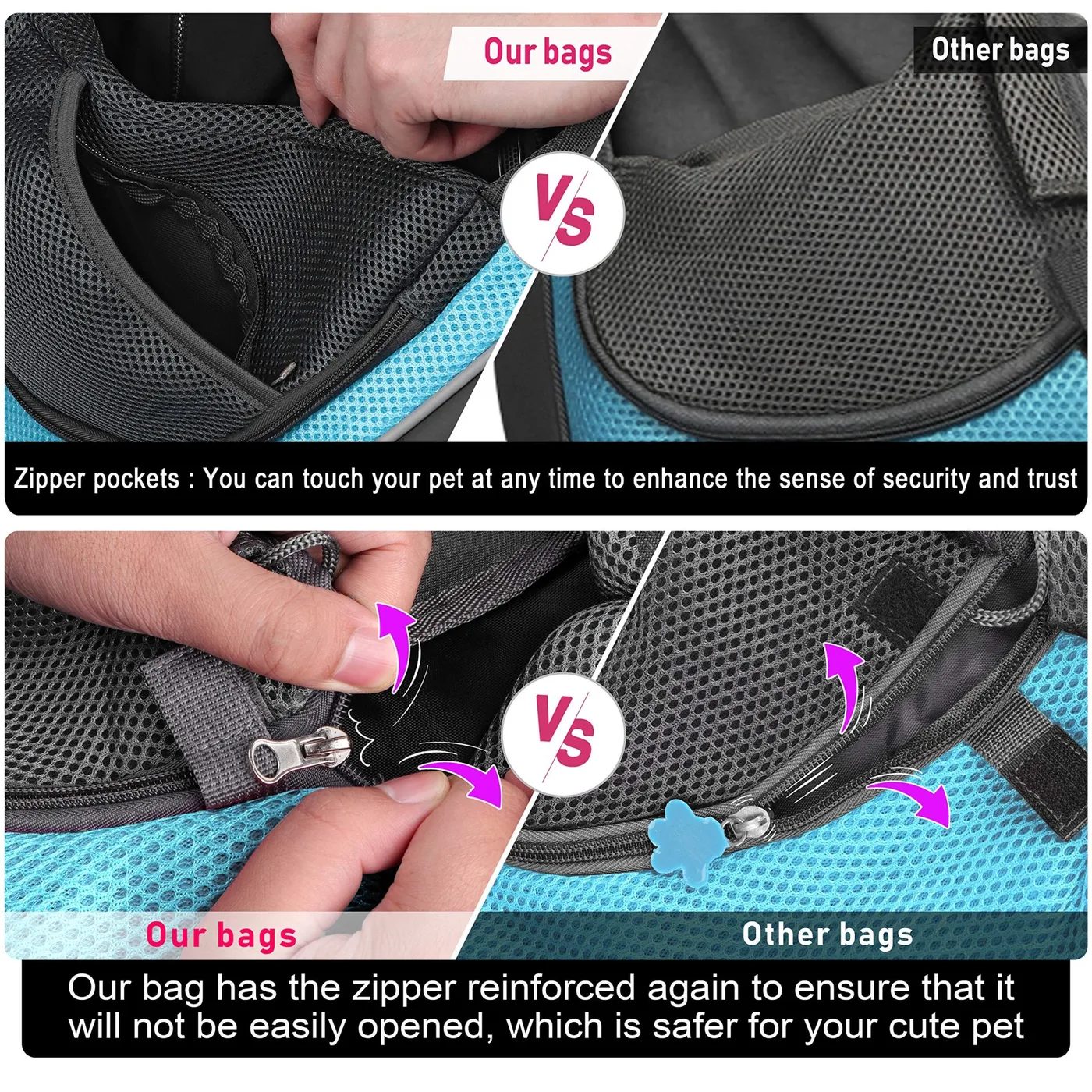
A custom cat carrier is restrained by behaviour rather than by weight, so locking sliders and bound internal seams matter more than load ratings.
What OEM Actually Controls: Five Independent Specification Layers
The word OEM is used loosely in this category, which causes real budget damage. In a pet carrier program it helps to separate the offer into five independent layers, because each layer has its own cost, its own lead time and its own risk profile, and a brand can open them in any combination.
Layer one is structure: the pattern, the panel layout, the frame or board system, the ventilation architecture and the closure design. This is the most expensive layer to open and the slowest to stabilise, because it requires pattern work, a construction sample and usually a second round to resolve fit. Layer two is the material set: shell, lining, mesh, foam, webbing, zipper and hardware finish. This layer is where most visible differentiation actually happens and where cost moves in clear steps.
Layer three is custom tooling: an engraved zipper pull, a moulded buckle, a silicone patch die, a custom-shaped eyelet or a branded plate. Tooling carries a one-off charge and a longer lead time, but after it is paid for it makes every subsequent reorder recognisably yours at almost no incremental cost.
Layer four is decoration and identity: the printed or embroidered mark, the woven label, the care label, the zipper pull branding and any recurring motif. Layer five is packaging and compliance: retail box, hang tag, insert card, polybag, carton marking and the market-specific statements.
Seeing the program as five layers turns a vague "we want OEM" into a concrete scope. It also exposes the trade-off that matters most: layers one and three cost money and time up front and pay back over many seasons, while layers two, four and five cost relatively little and pay back immediately on shelf. First-season programs are usually better served by the second group.
Option 1 - Structure: Pattern-Level Control Versus Proven Platform
Every OEM conversation starts with the structure question, and the honest answer for most brands is that a proven platform beats a new pattern in the first season. A proven platform has already been sampled, tested, costed and packed; it has known carton cube, known material yield and known failure modes. A new pattern has none of those, and the brand pays for discovering them.
That said, structural control is the right choice in three situations. First, when the product is the brand's signature item and differentiation is the entire point of the line. Second, when a functional requirement cannot be met by an existing platform - a specific airline under-seat envelope, an unusual weight distribution, a fold-flat geometry for a retail programme. Third, when the brand has already validated demand and needs to protect a margin that a shared platform cannot deliver.
When structural control is chosen, budget the pattern work properly. Expect a technical sketch phase, a first construction sample in substitute material, a revision for fit and tolerance, and then a confirmation sample in the real material set. Each round runs 6-10 working days, and the realistic count is three rather than two because the first construction sample always reveals something the drawing did not.
Tolerance discipline makes or breaks this option. Dimensional tolerances that are too tight slow the line and raise unit cost; tolerances that are too loose produce visible panel mismatch. Tighten tolerances only where parts must fit each other - board inserts, removable pads, zip tracks - and leave them generous on everything else.
A middle path deserves mention: platform modification. Taking an existing platform and changing the panel layout, the ventilation motif, the pocket configuration or the opening geometry delivers much of the differentiation of full OEM at a fraction of the development cost, and it is the option our designers recommend most often.
Option 2 - Material Set: Where Visible Differentiation Is Cheapest
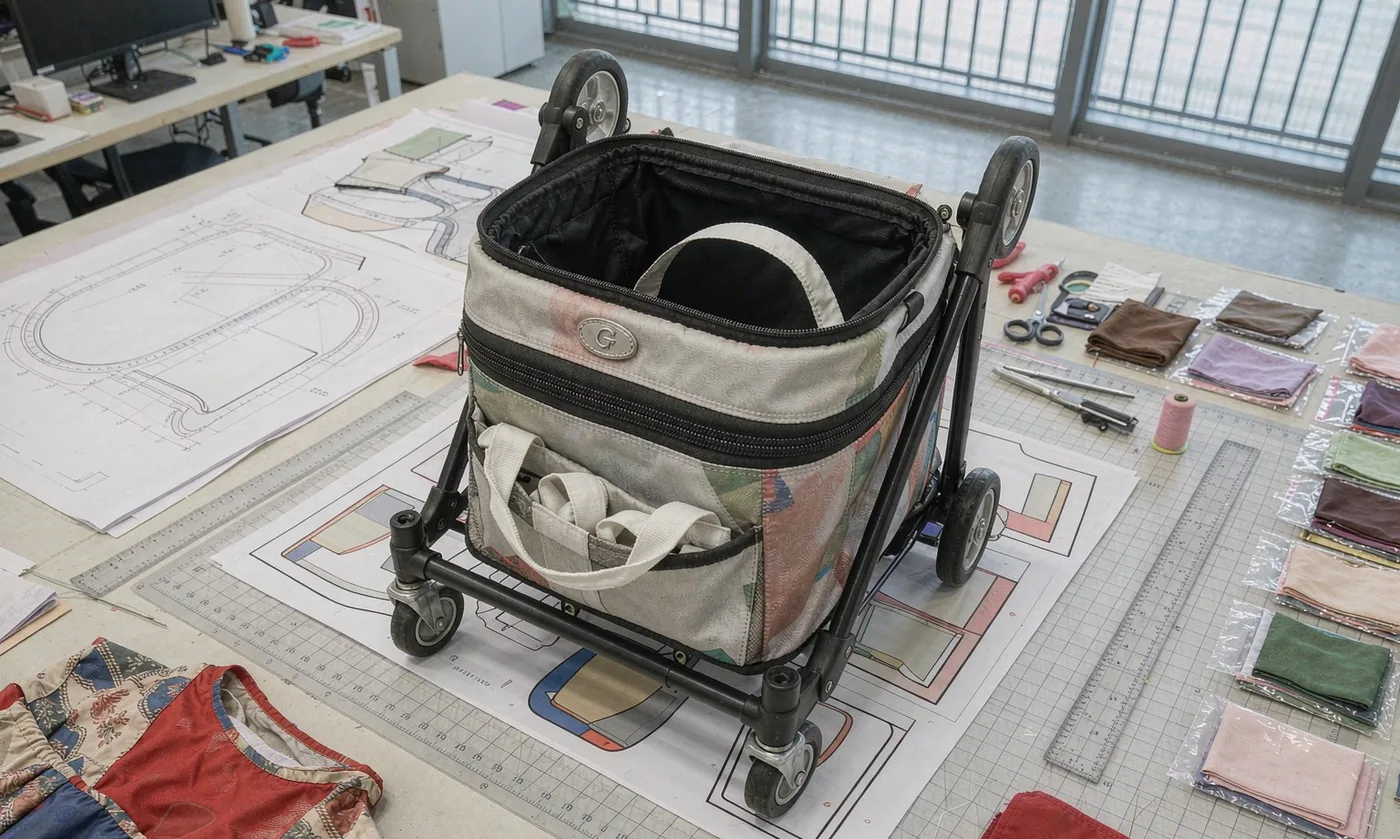
Material selection is the highest-return layer for most programs, because customers judge a pet carrier by hand feel, drape, sound and weight long before they read a specification. A brand that controls materials but not pattern can produce a product that feels entirely its own.
The shell sets the tone. Polyester is stable, economical and finishes well; nylon reads technical and premium and costs more with slightly higher shade risk; coated canvas and recycled blends carry a sustainability story that can be printed on the hang tag, at the cost of weight and drying time. Denier and coating choice then set the hand: a soft-hand finish on a mid-denier shell often reads more expensive than a raw high-denier shell.
Lining and mesh are the interior experience and the cheapest place to add personality. A printed lining motif, a contrast binding, or a mesh in a brand accent colour costs very little per unit and is visible every time the product is opened. It is also the detail most likely to appear in customer photography.
Hardware finish deserves its own line in the budget. A coordinated set - zipper pull, runners, D-rings, buckle - in light gold, gunmetal or brushed nickel lifts perceived value more per dollar than any fabric upgrade. The rule our designers apply: invest in the parts the hand touches, economise on broad surfaces.
| Material tier | Shell | Lining | Hardware | Positioning | Cost index |
|---|---|---|---|---|---|
| Entry | 300D polyester, PU coat | 210D plain dyed | Black nickel, stock pull | Mass retail, promotions | 1.00 |
| Core | 600D polyester or RPET | 210D printed motif | Matched set, branded pull | Mainstream brand | 1.25-1.40 |
| Premium | Nylon twill, soft finish | Brushed tricot | Light gold, engraved pull | Specialty and boutique | 1.60-1.85 |
| Signature | Coated canvas or custom weave | Custom print, RPET | Custom moulded set | Hero and collaboration | 2.00+ |
Substance compliance applies at every tier. Materials are screened against REACH restrictions for European programs, CPSIA and Prop 65 considerations apply for the United States - see the U.S. Consumer Product Safety Commission - and OEKO-TEX certified fabrics are available where a retail buyer requires a documented textile standard. Request certificate numbers at sample stage rather than after shipment.
Option 3 - Custom Tooling: One-Off Cost, Permanent Differentiation
Tooling is the layer that turns a branded product into a defended product. A custom zipper pull, a moulded buckle with a debossed mark, a silicone patch die or an engraved metal plate cannot be casually copied by a competitor browsing a catalogue, and after the one-off charge is paid the incremental unit cost is modest.
The economics are straightforward. A silicone or rubber patch die is the lowest-cost tooling step and suits curved or padded surfaces where printing struggles. An engraved metal plate or moulded zipper pull is mid-range and gives the strongest tactile signal, because the customer's hand meets it every time the product is opened. A fully custom moulded buckle is the most expensive and only makes sense at volumes where the amortisation lands below a few cents per unit.
Lead time is the catch. Tooling adds to the schedule before the first confirmation sample can be produced, typically two to three weeks for a patch die and longer for moulded hardware. Brands should decide tooling at the brief stage, not after sampling, because discovering the need for a mould during round two pushes the whole calendar.
Ownership should be explicit in writing. Custom tooling paid for by the brand belongs to the brand, is used only for that brand's programs, and should be stored and tracked so that a reorder two seasons later does not require a new charge. Ask for a tooling inventory with the first shipment.
One design caution: tooled parts look best when they are part of a coordinated hardware set rather than a single hero piece. One engraved pull on otherwise generic black hardware reads as an add-on; a matched set reads as a design decision.
Option 4 - Decoration and Identity Package
Decoration is the layer customers read as brand. In an OEM program it should be specified as a package - primary mark, secondary mark, motif and label - rather than as a single logo placement, because the coordination is what signals intent.
Method choice follows surface and artwork. Screen print suits flat panels with one to three spot colours and has the lowest per-piece cost at volume. Heat transfer handles gradients and photographic artwork. Sublimation gives full-bleed artwork across a whole panel on light polyester with no per-colour surcharge. Embroidery carries craft and permanence with a cost driven by stitch count. Woven labels, care labels and patches complete the identity.
Placement should follow the photography pose. The long side panel is the primary position because it faces the camera in the three-quarter hero shot; the end cap suits a secondary mark; the handle wrap suits a repeated motif; the lining is the hidden moment that generates sharing. Keep artwork at least 15 mm clear of seams, zips and binding, and verify legibility on the smallest size in the range.
Colour consistency across methods is the technical risk. A mark that appears in print, in embroidery thread and in a woven label must be matched across three substrates, and metamerism means they can agree under showroom light and diverge in daylight. Approve all three together under at least two light sources, against physical Pantone references.
Durability closes the specification. Print adhesion, rub resistance and wash performance are evaluated by recognised textile test methods published by AATCC, and a decoration that survives the sample but fails the first wash is a recall waiting to happen. Method-by-method cost and durability detail is covered in our printing methods guide.
Option 5 - Packaging and Compliance Options
Packaging in an OEM program has two distinct jobs that pull against each other: the retail box sells, the transit pack protects. Designing both to the same requirement usually over-specifies one and under-specifies the other.
For retail presentation, the options run from a kraft folding carton with a single-colour print and a die-cut window, through a four-colour printed carton with matte lamination and spot UV, to a rigid set-up box for premium or gift positioning. Window placement matters: show the ventilation field and the logo together, because those are the two features that convert.
For transit, the specification is board grade, inner packing count, void fill and carton marking. Performance is verified rather than assumed, using recognised drop, compression and vibration test methods published by ASTM International, and the carton spec is set from the result. Packed cube should be requested at sample stage, because it determines freight cost on every reorder for the life of the product.
Compliance copy sits on the hang tag and care label: brand and product name, size, colourway, composition, country of origin, care instructions, GTIN and any market-specific statement. Destination markets must be declared before materials are booked, since a late market change can invalidate an approved material set.
Low-volume flexibility is worth knowing: hang tags and insert cards carry low minimums and can be fully customised even on a first drop, while printed cartons carry higher print minimums, so first-season artwork is usually designed to a stock dieline.
One further saving is worth noting: designing the retail carton to a stock dieline while keeping the transit specification bespoke usually costs less than the reverse, because structural performance is tested where it matters while print tooling is avoided. Our packaging team specifies both layers in one document so that the packing sample validates them together rather than separately.
Schedule Options: Standard, Phased and Expedited
Not every program needs the same calendar, and an OEM partner should offer more than one route to shelf. Three schedule patterns cover almost every case, and the right one depends on whether the constraint is the launch date, the budget or the design ambition.
The standard route opens materials, decoration and packaging on a proven platform: two to three sample rounds at 6-10 working days each, then 35-50 days of bulk, landing at roughly 55-70 days total. This is the default recommendation and the lowest-risk route for a first OEM season.
The phased route opens the same layers but splits the delivery: a first shipment in the hero colourway to hit a launch date, with the second colourway following four to six weeks later. It costs slightly more in freight and administration but gets product on shelf earlier and spreads cash outflow.
The expedited route compresses development by running material booking and pattern work in parallel rather than in sequence, and by shortening approval cycles through a single named decision maker. It can take meaningful time out of the calendar, but it requires artwork to be final at brief stage and it removes the slack that protects against a failed sample round. Expediting is a tool for a known date, not a substitute for planning.
| Schedule route | Layers opened | Sample rounds | Bulk | Total to shipment |
|---|---|---|---|---|
| Standard | Materials, decoration, packaging | 2-3 | 35-50 days | 55-70 days |
| Phased | Same, split by colourway | 2-3 | 35-50 days per wave | First wave 55-70 days |
| Expedited | Parallel booking, single approver | 1-2 | 35-42 days | 45-60 days |
| Full custom | Structure, tooling, materials, packing | 3-4 | 40-50 days | 95-130 days |
Whichever route is chosen, the calendar must be built backwards from the on-shelf date. Subtract transit, distribution centre receiving, bulk and sampling, and the remaining date is the real deadline for a signed specification - and it is almost always earlier than the brand team expects.
Quality Gates, Documentation and Handover
An OEM program is only as good as its gates. Three gates should be written into the schedule, and none of them should be optional: pre-production verification, in-process checks, and final random inspection before release.
Pre-production verification confirms that the bulk material set matches the approved sample - shade, hand feel, weight, print set-up and hardware finish - on the first pieces off the line, while a correction is still cheap. In-process checks watch the things that drift during a run: seam integrity, mesh alignment, logo placement and hardware attachment. Final inspection follows an AQL 2.5 sampling plan with defects classified as critical, major and minor, and no shipment releases until the written report is issued and accepted.
Documentation should be requested early, not chased later. Test reports, material certificates, inspection reports, carton packing lists and the golden sample reference photograph all belong in a single file per program, because a retail buyer will ask for them and because a reorder two seasons later will be resolved against them.
Independent verification is available. Where a client requires third-party confirmation, inspection and testing can be arranged through bodies such as SGS, and the quality management system behind the production network is maintained to ISO 9001 requirements.
The final handover item is the golden sample - one physically signed unit kept under controlled conditions. Every reorder, colour dispute and quality conversation will be settled against that piece, and a program without one is a program that will renegotiate its own standard every season.
Inspection is not the only gate. A program should also close with a written defect library - photographs of the specific failures that are and are not acceptable - so that a future inspector applies the same standard the brand approved at sampling.
Handover Checklist: What a Completed OEM File Should Contain
An OEM program is not finished when the goods ship; it is finished when the file is complete enough for a reorder to be placed without a rediscovery conversation. Six documents make up that file, and requesting them at handover rather than a year later saves real money.
The tech pack records the as-built specification: dimensions with tolerances, panel construction, material references, hardware references, decoration placement and packaging specification. It must be updated whenever an approved change is made, because an outdated tech pack is the most common cause of an unexpected reorder.
The approval record holds the signed confirmation sample photograph, the Pantone references with their substrates, the shade tolerance, and the decoration placement drawings. The compliance file holds material certificates, test reports and the declared market list. The inspection file holds the pre-production, in-process and AQL 2.5 final reports.
The tooling inventory lists every custom tool, its owner, its storage location and its condition, so a reorder two years later does not trigger a new charge. The packaging file holds the dieline, the carton specification and the packing count.
With those six in place, a reorder becomes a purchase order rather than a project - which is the whole point of investing in OEM in the first place.
Two optional additions are worth considering: a defect library with photographs of acceptable and unacceptable examples, and a short change history recording every approved modification with its date. Both take minutes to assemble and both prevent the most common reorder dispute - a disagreement about what was agreed the first time.
Reading a costed breakdown: what a quotation should show
A single unit price hides the decisions that matter, and a brand that negotiates on that number alone is negotiating blind. Ask for a costed breakdown with four lines separated: material, labour and conversion, decoration and tooling, and packaging.
Material usually dominates and moves with the palette tier; labour and conversion moves with construction complexity rather than with quantity; decoration carries set-up separately from per-piece cost, which is what makes the quantity curve visible; and tooling appears as a one-off line that should be clearly identified so it is not charged again on reorder.
With those four lines, a design conversation becomes a budget conversation. Reducing a print from four colours to two shows up in decoration; switching to a stock dieline shows up in packaging; moving from a custom to a standard hardware finish appears in material. Each saving is traceable, and none of them requires a compromise on the parts of the product customers actually see.
Managing change orders during a live run
Change is inevitable, and the cost of a change depends entirely on when it is made. A change requested during artwork is free; during sampling it costs one round of 6-10 working days; during material booking it may invalidate a purchase; and during a live run it usually means stopping the line.
The practical discipline is a change freeze after the confirmation sample is signed, with any post-freeze change costed and scheduled before it is accepted. Urgent changes - a compliance issue, a safety concern - always take priority and are handled immediately, but cosmetic changes should wait for the next run.
Where a change is accepted mid-run, the affected units must be identified and separated rather than blended into the shipment, and the inspection report should note the split so that the receiving team knows what it has.
Why brands source here
- Pet carrier programs run since 2014; founding team in sewn goods since 2004
- SGS-verified production floor of 4,950 m² with 137 workers across 7 lines
- Monthly capacity of 200,000 units, audited to BSCI and ISO 9001
People Also Ask
What is the difference between OEM and ODM for pet carriers?
OEM builds to a specification you bring; ODM starts from an existing platform that you modify and brand. OEM offers more control and more development cost, ODM offers speed and lower risk.
Is OEM worth it for a small brand?
Yes if you open the right layers. Controlling materials, decoration and packaging on a proven structure delivers most of the visible differentiation at a first-season budget, while custom tooling and pattern work can wait.
How much does custom tooling cost?
A silicone or rubber patch die is the lowest step; engraved pulls and moulded hardware sit mid-range; a fully custom buckle is highest. All carry a one-off charge and add two to three weeks before the first confirmation sample.
What is AQL 2.5?
An acceptance quality limit sampling plan used for final random inspection, with defects classified as critical, major and minor. It defines how many units are checked and how many defects are tolerable before a shipment is rejected.
Can I phase delivery by colourway?
Yes. A phased route ships the hero colourway first and the second colourway four to six weeks later, getting product on shelf earlier and spreading cash outflow at a small freight and administration premium.
How do I protect my design from being copied?
Custom tooling, a coordinated hardware set and bespoke woven labels are the most practical defences, because they cannot be sourced from an open catalogue. Confirm tooling ownership and use restrictions in writing.
Frequently Asked Questions
What does OEM mean in a pet carrier program?
OEM means the product is built to your specification rather than selected from a finished catalogue. Specification is organised in five layers: structure, material set, custom tooling, decoration and identity, and packaging with compliance.
What is the MOQ for an OEM pet carrier?
MOQ 500 pieces per colourway is the standard floor. Programs with custom tooling or a new pattern may carry higher minimums, since tooling amortisation and dye lot minimums both scale with quantity.
How long does an OEM program take?
A standard OEM route runs 55-70 days to shipment: two to three sample rounds at 6-10 working days each plus 35-50 days of bulk. Opening structure and tooling as well typically extends the program to 95-130 days.
Do we have to open all five specification layers?
No. Most first-season programs control materials and identity only and use a proven structure and stock packaging dieline, then add tooling and structural changes once sell-through justifies the investment.
Who owns custom tooling?
Tooling paid for by the brand belongs to the brand and is used only for that brand's programs. Ask for a tooling inventory with the first shipment so reorders years later do not trigger a new charge.
Can we expedite a first order?
Yes, by running material booking and pattern work in parallel, limiting approval to one named decision maker and compressing bulk to 35-42 days. Expediting requires final artwork at brief stage and removes the slack that protects against a failed sample round.
What inspection standard applies?
Final random inspection follows an AQL 2.5 sampling plan with critical, major and minor defect classes. Shipments release only after the written report is issued and accepted.
Can you provide third-party test reports?
Yes. Independent inspection and testing can be arranged through recognised bodies such as SGS, and material certificates and test reports are collected into a single program file.
How is colour matched across different materials?
Against physical Pantone references, approved under controlled lighting, with all components - shell, thread, label and print - viewed together under at least two light sources to catch metamerism.
What compliance support is available?
Material screening against REACH for EU programs, CPSIA and Prop 65 considerations for the US market, and OEKO-TEX certified fabrics where a retail buyer requires a documented textile standard.
Can packaging be customised on a small first order?
Hang tags and insert cards have low minimums and can be fully customised. Printed rigid cartons carry higher minimums, so first-season artwork is usually designed to a stock dieline.
What are the commercial terms?
T/T 30/70 with FOB Xiamen. Production begins after sample approval and deposit clearance; the balance is settled against the shipping documents.
Talk to QUANZHOU JUNYUAN BAGS about a pet carrier program: MOQ 500 pieces per colourway, samples in 6-10 working days, bulk production in 35-50 days under AQL 2.5 inspection.
Get a free quote Request a sample