ODM Pet Carrier: Original Design
An ODM pet carrier program starts from an engineered platform and applies your original design to it - panel layout, ventilation motif, hardware set, colour system and packaging. You keep design authorship without paying for a new pattern. Entry is MOQ 500 pieces per colourway.
ODM is the middle road between buying a catalogue product and commissioning a pattern from scratch, and it is where most successful branded pet carrier lines actually live. The platform supplies the engineering that is expensive and slow to develop: panel geometry, load path, frame or board system, closure and the packing geometry. Your team supplies the design authorship that customers notice: panel proportions and blocking, the ventilation motif, the material and hardware palette, the colour system, the decoration package and the retail presentation. Because the engineering is already proven, sample rounds run 6-10 working days each and typically close in two, and bulk production runs 35-50 days after sample approval and deposit. Commercial floor is MOQ 500 pieces per colourway. Shipments release against an AQL 2.5 inspection report, and the quality system behind the production network is maintained to ISO 9001 requirements. The strategic value of ODM is compounding: every season you add design layers to a platform you already understand, so season two costs less and arrives faster than season one.
Custom cat carrier shells come in soft, vacuum-formed and injection-moulded variants, and each one carries its own tooling and MOQ pool.
What 'Original Design' Actually Means in an ODM Program
Original design in an ODM program does not mean starting from a blank page. It means the design decisions that define how a product looks, feels and reads are yours, while the underlying engineering is a proven platform that has already been sampled, tested, costed and packed.
This distinction matters commercially. Engineering - panel geometry, load distribution, frame behaviour, zip track engineering, carton cube - is expensive to get wrong and produces no visible brand value when it is right. Design - proportions, blocking, material hand, colour system, motif, hardware language - is exactly what customers perceive and is comparatively cheap to change. ODM lets a brand spend its budget on the second category.
Practically, the program works like this: you select a starting geometry, then specify a modification menu, then apply a material and colour system, then a decoration package, then packaging. Each step is a design decision with a cost and a lead time attached, and each is reversible until the confirmation sample is signed.
The output is genuinely yours. A platform modified with a new panel blocking, a proprietary ventilation motif, a coordinated hardware set in a custom finish, a two-shade brand colour system and a bespoke retail box is not recognisable as the base product it started from - and it reaches shelf in roughly half the time of a ground-up program.
Cost behaviour rewards this structure. Because the platform absorbs engineering, the brand's development spend goes into sampling and tooling rather than into pattern work, and both are one-off costs that do not repeat in the following season. The result is a first drop that launches on a realistic budget and a second drop that launches on a materially smaller one.
Where brands go wrong is treating ODM as a shortcut rather than a discipline. ODM programs that succeed have a written design intent: one sentence describing what the product should communicate. Programs that fail treat the platform as a menu and end up with a competent product that says nothing.
The Platform Library: Choosing a Starting Geometry
Choosing the starting geometry is the first and most consequential ODM decision, because every later design choice is constrained by it. Selection should be driven by the brand's price position and by how the customer will carry the product, not by novelty.
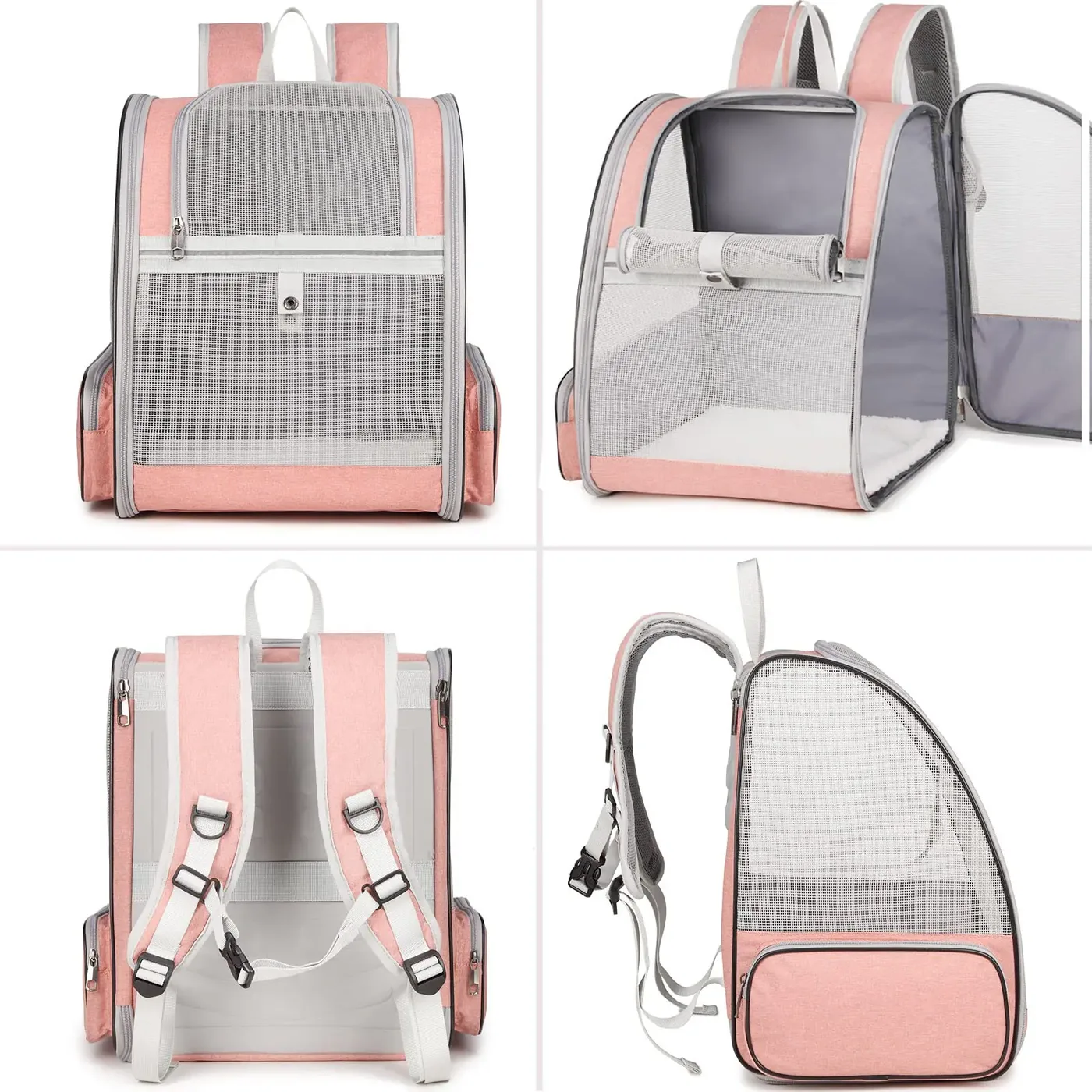
Three geometry families dominate branded programs. The structured duffle holds its shape empty, photographs cleanly, supports heavy hardware and piping, and suits mid to premium positioning. The soft-sided tote reads casual and approachable, packs efficiently for e-commerce fulfilment, and needs internal framing above roughly 10 kg of pet weight. The backpack hybrid frees the owner's hands, commands the highest price band, and adds strap engineering, load distribution and back-panel ventilation to the brief.
Within each family, pay attention to three specifications that are easy to overlook. Interior floor dimensions determine real pet comfort and should be stated in centimetres, not as a size label. Exterior dimensions determine whether the product claims airline compatibility, and those two sets of numbers pull against each other - the design must decide which one wins. Empty weight determines shipping cost and how the product feels in a customer's hand on first pickup, which is a surprisingly strong driver of perceived quality.
| Platform family | Typical pet range | Design language | Price band | Development effort |
|---|---|---|---|---|
| Structured duffle | 4-12 kg | Travel, heritage, tailored | Mid to premium | Low |
| Soft-sided tote | 3-9 kg | Casual, everyday, lifestyle | Entry to mid | Low |
| Backpack hybrid | 5-12 kg | Technical, outdoor, active | Premium | Medium |
| Fold-flat travel | 3-8 kg | Minimal, urban, storage-smart | Mid | Medium |
| Wheeled or convertible | 8-15 kg | Luggage-adjacent, long-haul | Premium plus | High |
Our design team recommends selecting one platform family for the first three seasons. Range discipline on geometry lets the brand build recognition, reuse photography setups and packaging dielines, and develop real expertise in one product language rather than shallow familiarity with five.
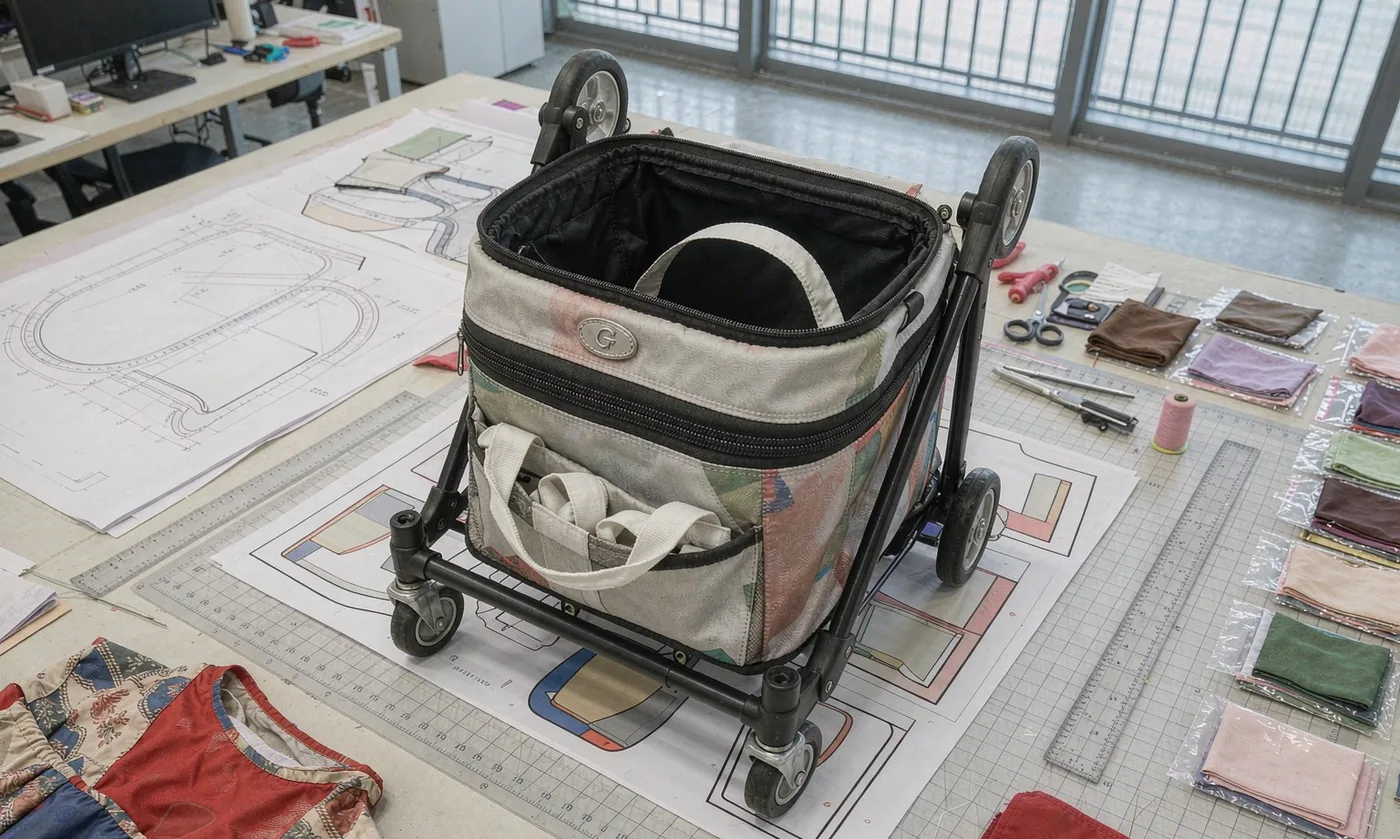
The Modification Menu: Panels, Ventilation, Pockets and Openings
The modification menu is where original design is actually exercised. It is a finite list of levers, each with a cost and a visual payoff, and knowing the payoff-per-dollar of each is what separates a strong ODM program from an expensive one.
Panel blocking is the highest-impact lever. Changing where panels meet - a two-tone split, a contrast yoke, a diagonal seam, a wrapped base panel - transforms the product's silhouette reading at essentially no material cost, because the same fabric is being cut differently. A horizontal blocking line placed low makes a product look longer and more tailored; blocking placed high makes it look compact and technical.
The ventilation motif is the second-highest-impact lever and the most underused. Mesh can be set as a wide architectural band, a discreet side gusset, a shaped aperture, or a rhythm of perforations that reads as a brand mark from several metres away. Treated as graphic design rather than as a hole, ventilation becomes the single strongest recognition cue in the product and costs nothing.
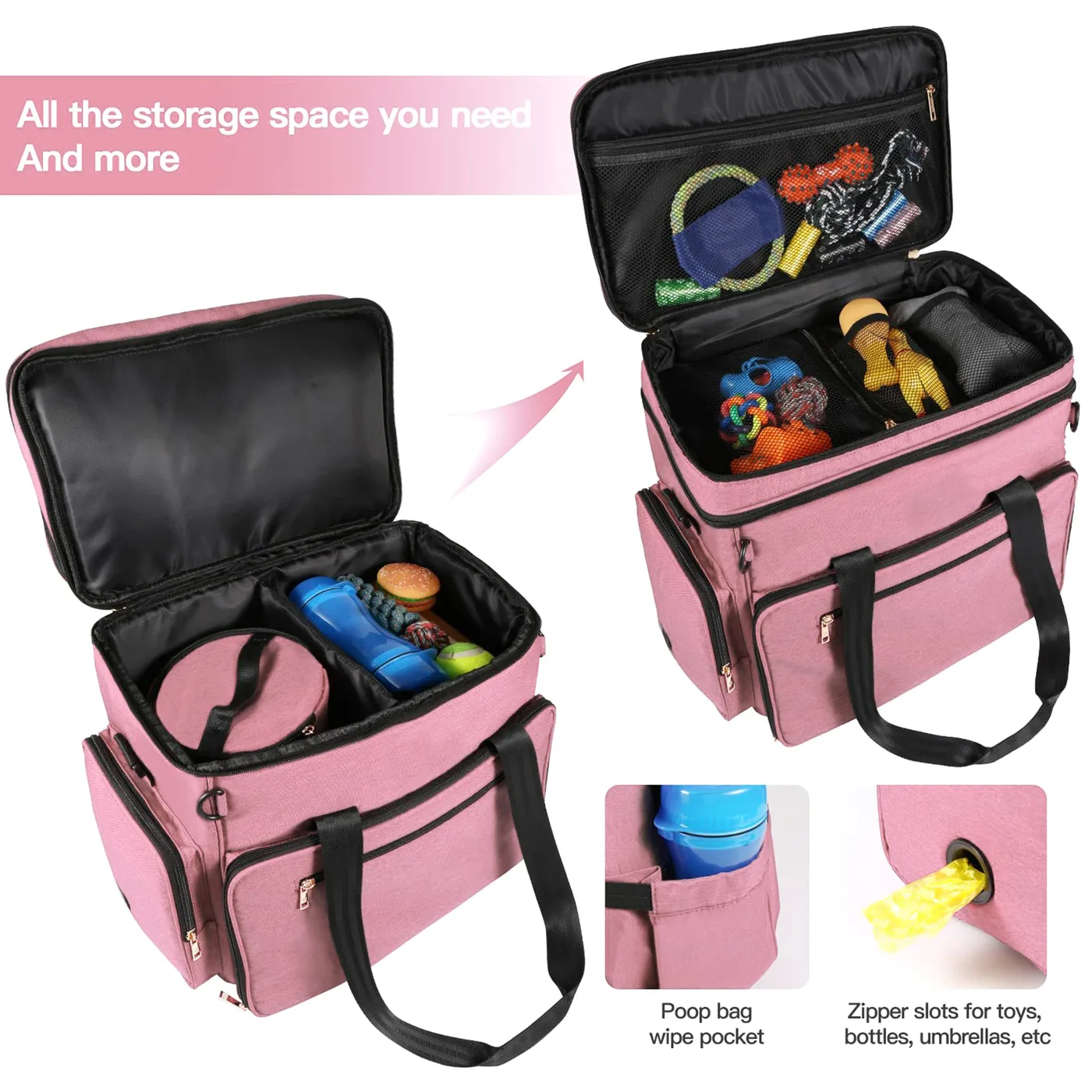
Pocket and opening configuration changes the product's ritual. Top load versus end load versus dual access; a magnetic closure versus a zip; an external slip pocket versus a hidden one; a removable pad versus a fixed one. These changes affect the pattern modestly but affect how the product is used every single day.
Hardware language is the cheapest premium signal available: a coordinated pull, runner, D-ring and buckle set in one finish, plus a branded pull or plate. Because hardware appears at every touchpoint, changing the finish changes the perceived price band more than most fabric upgrades.
Exclusivity Tiers: Open, Reserved and Exclusive
Exclusivity is the commercial question behind every ODM conversation, and it should be answered in tiers rather than in absolutes. Three tiers cover the practical range, and each has a different cost structure.
Open means the platform and its standard components remain available to other brands, and your differentiation comes from colour, decoration, hardware and packaging. This is the default and the cheapest tier, and for most brands it is entirely sufficient, because customers never see another brand's version.
Reserved means specific elements are held for you: a colourway, a hardware finish, a patch die, a woven label design, or a platform-and-colour combination. Reserved elements are documented in a register and are not offered to other clients for an agreed period, usually twelve months with renewal. This tier costs little or nothing beyond volume commitment and is the best value in the whole structure.
Exclusive means a modified platform - usually a specific combination of geometry, modification menu and material set - is contracted to one brand for a defined territory or period. It normally carries a higher minimum quantity or an annual volume commitment, and it is the right tier when the product is the brand's signature item.
Whichever tier applies, get it in writing on the order documentation: what is held, for how long, in which territory, and what happens on renewal. Verbal exclusivity is not exclusivity, and the conversation only becomes difficult when a competing product appears.
Renewal should be diarised rather than remembered. Our account team confirms held elements before each season's planning so that a brand does not discover a lapse after a competing product has already been shown.
From Modification to Signature: When to Commission a New Pattern
At some point in a successful line, modification stops being enough and a brand needs its own pattern. Recognising that moment saves money in both directions - commissioning too early wastes development budget, commissioning too late leaves the brand undifferentiated.
Three signals indicate readiness. First, the modification menu is exhausted: the brand has changed the blocking, the ventilation, the hardware and the pockets, and further changes are cosmetic. Second, volume justifies it: a pattern development cost amortised over 500 pieces is painful, over 5,000 pieces it is trivial. Third, distribution demands it: a retailer asking for a product they cannot see elsewhere, or a functional requirement no platform meets.
When the decision is made, budget the pattern properly. Expect a technical sketch phase, a construction sample in substitute material, a revision for fit and tolerance, and a confirmation sample in the real material set - realistically three rounds at 6-10 working days each. Tolerance discipline keeps the cost down: tighten tolerances only where parts must fit each other and leave them generous elsewhere.
A hybrid approach is often best: commission the new pattern but keep the proven component library - zipper family, board system, pad construction, packaging dieline. That limits the engineering risk to the parts that actually create differentiation.
One more signal is worth naming: the brand can describe the product's difference in one sentence. If the answer requires a list of five small changes, the line probably needs a new pattern rather than another modification, and the budget should be planned a season ahead.
Series Planning: Designing a Family, Not a Single Bag
A single product is a launch; a family is a business. ODM is particularly well suited to series planning, because sharing one platform and one material system across several expressions is dramatically cheaper than developing each independently.
The classic structure is a three-tier family. The core expression uses the standard material set and stock hardware, hits the entry price point and carries volume. The elevated expression adds a premium shell, a coordinated hardware finish and a woven label, sitting one price band higher. The signature expression - often seasonal or collaborative - adds custom tooling, a distinctive colourway and special packaging.
Sharing is what makes this work. One platform, one shell fabric family, one lining print, one zipper family and one packaging dieline across all three tiers cuts development and material minimums substantially and makes the family read as a family. The differentiation then happens in the decoration, hardware and trim, which is where customers look anyway.
Colour architecture binds the series. Two or three permanent core shades appear across all tiers and reorder every season, while seasonal shades rotate through the signature tier only. This keeps dye lots stable, holds trim inventory usable, and creates the scarcity that supports full-price sell-through on the special pieces.
Accessories complete the picture. A matching collar, leash, treat pouch or bag holder sharing the same colour system and decoration method creates the coordinated set that lifts basket value, and because the artwork and colour references already exist, the accessory development cost is minimal.
Review the grid every season and cut what does not earn its place; a range that contracts deliberately is usually more profitable than one that expands by default.
Cost and Timeline of an ODM Program
ODM economics are attractive because the expensive, slow parts of product development have already been paid for. Understanding where the remaining costs sit helps a brand plan the first two seasons rather than just the first order.
Development cost in an ODM program is concentrated in sampling and tooling. Sample rounds run 6-10 working days each, most programs close in two, and each round carries a sample charge plus courier. Tooling - a patch die, an engraved pull, a custom buckle - is a one-off charge that should be amortised across the expected life of the product rather than loaded onto the first season.
Unit cost is driven by the same five levers as any program: material tier, hardware finish, decoration method and colour count, packaging specification, and quantity. The quantity curve is steepest between 500 and 1,500 pieces, because set-up charges amortise quickly in that range, then flattens.
| Program element | ODM route | Full custom route | Saving |
|---|---|---|---|
| Sample rounds | 2 rounds, 6-10 working days | 3-4 rounds | 2-4 weeks |
| Pattern development | Not required | Required | 3-5 weeks plus cost |
| Total to shipment | 55-70 days | 95-130 days | 40-60 days |
| Typical MOQ per colourway | 500 pcs | 800+ pcs | Lower commitment |
| Season two redevelopment | Colourway and decoration only | Partial re-engineering | Most of the development budget |
The compounding effect is the real argument for ODM. Season two on the same platform is a colourway and decoration change, which removes most of the development cost and most of the risk, and it can be executed while season one is still selling.
Freight belongs in this model as well, because packed carton cube is set by the platform and is paid on every reorder for the life of the line.
Protecting the Design: Documentation and Reorder Discipline
Design authorship only holds if it is documented. An ODM program should close every season with a file that lets the next one start without rediscovery, and that file has five parts.
The tech pack records the modification menu as built: panel dimensions, blocking lines, ventilation geometry, pocket configuration, hardware references and tolerances. It is the document a reorder is built from, and it should be updated whenever a change is approved - an outdated tech pack is the most common cause of an unexpected reorder.
The approval record holds the signed confirmation sample photograph, the Pantone references with their approved substrates, the decoration placement drawings and the packaging artwork. Colour is approved against physical Pantone references under controlled lighting, and the record should state the agreed shade tolerance so that a dispute two seasons later has a number to resolve against. Pantone's system is the reference standard used industry-wide for this purpose; see Pantone.
The exclusivity register lists what is held for the brand, until when and in which territory. The compliance file holds material certificates, test reports and inspection reports, with REACH screening for EU programs and Prop 65 and CPSIA considerations for the US market.
Quality closes the loop: final random inspection follows an AQL 2.5 sampling plan, independent verification is available through third-party bodies such as SGS, and the quality management system behind production is maintained to ISO 9001 requirements. Keep one physically signed golden sample; every future conversation about colour, construction or quality will be settled against it.
Finally, review the file at the end of each season and update it while the decisions are still fresh rather than at the start of the next one.
Collaboration and Capsule Design on an ODM Platform
Capsule and collaboration drops are where an ODM platform earns its keep, because the engineering is already paid for and the design budget can go entirely into the things customers notice. A well-planned capsule on a proven platform can be developed in weeks rather than months.
The design levers available for a capsule are, in order of impact per dollar: the colourway, including a lining print; the decoration method, where a specialty finish such as puff, foil or reflective instantly signals limited; the hardware finish, where a custom pull or plate reads as investment; the packaging, where a numbered hang tag or a special carton creates collectability; and finally the material, where a specialty stock or a custom weave changes the hand feel outright.
Numbering is the strongest scarcity device in the set. A run of 300 to 800 units, individually numbered on the hang tag or on a woven label, converts a colourway change into an event and generates the secondary-market visibility that keeps a brand in conversation between seasons.
The commercial caution is dye lot minimums. A capsule colourway is still a production commitment, and a custom shade usually needs the same minimum as a core one. Capsules therefore work best as an extra colourway on top of a committed core run, rather than as a standalone small order.
Timing should be planned against the calendar, not against inspiration. A capsule developed alongside the core drop shares sampling, photography and packaging approval, which is what makes it economically viable; a capsule conceived after the core drop has shipped carries standalone development cost and usually misses its moment.
Which ODM changes are reversible, and when
Not every design change carries the same consequence, and knowing which are reversible is what lets a team move fast early and slow down at the right moment. Three categories cover it.
Freely reversible: colourways, lining prints, hang tag artwork, insert cards and packaging print. These can be changed up to the point where the relevant material is booked, and changing them late costs money but not time.
Conditionally reversible: decoration method and placement, hardware finish and panel blocking. These can change during sampling, but a late change can invalidate an approved sample and push the calendar by one round of 6-10 working days.
Effectively irreversible once bulk starts: material bookings, custom tooling and anything that changes the packing geometry. A change at this stage usually means either accepting the run or restarting it, which is why the confirmation sample exists and why it should be reviewed against a written checklist rather than approved on impression.
Presenting an ODM line to a retail buyer
A buyer meeting is won on clarity, not on enthusiasm. Four pieces of preparation separate a line that gets listed from one that gets a polite follow-up.
First, a one-page line plan: silhouettes, sizes, colourways, price bands and the story in one sentence per product. Buyers think in grids and margins, and a plan that fits on one page signals that the brand understands its own range. Second, real samples in the real packaging, because a buyer evaluates the shelf presentation as much as the product.
Third, the compliance file: material certificates, test reports and origin documentation, ready to hand over. A brand that brings these unasked is a brand that will not cause problems later, and that is worth more in a buyer's risk calculation than a small price advantage. Fourth, the calendar: launch date, reorder lead time and the reorder minimum, stated plainly.
Finally, know which two products are the heroes and be willing to drop the rest. A buyer who is offered twelve SKUs usually lists three; a buyer who is offered four strong ones and a clear plan for the next season usually lists all four.
Writing a house style for the line
A house style document is the cheapest tool a growing brand can own. It records the decisions that would otherwise be re-litigated every season: logo clear space and minimum size, the core colour system with its Pantone references and substrates, the typeface family and the minimum type sizes for tags and cards, the standard hardware finish, the placement rule for the primary mark, and the photography setup.
Written once, it makes every subsequent product faster to develop and more consistent on shelf. It also makes delegation possible - a designer who has never seen the brand can produce artwork that matches, because the rules are documented rather than remembered.
Keep it short and specific. One page of rules that are actually followed beats a thirty-page brand book that nobody opens, and it should be updated whenever a decision is made that the next season needs to inherit.
Production capability
- SGS-verified production space of 4,950 m², 149 machines, 7 assembly lines
- Pet carrier and pet bag output since 2014 from a 137-person team
- 200,000 units shipped monthly under BSCI and ISO 9001 systems
People Also Ask
Is ODM faster than custom design?
Yes. Because the engineering already exists, ODM typically reaches shipment in 55-70 days against 95-130 days for a ground-up program, and season two becomes a colourway and decoration change rather than a redevelopment.
Can I brand an ODM product as my own?
Yes. Colour system, decoration, woven labels, hardware and packaging are all specified by you, so the finished product reads as yours and carries your retail identity.
What is a modification menu?
The finite list of design levers available on a platform: panel blocking, ventilation motif, pocket and opening configuration, hardware finish, material palette and trim. Knowing the payoff of each is what makes an ODM program efficient.
How do I make an ODM product look distinctive?
Use panel blocking and the ventilation motif first, since both change the silhouette reading at little or no material cost, then add a coordinated hardware set and a two-shade brand colour system.
What is the cheapest way to make a product look premium?
A coordinated hardware finish set plus a woven label rather than a printed one. Both are small absolute costs and both are read as indicators of quality at shelf.
Should a first line use one platform or several?
One, for at least three seasons. Range discipline lets the brand build recognition, reuse photography and packaging dielines, and develop real depth in one product language.
Frequently Asked Questions
What does ODM mean for pet carriers?
ODM means starting from an engineered platform and applying your own design: panel blocking, ventilation motif, material and hardware palette, colour system, decoration and packaging. You get design authorship without paying for a new pattern.
How is ODM different from OEM?
OEM builds to a specification you bring, including structure. ODM starts from a platform that already exists and is modified to your design intent, which is faster and lower risk, typically 55-70 days to shipment versus 95-130.
Can we get exclusivity on an ODM design?
Yes, in tiers. Reserved elements - a colourway, hardware finish, patch die or woven label - can be held for twelve months with renewal. Full platform exclusivity normally carries a higher volume commitment and a defined territory.
What is the MOQ for an ODM program?
MOQ 500 pieces per colourway is standard. Higher tiers of exclusivity or custom tooling may carry larger commitments, and multi-colourway launches multiply the figure.
How long does ODM development take?
Typically two sample rounds at 6-10 working days each, then 35-50 days of bulk production after approval and deposit - roughly 55-70 days to shipment, plus transit.
How much can we actually change on the platform?
Panel blocking, ventilation motif, pocket and opening configuration, hardware finish and set, material palette, colour system, decoration and packaging. Structural geometry and load-bearing elements usually remain from the platform.
When should we move from ODM to a custom pattern?
When the modification menu is exhausted, when volume amortises the development cost comfortably, or when distribution requires a product nobody else can offer. Below those thresholds, modification is better value.
Can we build a product family on one platform?
Yes, and it is the most cost-effective structure: one platform and one material system across core, elevated and signature tiers, differentiated by decoration, hardware and packaging.
How do you hold colours consistent across seasons?
Core shades are dyed to a fixed Pantone reference with an agreed numeric tolerance and re-approved each season. Trim and packaging bought in volume across colourways keeps shade behaviour stable.
What documents do we receive at the end of a program?
A tech pack with the modification menu as built, an approval record with sample photographs and colour references, an exclusivity register, a compliance file with certificates and test reports, and inspection reports.
What inspection standard is used?
Final random inspection follows an AQL 2.5 sampling plan with critical, major and minor defect classifications. Shipments release only after the written report is issued and accepted.
What are the payment terms?
T/T 30/70 with FOB Xiamen. Production starts after sample approval and deposit clearance, and the balance is settled against the shipping documents.
Talk to QUANZHOU JUNYUAN BAGS about a pet carrier program: MOQ 500 pieces per colourway, samples in 6-10 working days, bulk production in 35-50 days under AQL 2.5 inspection.
Get a free quote Request a sample