Custom Charm: Zipper Pull Accessory Design and Specification Guide
A custom charm zipper pull costs $0.22-$1.85 per piece at 500-5,000 units, with die-cast zinc alloy and hard enamel the most specified combination at the premium end. Budget $180-$650 for tooling on an original shape and 8-14 mm for the working length, because anything longer snags on fabric and anything smaller is unreadable. Our production team samples charms in 6-10 working days and runs bulk in 35-50 days, inspected to AQL 2.5.
This executive summary is written for brand teams specifying an original charm for a zipper pull on a private label pet carrier. MOQ 500 pieces per design or plating colour is the standard entry point, and it exists because die-cast tooling, plating bath set-up and polishing labour are fixed costs that only amortise across volume. Sampling takes 6-10 working days from approved artwork and includes a physical metal sample in the intended plating plus a pull-test result on the chosen attachment hardware. Bulk production runs 35-50 days after sample sign-off, with new tooling and multi-colour hard enamel at the longer end of that range. Every shipment is inspected to AQL 2.5 under ISO 9001 documented procedures at our SGS-verified production base, and goods move FOB Xiamen on T/T 30/70 terms. Two specifications should be settled before artwork is drawn: the attachment hardware and the maximum finished weight, because both constrain the shape more than any visual consideration does. Tooling for an original shape is a one-time charge and the tool is reused on every reorder, so developing one strong charm and carrying it across the range is usually cheaper than commissioning a new shape for each SKU.
Most private label pet bags fail on compliance paperwork rather than on construction, so the document pack is scheduled alongside the sample, not after it.
Why the Zipper Pull Is the Best Place for a Metal Charm
The zipper pull is the only part of a pet carrier that a customer handles every single time they use it. That makes it the highest-frequency brand touchpoint on the product, and the most defensible place to spend money on metal. A logo printed on a panel is seen; a charm on a pull is touched, heard and, over a year, associated with the product every time it opens.
There is also a functional argument. Factory-supplied pulls are small, slippery and often unbranded polymer tabs. Replacing one with a weighted metal charm changes the perceived quality of the entire closure, because the user feels mass and hears a distinct click. In blind handling tests we run with brand teams, adding a 6-9 gram charm to an otherwise identical carrier lifts perceived value more reliably than upgrading the shell fabric, at a fraction of the material cost.
Design discipline is what separates a good charm from a gimmick. The pull moves, so the charm moves with it, which means the shape has to be comfortable in the hand and safe against the body of the bag. Rounded silhouettes with no sharp points, no thin protruding elements and no open loops that can catch on trim are the working rules. Anything with a spur, an antler or a thin tail will either bend in transit or snag on the lining within a week.
Weight discipline follows. Between 4 and 12 grams is the practical window for a carrier pull. Lighter than that and the charm feels like a token; heavier and it pulls the zip slider down under gravity, which over time wears the slider and, on a top-opening bag, can drag the zip open. The heavier the charm, the more important it becomes to specify a slider with an appropriate pull strength and a locking mechanism where the design allows.
Finally, the charm is the cheapest collectible you will ever develop. Because tooling is paid once and unit cost falls steeply with volume, a brand can run a base charm at volume and commission two or three seasonal variants at 500 pieces each, building a collecting behaviour that drives repeat purchase. That logic is explored further in our notes on custom patches, where the same base-plus-variant cadence applies to a different medium.
Materials and Processes: Die-Cast, Stamped, Enamel and Soft Options
Four production routes cover nearly every charm brief. Choosing between them is mostly a question of how much relief you want, how many colours you need and how much you are prepared to spend on tooling.
Die-cast zinc alloy is the default for original shapes. Molten alloy is injected into a steel mould, producing a three-dimensional part with real depth, crisp edges and enough mass to feel substantial. Tooling cost is the barrier, and it rises with complexity: a simple flat-backed shape with two levels of relief sits at the lower end, while a fully sculpted figure with undercuts sits at the top. Zinc takes plating beautifully and is the right choice when the charm is the hero of the product.
Stamped brass or stainless is a two-dimensional process: sheet metal is cut and struck between a die and a punch. It gives a thin, precise, flat part with excellent edge definition at lower tooling cost, and it is the correct answer for a clean wordmark or a geometric icon. Stainless can be left unplated for a technical, surgical look. Brass accepts antique finishes particularly well, which suits heritage brands.
Hard enamel fills recessed areas with enamel powder that is fired and polished flush with the metal lines, producing a smooth, glass-like surface that will not wear down in normal use. Soft enamel leaves the fill below the metal lines, so you feel the metal ridges - a tactile, slightly more casual effect at lower cost. Both are excellent; the decision is aesthetic, and hard enamel is worth the premium on a product positioned as premium.
| Process | Relief | Colour capability | Tooling index | Unit cost index | Typical use |
|---|---|---|---|---|---|
| Die-cast zinc alloy | Full 3D | Hard or soft enamel, print | 3.0x | 1.6x | Hero charms, mascots |
| Stamped brass | 2D struck | Soft enamel, antique wash | 1.4x | 1.2x | Wordmarks, crests |
| Stamped stainless | 2D cut | Etched, printed, unplated | 1.0x | 1.0x | Technical and minimal brands |
| Silicone moulded | Soft 2.5D | Multiple colours, translucent | 1.8x | 0.7x | Silent pulls, soft-touch lines |
| PVC moulded | Soft 2.5D | Full colour, layered | 2.0x | 0.8x | Colour-driven and character designs |
Silicone and soft PVC deserve a mention that most guides skip: they are the right answer when silence matters. A metal charm on a carrier used in a kennel, a car or an apartment at night makes noise against the zip and the body fabric. A moulded silicone charm solves that completely, accepts multiple colours, and costs less than metal, at the price of a less luxurious feel.
Plating is where the finish lives. Common options include shiny gold, matte gold, antique brass, nickel, black nickel, gunmetal, rose gold and antique copper. Plating thickness measured in microns is the quality variable, and a thin flash plating wears through at contact points within months. Specify a minimum thickness in the tech pack rather than just a colour name.
Attachment Hardware: Split Rings, Lobster Clasps, Cords and Ball Chains
Attachment is the most common source of charm complaints, and it is almost never a design problem - it is a specification problem. The charm itself rarely fails; the ring, the cord or the crimp does.
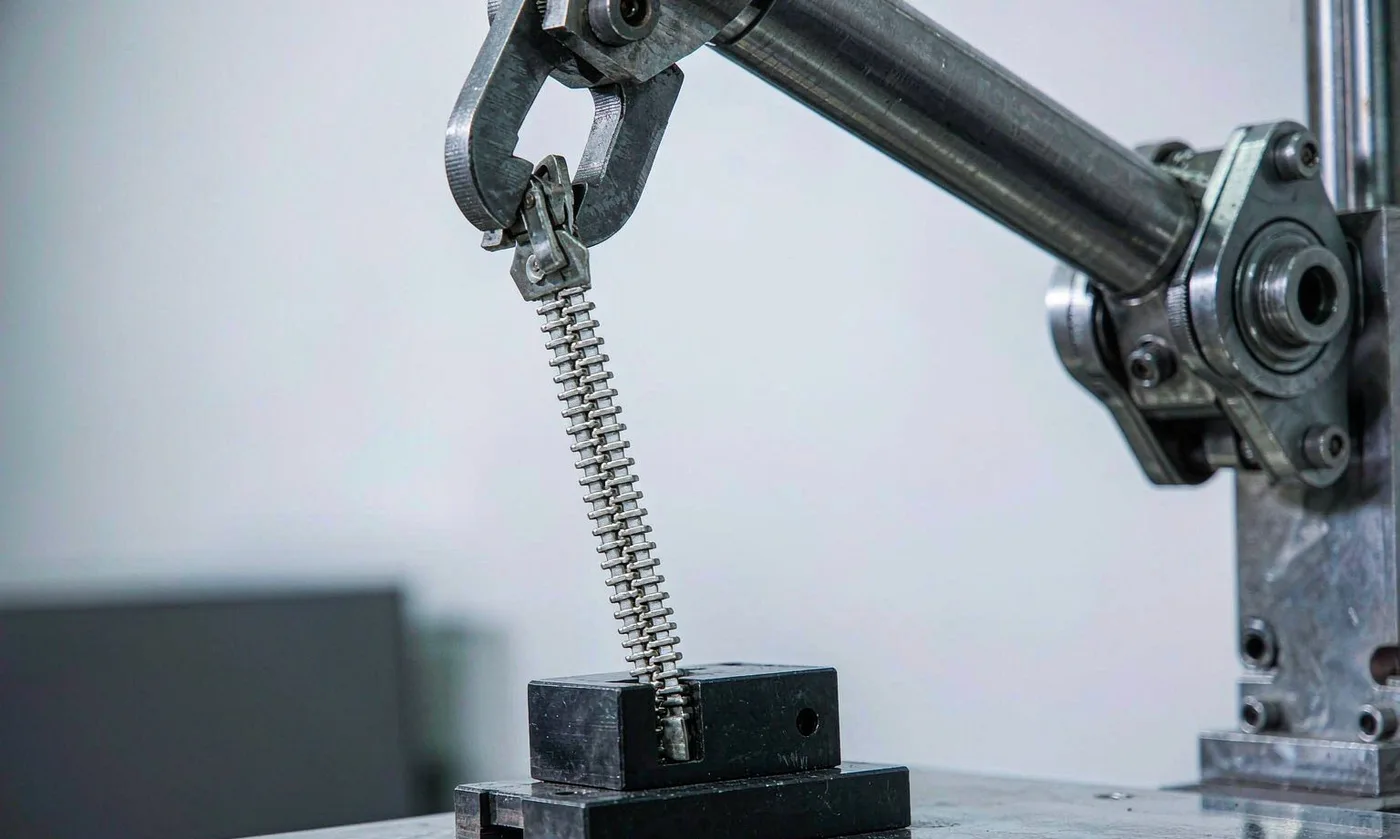
A split ring is the standard connector and the most secure option when it is properly sized. Specify the wire diameter as well as the outer diameter, because a thin ring on a heavy charm will open under repeated load. A double split ring or a soldered closed ring removes the failure mode entirely at a small cost increase, and for premium products that upgrade is worth specifying.
A lobster clasp or a small carabiner makes the charm removable, which suits collectible programmes and lets the customer move the charm to a collar or a keyring. The trade-off is that a removable charm is a lost charm, so the clasp gate must have real spring tension, and the product copy should treat the charm as a detachable accessory rather than a permanent fitting.
Cord and ribbon loops suit soft, quiet designs and work well with silicone or leather charms. The failure point is the knot or the crimp, so specify a tested pull strength and a defined knot construction. Ball chain offers an adjustable, technical look and is the cheapest route to a hanging charm, but the balls wear against metal sliders and should be avoided on high-abrasion placements.
Every attachment should be specified with a pull test result. Our standard is to record the force at which the assembly fails and to require a comfortable safety margin over any load the product will realistically see. For a charm on a carrier pull, that means the assembly should withstand several kilograms of static pull without opening, while remaining light enough not to distort the slider.
One more consideration: attachment dictates assembly method at the production line. A charm that ships loose and is fitted by the customer requires different packaging and different instructions from one that is fitted in-line. Decide which you want before costing, because the labour difference is real.
Size, Weight and Ergonomics on a Moving Part
Designing for a zipper pull is closer to designing jewellery than to designing graphics, because the object is small, moving and handled. Three constraints govern the outcome: length, mass and edge geometry.
Length first. A charm body of 14-22 mm plus attachment hardware gives a total hang of roughly 25-40 mm, which is comfortable on a carrier and readable at a glance. Beyond about 45 mm of total hang the charm starts catching on trim, on lining and on the customer hand. Below about 20 mm total, the detail is no longer legible and the part reads as a bead rather than a brand mark.
Mass second. As noted, 4-12 grams is the practical window, and within that window the distribution of mass matters. A charm with most of its weight far from the attachment point swings more, which increases wear on the ring and makes more noise. Keeping the mass close to the connection reduces both problems.
Edge geometry third, and this is the constraint most brands discover late. Sharp internal corners concentrate stress in a cast part and can crack; thin external projections bend in a carton and arrive damaged. Every design we receive goes through a manufacturability review that looks for minimum wall thickness, minimum radius on internal corners and a sensible draft angle for the mould. Simple changes - thickening a tail from 0.8 mm to 1.4 mm, opening a corner radius from 0.2 mm to 0.6 mm - usually preserve the design intent while eliminating a whole class of production defects.
Finally, consider how the charm sits against the product at rest. A flat-backed charm lies quietly against the panel; a fully sculpted one stands proud and catches on things. For carriers that will be stacked, shipped in cartons or checked as baggage, the flatter the profile the better.
Our production team provides a sample fitted to the actual zip slider during the 6-10 working day sampling window so that swing, noise and drag can be assessed on the real product rather than on a drawing.
Colour Systems for Metal: Plating, Enamel Matching and Consistency
Colour on a charm comes from two places - the plating on the metal and the enamel or print in the recesses - and the two need different management.
Plating colour is best controlled by specifying a reference sample rather than by describing a shade. Words like antique brass and rose gold mean different things to different platers, and the gap between two suppliers interpretations is visible immediately when a charm sits next to a fabric in the same family. The practical approach is to approve a physical plated reference early, hold it as the master, and require production to match within a defined tolerance. Re-plating a batch is expensive, so the reference is worth protecting.
Enamel colour can be matched closer to a Pantone reference than plating can, because enamel is a pigmented material rather than a reflective surface. Even so, a fired enamel shifts slightly during curing, so the correct procedure is to approve a fired sample rather than a powder swatch. Reference colour standards are maintained by Pantone, and giving both the Pantone reference and an approved physical sample is the combination that produces consistent reorders.
Consistency across batches is the real challenge, and it is where a documented colour system earns its keep. Store the plating reference, the enamel formula or shade reference, the plating thickness specification and the approved sample photographs together per SKU. When a reorder lands a year later, that file lets the production line reproduce the original rather than approximate it.
Colour also interacts with wear. Dark plating on a high-contact area shows rub-through as a bright line, which reads as damage even when the part is structurally fine. Antique finishes hide wear better than mirror finishes, and on a product that will be handled daily that is often the better specification.
Safety and Compliance for Metal Charms
A metal charm on a pet product sits at the intersection of two regulatory concerns: chemical content in the metal and physical safety of a small part. Both are straightforward if planned and expensive if discovered late.
On chemical content, the relevant framework in the United States is the Consumer Product Safety Improvement Act, administered by the U.S. Consumer Product Safety Commission, which sets limits on lead and certain phthalates in products intended for children. Pet products are not automatically children products, but many retailers apply the same limits by policy, and any item that could reasonably be classified as a children product by its design or marketing should be tested accordingly. In the European Union, nickel release and REACH substance obligations apply.
On physical safety, the concerns are sharp points, sharp edges and small detachable parts. A charm that can be removed and swallowed is a hazard regardless of what species it is intended for, and the standard mitigation is a pull test with a documented result plus a design review that eliminates points and thin projections. Keep minimum radii generous and edges radiused or rolled.
Testing should be planned, not improvised. Independent laboratory verification is available through organisations such as SGS, and the practical approach is to test the first production run of a new charm and repeat when material, plating supplier or enamel formulation changes. A current test report per material batch is what a retailer buyer will ask for, and having it ready shortens onboarding by weeks.
Declaration discipline matters as much as the test itself. Record the alloy grade, the plating specification and thickness, the enamel supplier and the hardware supplier on the tech pack. If a question arises about a shipment, that record identifies the variable in minutes instead of days.
Finally, consider the label and packaging copy. A charm marketed as collectible should carry an appropriate age and use statement, and detachable charms should be labelled as accessories with a clear instruction not to leave them within reach of an unsupervised animal.
Packaging, Presentation and Merchandising the Charm
The charm is one of the few brand elements that can be merchandised both on the product and separately from it, and planning that second life changes how it should be packaged.
On-product, the presentation question is whether the charm is visible at the point of sale. A charm tucked inside a zip garage is invisible; one hanging on the main compartment pull, photographed in the lifestyle imagery and called out in the product copy, becomes a selling feature. Specify a presentation position in the packing instructions so every unit leaves the line the same way.
Separately, charms sell as accessories. A small backing card with the charm mounted through a punched hole, wrapped in a translucent sleeve, costs very little and turns the part into an impulse item at the counter. Because the tooling is already paid, the accessory margin is usually far better than the margin on the carrier itself. This is the same logic that makes a matching custom keychain worth developing from the same artwork - one design, two revenue lines.
Protective packaging matters during transit. Metal charms scratch each other in bulk cartons. Individual polybags, or a paper interleaving layer, prevent the fine scuffs that turn a premium part into a return. For hard enamel and mirror plating, individual protection is not optional.
Retail presentation deserves one more decision: whether the charm is called out on the packaging at all. A small line of copy and a simple icon on the carton - the same icon used on the hang tag and the product page - turns an unnoticed detail into a stated feature. Brands that skip this step routinely find that customers discover the charm months after purchase, which is wasted marketing value on a part that was specified precisely to be noticed. Consistency across carton, tag and product page is what makes the charm read as part of the design language rather than as a trim accident.
Finally, treat the charm as part of the unboxing sequence. If the carrier ships with the charm fitted, the customer discovers it while opening the bag; if it ships in a small pouch inside, the customer performs a small act of assembly, which increases perceived involvement and is frequently photographed. Both approaches work - just choose deliberately rather than by default.
Tooling Cost, Order Planning and Launch Cadence
Charm economics are dominated by tooling, and understanding that shape lets a brand plan a programme that gets cheaper every year instead of costing the same every time.
Tooling for an original die-cast shape is a one-time charge, typically in the range of a few hundred dollars for a simple design to well over a thousand for a complex sculpt with multiple slides. It is paid once and, importantly, the tool is then yours to reuse. That means the second and third runs of the same shape have no tooling cost at all, which is the strongest argument for developing one strong charm and reusing it across a range rather than commissioning a new shape for every SKU.
Unit cost falls steeply with volume. At 500 pieces the fixed set-up - mould preparation, plating bath, polishing labour - is spread thinly. At 2,000 pieces the same fixed cost is spread four ways, and the unit price typically improves by 30-40 percent. Beyond roughly 5,000 pieces the curve flattens and alloy and plating cost dominate. Our standard minimum of 500 pieces per design or plating colour sits at the point where the numbers start working.
Lead time planning follows the established pattern: sampling in 6-10 working days, bulk in 35-50 days after approval, with new tooling at the longer end. For a launch with a fixed date, start the charm roughly 100-110 days out, because a new shape usually needs one tooling correction cycle.
Cadence is where the charm pays for itself. Run a base charm at volume, then commission seasonal or city variants at 500 pieces using the same attachment and the same plating family so they look like a set. Collectors buy the variant, and the variant drives traffic back to the base product. Over two or three years this builds a recognisable accessory language that competitors cannot copy cheaply, because they would have to tool it too.
Production capability
- SGS-verified production space of 4,950 m², 149 machines, 7 assembly lines
- Pet carrier and pet bag output since 2014 from a 137-person team
- 200,000 units shipped monthly under BSCI and ISO 9001 systems
People Also Ask
How much does a custom zipper pull charm cost?
Between $0.22 and $1.85 per piece depending on process, plating and quantity, with the sharpest improvement between 500 and 2,000 units.
What size should a charm be on a pet carrier?
A charm body of 14-22 mm with 25-40 mm of total hang is comfortable and legible. Beyond about 45 mm it catches on trim and lining.
Is zinc alloy or stainless steel better for charms?
Zinc alloy gives full three-dimensional relief and takes plating beautifully, suiting hero designs. Stainless gives a precise flat part at lower tooling cost and suits technical or minimal brands.
Do metal charms make noise on a bag?
Yes. Metal against a zip and shell fabric is audible, which is why silicone or soft PVC charms are specified for kennel, car and night-time use.
Should the charm be fitted in-line or shipped loose?
Fitting in-line guarantees presentation and consistency; shipping loose lets the customer assemble it, which increases involvement and is often photographed. Choose deliberately rather than by default.
How long does it take to develop a new charm shape?
Roughly 100-110 days before a fixed launch date, because a new shape usually needs one tooling correction cycle inside the sampling window.
Frequently Asked Questions
What is the minimum order for a custom zipper pull charm?
MOQ 500 pieces per design or plating colour. Below that level the die-cast set-up, plating bath and polishing labour are spread too thinly for a competitive unit price.
How much does tooling cost for an original charm shape?
Typically $180-$650 for a simple flat-backed design and more for a fully sculpted figure with undercuts or multiple slides. Tooling is a one-time charge and the tool is reused on reorders.
How long does charm sampling take?
Sampling takes 6-10 working days from approved artwork and includes a physical sample in the intended plating, fitted to the actual zip slider for assessment.
What is the bulk production lead time?
Bulk runs 35-50 days after sample sign-off, with new tooling and multi-colour hard enamel at the longer end of the range.
Which is better, hard enamel or soft enamel?
Hard enamel is polished flush with the metal lines and wears better, suiting premium products. Soft enamel leaves the fill recessed so you feel the metal ridges, costs less and reads more casual.
What weight should a zipper pull charm be?
Between 4 and 12 grams. Lighter feels like a token, and heavier drags on the slider and can pull a top-opening zip open over time.
Can charms be made removable?
Yes. A lobster clasp or small carabiner makes the charm detachable and collectible, but the gate needs genuine spring tension and the copy should treat it as an accessory.
Are metal charms safe and compliant for pet products?
They can be. Specify alloy grade and plating, obtain heavy metals testing where required, and design out sharp points and thin projections. Many retailers apply children product limits by policy even to pet items.
What plating options are available?
Shiny and matte gold, antique brass, nickel, black nickel, gunmetal, rose gold and antique copper are all standard. Specify plating thickness in microns, not just a colour name.
Can you match our Pantone colour in enamel?
Enamel can be matched closely to a Pantone reference, but the fired result shifts slightly during curing, so approval should be against a fired physical sample rather than a powder swatch.
How do we stop charms scratching in transit?
Pack individually in polybags or with paper interleaving. Metal parts scratch each other in bulk cartons, and mirror plating and hard enamel need individual protection.
Can one charm design be reused across a range?
Yes, and it is strongly recommended. Tooling is paid once, so reusing a shape across several SKUs is usually the largest saving available in a charm programme.
What payment and shipping terms apply?
Standard terms are T/T 30/70 with goods shipped FOB Xiamen. Finished goods are inspected to AQL 2.5 under ISO 9001 procedures before release.
Talk to QUANZHOU JUNYUAN BAGS about a pet carrier program: MOQ 500 pieces per colourway, samples in 6-10 working days, bulk production in 35-50 days under AQL 2.5 inspection.
Get a free quote Request a sample