Custom Waste Bags: Refill Roll Program Planning
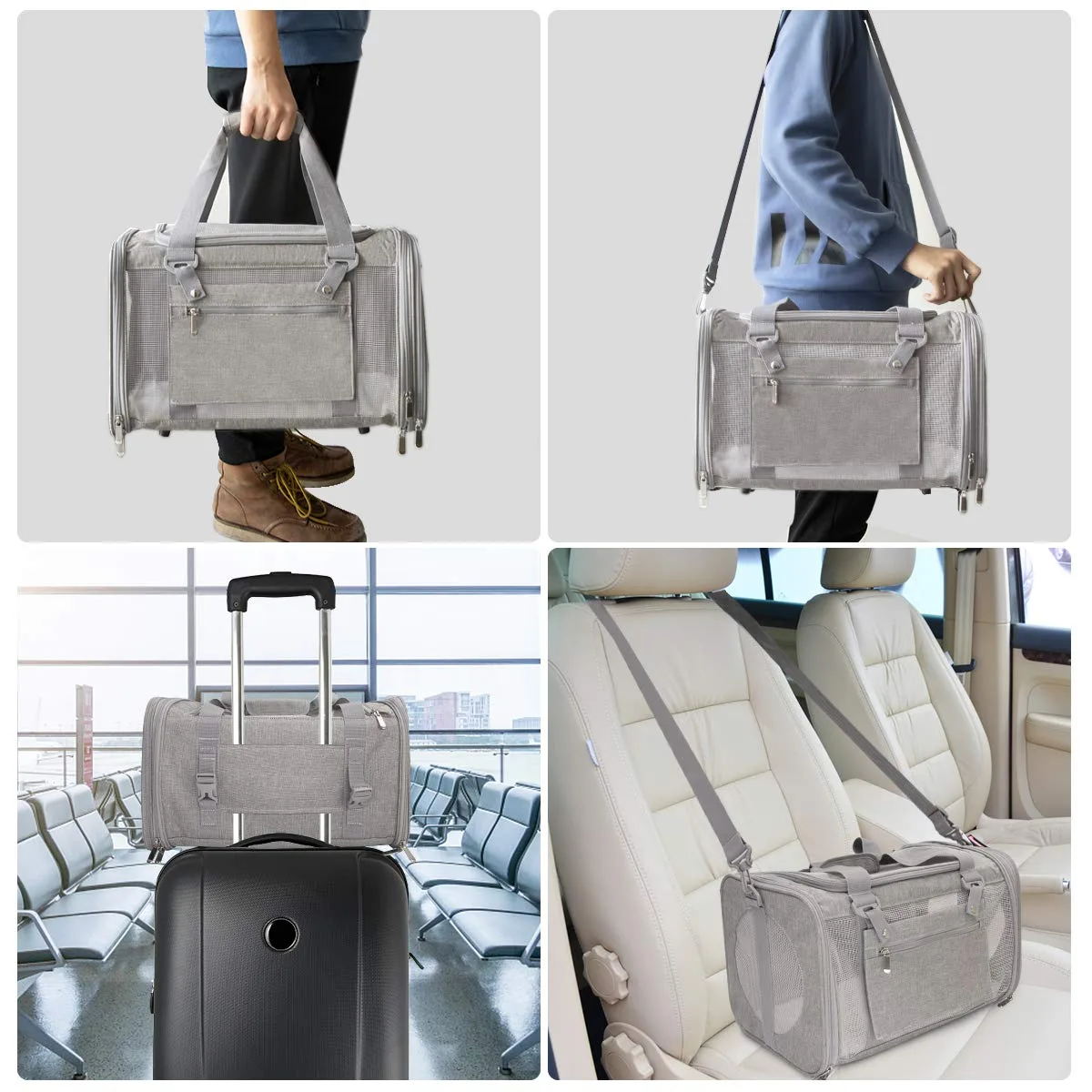
For a custom cat carrier the ventilation question is where the mesh sits, not how much there is: high side panels plus a shaded front zone keeps airflow without visual exposure.
Refill Rolls as the Repeat-Purchase Engine Behind a Dispenser Capsule
A dispenser is a one-time sale. The refill roll inside it is a subscription waiting to be built. That difference should shape every decision in the program, because the roll is where lifetime value actually accumulates and where a private label either earns a second purchase or loses the customer to a commodity brand.
The design consequence is that the roll has to fit the holder precisely. A roll that is 4 mm too wide jams in a pod, and a perforation that tears unevenly turns a two-second task into a struggle. Customers blame the brand on the holder, not the film supplier, so the interface between the two products is a brand asset worth protecting.
From a merchandising view, refills are also the item that keeps a brand present in the aisle between seasonal drops. Accessory capsules go quiet for months; a refill facing never does. Retailers allocate space to categories that move every week, and a branded refill earns that space in a way a seasonal colourway cannot.
The commercial model most brands land on is a two-tier structure: an everyday unscented roll in a bulk pack, and a premium scented or printed roll in a retail box. The everyday tier defends against price competition and the premium tier carries the margin, and both share the same film and core specification to keep sourcing simple.
Brands already running a holder program should treat the roll as the anchor of the relationship and the holder as the acquisition cost. That reframing changes the budget: spending more on the pod to win the customer is rational when the roll generates the repeat revenue.
A private label refill also earns pricing power that a commodity roll never holds. Once a customer owns the holder, compatibility and trust outweigh a few cents of difference against a supermarket roll, and that is the moment a brand can defend a premium rather than discounting. The practical implication is that the refill should never be positioned as the cheapest line in the range. It should be presented as the roll engineered for the holder, supported by clear fit messaging, consistent availability and a pack design that looks like it belongs beside the hero product rather than beside the cleaning aisle.
Film Specification: Gauge, Material and Seam Behaviour
Film is the product. Everything else is decoration, and a roll that tears at the seam or leaks in the hand will destroy trust in a brand faster than any packaging can rebuild it. Specification therefore starts with gauge, material and seal behaviour rather than with print.
Gauge sits between 15 and 22 micron for most retail refills. Thinner film saves material and feels softer but loses puncture confidence; thicker film reassures the customer but adds weight to every carton and raises freight disproportionately on a bulky item. The right answer depends on the position, not on cost alone.
| Film option | Gauge | Handfeel | Recycled content | Typical position |
|---|---|---|---|---|
| Standard PE | 15-18 micron | Soft, quiet | 0% | Everyday value tier |
| High-density PE | 18-22 micron | Crisp, slightly noisy | 0-30% | Mid-tier retail box |
| Recycled PE blend | 18-20 micron | Soft, matte | 50-100% | Sustainable line |
| Cornstarch blend | 18-22 micron | Dry, papery | Biobased | Premium eco tier |
Seam strength is the technical detail that separates a usable roll from a returned one. A bottom seal that is too narrow splits under load, and a seal that is too wide makes the bag stiff and hard to open. We set seal width and temperature together at sample stage and verify peel strength before any bulk run is released.
Perforation geometry belongs in the same conversation. The tear line must survive being pulled from a hanging card yet separate cleanly with one hand, and those two requirements pull in opposite directions. A prototype roll tested in the actual holder is the only way to settle it.
Opacity is a quiet quality signal. A bag that is too translucent undermines confidence even when it performs perfectly, so pigment loading and opacity should be specified explicitly rather than left to the film supplier default.
Storage stability is the last film item worth writing into the specification. Rolls held in a hot warehouse for a season can block, lose seal integrity or pick up odour from a neighbouring scented line, so shelf-life guidance and carton storage conditions belong in the paperwork. Brands shipping into warm climates should specify a slightly higher gauge and confirm performance after accelerated ageing rather than approving on a fresh sample alone, because the failure mode appears months after the launch rather than during inspection.
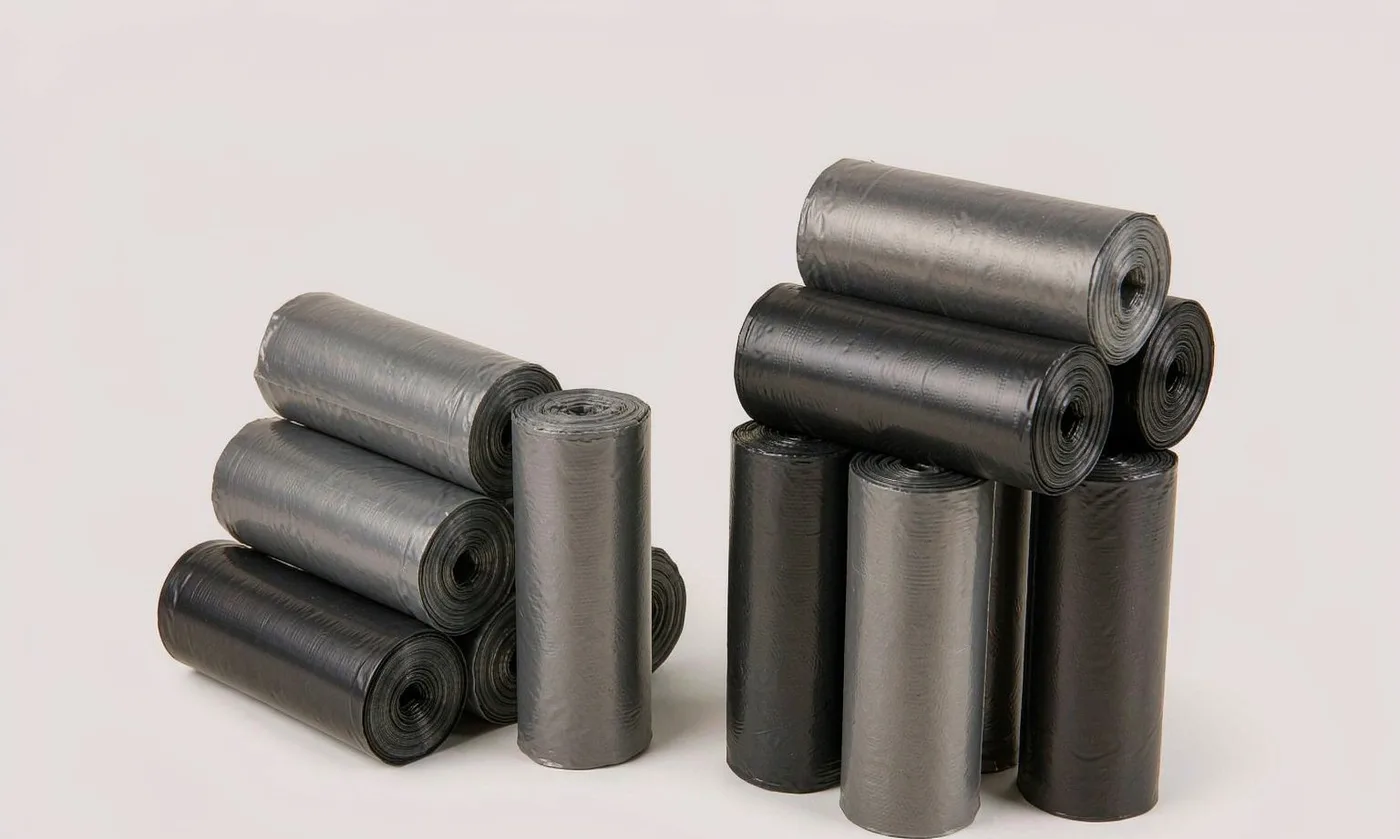
Printing the Roll: Flexographic Plates, Ink Coverage and Registration
Printing on film is a different discipline from printing on fabric. The surface does not absorb ink, the substrate stretches under tension, and a design that looks perfect on screen can register badly on a 15-micron film running at speed. Understanding those constraints at the design stage saves an entire sampling round.
Flexographic printing is the standard method for roll stock. Each colour requires its own plate, and plate charges are fixed costs amortised across the run, which is the direct reason the program carries a 500-roll minimum per design. A one-colour mark is dramatically cheaper per roll than a four-colour illustration.
- One-colour repeat mark: lowest cost, fastest setup, reads clearly at bag scale
- Two-colour mark with accent: good balance of character and plate cost
- Full-coverage pattern: highest impact, highest ink cost, slowest run speed
- Registered repeat text: needs tight tension control and a proof on actual film
Ink coverage affects more than price. Heavy coverage stiffens the film, reduces the soft handfeel customers associate with quality, and can interfere with the seal area if the design runs too close to the bottom edge. Keeping a clear margin around the seal is a specification rule, not a preference.
Registration on thin film drifts with tension, which is why a proof should always be pulled on the actual substrate rather than on paper. A paper proof flatters the artwork and hides the drift that shows up in production, and correcting it after plates are cut costs both money and calendar time.
Ink chemistry needs to be part of the brief from the start. Any ink system intended for EU or UK retail should be checked against REACH requirements, and low-odour formulations matter when the product sits in a kitchen drawer next to food.
Finally, consider whether print is needed at all. An unprinted premium film with a branded core, a printed hang tag and a printed box can communicate more clearly than a busy repeat pattern on the bag itself, and it removes plate cost from every reorder.
There is also a minimum-legibility rule worth applying. Type below roughly 3 mm cap height disappears on a bag that is opened, knotted and dropped into a bin, and fine detail degrades further once ink sits on a stretched film. Artwork supplied for a carrier or a hang tag almost always needs to be redrawn for a bag rather than scaled down, and doing that redraw before plates are cut is far cheaper than discovering the problem in a printed proof.
Scent, Colour and Add-On Features That Change the Brief
Scented refills are the most common upgrade request and the one that most often surprises buyers with lead time. A fragrance is an additional component with its own supplier, its own stability profile and its own documentation, and it needs to be locked before sampling rather than added afterwards.
Scent intensity is a design decision, not a technical one. A strong fragrance masks odour in use but can be unpleasant in a closed drawer, and some retail channels restrict certain fragrance families. We recommend sampling two intensity levels before committing, because preference varies sharply by market.
Colour works in two places: the film tint and the print. A tinted film in a brand colour reads instantly on shelf and differentiates a premium tier from a white value tier without any print at all. Combined with a one-colour mark it is often the most cost-effective premium signal available.
Handle design is the third lever. A tie-handle bag costs more to convert but reads as a considered product, and it changes the packing geometry enough to affect bag count per roll. Whether the extra conversion cost pays back depends on the channel, and it should be tested in one colourway first.
Add-on features also include a dispenser-friendly core, a starter bag pulled through for first use, and an end-of-roll indicator printed on the final bag. These are small touches that appear in reviews disproportionately to their cost, and they are easiest to add at specification stage rather than later.
Every feature should be evaluated against the master carton, because bulky features reduce pack-out and raise landed cost. A feature that adds 2% to unit cost but 8% to freight volume is a bad trade on a product where freight is already the dominant variable.
Testing discipline protects the feature investment. Any new scent, tint or handle style should go through one full production cycle before it is launched across the whole range, because a fragrance that migrates into a neighbouring unscented line or a tint that shifts under UV will not show up in a laboratory sample. A single colourway test run at the standard 500-roll minimum is inexpensive relative to a recall, and it produces the field evidence needed to brief retail buyers confidently.
Roll Formats: Count, Core Diameter and Perforation Geometry
Format is where a refill program either fits the installed base or fails it. The three numbers that matter are bag count per roll, core diameter and bag dimensions, and all three should be derived from the holder a brand already sells rather than chosen from a catalogue.
Fifteen bags per roll is the market convention and the safest default, because most dispensers are engineered around it. Twenty-bag rolls appeal to value shoppers but need a slightly larger core or a tighter wind, and both changes can break fit in a pod designed for fifteen. Changing count is a compatibility decision.
| Format | Bags per roll | Core diameter | Roll width | Fits |
|---|---|---|---|---|
| Standard refill | 15 | 32 mm | 58 mm | Most clip pods and sleeves |
| Compact refill | 12 | 28 mm | 55 mm | Slim pods, pocket sleeves |
| Value refill | 20 | 38 mm | 60 mm | Large wallets, home dispensers |
| Bulk loose pack | Not rolled | None | Folded | Home caddies, refill stations |
Core diameter drives fit more than buyers expect. A pod with an internal post is built for a specific bore, and a core that is even 2 mm off will not seat. Whenever a brand supplies a holder sample, we measure the post and specify the core to it rather than assuming a standard.
Perforation geometry deserves its own prototype. Tear strength is set by cut depth and spacing, and the optimum differs between a bag pulled from a pod and a bag pulled from a box. Testing both use cases at sample stage prevents the most common field complaint in this category.
Bag dimensions should be generous enough for the intended dog size. A bag that is technically adequate for a small breed but feels tight in the hand for a large one generates the same negative review regardless of film strength, and sizing up costs very little in material.
Documentation discipline protects the format decision over time. Every approved roll should have a recorded width, core bore, bag count, gauge and perforation setting held on file, because those five numbers are what make a reorder identical to the launch batch. Brands that change suppliers mid-programme almost always lose at least one of them, and the result is a roll that no longer fits the holders already in customers hands, which is a far more expensive problem than the saving that prompted the switch.
Packaging Formats: Retail Box, Header Card and Bulk Master Carton
Refill packaging has to solve three problems at once: protect the roll in transit, communicate count and fit on shelf, and pack efficiently into a master carton. Those goals conflict, and resolving them deliberately is what separates a professional program from an improvised one.
A printed retail box is the premium answer. It protects the roll, gives six printable faces for brand storytelling and fit messaging, and stacks cleanly on a shelf or in a subscription box. The cost is board, print and volume, and volume is the one that hurts on a bulky low-weight product.
- Retail box: best protection and messaging, highest freight volume
- Header card with shrink band: good shelf density, moderate protection
- Printed paper band: lowest material use, weakest transit protection
- Bulk master carton: lowest cost per roll, suited to e-commerce refill packs
E-commerce refill packs increasingly skip individual retail packaging entirely. A kraft-wrapped multipack inside a mailer delivers the same product at lower cost, and the sustainability story is stronger. For a subscription brand this is usually the right call.
Fit messaging on the pack is a conversion lever. A small icon showing the holder the roll fits removes the hesitation that stops a customer buying a refill online, and it costs one print colour. Where a brand sells both items, cross-referencing the holder on the refill pack is free marketing.
Master carton pack-out should be engineered from the roll dimensions rather than filled to a weight limit, because rolls cube out long before they weigh out. Getting pack-out right can reduce landed cost per roll by more than any film negotiation would, which is why we model it before quoting.
Pallet efficiency deserves a mention alongside carton pack-out, because a refill line ships in volume and small dimensional changes compound across a container. Reducing box height by a few millimetres can add an entire layer per pallet, and over a year of replenishment that is a meaningful freight saving for a decision made at the drawing board. We run that calculation as part of packaging development rather than after the first shipment, when changing the board size would trigger a reprint.
Cost Model for Printed Refill Rolls at 500 Rolls per Design
Refill economics look simple and rarely are. Film is the visible cost, but plate charges, conversion waste, ink coverage and freight all move the number, and the mix changes with run size. The table below shows the typical distribution for a printed 15-bag roll at the standard minimum.
| Cost element | Share of unit cost | Fixed or variable | Main lever |
|---|---|---|---|
| Film resin and extrusion | 28-36% | Variable | Gauge and recycled content |
| Printing and plates | 10-20% | Setup plus variable | Colour count and coverage |
| Conversion and perforation | 12-18% | Variable | Handle style, bag count |
| Core and winding | 5-9% | Variable | Core diameter |
| Retail packaging | 12-22% | Setup plus variable | Format choice |
| Freight allocation | 10-18% | Variable | Pack-out and cube efficiency |
Plate amortisation explains the minimum. A four-colour design carries four plate charges spread across 500 rolls; at 100 rolls that fixed share would dominate the unit cost and make the program unviable. Designing to one or two colours is the fastest way to improve margin on a first run.
Freight is the sleeper variable. Rolls are light and bulky, so a multipack that cubes efficiently beats a heavier pack that does not. We model pack-out alongside unit cost for this reason, and we advise clients before they commit to a box format that will cost more to ship than to make.
Recycled and biobased films carry a premium that varies with resin markets, so any sustainability tier should be quoted with a validity window. Building that into the pricing conversation avoids an awkward repricing conversation at reorder.
Finally, the cost model should be reviewed at reorder rather than assumed stable. Resin prices, freight rates and exchange rates all move, and a refill program is a repeating commitment where a small drift per roll compounds over a year.
Sampling, Compliance Files and Replenishment Cadence
A refill program runs on the same commercial clock as the rest of the capsule: samples in 6-10 working days, bulk 35-50 days after approval, AQL 2.5 inspection, T/T 30/70 and FOB Xiamen. What differs is the compliance file, because film and ink are regulated articles in most destination markets.
Sampling should always include a roll tested in the actual holder and a print proof pulled on the production film. Those two artefacts catch almost every failure that would otherwise surface in bulk, and they cost a fraction of a reprint. We hold both as reference standards for reorder.
Compliance documentation should be assembled during development, not requested at shipment. Film composition, ink formulation, fragrance safety data and any recycled-content certification each have their own lead time, and a missing document can hold a container longer than production takes to run.
Where a client sells into the EU or UK, we check ink and film inputs against REACH obligations, and where physical performance needs documenting we align testing with ASTM standard methods. Documentation is issued under a ISO 9001 system.
Replenishment cadence is a planning exercise rather than a purchasing one. A brand should set a reorder trigger based on sell-through of the holder base, because refill demand follows the installed base with a lag of roughly four to eight weeks. Missing that window is what causes stockouts on the most profitable item in the range.
Seasonal print designs work well here for the same reason they work on packaging: the film and tooling stay constant and only artwork changes, so a limited run costs little and creates genuine newness. A quarterly design rotation keeps the refill facing alive without touching the specification.
Order and quality terms
- MOQ 500 pieces per colourway; samples in 6-10 working days
- Bulk production 35-50 days after approval; AQL 2.5 inspection standard
- T/T 30/70 terms, FOB Xiamen, full document set per shipment
People Also Ask
What is the MOQ for custom printed waste bag rolls?
The standard minimum is 500 rolls per print design. Each print colour requires its own flexographic plate, and 500 rolls spreads those fixed plate charges across a viable base so the setup share of unit cost stays proportionate.
How long do custom refill samples take?
Refill samples take 6-10 working days once film gauge, core size, bag count and artwork are approved. Always request a print proof on the production film plus a roll tested in the actual holder.
What film thickness should I choose?
Most retail refills sit between 15 and 22 micron. Thinner film feels softer and saves material, thicker film reassures on puncture confidence but adds weight and freight on a bulky product.
Can refill rolls be made with recycled content?
Yes. Recycled PE blends at 50-100% content and cornstarch blends are both available. Any recycled or biobased claim should be traceable to a certified source and quoted with a validity window.
How many bags should each roll contain?
Fifteen bags per roll is the market convention and fits most clip pods and sleeves. Twelve suits slim pods, twenty suits home dispensers, and bag count should follow the holder you already sell.
Are scented refill rolls available?
Yes, though fragrance is a separate component with its own supplier, stability profile and documentation. We recommend sampling two intensity levels before committing, since preference varies sharply by market.
What inspection standard applies to bulk refill orders?
Bulk refill runs are inspected to AQL 2.5 before shipment under FOB Xiamen terms with T/T 30/70 payment. Seal strength, perforation tear and print registration are checked against the approved reference sample.
Frequently Asked Questions
What core diameter do refill rolls use?
A 32 mm core with a 58 mm roll width is the most common configuration and fits the majority of clip pods and sleeves. Where a brand supplies a holder, we measure the internal post and specify the core to it.
Can I print a full-coverage pattern on the bag?
Yes. Full coverage has the strongest shelf impact but uses the most ink, stiffens the film and slows the run. Keep a clear margin around the seal area so ink does not interfere with sealing.
Do I need a different plate for each colourway?
Each print colour needs its own plate. A colourway that reuses the same mark in a different ink colour usually needs only a new plate for that colour, not a full set.
How is perforation tear strength set?
Tear strength is set by cut depth and spacing, then verified by pulling bags from both the holder and the retail pack. The optimum differs between the two, so both use cases get tested at sample stage.
What packaging format is best for e-commerce refills?
A kraft-wrapped multipack inside a mailer usually beats an individual retail box for subscription and e-commerce. It lowers cost, reduces damage risk and supports a stronger sustainability story.
How do you control print registration on thin film?
Proofs are pulled on the actual production film rather than on paper, because tension drift on thin substrate is invisible on a paper proof. Registration is then checked again at the start of the bulk run.
Can the refill pack reference the matching holder?
Yes, and it is recommended. A small icon showing which holder the roll fits removes online purchase hesitation and cross-sells the holder at the same time, for the cost of one print colour.
What causes rolls to jam in a dispenser?
Almost always width or core mismatch. A roll 4 mm too wide or a core 2 mm off the internal post will not seat, which is why we specify format from a physical holder sample rather than a catalogue.
How should I plan reorder timing?
Set the trigger against holder sell-through, because refill demand follows the installed base with a four to eight week lag. Missing that window is the most common cause of stockouts on this item.
Is a tie-handle bag worth the extra conversion cost?
It depends on channel. Tie handles read as a considered premium product in pet specialty but rarely pay back in a value tier. Testing one colourway first is the safest way to judge.
What compliance files ship with a refill order?
Typically film composition, ink formulation data, fragrance safety documentation where applicable and any recycled-content certification. These are assembled during development so they do not delay shipment.
Can seasonal designs reuse the same film and tooling?
Yes. Only the artwork and plates change, so a limited seasonal run adds little cost and creates genuine newness. A quarterly design rotation keeps the facing alive without touching the specification.
Why is freight such a large share of refill cost?
Rolls are light and bulky, so cartons cube out long before they reach a weight limit. Pack-out engineered from roll dimensions can cut landed cost more than any film price negotiation.
Talk to QUANZHOU JUNYUAN BAGS about a pet carrier program: MOQ 500 pieces per colourway, samples in 6-10 working days, bulk production in 35-50 days under AQL 2.5 inspection.
Get a free quote Request a sample