Custom Sleeping Bag: Cozy Rest
A custom pet sleeping bag is specified as a quilted textile shell with a synthetic fill of 150-400 g/m², a zip or wrap closure, and a packed size that suits a retail carton. MOQ is 500 units per colourway, and the three decisions that define the product are shell hand-feel, fill weight and quilting pattern. Get those right and the SKU sells itself on touch alone.
Soft goods are where a brand's material vocabulary becomes visible, and the development path reflects that: fabric and colour are approved before construction begins. Standard terms are MOQ 500 units per colourway, samples in 6-10 working days, bulk production in 35-50 days after sample approval, and inspection at AQL 2.5 with a written defect list covering stitch density, fill distribution and trim alignment. Payment is T/T 30/70, FOB Xiamen.
The brief should resolve four things before costing: shell fabric and finish, fill type and weight, quilting geometry, and the logo method. Once those are fixed, pattern-making is quick and the first sample is usually close enough to sign within two rounds. The programmes that run late are almost always the ones that try to choose the fabric from a photograph.
Two things make soft goods development run smoothly. First, approve the shell and the fill from physical swatches and a hand-filled mock-up rather than from a specification sheet, because loft and drape cannot be read from numbers. Second, decide the quilting pattern before the pattern maker cuts, since stitch geometry fixes where the logo can sit and changing it later forces a re-sample. Brands that follow both usually sign within two rounds and protect their gift-season date.
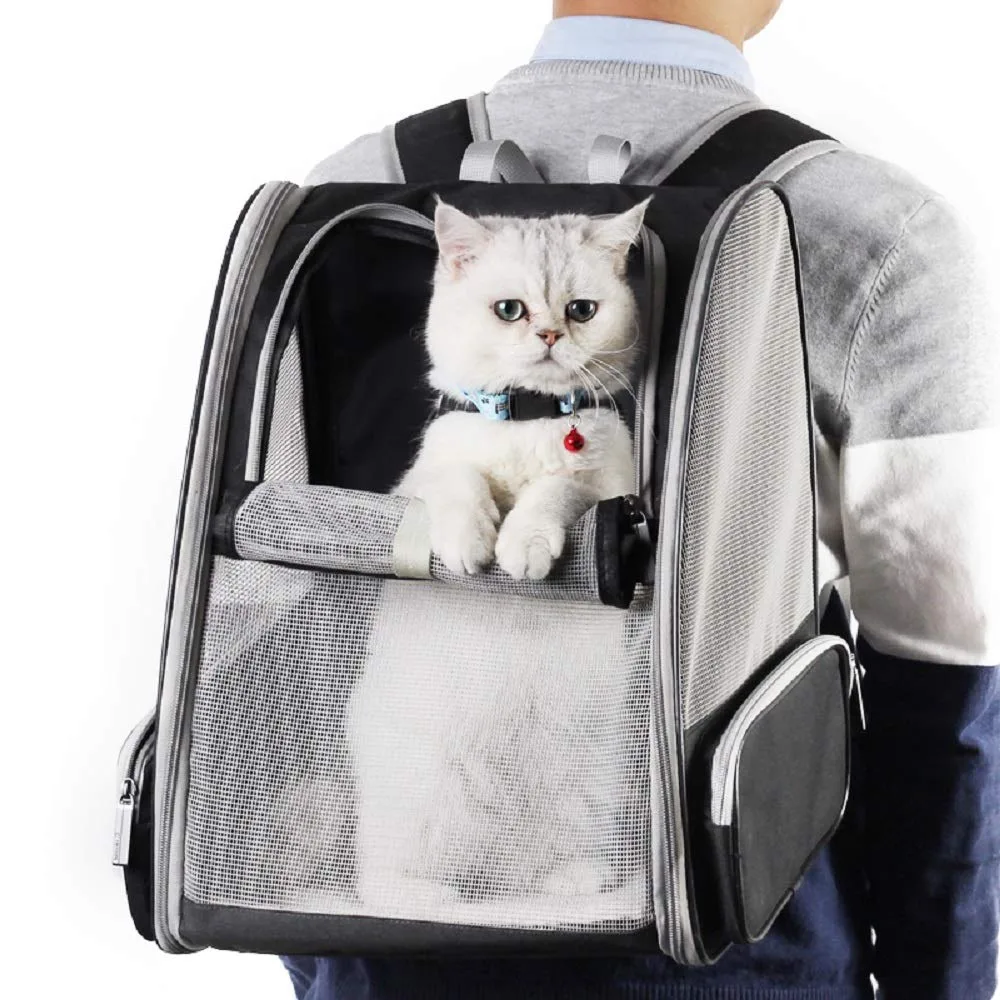
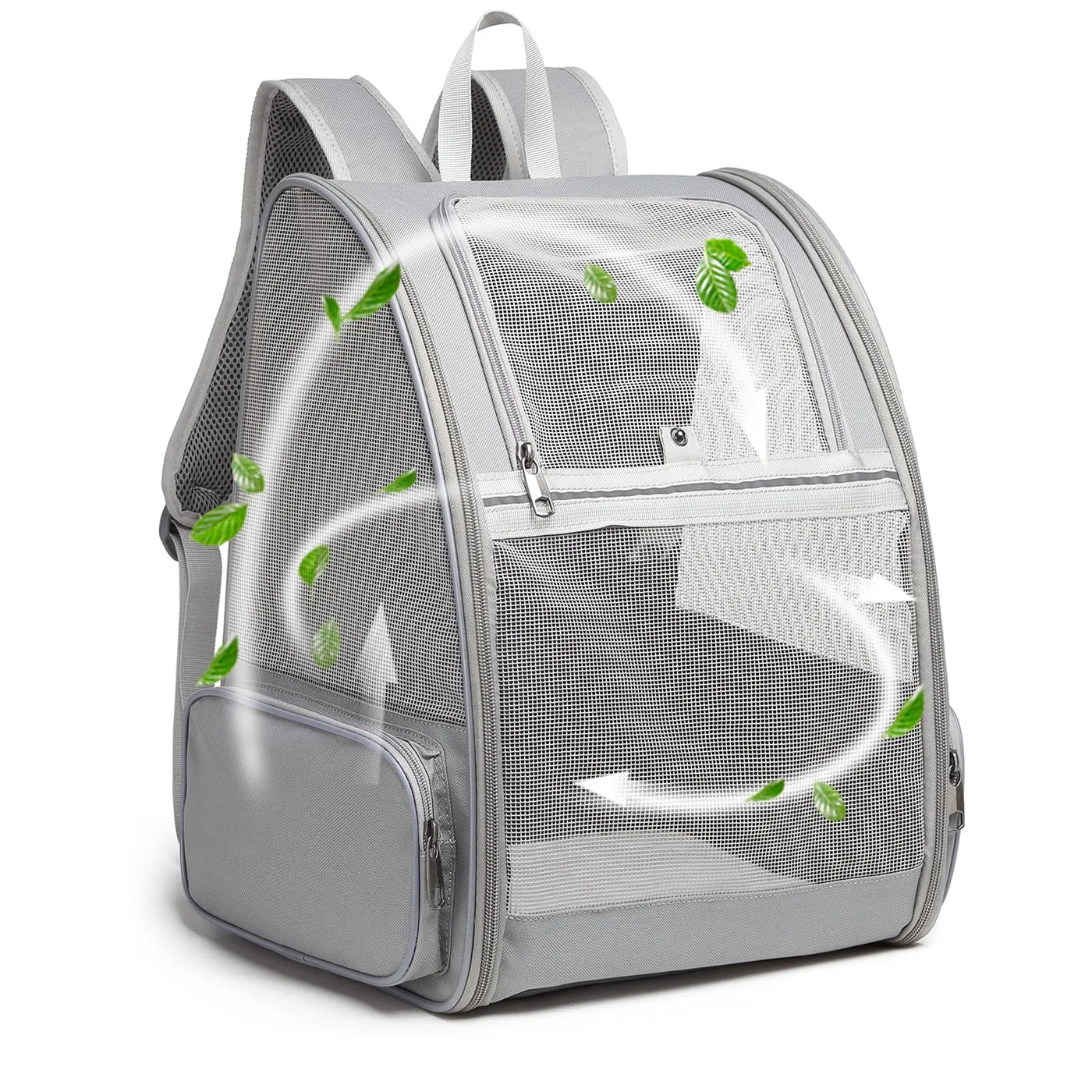
For a custom cat carrier the ventilation question is where the mesh sits, not how much there is: high side panels plus a shaded front zone keeps airflow without visual exposure.
The Sleeping Bag as a Textile-Led Brand Statement
Of every SKU in a pet range, the sleeping bag is the one the customer touches longest and judges most intimately. It is picked up, squeezed, opened and pressed against the cheek in the store. That means the design decisions that matter are tactile ones - loft, drape, surface friction and the sound the fabric makes when it moves - and they cannot be evaluated from a render. A brand that specifies soft goods properly wins on a dimension competitors rarely engineer for.
Positioned well, the sleeping bag also does structural work for a range. It bridges the gap between a flat bed and a technical outdoor product: it is soft enough for the home buyer and packable enough for the camping buyer. That dual read makes it the natural bridge SKU between a comfort capsule and an outdoor capsule, and the natural companion to a camping shelter or a home bed.
The design opportunity is in surface, not silhouette. Almost every pet sleeping bag is a rounded rectangle with a closure, so differentiation comes from quilting geometry, colour placement, binding choice and logo treatment. Those four variables, handled consistently, produce a recognisable brand signature at a fraction of the cost of a new shape.
Price architecture in soft goods is unusual because perceived value tracks material cost more closely than in hard goods. A shopper can feel a 200 g/m² fill versus a 350 g/m² fill, and will pay proportionally. That makes the category honest: spend more on fabric and fill, and the shelf price follows. It also means cutting fill weight to hit a price point is immediately visible, which is why fill should be the last thing a brand team negotiates and the first thing it protects.
Seasonality runs opposite to the outdoor structures. Sleeping bags peak in the fourth quarter, sell as gifts, and carry the highest emotional weight of any SKU in the range. Design accordingly: the packaging moment, the colour palette and the photography should all assume the product is being bought for someone else's pet, often by a buyer who will never see the dog.
Shell and Fill: Specifying Hand-Feel Before Construction
Specify the shell first, because everything else follows from it. The three credible families are brushed polyester (polyester fleece or peach-finish microfibre), cotton or cotton-blend canvas, and technical nylon. Brushed polyester is the volume default: it is warm to the touch, holds colour beautifully, dries fast and washes without shrinking. Cotton canvas reads natural and premium and takes print well, but creases, shrinks and costs more. Nylon reads technical and packs smallest, but it is cold to the touch on first contact, which is a real disadvantage in a comfort product.
Surface finish matters as much as base fibre. A peach-finish microfibre feels suede-like and is the safest premium choice for a comfort product; a brushed tricot feels plush and slightly fuzzy; a plain weave feels flat and cheap unless the yarn quality is high. Ask for swatches of the same base fabric in three finishes and choose by hand, not by specification sheet.
Fill determines loft, weight and wash performance. Polyester staple fibre is the standard: cheap, resilient, and stable through washing. Cluster or ball fibre lofts better and recovers better after compression, and is worth the premium for a product that will be packed and unpacked. Down is warmer per gram but is a poor fit for a pet product: it is expensive, it migrates, and it creates an allergen and sourcing conversation most brands do not want.
| Configuration | Shell | Fill | Hand-feel | Cost index | Best for |
|---|---|---|---|---|---|
| Everyday comfort | 180 g/m² brushed polyester | 150 g/m² staple | Soft, light | 1.00 | Entry price band, warm climates |
| Core volume | 200 g/m² peach microfibre | 250 g/m² staple | Suede-like, plush | 1.20 | Mid band, most private label ranges |
| Premium loft | 220 g/m² peach microfibre | 350 g/m² cluster ball | Deep, resilient | 1.48 | Premium gifting, cold climates |
| Technical packable | 70D ripstop nylon | 300 g/m² cluster ball | Smooth, cool | 1.62 | Camping capsule, travel sets |
Two specifications protect the product after launch. Wash stability should be tested before bulk: a shell that shrinks more than about 3% will pucker along the quilt lines after the first wash and look defective. And any shell or fill in prolonged contact with an animal should hold OEKO-TEX certification, which is the credential buyers and marketplace filters recognise.
Colour fastness deserves its own line in the tech pack. Rubbing fastness and light fastness to published textile methods maintained by AATCC should be stated as minimum grades rather than left implicit, because a dark shell that crocks onto a light sofa is a return and a review problem, not just a lab number.
Quilting, Stitch Patterns and Surface Design
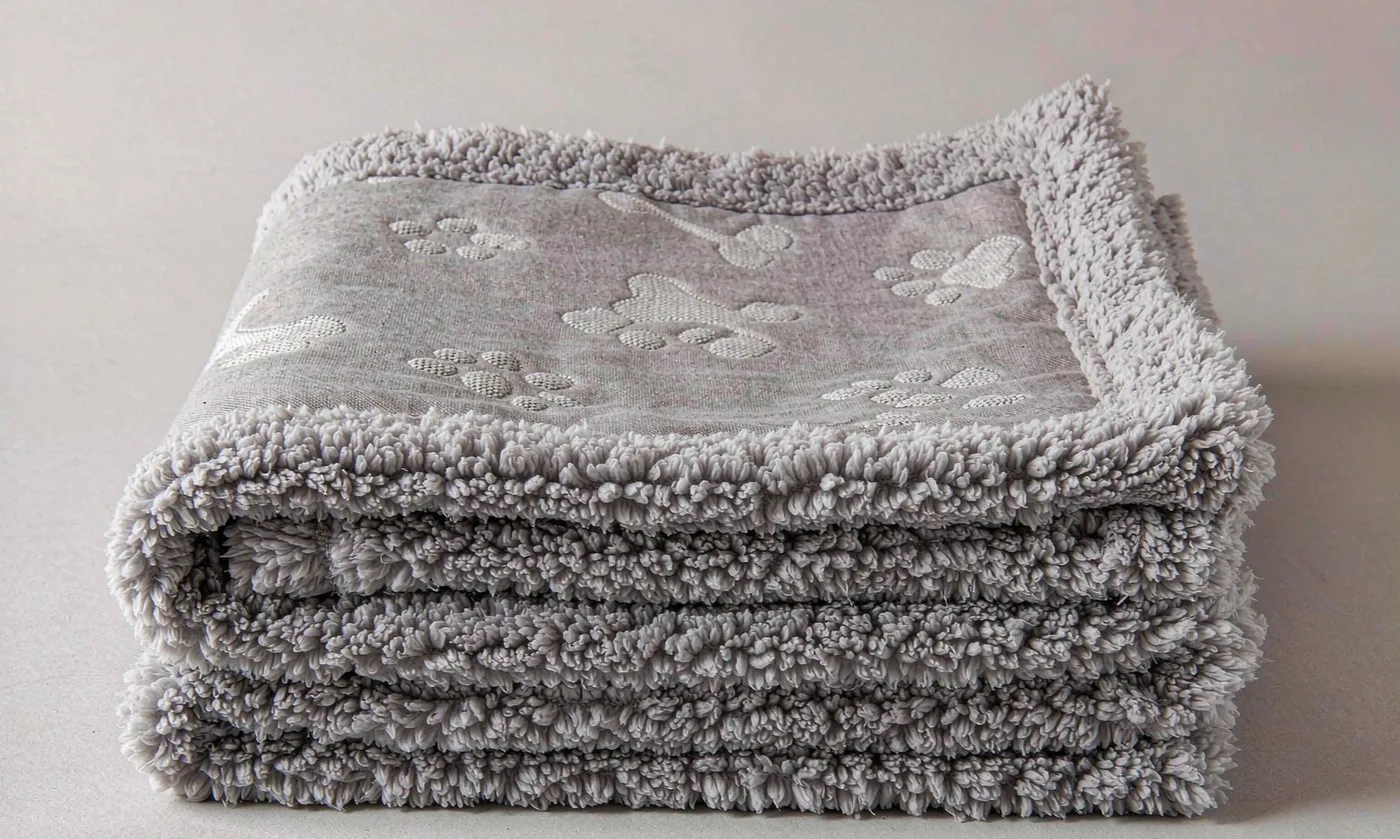
Quilting is the single cheapest way to make a sleeping bag look designed. It controls how the fill sits, how light falls across the surface, and how expensive the product reads. It also happens to be the element most brands default on - straight channel quilting - and therefore the easiest place to differentiate.
The four patterns worth considering each carry a different message. Straight channels run lengthwise and read technical, tidy and outdoor. Diamond quilting reads heritage and premium, and hides fill migration better than any other pattern. Wave or curve quilting reads soft, organic and comfort-led, and photographs beautifully but requires more precise pattern control. Grid quilting reads modern and minimal, and suits a design-led brand with restrained colour.
Stitch density follows from fill weight. Heavier fill needs closer quilting or it will shift and clump; a practical rule is that the maximum distance between quilt lines should not exceed about 150 mm for a 350 g/m² fill, and can stretch to 250 mm for a 150 g/m² fill. Getting this wrong produces the single most visible defect in soft goods: an empty panel at one end and a lump at the other after washing.
- Contrast thread: an accent stitch colour turns quilting into a design feature for almost no cost.
- Bound edges: a contrast binding in the accent colour frames the product and protects the edge from wear.
- Panel blocking: a two-tone shell split by a quilt line creates a colour story without a second fabric.
- Piped seam: a narrow cord in the seam lifts perceived value more than almost any other single detail.
Plan the quilting against the logo position from the start. A logo embroidered across a quilt line will pucker; a logo placed in the centre of a diamond panel will sit flat. This is a pattern-making decision, not a decoration decision, and resolving it in the tech pack avoids the most common re-sample in soft goods development.
Colour Systems for Soft Goods
Colour behaves differently on textile than on coated metal or printed board, and the tolerance has to be set accordingly. Dye lots vary, different fibres take the same formula differently, and the same reference on a brushed surface reads darker than on a smooth one. Specify against Pantone references, then approve a physical lab dip on the production fabric rather than on a substitute.
A realistic acceptance band for dyed fabric is a delta-E of about 1.5 to 2.0 against the approved swatch, judged under a controlled light source. Asking for tighter is possible but adds cost through shade sorting, and the shopper will never see the difference. Asking for looser invites a capsule where the sleeping bag and the matching blanket visibly disagree.
Build the palette as a system across the soft goods capsule. One core neutral - oat, warm grey or deep navy - that reorders annually. One signature colour that appears on the binding, the zip tape and the logo. One seasonal accent that rotates and gives the retailer a new story. Applied consistently across the sleeping bag, the blanket, the bed and the travel set, that system makes a small range look like a considered collection.
Dark versus light is a commercial decision, not only an aesthetic one. Light shells photograph beautifully and look premium on shelf, but show every mark and are returned more often. Dark shells hide soiling and sell better into multi-pet households. A common resolution is a mid-tone core with a light interior lining, which gives the photograph a bright interior while keeping the exterior practical.
Naming and consistency carry search value. Use the same consumer-facing colour name across every SKU and print it on the hang tag and the carton. A shopper who bought "Sage" last year and searches for "Sage" this year is the most valuable customer in the range, and inconsistent naming breaks that loop.
Logo Methods on Textiles
Textiles offer more logo options than any other substrate, and the choice should be driven by what the brand wants to communicate. Embroidery communicates craft and permanence. A woven label communicates apparel credibility. Heat transfer communicates illustration and colour range. A silicone or rubber badge communicates outdoor technical. A printed interior lining communicates playfulness and is the most photographed option.
Embroidery is the default for a premium sleeping bag. It is durable, it has a tactile quality shoppers associate with quality, and it handles up to about six thread colours. Its limits are size and detail: strokes below roughly 0.6 mm and text below about 5 mm cap height will not hold. Digitising is a one-off cost and the file should be kept as a brand asset for reuse across the capsule.
| Method | Setup | Colour range | Wash durability | Brand read |
|---|---|---|---|---|
| Embroidery | Digitising file | Up to 6 threads | Very high | Craft, heritage, premium |
| Woven damask label | Loom setup | Up to 8 threads | Very high | Apparel credibility, quiet luxury |
| Heat transfer | Film | Full colour | Medium-high | Illustrated brands, character artwork |
| Silicone badge | Mould | 1-3 colours | Very high | Technical outdoor |
| All-over print lining | Print run | Unlimited | High (no contact wear) | Playful, giftable, social-friendly |
Placement follows use. The strongest single position for a sleeping bag is the outer foot panel or the upper corner of the open bag, which is what appears in a photograph of a pet lying inside. A secondary woven label at the closure gives the apparel cue. A printed lining gives the reveal moment when the bag is opened.
Artwork discipline again: vector files, Pantone call-outs for every thread and ink, and a stated minimum size. Embroidery in particular needs the artwork simplified deliberately - a logo designed for print will usually need a dedicated embroidery variant with thicker strokes and fewer gradients. Preparing that variant once is far cheaper than fixing it at sampling.
Shape, Closure and Hardware Detailing
Silhouette choices in this category are narrow but not trivial. The rounded rectangle with a side zip is the volume shape, easy to make and easy to photograph. The envelope with an open top and a fold-over flap reads more like bedding and suits home positioning. The mummy or hooded shape reads technical and suits the camping capsule, and is the most distinctive on shelf.
Closure choice affects both function and perception. A full-length zip gives a camping read and lets the bag open completely flat for washing and for photographing the lining. A partial zip with a wrap flap gives a home read and is easier for a pet to enter. A hook-and-loop tab is cheapest and quietest but reads less premium and collects fibre.
Hardware is where a comfort product is quietly judged. A zip with a branded pull, a self-fabric zip garage that stops the slider catching fur, and a binding that covers the zip tape all cost cents and are noticed. Conversely, a stiff zip that snags on the lining is remembered far longer than the colour.
Interior detailing deserves a deliberate decision. A contrasting lining turns the open bag into a photographable surface and is the highest-impact use of a second colour in the whole product. A small interior pocket for a toy or a treat is a genuine differentiator that costs almost nothing and gets mentioned in reviews.
One more shape decision deserves attention: whether the bag is reversible or opens fully flat. A bag that unzips completely and lays open becomes a mat, which doubles its usefulness in a hotel room, a car boot or a campsite, and gives the printed lining a genuine purpose. Specifying a two-way zip so the bag can be opened from either end adds a little cost and makes that flat-open behaviour practical rather than theoretical.
Two functional details close the spec. A non-slip base - silicone dots or a textured fabric panel - stops the bag sliding on hard floors and is a real, mentionable benefit. And a machine-washable construction, with the fill rated to survive domestic washing, should be stated as a requirement rather than assumed, because not every quilting construction survives it.
Packaging and the Gift Moment
Sleeping bags sell disproportionately as gifts, which changes what packaging has to do. The box or bag has to survive being wrapped, look considered without a price tag, and communicate size at a glance. That last point is the hardest, because a compressed soft product in a box gives no scale cue.
Three packaging routes work. A printed gift box with a window gives the strongest shelf presence and the clearest size cue, at the highest unit cost and the largest freight volume. A vacuum-compressed roll in a printed belly band gives the best freight profile and a satisfying opening moment, but hides the product completely. A reusable carry bag with a printed card is the middle route, and is the one most brands settle on because the carry bag becomes part of the product.
Whichever route you choose, three printed inserts do the work: a care card with washing instructions, a brand card that introduces the rest of the capsule, and a size card showing the internal dimensions with a breed-weight guide. The size card in particular reduces returns, because sizing is the main reason soft goods come back.
For retail, plan the shelf block around colour rather than size. Soft goods merchandised by colour read as a collection; merchandised by size they read as inventory. Give the retailer a planogram with the colour order specified and match it on the carton markings so the shelf builds correctly.
Sustainability language should be concrete. "Recycled polyester shell, 12 bottles per unit" is a claim that can be substantiated and printed; "sustainable materials" cannot, and regulators in several markets now treat vague environmental claims as a compliance risk. Keep the substantiation file with the tech pack.
Compression is the other packaging decision with real commercial weight. A sleeping bag compressed for shipping recovers loft within a day or two, but a bag left compressed on a shelf for months will not recover fully, and the customer reads that as thin fill. Either ship uncompressed, or state clearly on the carton that the bag should be opened and shaken on arrival so the retailer knows to do it before the product faces the shopper.
Sampling, Compliance and Seasonal Timing
Soft goods sampling is fast because pattern-making is fast. Round one is a construction sample in a stock fabric, used to check shape, closure and quilting geometry. Round two is the production sample in the real fabric, colour and trim, and it is the one that gets signed. Allow 6-10 working days per round, and insist on seeing a washed sample of the production unit at least once before bulk - shrinkage and pucker only appear after laundering.
Compliance for textile pet products centres on restricted substances and, in some markets, on filling material rules. EU obligations are administered under the framework published by ECHA, and US general product safety obligations by the U.S. Consumer Product Safety Commission. Independent testing through SGS on the first lot of every new fabric is inexpensive and gives retail compliance teams a document they can file.
Bulk runs 35-50 days from approval. Fabric dyeing is the long pole: a custom shade on a custom base cloth can add ten days before cutting even begins. Ordering greige or stock-colour fabric for the first season and moving to a custom dye for the second is a sensible way to protect a launch date.
Inspection at AQL 2.5 should cover the defects that actually matter in soft goods: stitch density below spec, fill migration after a shake test, trim misalignment beyond 3 mm, loose threads inside the bag, and a zip that does not run its full length. A shake test on a sample from each carton is the cheapest way to catch fill problems before they reach a customer.
The calendar for a fourth-quarter launch runs: brief and palette in March, fabric and colour approvals in April, samples signed by May, retailer range review in June, bulk in July and August, and stock landed by early October. Working backwards from the gift season matters more in soft goods than anywhere else, because the selling window is short and unforgiving.
Order and quality terms
- MOQ 500 pieces per colourway; samples in 6-10 working days
- Bulk production 35-50 days after approval; AQL 2.5 inspection standard
- T/T 30/70 terms, FOB Xiamen, full document set per shipment
People Also Ask
What is a pet sleeping bag used for?
It gives an enclosed, insulated place to sleep, both at home and while travelling. The hooded shape retains warmth better than a flat bed, and the zip-open version doubles as a mat when fully opened.
Are pet sleeping bags machine washable?
Most quality versions are, provided the construction and fill are specified for domestic washing. Check the care label and wash on a gentle cycle, then dry thoroughly so the fill does not clump.
What fill is best for a pet sleeping bag?
Polyester cluster-ball fibre is the best all-round choice: it lofts well, recovers after compression and survives washing. Down is warmer by weight but migrates and creates an allergen conversation most brands avoid.
How do I choose the right size?
Measure the pet lying fully extended and add roughly 15% to both length and width. Match that to the internal dimensions, not the external ones, and use a breed-weight guide as a secondary check.
Can a pet sleeping bag be used for camping?
Yes, if the shell is a packable technical fabric and the bag compresses into a carry sack. Pairing it with a matching shelter in the same palette is the strongest camping capsule available in this category.
Does quilting affect warmth?
Yes. Quilting holds the fill in place so it does not migrate into cold spots. Heavier fill needs closer quilt lines - no more than about 150 mm apart for a 350 g/m² fill.
Frequently Asked Questions
What is the MOQ for a custom pet sleeping bag?
MOQ is 500 units per colourway. A single order can usually be split across two or three sizes in the same colourway and fabric, because the pattern and the dye lot are shared.
Which shell fabric should we choose?
Peach-finish microfibre polyester is the safest premium choice: it feels suede-like, holds colour, dries fast and washes without shrinking. Cotton canvas reads natural but creases and shrinks; nylon reads technical but feels cold on first touch.
How much fill do we need?
150 g/m² suits warm climates and entry price bands, 250 g/m² is the volume standard, and 350 g/m² with cluster-ball fibre gives genuine premium loft. Fill weight is the last specification a brand should cut when defending a price point.
Can the sleeping bag be machine washed?
It can if the construction is specified for it. State machine-washability as a requirement in the brief and test a washed production sample before bulk, because not every quilting construction survives domestic laundering.
How long does sampling take?
Two rounds at 6-10 working days each, plus a wash test on the production sample. Fabric dyeing for a custom shade can add up to ten days before cutting begins, which is the usual reason a soft goods launch slips.
Which logo method lasts longest on textiles?
Embroidery and woven damask labels both survive repeated washing with no visible degradation. Heat transfer is durable but will eventually crack on high-flex areas, and silicone badges outlast both but suit technical rather than comfort positioning.
What inspection standard applies?
AQL 2.5 with a defect list covering stitch density, fill migration after a shake test, trim misalignment, loose threads and zip function. Shake-testing a unit from each carton is the cheapest way to catch fill problems early.
Can we use a recycled shell fabric?
Yes. Recycled polyester is widely available and prints and dyes comparably to virgin polyester. Keep the certification and the grams-per-unit figure on file so the claim can be substantiated if challenged.
What sizes should a first capsule include?
Three: small, medium and large, all sharing the same fabric, quilting and trim. Because the pattern scales, three sizes usually sit within a single MOQ and give the retailer a complete-looking block.
Should the interior be a different colour?
Almost always yes. A contrasting lining turns the open bag into a photographable surface and is the highest-impact use of a second colour in the product, with no effect on unit cost beyond the fabric choice.
How do we stop the bag sliding on hard floors?
Specify a non-slip base, either silicone dots printed onto the shell or a textured fabric panel. It is a low-cost addition and is one of the benefits most often mentioned positively in reviews.
What is the bulk lead time?
35-50 days after written sample approval. Using a stock-colour fabric for the first season and moving to a custom dye from the second season is the most reliable way to protect a launch date.
Do we need OEKO-TEX certification?
It is strongly advised for any textile in prolonged contact with an animal. Several marketplaces now filter on it, and it is the credential retail compliance teams know how to file.
How should soft goods be merchandised by colour or size?
By colour. A colour-blocked shelf reads as a collection and lifts the whole capsule, while a size-blocked shelf reads as inventory. Match the planogram colour order on the carton markings.
Talk to QUANZHOU JUNYUAN BAGS about a pet carrier program: MOQ 500 pieces per colourway, samples in 6-10 working days, bulk production in 35-50 days under AQL 2.5 inspection.
Get a free quote Request a sample