Small Pet Carrier: Mini Breed
A small pet carrier for mini breeds should offer an interior floor of about 45 x 28 cm, an interior height of 30 cm, and a rated band of 3.5-6 kg, with an empty weight near 0.78 kg. This step typically carries 25-30 percent of a ladder's unit volume, because it is the first size that fits both a small dog and an average cat.
The S step is the commercial engine of a size ladder. It is the first rung that serves cats and mini dogs with one shell, which is why it normally outsells every other step in a first season and why its unit cost sets the price architecture for the whole range. Design it once and design it properly: one shell fabric, one hardware finish, one board specification and one decoration block, all reused upward. Commercial minimums are MOQ 500 pieces per colourway, and on this step that quantity turns over fast enough to justify two or three shades rather than one. Sample development runs 6-10 working days per round, with two rounds standard: a construction sample to validate floor and posture, then a confirmation sample in production fabric with final decoration and packaging. Bulk runs 35-50 days after sign-off and deposit clearance, released only after final random inspection at AQL 2.5 with a written report. Terms are T/T 30/70, FOB Xiamen. Our production team treats the S pattern as the reference pattern for the ladder: when a grading question arises on L or XL, it is resolved against the S silhouette rather than against a drawing, because the S is the piece most customers will actually see.
A custom pet travel bag has to reconcile two limits at once: the airline under-seat envelope and the ventilation the animal actually needs.
The S Step Carries the Ladder
Ask a brand team which size will sell best and they will usually guess the middle. In pet carriers the answer is almost always the S step, and the reason is demographic rather than aesthetic. The S band - roughly 3.5 to 6 kg - captures the majority of household cats and the entire mini and toy dog population, which together are the largest single block of pet-owning households in most urban markets.
This has a direct consequence for how the step should be designed. Because it carries the volume, it sets the unit cost the brand will be judged on, and because it is the piece most customers will see in a store or in a friend's home, it sets the perceived quality of the whole range. Under-investing here in order to fund an impressive XL is a common and expensive mistake; the XL will sell ten percent of the units and be carried by a minority of customers.
The S step is also the natural entry point for a new customer. It is the cheapest unit in most ladders, the easiest to justify as a first purchase, and the one most often bought as a gift. A brand that designs S as the welcome mat - clean finish, generous ventilation, a legible mark, a pleasant handle - converts that first purchase into a second one two years later when the customer's circumstances change.
Finally, S is the step where e-commerce works best. It ships in a carton that avoids oversize parcel surcharges, it photographs at a scale that fills a product frame, and its weight keeps last-mile cost inside the band most online retailers have optimised for. Those are commercial properties, and they belong in the brief.
The citable conclusion: treat the S step as the reference product of the range, fund its finish accordingly, and let the other four steps inherit its material and trim language rather than competing with it.
Sizing the Mini Breed Band
The mini band is defined by a combination of weight and shape that is more awkward than it looks. A 5 kg Jack Russell is long-backed and needs floor length; a 5 kg Persian is compact, wide and needs interior height. One shell cannot be perfect for both, so the design decision is which of the two to favour - and the honest answer for most brands is to favour the dog, because the cat will tolerate a slightly longer floor far better than a dog tolerates a short one.
| Parameter | S (mini dog bias) | S (cat bias) | Shared M boundary |
|---|---|---|---|
| Interior floor L x W | 46 x 27 cm | 44 x 29 cm | 55 x 33 cm |
| Interior height | 29 cm | 31 cm | 34 cm |
| Rated pet weight | 3.5-6 kg | 3.5-6.5 kg | 6-10 kg |
| Exterior L x W x H | 49 x 31 x 32 cm | 48 x 32 x 33 cm | 60 x 36 x 36 cm |
| Empty weight | 0.78 kg | 0.80 kg | 1.05 kg |
| Ventilation area | 560 cm2 | 580 cm2 | 720 cm2 |
| Floor board | 8 mm | 8 mm | 10 mm |
The two columns differ by 2 cm of length and 2 cm of width, which is far less than the manufacturing tolerance stack across a production run - and that is the point. Publishing two variants of the same step invites a customer to agonise over a distinction that does not exist in the finished product. Our recommendation is to build one S shell with a dog-biased floor and recover the cat case through interior height and a removable pad, then state both use cases clearly on the packaging.
The M boundary is where brands most often lose money. If S ends at 6 kg and M begins at 6.5 kg, a 6.2 kg pet falls into a gap and the customer buys from someone else. Overlap the bands by at least half a kilogram and give the boundary pet a genuine reason to choose - usually interior height or a specific feature rather than a number.
Interior height of 30 cm is the minimum that lets a 5 kg cat sit without its head touching the lid. It is also the number most often trimmed to make an exterior dimension look smaller on a spec sheet, and it is the number a customer discovers within thirty seconds of putting the animal inside. Publish it measured padded-to-padded and do not round it up.
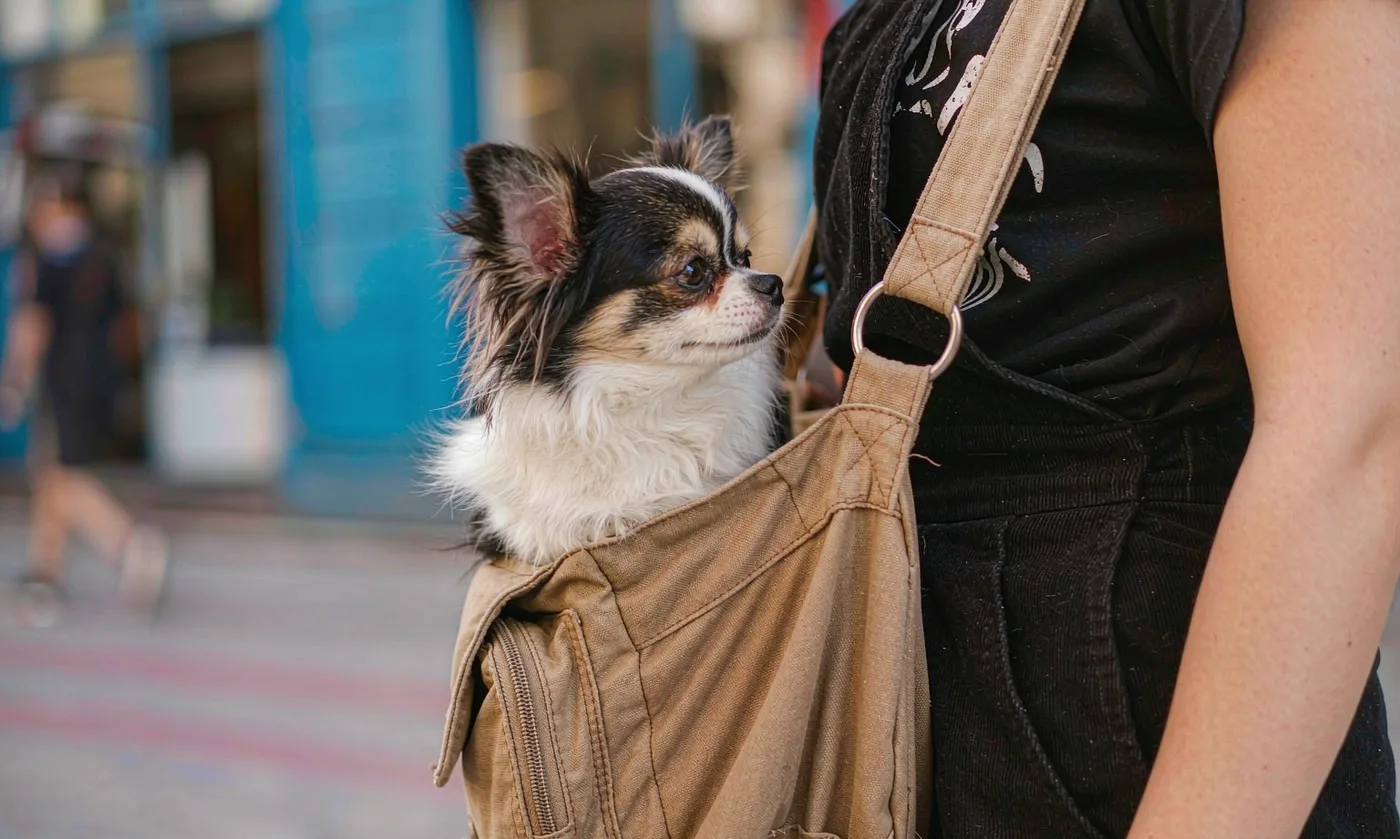
Pattern Notes for a 4-6 Kilogram Load Case
At 4-6 kg the structural demand is modest, which frees the designer to spend the specification on shape retention and on hand feel rather than on strength. The floor board is carrying static weight plus the dynamic shock of a bag being set down, which an 8 mm board handles comfortably; the failure mode at this scale is not breakage but dish, where the floor slowly takes a permanent curve and the bag starts to look tired after a season of use.
The remedy is board density rather than thickness. Two 8 mm boards of different density behave completely differently over six months, and specifying density in the tech pack - rather than the word rigid - is the single cheapest way to protect the product's appearance through its life. Our team specifies board by density and by thickness together, and rejects substitutes on either axis.
Handle attachment is the second real load path. At S the handle is carrying about 7 kg total, which is trivial for the webbing and demanding for the attachment: a bar-tack into a single layer of shell fabric will tear out long before the webbing fails. Specify a reinforcement patch under every handle and strap attachment, and require the patch to be captured in the seam rather than topstitched on afterwards.
Zip track geometry at this scale is where samples most often disappoint. A three-sided opening that wraps around one end panel gives genuinely good access for loading an unwilling cat, but it puts the zip track through two corners, and corners are where coil zips bind. The pattern answer is a slightly radiused corner rather than a square one, and a zip tape with enough flexibility to take the turn without pleating.
The boundary pet: designing for the pet that sits between two steps
Every ladder has a boundary pet, the animal whose measurements fall between the S and M floors, and the way a brand handles it says more about the design quality of the range than any hero feature. A 6 kg whippet-cross with a long back will measure out of the S floor length while weighing comfortably inside the S band. The instinct is to tell the customer to buy M; the better answer is to make the S floor generous enough that the boundary animal fits with the pad removed, and to say so on the hang tag. Design the boundary case explicitly in the brief, name the breed shapes that trigger it, and give customer service a one-line answer, because the boundary pet is where a size chart either earns trust or loses it.
How the S pattern becomes the reference for the ladder
Because the S shell is the one most customers will see, our pattern team treats it as the reference against which the rest of the ladder is judged. When a grading question arises at L or XL - how far the handle drop grows, where the ventilation band sits, how much the end panel curves - it is resolved by comparing the candidate against the S silhouette rather than against a drawing. Practically, this means the S pattern should be finalised first and frozen before the other steps are graded, and any later change to S should trigger a review of the whole set rather than a silent edit on one rung.
Serving Cats and Mini Dogs With One Shell
One shell serving both species is the commercial prize of the S step, and it is achievable with three deliberate choices. First, prioritise floor length over interior height, because a dog that cannot lie down is visibly uncomfortable while a cat that cannot sit up fully will simply curl. Second, make the entry opening as large as the structure allows, because loading a cat is the single most complained-about moment in the product's life. Third, provide a removable, washable pad, because both species have accidents and a pad that cannot be removed is a pad that gets thrown away with the bag.
Entry configuration deserves more design attention than it usually receives. A top-only opening forces the owner to lower an animal into a hole, which cats resist. An end-only opening is better for a dog that walks in and worse for a cat that needs to be placed. The best compromise at S is a top opening that continues down one end by roughly two thirds of the panel height, giving a wide L-shaped aperture that works in both directions.
Interior visibility is the quiet differentiator. A light-coloured lining makes the interior read as larger and cleaner, makes it easier for the owner to see the animal, and photographs well for social sharing. A dark lining hides soiling better but makes the interior look like a cave in the product photography that drives online conversion. For the S step we recommend the light lining and accept the cleaning trade-off, with a dark, removable pad on top of it.
Merchandising should make the dual use explicit. Hang tag and product page copy that says which cat and which dog sizes the step serves converts far better than a weight number alone, because most customers do not know their pet's weight to the half kilogram and do know its breed. Our brand team supplies clients with a breed-to-step mapping table for the hang tag, drawn from the same body database that drives the pattern.
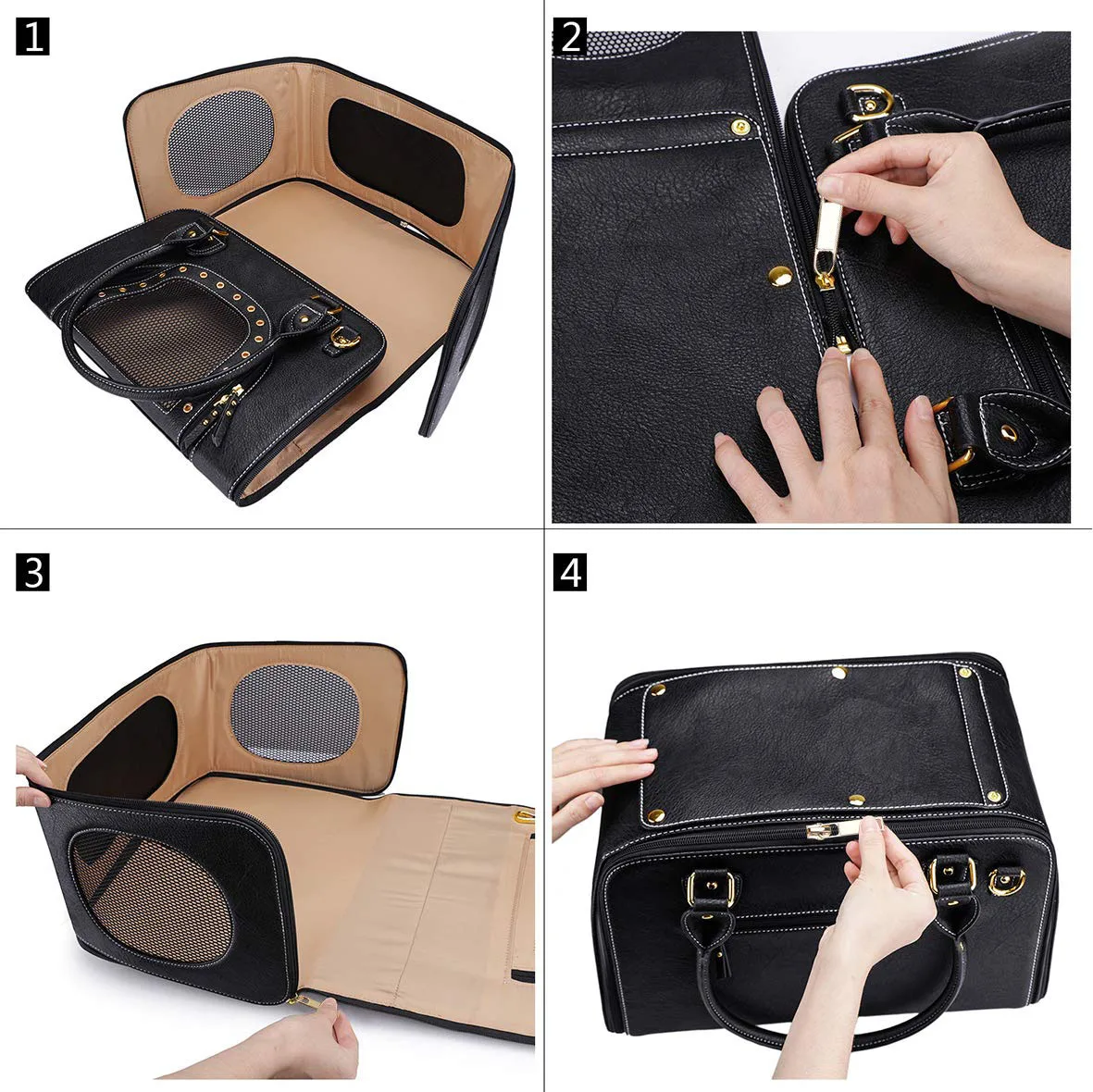
Flat-Pack Cube: Freight and Shelf Economics at the S Step
Freight is the hidden margin in a carrier program, and the S step is where it is won or lost. A soft-sided S bag that nests or folds flat can ship four to six units in the carton cube that one structured unit occupies, which changes the landed cost per piece by more than most material substitutions ever will. The compounding effect - fewer containers, lower duty on a lower declared value, lower last-mile parcel cost - is usually worth more than a fabric downgrade.
Design for cube from the first sketch. A collapsible S silhouette needs a board that can be removed, a frame that does not depend on permanent adhesive, and a packing method that does not crease the shell permanently. Where a brand wants a structured look on shelf, the compromise is a semi-structured shell with a removable base board and a light internal frame that folds along one axis.
Retail shelf economics matter as much as freight. A folded S bag occupies roughly a third of the shelf depth of a structured one, which means a retailer can floor twice as many units in the same bay and will therefore prefer it. That preference is worth stating in the buyer conversation, because it translates directly into facings.
Where a program needs both a structured and a collapsible S, resist the temptation to run two patterns. One pattern with a removable board and a fold line satisfies both channels, and the cost of the extra components is far below the cost of a second tooling and sampling cycle. Our design team has yet to see a case at this scale where two separate S patterns were the right answer.
Decoration Space and Brand Read at Small Scale
The S panel is the first step in the ladder where a brand mark has room to be designed rather than merely fitted. A 45 cm long side panel accepts a mark at 80-100 mm comfortably, which is enough for a wordmark with a secondary line, a small emblem, or a repeated motif. That room should be used deliberately, because S is the step most customers will see in public and the step most likely to appear in a customer's own photography.
Placement follows the photography pose. The long side panel faces the camera in a three-quarter hero shot, so the primary mark belongs there; the end cap suits a small secondary mark or a woven flag; the handle wrap suits a repeated micro-pattern; and the interior lining is the cheapest place to create a moment worth sharing. Keep any artwork at least 15 mm clear of seams, zip tracks and binding, and check legibility on the XS step before approving it on S.
Method selection at S is the widest of any step in the ladder. Screen print, heat transfer, sublimation on light polyester, embroidery and woven labels are all viable, and the right choice is driven by brand position rather than by cost. A heritage or outdoor brand should embroider; a brand built on an all-over pattern should sublimate; a brand with a photographic identity should use heat transfer. The one rule that holds across all of them: decide the method for the smallest step in the ladder and confirm it still reads on the largest.
Colour is where S carries the range's identity. Because the step sells in volume, it is the only rung where a third or fourth colourway can be justified against the dye lot minimum, and seasonal shades are best introduced here first. Approve every shade under a controlled light box against a Pantone reference rather than on a screen, and test the darkest shade in the system for rubbing, washing and light fastness using recognised textile methods from bodies such as AATCC.
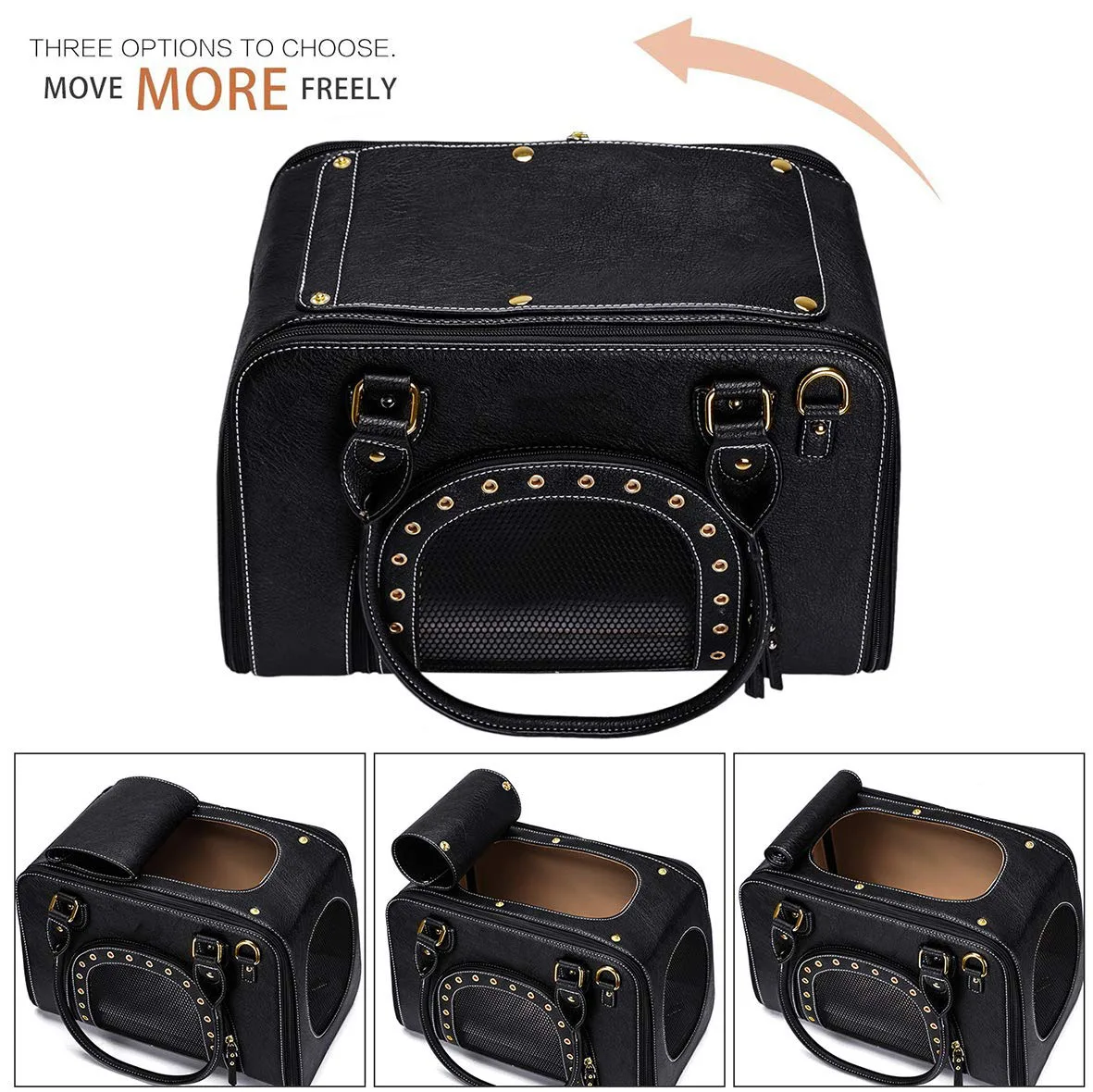
Materials and Trim That Hold Up in the Volume Tier
Volume tiers punish material optimism. A fabric that performs beautifully in a sample and fades, pills or abrades in month four will generate returns at a rate that dwarfs any saving, and the S step is where that bill arrives because it sells the most units. Specification discipline on this rung is a financial control, not a design preference.
Shell selection usually lands on 600D polyester for a branded S program: stable shade, good abrasion resistance, wide finishing range and strong print receptivity. A 300D shell saves money and loses perceived quality at this price band; nylon reads more premium but carries more shade risk between dye lots, which is a real problem when the step reorders three times a year. Where a sustainability story is part of the brand position, an RPET shell with documentation is the credible route and costs a modest premium.
Lining is the most cost-effective upgrade in the whole specification. A printed or branded lining costs a small increment and is seen every time the bag is opened, which is precisely the moment the owner is interacting with the product rather than carrying it. Our designers treat the lining as a brand surface with the same status as the exterior panel.
Hardware finish should be consistent with the rest of the ladder and specified by finish code rather than by colour word. Light gold, gunmetal and black nickel all read differently against the same shell, and a verbal description such as antique brass is not a specification - it is a disagreement waiting to happen at bulk. Require a physical finish sample with the confirmation sample and hold it as part of the golden reference set.
Substance compliance is not optional. Materials are screened against REACH restrictions for the European market, and OEKO-TEX certification is available where a retail buyer requires a documented textile standard. Ask for certificate numbers with the sample rather than with the shipment, because a certificate that arrives after the goods have sailed cannot fix a rejected delivery.
Sampling, MOQ and Reorder Rhythm for the S Step
Because S is the volume rung, its development should be the most thoroughly sampled in the ladder and its reorder rhythm the most carefully planned. Sample development runs 6-10 working days per round. Two rounds are standard: a construction sample to validate floor, posture and entry, and a confirmation sample in production fabric carrying the final decoration, hardware finish and packaging.
Minimums are MOQ 500 pieces per colourway. On this rung, two or three colourways are usually justified rather than one, because turnover supports it and because colour choice is one of the two reasons a customer picks a brand in this band - the other being the entry configuration. A common first allocation across the ladder gives S roughly 25-30 percent of units.
Bulk runs 35-50 days after sign-off and deposit clearance, with release only after final random inspection at AQL 2.5 with defects classified critical, major and minor. Independent verification is available through third parties such as SGS, and the quality system behind the line is maintained to ISO 9001 requirements. On a reorder, insist that the new run be matched to the held golden sample rather than to the previous carton, because small drifts compound silently across four or five repeat orders.
Reorder rhythm should be planned before the first drop ships. Because S turns over fastest, it is the rung that goes out of stock first and the rung whose stockout costs the most in lost basket attach. Set the reorder trigger on weeks of cover rather than on units remaining, and book the fabric at the same time as the reorder, since material availability - not sewing capacity - is what sets the 35-50 day window.
Handled with that discipline, the S step does more than sell units: it establishes the material language, the colour system and the quality expectation for every other rung in the range. For the next step up, see our medium pet carrier brief, and for the ladder logic behind both, the custom pet carrier size guide.
Why brands source here
- Pet carrier programs run since 2014; founding team in sewn goods since 2004
- SGS-verified production floor of 4,950 m² with 137 workers across 7 lines
- Monthly capacity of 200,000 units, audited to BSCI and ISO 9001
People Also Ask
What is the difference between a small and a medium pet carrier?
S covers 3.5-6 kg with roughly a 45 x 28 cm floor and 8 mm board; M covers 6-10 kg with a 55 x 33 cm floor and 10 mm board. M also escalates zipper gauge and webbing width.
Will a small carrier fit a cat?
Yes for the majority of domestic cats up to about 6.5 kg. Prioritise interior height of 30 cm and a wide entry opening, since loading the cat is the most complained-about moment in the product's life.
How do I measure my dog for a small carrier?
Measure body length from the base of the neck to the base of the tail and shoulder width at the widest point. Add 10-15 percent to length and multiply width by 1.25, then match against interior floor dimensions.
Are small pet carriers airline approved?
Exterior dimensions are usually within cabin expectations, but acceptance is airline-specific and changes often. Publish exact exterior dimensions rather than printing a blanket approved claim.
What fabric is best for a small pet carrier?
600D polyester for most branded programs, with RPET where a documented sustainability story is needed. Pair it with a branded lining, which is the cheapest upgrade the customer sees every time.
How many units of the small size should I order first?
Around 25-30 percent of the ladder's total units within a MOQ 500 per colourway minimum. Set the reorder trigger on weeks of cover rather than units remaining, because this rung sells out first.
Frequently Asked Questions
What size is a small pet carrier?
About 45 x 28 cm of interior floor with 30 cm of interior height, rated for pets between 3.5 and 6 kg and weighing roughly 0.78 kg empty. It is the first step that serves both a mini dog and an average cat.
Which breeds fit the small carrier step?
Mini and toy groups - Jack Russell, miniature poodle, Pomeranian, Shih Tzu, Cavalier - plus the majority of domestic cats. Check body length and shoulder width alongside weight, because shape varies within the band.
Should I build one small shell for cats and dogs?
Yes. Prioritise floor length over interior height, make the entry opening as large as the structure allows, and use a removable washable pad. State both use cases explicitly on the hang tag and product page.
How much interior height does a small carrier need?
About 30 cm, measured padded-to-padded, which lets a 5 kg cat sit without its head touching the lid. It is the number most often trimmed to make exterior dimensions look smaller, and the first one a customer notices.
What is the best entry configuration at this size?
A top opening that continues down one end by roughly two thirds of the panel height. It works for a dog that walks in and for a cat that has to be placed, and it avoids the zip binding that square corners cause.
Why does the floor board specification matter at only 6 kg?
The failure mode is not breakage but dish - a permanent curve that makes the bag look tired after a season. Specify board by density and thickness together rather than by the word rigid.
Which shell fabric suits a volume small carrier?
600D polyester for most branded programs: stable shade, good abrasion resistance, strong print receptivity. RPET with documentation is the credible route where a sustainability claim is part of the brand position.
Can seasonal colours be introduced on the small step?
Yes - it is the only rung where turnover usually justifies a third or fourth colourway against the dye lot minimum. Introduce seasonal shades here first and approve them under a controlled light box.
What is the minimum order for a small carrier run?
MOQ 500 pieces per colourway. Across a five-step ladder, a typical first allocation gives the S step roughly 25-30 percent of total units.
How long does sampling take?
6-10 working days per round, with two rounds standard. Because the S step sells the most units, it should also be the most thoroughly sampled rung in the ladder.
How do I keep reorders consistent with the first drop?
Hold one physically signed golden sample and match every reorder against it, not against the previous carton. Book fabric at the same time as the reorder, because material availability sets the production window.
Does a collapsible design save real money?
Yes. Four to six folded units can ship in the cube of one structured unit, which changes landed cost per piece more than most material substitutions, and doubles the facings a retailer can floor in the same bay.
What quality standard applies to bulk release?
Final random inspection to AQL 2.5 with defects classified critical, major and minor, and no release until the written report is accepted. Independent third-party verification is available on request.
Where should the logo go on a small carrier?
The long side panel, which faces the camera in the three-quarter hero shot. Keep artwork at least 15 mm clear of seams, zips and binding, and confirm legibility on the XS step before approving it.
Talk to QUANZHOU JUNYUAN BAGS about a pet carrier program: MOQ 500 pieces per colourway, samples in 6-10 working days, bulk production in 35-50 days under AQL 2.5 inspection.
Get a free quote Request a sample