Medium Pet Carrier: Average Size
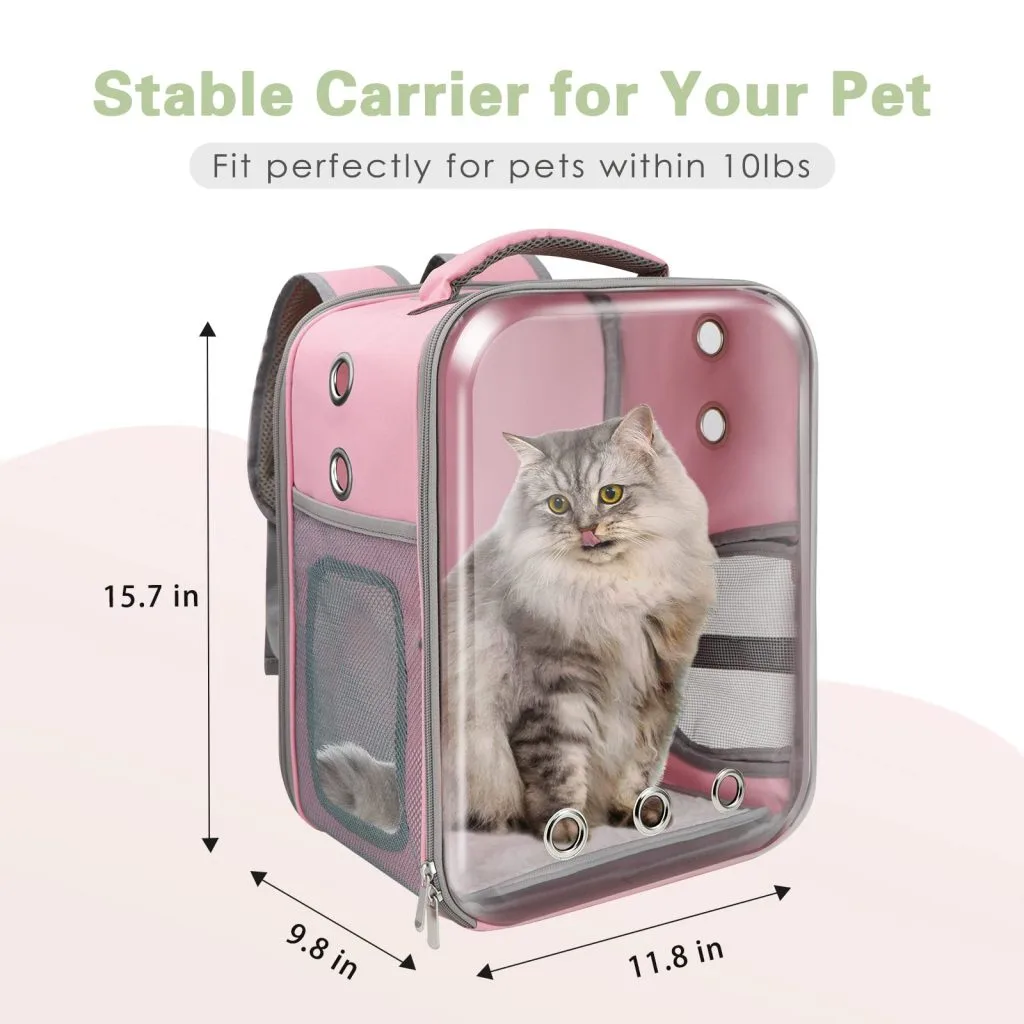
A medium pet carrier covers 6-10 kg with an interior floor near 55 x 33 cm and 34 cm of interior height, and it is the step that sets the price anchor for the whole range - typically 30-35 percent of units and the size most retailers floor in every store. Treat M as the reference price point: every other step is merchandised as cheaper or dearer than it.
The M step is where a size ladder becomes a brand. It is the rung a customer compares against a competitor's bag, the rung a retail buyer uses to set a shelf price, and the rung whose unit cost determines whether the range reads as entry, mid or premium. Specify it with that weight in mind: one shell fabric, one hardware finish, one board density and one decoration block, all shared upward and downward so the ladder reads as one family. Commercial minimums are MOQ 500 pieces per colourway, and M is the rung where a second and third colourway are easiest to justify because turnover supports them. Sample development runs 6-10 working days per round, two rounds standard: a construction sample to validate floor, board and entry geometry, then a confirmation sample carrying production fabric, final decoration and packaging. Bulk runs 35-50 days after sign-off and deposit clearance, released only after final random inspection at AQL 2.5 with a written report. Terms are T/T 30/70, FOB Xiamen. Our production team holds the M pattern as the cost reference for the range: when a client asks what a feature costs, the answer is quoted against the M specification, because that is the piece the market prices.
Custom pet travel bag programmes are usually quoted with the airline dimension printed into the technical pack, so there is no argument at inspection.
The M Step Sets the Price Anchor
Price architecture in a size ladder is not set by the cheapest rung or the most expensive one; it is set by the rung customers compare. In pet carriers that rung is M. A shopper standing in an aisle sees one medium bag from each brand, and the comparison they make in that moment defines what they believe the category costs - which then frames how they read the price of the small and the large from the same brand.
This has a practical consequence for specification. Over-engineering M raises the anchor and makes every other rung look cheap by comparison; under-engineering it drags the perceived value of the range down even if the XL is excellent. The correct approach is to design M to the position the brand wants to occupy - entry, mid or premium - and then let S and L inherit its material language with the minimum changes required by load.
Volume supports the attention. Across a typical five-step ladder, M takes roughly 30-35 percent of units, with S close behind and the outer rungs trailing. That means M carries the largest absolute quality exposure in the range: a defect rate that is tolerable on a 500-unit outer rung is a customer service problem on a 1,500-unit middle one.
M is also the rung most likely to be bought as a first and only carrier. Customers who own one pet of average size buy M and stop, which means the entire brand experience is delivered by this one product. Our design team therefore treats the M interior - lining, pad, entry, ventilation placement - as the highest-leverage surface in the program, ahead of any exterior styling.
The citable conclusion: specify M to the brand position you intend to hold, hold its cost as the reference for every quotation, and accept that this rung will define how the market prices everything else you make.
Defining Average: What the Medium Band Covers
"Average" is a dangerous word in a size chart because it invites a brand to design for a statistical centre that does not exist. The 6-10 kg band spans an enormous variety of body shapes: a 7 kg whippet-cross is long and shallow, a 9 kg French bulldog is short and extremely broad, and a 10 kg cat is compact with a very different posture requirement from either. One floor cannot serve all three perfectly, so the design job is choosing which dimension to privilege.
| Parameter | S (reference) | M (anchor) | L (next step) | Why M changes |
|---|---|---|---|---|
| Interior floor L x W | 45 x 28 cm | 55 x 33 cm | 65 x 38 cm | First rung needing a dog-length floor |
| Interior height | 30 cm | 34 cm | 38 cm | Sitting height of a 9 kg dog |
| Rated pet weight | 3.5-6 kg | 6-10 kg | 10-15 kg | Anchor band for the category |
| Exterior L x W x H | 49 x 31 x 32 cm | 60 x 36 x 36 cm | 70 x 41 x 40 cm | Approaches the soft cabin envelope |
| Empty weight | 0.78 kg | 1.05 kg | 1.35 kg | Board and hardware escalation |
| Ventilation area | 560 cm2 | 720 cm2 | 900 cm2 | Thermal load scales with volume |
| Floor board | 8 mm | 10 mm | 12 mm | Dish resistance under sustained load |
| Zipper gauge | #5 coil | #5 coil | #8 coil | Opening length raises tape tension |
Our recommendation for the M floor is to privilege length and accept that the broad-chested outlier will be better served by a dedicated wide pattern - a separate product line rather than a compromise in this one. A brand that tries to make M fit every 6-10 kg body shape ends up with a floor too wide for a whippet and too narrow for a bulldog, satisfying neither.
Interior height of 34 cm is the number that makes the difference at this rung. It is enough for a 9 kg dog to sit with its head clear of the lid, which is the posture customers photograph and the one they judge comfort by. Cutting it to 30 cm to improve the exterior spec sheet is the most common self-inflicted wound we see in mid-tier programs.
Overlap at both boundaries matters more here than anywhere else, because M sits between the two highest-volume rungs. Bands should overlap by roughly half a kilogram at each edge, and the choice for a boundary pet should be presented as a posture or feature decision - more length versus more height - rather than as a number the customer has to interpret.
Where Structure Escalates: Board, Zip and Webbing at 10 kg
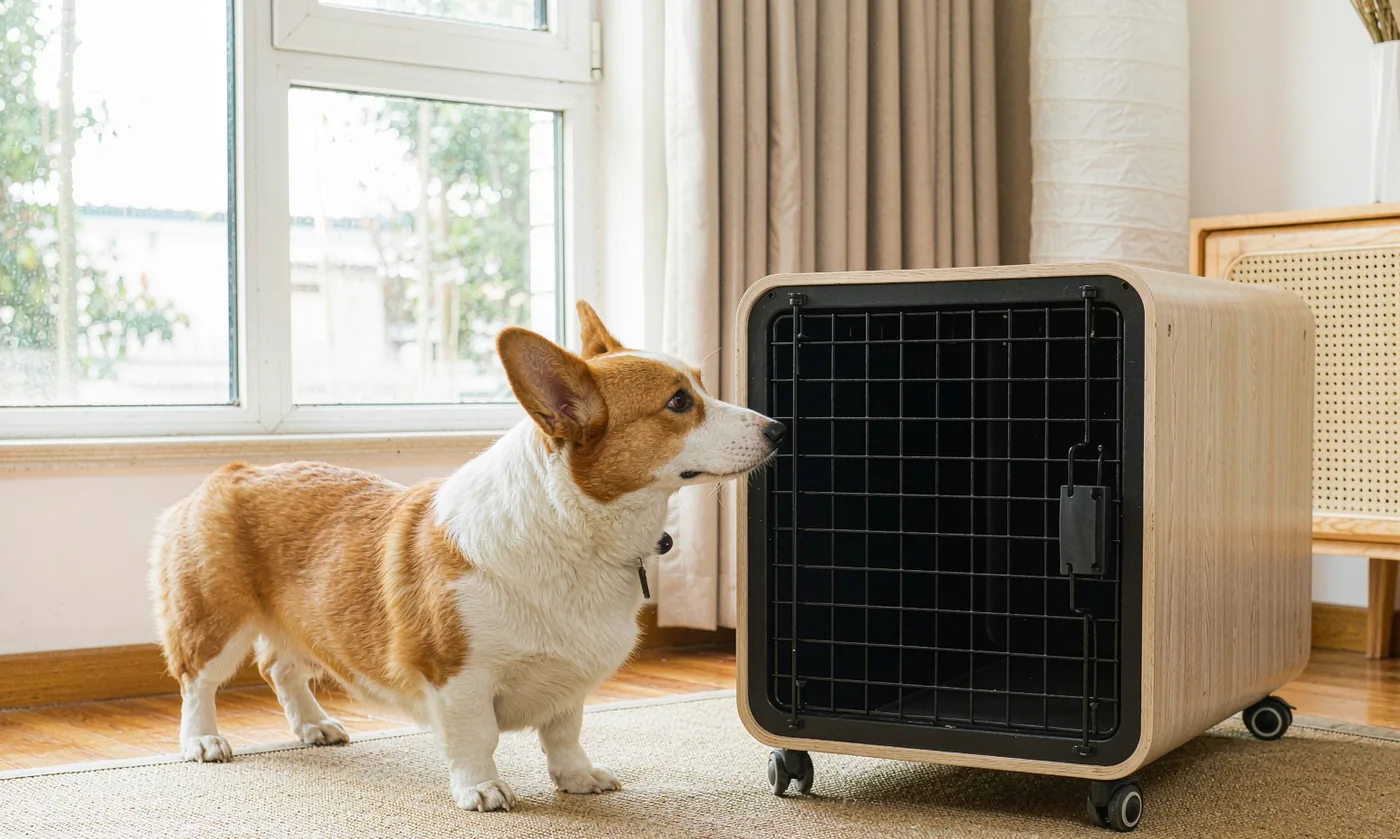
Ten kilograms is the first threshold where a soft-sided carrier stops behaving like an accessory and starts behaving like luggage. Below it, the board holds shape; above it, the board carries load and the consequences of under-specification become visible within weeks rather than within seasons. Three components escalate at this boundary, and all three should be changed together.
The board moves from 8 mm to 10 mm, but the more important change is density. A low-density 10 mm board performs worse under sustained load than a high-density 8 mm one, and the specification must state both numbers. The pocket pattern changes as well: a thicker board needs a slightly deeper pocket and a closure that will not let the board walk out of position when the bag is lifted by one handle.
The zip moves from #5 to #8 at the L boundary, but the M rung is where the decision has to be anticipated, because the opening length at M is already long enough that tape tension becomes a real factor. On a three-sided opening wrapping a 55 cm panel, a #5 coil will begin to bind at the corners within the first months of use. At M we recommend a #5 reversed coil with a branded pull and a radiused corner; plan the move to #8 for any opening longer than roughly 70 cm.
Webbing moves from 20 mm to 25 mm at this rung, for a reason that is about hands rather than about strength. A 20 mm webbing carrying 11 kg total is structurally fine and unpleasant to hold, because the load is concentrated over a narrow band. The perceived quality of a carrier is heavily influenced by how the handle feels in the first five seconds, and 25 mm with a soft wrap is the threshold where a loaded M bag stops feeling like a strap.
Handle attachment reinforcement is the fourth change and the one most often missed. At M the handle is carrying 11 kg through two attachment points, and a bar-tack into a single shell layer will eventually tear. Specify a reinforcement patch captured into the seam, extending below the load line, on every handle and strap attachment in the rung.
The Airline Question at the Medium Step
Every brand eventually wants to print a travel claim, and the M rung is where that desire becomes dangerous. The M exterior envelope sits right at the edge of what a soft-sided bag can compress into an under-seat space, which means a claim that is true for one airline on one aircraft is false for another - and a customer who discovers that at a gate will say so publicly.
The correct specification is dimensional rather than declarative. Publish exterior length, width and height, state the compressible dimension for a soft-sided shell, and let the customer check against their own carrier. Airlines publish their own pet-in-cabin policies and they change them; at industry level, the live animal transport framework is published by IATA, and national aviation authorities such as the US Federal Aviation Administration publish traveller-facing guidance that is worth reading before any packaging copy is written.
Designing for the cabin case is a genuine engineering brief, not just a copy problem. It pushes toward a soft shell with a controlled collapse, a board that can be removed temporarily, and a frame that recovers its shape afterwards. Those choices conflict with the structured look that photographs best on a shelf, and the resolution most brands choose is a semi-structured M: firm enough to hold a shape on a shelf, soft enough to compress a few centimetres at the ends under hand pressure.
Where a program genuinely needs a hard-sided or rigid-framed M for a checked or cargo-adjacent use case, that is a different product with different test requirements and a different price band. Our team advises clients to decide at brief stage which of the two products they are making, because a design that tries to satisfy both ends up satisfying neither and fails on the shelf.
What return data reveals about the anchor rung
Return reasons at M are unusually consistent across brands and almost never about the things a design team argues about. The three recurring causes are a pet that does not fit, an interior that felt smaller than the photography suggested, and a handle that was uncomfortable when loaded. All three are specification problems rather than styling problems: the first is a floor dimension issue, the second is a photography and interior colour issue, and the third is a webbing width and wrap issue. Our team asks clients to review return reasons from any previous season before signing the M tech pack, because that data is the cheapest specification input available and it is usually sitting unread in a customer service inbox.
Freezing the anchor rung before grading the rest
Because M sets the price anchor and the visual language of the ladder, it should be finalised and frozen before the other rungs are graded. A change to M after S and L have been derived forces a re-derivation of both, and in practice brands rarely redo them properly - they adjust one and leave the other slightly out of family, which is exactly how a ladder loses its visual coherence. Freeze M, then grade outward, and treat any later change to M as a review trigger for the entire set rather than as an edit to one pattern.
Ventilation and Thermal Load at Medium Volume
Thermal behaviour changes with volume in a way that surprises designers who have only worked at the small end. A 9 kg animal in a 55 cm bag generates significantly more heat than a 4 kg animal in a 45 cm bag, but the interior surface area available for heat exchange grows more slowly than the heat generated. The practical result is that ventilation area must grow faster than volume, not in proportion to it.
Our rule for M is a minimum of 720 cm2 of open area, distributed across at least two opposing faces, with at least one field positioned above the mid-line of the shell. That last condition matters more than the total: warm air rises, and a ventilation field placed low on one side and low on the other leaves a stagnant pocket at the top of the bag exactly where the animal's head is.
Mesh specification deserves more attention than it gets. A coarse mesh passes more air and resists claw damage better; a fine mesh looks better in photography and blocks more light, which some animals find calming. The compromise most programs land on is a medium-gauge polyester mesh on the two functional faces and a finer decorative mesh or perforation pattern on the visible face.
Safety testing bodies have pushed the industry toward treating ventilation and restraint as measurable properties rather than as adjectives. Independent product testing and crash-performance programmes are published by the Center for Pet Safety, and while those programmes do not certify a soft fashion carrier, their language is what an informed retail buyer will use when they ask what makes this bag safe.
Merchandising the Middle: Shelf, Photography and Copy
M occupies the most contested space in the category, which means it has to win the shelf in under three seconds. Three decisions drive that: the photography pose, the visible feature hierarchy, and the copy on the front of the packaging. All three should be settled during design rather than after the sample is approved.
The photography pose for M is a three-quarter view, slightly above eye level, showing the long side panel with the logo and the ventilation field together, and with the entry partially open to signal accessibility. A closed, top-down hero shot makes every carrier in the category look identical, and at the anchor rung identical is fatal. Opening the bag in the hero image is the cheapest differentiator available.
Feature hierarchy on the packaging should list exactly three things. Customers at this rung are comparing, and a box with eight icons reads as desperate while a box with three reads as confident. Choose the three that are actually true of the product and that a competitor cannot match: interior dimensions, ventilation area, and the entry configuration are stronger than any list of pocket features.
Copy should convert dimensions into breeds. A customer does not know that their dog weighs 8.5 kg, but they know it is a cocker spaniel. A breed-to-step mapping on the hang tag and the product page consistently outperforms a weight table in online conversion, because it removes the measuring step from the purchase decision.
Finally, the M bag should be photographed with the pad in and the board pocket closed, because returns at this rung are frequently driven by a customer believing the floor is softer or thinner than it is. Showing the interior as delivered removes the ambiguity.
Decoration and Colour System at the Anchor Step
The M panel is the largest clean decoration surface in the ladder after L and XL, and it is the surface most customers will see in public. A mark at 100-130 mm works comfortably here, which is enough room for a wordmark with a descriptor line or for an emblem lockup. That room should be used for the strongest version of the identity rather than for a scaled-up version of the S mark.
Method choice at M is unconstrained, which is itself a risk: because everything works, programs often pick by cost and end up with a mark that contradicts the brand position. The decision should be made by position. A brand selling durability and outdoor heritage should embroider, because stitch reads as permanence. A brand selling pattern and colour should sublimate across the panel, because it costs no more per colour. A brand selling restraint should use a small woven label or a debossed patch and leave the panel clean.
Colour system discipline is easiest to defend at M because the rung sells in volume. Our recommendation is a three-part system: one hero shade for the shell, one neutral for lining and binding, one accent for pulls, stitch and labels. Seasonal shades are introduced at M first, because turnover justifies the dye lot and because the anchor rung is where a new colour is most likely to be seen.
Colour approval must be physical. Screens lie, office lighting lies, and a shade approved on a laptop will not match the dyed roll. Approve against a Pantone reference under a controlled light box, state a numeric tolerance, and test the darkest shade in the system for rubbing, wash and light fastness using recognised textile methods published by bodies such as AATCC.
Cost Architecture, Sampling and Production for the M Rung
Because M is the cost reference for the range, its bill of materials deserves line-by-line scrutiny rather than a headline unit price. The four lines that move the number most are shell fabric, board specification, hardware finish and decoration method, and each has a cheap substitution that will cost more in returns than it saves in unit price. Our team quotes each substitution with its consequence rather than in isolation.
Minimums are MOQ 500 pieces per colourway. At M, two to three colourways are usually justified, because the rung's turnover supports the dye lot and because colour choice is a primary reason a customer picks one brand over another at this size. A typical first allocation across a five-step ladder gives M roughly 30-35 percent of units.
Sample development runs 6-10 working days per round, with two rounds standard. Round one should be judged purely on volume and structure - floor, board, entry, handle drop - and only round two on colour and decoration, because a brand team that starts debating shade on a construction sample will spend the round on the wrong question. Bulk runs 35-50 days after sign-off and deposit clearance, released only after final random inspection at AQL 2.5 with defects classified critical, major and minor.
Independent verification is available through third parties such as SGS, and the quality system behind our partner facilities is maintained to ISO 9001 requirements. On reorders - which at M will come two or three times a year - match the new run against the physically held golden sample rather than against the previous carton, because small drifts in shade and board density compound silently across repeat orders.
Handled as the anchor it is, the M rung does more than sell units: it sets the price the market believes the brand is worth. For the rung above it, see our large breed carrier brief; for the full ladder logic, the custom pet carrier size guide.
Production capability
- SGS-verified production space of 4,950 m², 149 machines, 7 assembly lines
- Pet carrier and pet bag output since 2014 from a 137-person team
- 200,000 units shipped monthly under BSCI and ISO 9001 systems
People Also Ask
What is the average pet carrier size?
Around a 55 x 33 cm interior floor with 34 cm of interior height, covering pets from 6 to 10 kg. It is the most compared rung in the category and the one that sets a shopper's price expectation.
Is a medium carrier big enough for a cocker spaniel?
Usually yes for an adult in the 9-13 kg range at the top of the band, but check floor length against body length. Long-backed individuals may need the L floor or a long-body pattern.
How much does a medium pet carrier weigh empty?
Roughly 1.05 kg with a 10 mm board and standard hardware. Keep empty weight below about one tenth of rated pet weight so the total carried load stays comfortable.
What is the difference between medium and large?
M covers 6-10 kg with a 55 x 33 cm floor and #5 zip; L covers 10-15 kg with a 65 x 38 cm floor, 12 mm board and #8 zip. L is also the rung where webbing moves to 38 mm.
Do airlines accept medium soft carriers in the cabin?
Some do, on some aircraft. Acceptance is airline-specific, so publish exact exterior dimensions and let the traveller confirm with their carrier before flying.
Why is the medium size the most expensive per feature?
Because it is the comparison rung. Brands invest in M to set a price anchor, and its specification - board, hardware, decoration - is what shoppers benchmark against competitors.
Frequently Asked Questions
What size is a medium pet carrier?
About 55 x 33 cm of interior floor with 34 cm of interior height, rated for 6-10 kg and weighing roughly 1.05 kg empty. It is the anchor rung that sets the price expectation for the whole range.
Which breeds fit the medium step?
Most spaniels, beagles, corgis, miniature schnauzers, larger cats and small terrier crosses between 6 and 10 kg. Broad-chested breeds at the top of the band are usually better served by a dedicated wide pattern.
Why does the medium step need a thicker floor board?
At 10 kg the board stops holding shape and starts carrying load. Specify 10 mm with a stated density - a low-density 10 mm board performs worse under sustained load than a high-density 8 mm one.
What zipper gauge suits a medium carrier?
A #5 reversed coil with a branded pull on a radiused corner for openings up to roughly 70 cm. Plan the move to #8 for longer openings, because tape tension on a three-sided opening causes binding at square corners.
Can a medium carrier go under an aircraft seat?
Sometimes, depending on the airline and the aircraft. Publish exterior dimensions and the compressible dimension rather than printing an approved claim, because policies vary and change frequently.
How much ventilation does a medium carrier need?
A minimum of 720 cm2 of open area across at least two opposing faces, with one field above the mid-line so warm air can escape rather than pooling at the top of the bag.
Should the medium step use the same fabric as the small?
Yes, up to roughly 10 kg of rated load. Above that, board thickness, zipper gauge and webbing width escalate; below it, one shared shell fabric keeps the ladder reading as one family and protects unit cost.
What is the best way to present size on packaging?
Convert dimensions into breeds. Customers rarely know their pet's weight to the half kilogram but always know its breed, so a breed-to-step mapping outperforms a weight table in online conversion.
How many colourways are justified at the medium step?
Two to three, because turnover supports the dye lot minimum and colour is a primary reason a customer chooses one brand over another at this size. Introduce seasonal shades here first.
What is the minimum order for a medium carrier run?
MOQ 500 pieces per colourway, with a typical first allocation giving M roughly 30-35 percent of total units across a five-step ladder.
How long does sampling take for the anchor size?
6-10 working days per round, two rounds standard. Judge round one only on volume and structure, and reserve colour and decoration discussion for the confirmation sample.
How should the medium bag be photographed?
A three-quarter view slightly above eye level showing the long side panel with logo and ventilation together, and the entry partially open. A closed top-down shot makes every carrier in the category look identical.
What inspection standard applies to bulk?
Final random inspection to AQL 2.5 with defects classified critical, major and minor, and no carton released until the written report is accepted. Third-party verification is available on request.
How do reorders stay consistent with the first drop?
Hold one physically signed golden sample and match every repeat run against it rather than against the previous carton. Book fabric with the reorder, since material availability sets the 35-50 day window.
Talk to QUANZHOU JUNYUAN BAGS about a pet carrier program: MOQ 500 pieces per colourway, samples in 6-10 working days, bulk production in 35-50 days under AQL 2.5 inspection.
Get a free quote Request a sample