Slim Pet Carrier: Narrow Fit Design Guide
A slim pet carrier with a narrow fit is a shell built to an 18-24 cm front-to-back depth instead of the conventional 30-32 cm, with the lost volume recovered through a longer floor panel and taller side gussets. Expect roughly 22-30 percent less cross-section area and a unit cost index of about 108-118 against a standard rectangle.
Narrow fit is the most commercially underrated silhouette in the category, because it solves a real friction - aisles, turnstiles, under-seat clearance - with a shape change rather than a feature claim. The design risk is that slimming one axis destabilises the rest of the pattern: the baseboard, the gusset and the entry geometry all have to be re-cut, not merely scaled. Handled properly, a slim carrier reads as deliberate minimalism and earns a premium rather than looking like a cost-reduced version of a fuller bag.
- Sampling: structural samples in 6-10 working days, including one round with the revised baseboard and gusset stack.
- Minimums: MOQ 500 units per colourway on slim patterns, with 800 where a new frame jig is required.
- Schedule: bulk production runs 35-50 days after sample approval, tooling included.
- Quality: seam alignment, zip run and baseboard flatness are inspected to AQL 2.5.
- Terms: T/T 30/70, FOB Xiamen, with third-party test reports filed against the written specification rather than against a golden sample.
- Planning note: slimmer cartons raise units per container by 18-28 percent, which offsets part of the tooling premium on export orders and should appear in the sourcing memo.
Every custom dog carrier we develop is quoted against the same three variables - fabric weight, hardware grade and print method - before the first sample is cut.
What narrow fit actually asks the pattern to do
A narrow-fit brief starts with one dimension and forces everything else to respond. When the front-to-back depth is pulled back from a conventional 30-32 cm to something in the 18-24 cm band, the cross-section area shrinks by roughly a quarter, and the only way to keep usable interior volume is to lengthen the floor and push height into the gussets. That is a pattern problem rather than a scaling problem: reducing a standard rectangle by 25 percent on one axis produces a shell whose panels no longer meet the base at workable angles, and the result splay-seats instead of standing.
The floor panel changes first. A slim shell needs a longer, narrower baseboard, and the baseboard is what decides whether the carrier stands upright on a shop floor or tips forward the moment weight shifts inside. We normally specify a 4-5 mm laminated board cut to the new footprint with radiused corners matched to the panel geometry, so the cover fabric does not bunch at the turn and the silhouette stays clean on the shelf.
The gusset changes second. On a standard rectangle the side gusset is a closing strip; on a slim build it becomes a load-bearing element because it carries the height the depth no longer provides. A three-ply construction - outer fabric, 3 mm foam, lining - holds a vertical line without the bulk of a heavier laminate, which matters when the entire point of the silhouette is visual lightness.
Third is the entry. A narrow opening is awkward to load through, so the zip line is carried 8-12 cm further down each side wall than on a standard shape, effectively turning the top panel into a three-sided flap. That adds zip length and changes how the logo panel reads when the unit is displayed open on a fixture, which merchandising teams should see in the first sample rather than the third.
Finally the shoulder of the bag. Slim shapes concentrate load into a narrower contact area, so strap attachment points move outward rather than upward. It is a small pattern change with an outsized effect on perceived comfort - and perceived comfort is what gets repeated in reviews.
The slim silhouette as brand language
Shape is the fastest signal a brand sends before a single word is read. A narrow-fit carrier says restraint, precision and urban competence; it belongs to brands that position themselves around city living, design literacy and considered consumption. That is a different promise from the generous, soft-shouldered volume of an outdoor line, and launching both under one label without distinguishing them dilutes both.
The mechanism is proportion. Human perception reads a slim vertical object as more technical and more expensive than a wide one of identical volume, largely because slimness implies engineering effort - the assumption being that it took work to make something that compact. Brand programmes exploit this by pairing the narrow profile with quiet colour: charcoal, bone, deep olive, graphite. Loud colour on a slim body fights the message and reads as novelty.
Hardware should follow the same logic. Slim silhouettes want low-profile hardware: flat-profile zips, recessed pulls, matte anodised rings rather than chunky polished castings. A single oversized carabiner can undo the entire impression, because the eye compares the hardware mass against the slimness of the body and resolves the contradiction as cheapness.
There is a retail argument too. A narrow footprint means more facings per linear metre of shelf, and more facings means more visible brand presence for the same fixture cost. Brands that sell through independent pet boutiques - where shelf depth is often shallower than a supermarket gondola - find narrow-fit shapes accepted where fuller bodies are rejected outright.
The risk to manage is under-delivery. If a slim shell compromises the interior to the point where the product feels cramped, the shape promise collapses into a complaint. The brand-safe route is to publish interior dimensions honestly and let the slenderness be an exterior virtue rather than an interior sacrifice.
One more consideration: slim shapes photograph differently. On a white e-commerce background a narrow body produces more negative space around the subject, which makes the product read as larger and more premium in a grid thumbnail. Brands that shoot both slim and standard bodies in one range should adjust the crop so the two do not appear to be different sizes.
Structure: stopping a narrow shell from folding
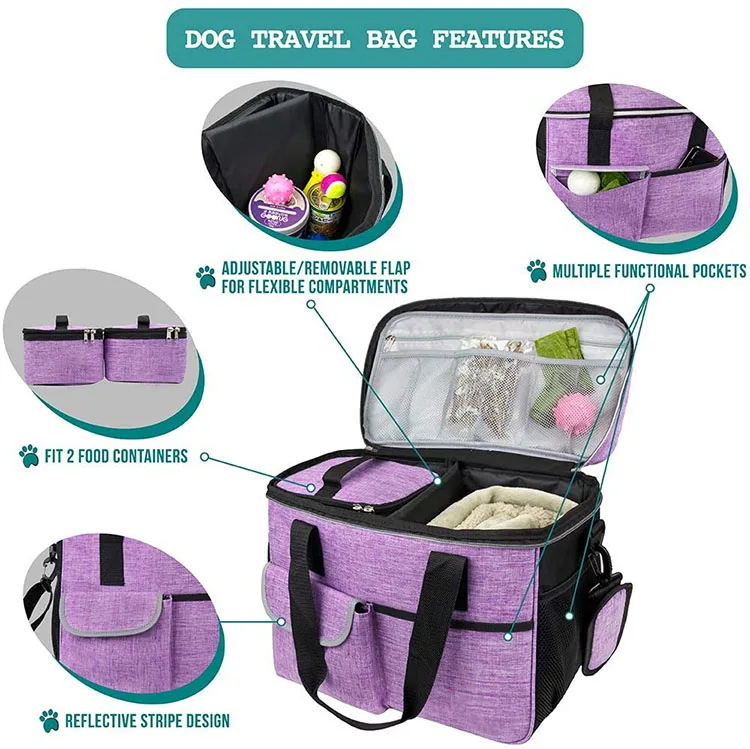
A slim carrier fails in one of three ways: it creases along the vertical centreline, it tips forward from the base, or the mouth collapses inward. All three are structural, not cosmetic, and all three are solved in the pattern room rather than on the line.
Centreline creasing happens when the front panel is cut as a single flat piece with no internal support. Two fixes work. The first is a hidden vertical stay - a 12-18 mm webbing tape sewn into the lining seam - which tensions the panel without adding visible structure. The second is a subtle outward curve of 4-6 mm engineered into the panel cut, so the fabric is pre-stressed into a shallow convex form that resists folding inward. The second is more elegant and costs nothing in material, but it requires the cover fabric to have enough body to hold the curve.
Forward tipping is a baseboard and centre-of-gravity question. Weight concentrated high in a narrow shell creates a short, unstable moment arm. Moving 200-300 g of structure - board density, a steel-reinforced base rim, a denser lining - below the mid-height line can transform how the unit stands. Our production team tests this by loading a sample to 60 percent of rated capacity and releasing it on a 5 degree incline; a carrier that stays put passes.
Mouth collapse is the most common fault in narrow builds because the top opening spans a long, unsupported width. A covered spring wire or a 6 mm foam-cored top rail holds the aperture open. For soft-top designs, a turnover facing with a light interfacing is usually sufficient and keeps the unit foldable.
Ventilation deserves a structural note as well. Slim shells have less side-wall area for mesh, so mesh panels migrate to the ends and the upper third of the front. End-panel mesh is also more visible from the front on a shelf, which is a merchandising advantage if the mesh colour is specified deliberately rather than defaulted to black.
Materials and colour that hold a crisp edge
Slim silhouettes are unforgiving about material. A fabric with enough body to look architectural on a box shape will sag visibly on a narrow one, because there is less geometry supporting it and the eye has a longer uninterrupted plane to read. In practice this pushes slim programmes toward higher-density constructions: 600D polyester with a polyurethane coating, 420D nylon ripstop with a calendered finish, or a coated canvas in the 12-14 oz range.
Coated finishes do more than repel water; they raise the bending stiffness of the cloth, which is what keeps a corner sharp. A useful screening test is the cantilever stiffness check run to ASTM test methods for fabric stiffness, where a narrow-body programme typically wants values 20-30 percent above what the same brand would accept on a standard rectangle.
Colour is where slim shapes either succeed or look cheap. Because the panels are large and planar, any dye lot variation is obvious across a single unit, let alone across a shelf of them. Specify Pantone references and a tolerance, then hold the lab dip for the whole programme rather than per order - the practice described in colour management guidance from Pantone colour standards. Crocking and light fastness should be confirmed against AATCC colourfastness test methods, with a minimum of grade 4 for dry crocking on any pale colourway.
Lining is not a detail on a slim build. A pale lining makes a narrow interior read larger and lighter, which directly counteracts the cramped perception that narrow shapes invite. A printed lining with a small-scale repeat adds private-label character at almost no unit cost, and it is one of the few brandable surfaces invisible to competitors.
Finally, edge treatment. Slim shapes look best with bound or turned edges rather than raw overlocked seams, because a bound edge draws the eye along the silhouette. It adds labour, and at MOQ 500 it typically adds USD 0.35-0.70 per unit - a cost most slim programmes can absorb given the price position the shape supports.
Logo, hardware and trim on a reduced-width panel
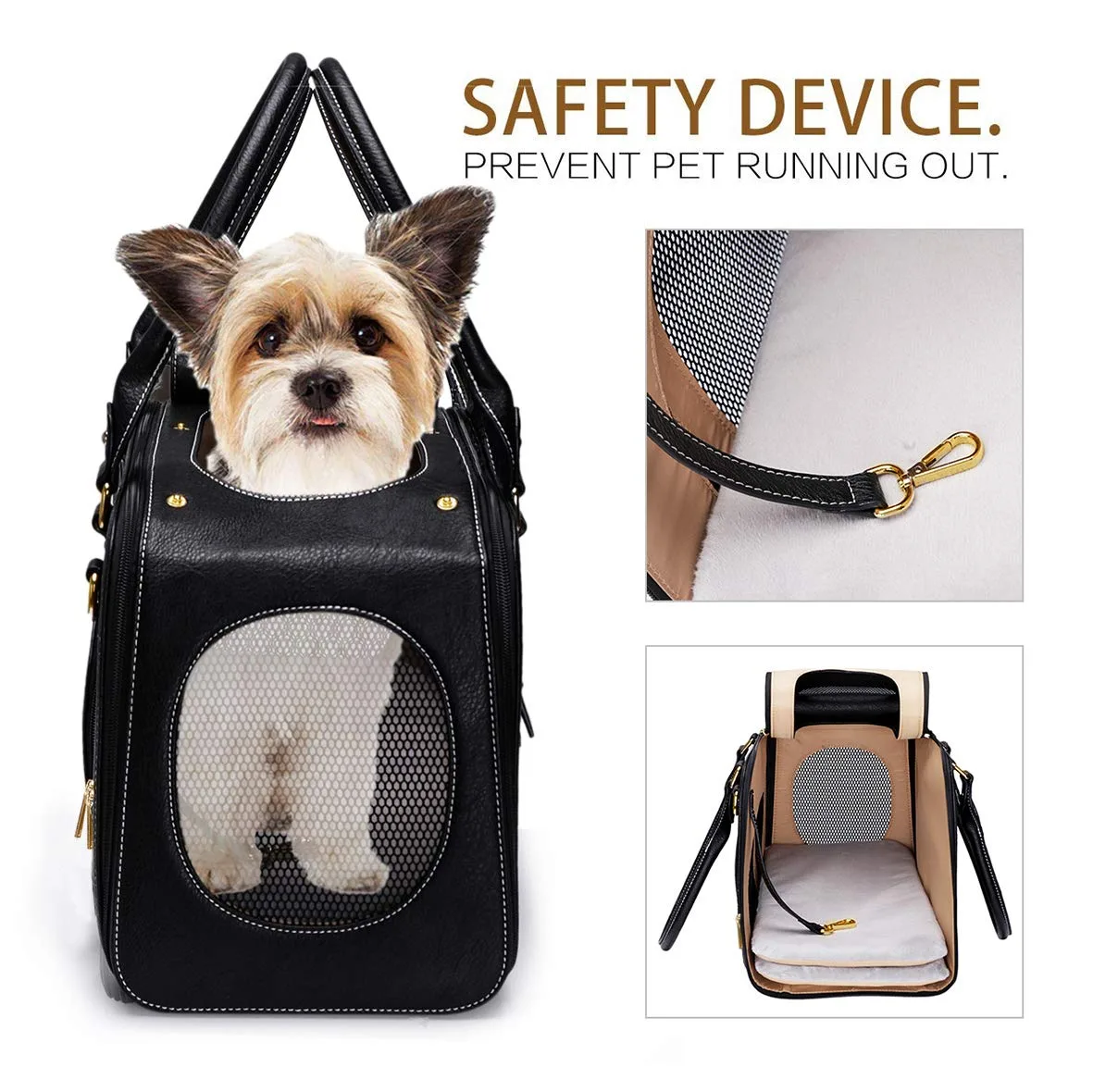
Branding a narrow body is a composition problem. The available flat area on the front panel of an 18-24 cm deep shell is roughly 35-45 percent smaller than on a standard rectangle, so a logo that was scaled for the standard shape will either crowd the panel or shrink into illegibility. The discipline is to choose one primary mark and one secondary mark, and to place them on different planes - front panel and end panel, or front panel and top rail - so the brand is legible from three viewing angles rather than repeated twice on one.
Embroidery behaves differently on slim panels than on boxy ones. Because the panel is under higher tension, dense fills pull the fabric and the puckering is more visible. Reducing fill density to around 60-70 percent and increasing underlay stabilisation solves it, and a satin stitch of 0.8-1.0 mm width holds detail better at small sizes than a tight fill. For marks under 40 mm wide, a woven label or a heat-transferred patch is usually cleaner than embroidery.
Screen printing on a narrow panel wants a lower-profile ink. Plastisol deposits sit proud of the cloth and catch light along the fold lines, which draws attention to exactly the creases the shape is trying to avoid. Water-based or discharge inks, or a thin silicone transfer, sit flatter and move with the fabric.
Hardware placement should respect the structural logic. Anything heavy - D-rings, strap anchors, trolley sleeves - should be anchored into a reinforced tape that runs to the baseboard, not just into the panel cloth. On a slim body the lever arm is shorter, so it is tempting to treat anchorage as less critical; it is not, because the load path is more direct into the seam.
Packaging completes the mark. A narrow carrier ships in a narrow carton, and a narrow carton wastes pallet cube unless the programme also ships a flat-pack variant. Private label clients frequently pair the slim shape with a slim hangtag and a belly band rather than a full printed box, keeping the unboxing minimal and consistent with the silhouette.
Shape variants, tooling and unit cost
Cost on a narrow-fit programme is driven less by material than by pattern development. Cutting a new baseboard die, a new gusset die and a revised zip-path template is a one-off charge, and it is the reason slim shapes carry a higher unit cost index at the same volume. The figures below are indicative for private label programmes quoted at FOB Xiamen.
| Slim variant | Structural approach | Tooling / pattern setup | Unit cost index | MOQ | Sampling |
|---|---|---|---|---|---|
| Soft slim, 22 cm | Three-ply gusset, hidden stay | USD 250-450 | 108 | 500 | 6-10 working days |
| Soft slim, 18 cm | Pre-curved panels, wire top rail | USD 350-650 | 114 | 500 | 6-10 working days |
| Framed slim | Laminated baseboard, steel rim | USD 500-900 | 118 | 800 | 8-10 working days |
| Slim with trolley sleeve | Reinforced back panel tape | USD 400-750 | 112 | 500 | 6-10 working days |
| Standard rectangle (baseline) | Conventional gusset | Existing dies | 100 | 500 | 6-10 working days |
Two patterns in the table are worth explaining. Framed slim carries the highest index because the steel rim adds both material and a hand-fitting operation, and it attracts the higher MOQ because the jig amortisation only makes sense across a larger run. The trolley sleeve variant, by contrast, is inexpensive because it reuses the standard slim pattern and adds a single panel - a good example of how a feature can be added without disturbing the silhouette.
Unit cost index is volume-sensitive. At 500 units the index premium for slim shapes is closest to the top of the range; at 3,000 units and above the tooling is amortised and the premium typically compresses to 4-7 points. Brands planning a full range should sequence slim shapes after the rectangle platform has reached volume, so the incremental shapes inherit amortised tooling.
Freight and duty interact with the shape too. A slimmer carton changes the dimensional weight calculation on air freight, and because slim units pack denser the chargeable weight per unit usually falls by 10-16 percent against an equivalent boxy shipper. For brands shipping direct to a US or EU warehouse rather than to a retail DC, that difference is often larger than the tooling premium spread over the first two seasons.
Building a slim-fit ladder: sizing, series and line extension
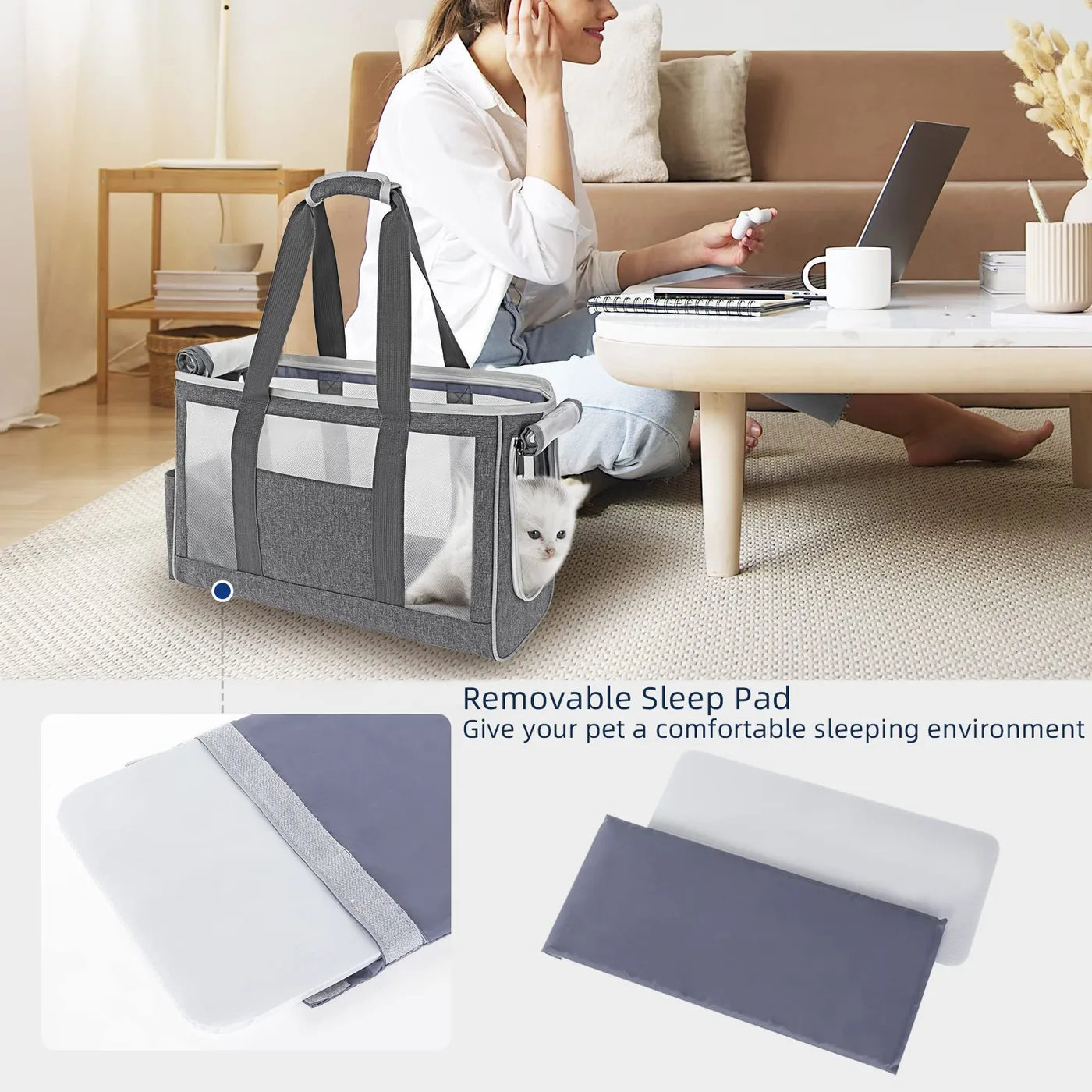
A single slim carrier rarely justifies the pattern investment on its own; a ladder does. The commercial logic is to define three sizes that share one pattern language - small at 38 cm length, medium at 45 cm, large at 52 cm - all held at the same 20 cm depth. Because the depth is constant, the visual signature is consistent across the range and the three units read as a family on a shelf, which is what makes a range review buyer take the line seriously.
The constant-depth approach also simplifies tooling. One baseboard die width, one gusset die, three length cuts. That is a genuinely cheaper ladder than three independently proportioned sizes, and it means the range can be extended to a fourth size later without new tooling beyond a length template.
Colourway strategy should follow a 60-30-10 logic per season: 60 percent of volume in the core neutral, 30 percent in a seasonal accent, 10 percent in a limited or collaborative colour. Slim shapes are particularly effective carriers for limited editions because the silhouette itself feels collectible, and because the lower material volume per unit makes a short run economically viable.
Co-branding is the natural extension. A narrow body gives a collaborator's mark a clean plane to sit on, and the format suits designer collaborations, artist series and retail-exclusive colourways. Where a collaborator's artwork is the main attraction, the carrier shape should recede - a plain slim shell with a printed end panel reads as designed, whereas a busy shape carrying busy artwork reads as promotional.
Programme timing matters. If the slim ladder is intended for a spring launch, pattern development should start four to five months ahead, because the sampling cycle plus the 35-50 day bulk run plus freight leaves little slack for a second tooling round.
Should the range extend into accessories, keep the same proportion language. A slim carrier paired with a bulky treat pouch or an oversized insulated insert breaks the visual system; accessories specified at 60-70 percent of the carrier depth hold the family together and photograph as a set.
Sampling, approval and quality gates
Slim programmes benefit from a structured sample sequence, because the failure modes are structural and therefore expensive to discover late. Round one is a structural sample in the intended cover fabric with the revised baseboard, gusset stack and zip path - unprinted, so the geometry can be judged without the distraction of decoration. That sample is produced in 6-10 working days and is the one that should be load-tested, stood on an incline and packed into the shipping carton.
Round two adds branding. Seeing the mark on the actual narrow panel, at the actual viewing distance, is the only reliable way to judge whether the artwork needs to be re-proportioned. Round three is a pre-production sample from bulk materials with final lab dip, which is also the sample that should be sent for third-party testing.
Verification should be specified rather than assumed. Structural checks against ASTM mechanical test methods, colour and crocking against AATCC methods, and restricted-substance screening with a laboratory such as SGS are the three reports most retail buyers ask for by name. Filing them against a written specification - not merely against a golden sample - is what makes a claim defensible a year later.
On the line, four gates matter for narrow shapes specifically: baseboard flatness, gusset symmetry, zip run smoothness at the corner where the line turns down the side wall, and panel tension along the front. These are the four places where a slim build drifts, and they are checked to AQL 2.5 alongside the standard appearance criteria.
One closing practical note. Slim units pack flatter and denser than boxy ones, so carton quantities per shipment are typically 18-28 percent higher for the same container. That freight advantage partially offsets the unit cost premium, and it is worth putting in the sourcing memo rather than leaving it as an unnoticed bonus.
Documentation closes the loop. Keep the approved pattern file, the lab dip reference, the test reports and the signed pre-production sample together as one programme record, so a reorder twelve months later reproduces the first run rather than an approximation of it.
Order and quality terms
- MOQ 500 pieces per colourway; samples in 6-10 working days
- Bulk production 35-50 days after approval; AQL 2.5 inspection standard
- T/T 30/70 terms, FOB Xiamen, full document set per shipment
People Also Ask
Are slim pet carriers comfortable for cats?
They suit cats well because cats naturally curl rather than sprawl, and a narrow footprint supports the curled posture. The floor should still allow the cat to turn around, which at 20 cm depth means a floor length of at least 40 cm for an average 4-5 kg cat.
Will a narrow-fit carrier fit under an airline seat?
A 20 cm depth with a 45 cm length fits within the under-seat envelope of most narrow-body cabins, but airlines vary and the soft-sided allowance is what makes it work. Always confirm the specific carrier's cabin policy before travel.
How do you stop a slim bag from creasing down the front?
Either sew a hidden 12-18 mm webbing stay into the lining seam, or engineer a 4-6 mm outward curve into the front panel cut so the fabric is pre-stressed convex.
What size pet fits a slim carrier?
As a working rule, pets up to 6 kg suit a 45-48 cm slim shell; above that the required floor length pushes the shape back toward standard proportions.
Do slim shapes work for wholesale shelf planning?
Yes - a narrow footprint yields more facings per linear metre, which is why independent boutiques with shallow shelving often accept slim shapes where fuller bodies are declined.
Should a slim carrier have a rigid or soft frame?
Soft builds fold, ship denser and suit e-commerce; framed builds stand better on a shelf and suit physical retail. Many private label ranges carry both at different price points.
Frequently Asked Questions
What depth counts as a slim or narrow-fit pet carrier?
Narrow fit generally means a front-to-back depth of 18-24 cm, against 30-32 cm for a conventional rectangular shell. Below 18 cm the interior becomes difficult to load and the unit tips; above 24 cm the silhouette stops reading as slim on a shelf.
How much interior volume is lost by slimming the profile?
Expect 22-30 percent less cross-section area at the same length and height. Programmes recover part of it with a longer floor panel and taller gussets, typically netting back 10-15 percent.
Does a slim carrier need a different baseboard?
Yes. A narrow footprint requires a longer, narrower board - usually 4-5 mm laminated - with radiused corners matched to the panel geometry so the cover fabric does not bunch at the turn.
What is the MOQ for a slim private label programme?
MOQ 500 units per colourway for soft slim patterns. Framed slim builds that require a new jig are quoted at 800 units because the tooling only amortises sensibly across a larger run.
How long does sampling take for a narrow-fit shape?
Structural samples are produced in 6-10 working days. Framed variants with a steel rim sit at the upper end, at 8-10 working days, because the rim is hand-fitted.
Why do slim shapes cost more per unit than rectangles?
The premium is pattern development rather than material: a new baseboard die, gusset die and zip-path template. At MOQ 500 the index runs 108-118; at 3,000 units it compresses to roughly 104-107.
Which fabrics hold a slim silhouette best?
Higher-density constructions with coated finishes - 600D polyester with PU coating, 420D calendered nylon ripstop, or 12-14 oz coated canvas - because coating raises bending stiffness and keeps corners sharp.
Where should mesh panels go on a narrow body?
Slim shells have less side-wall area, so ventilation migrates to the end panels and the upper third of the front. End-panel mesh is also more visible from the front on a fixture.
Is embroidery suitable for branding a narrow panel?
It works if fill density is reduced to 60-70 percent with increased underlay, because slim panels are under higher tension and pucker more readily. Under 40 mm wide, a woven label or heat transfer is cleaner.
How is quality inspected on slim production runs?
Four gates are added to the standard appearance criteria - baseboard flatness, gusset symmetry, zip smoothness at the corner turn, and front panel tension - all inspected to AQL 2.5.
Can slim carriers be shipped flat to save freight?
Soft slim builds pack flatter and denser than boxy shapes, typically raising carton quantity per container by 18-28 percent. Framed variants do not fold and lose that advantage.
How should a slim range be sized for retail?
Use a constant-depth ladder - for example 38, 45 and 52 cm lengths all held at 20 cm depth - so the three sizes share one visual signature and one set of tooling.
What bulk lead time should be planned for a slim launch?
Bulk production runs 35-50 days after sample approval. For a seasonal launch, start pattern development four to five months ahead to leave room for a second tooling round.
Talk to QUANZHOU JUNYUAN BAGS about a pet carrier program: MOQ 500 pieces per colourway, samples in 6-10 working days, bulk production in 35-50 days under AQL 2.5 inspection.
Get a free quote Request a sample