Custom Pet Toothbrush: Dental Care Design and Branding Guide
A custom pet toothbrush is settled by four specifications: head and bristle construction, handle geometry, format and hygiene packaging. Fix those before tooling starts and a 500-piece colourway runs from approved sample to packed cartons in 35-50 days, with a physical sample ready in 6-10 working days and colour held to a signed chip.
Our production team develops oral care tools around a single insight: the product only works if it is used regularly, so the specification is judged on whether it makes a daily routine easier rather than on whether it looks clinical. The brief runs from reach and control through bristle softness and format to a landed cost, and nothing moves to bulk until a physical sample has been handled and used. MOQ 500 pieces per colourway. Samples take 6-10 working days from approved artwork; tooling and bulk run 35-50 days after sign-off, inspected to AQL 2.5 with a written report attached to the packing list. Colour is matched to a Pantone reference and a signed chip is retained, so reorders land inside the same tolerance. Terms are T/T 30/70, FOB Xiamen. The SGS-verified production base covers 4,950 m² with 137 people across 7 lines, audited to BSCI and ISO 9001, and pet programs have run there since 2014. Where a range is starting out, we recommend one format in two colours rather than two formats, because colour allows the replacement cycle to be built into the range from the first order.
Custom pet travel bag programmes are usually quoted with the airline dimension printed into the technical pack, so there is no argument at inspection.
Designing an Oral Care Tool for a Routine
A toothbrush is the only product in a pet range whose value depends almost entirely on frequency of use. A technically excellent brush used once a month delivers nothing; a modest brush used daily delivers real benefit. That makes adherence the design objective rather than specification, and it changes what the brief should optimise for.
The practical implication is that the product has to be pleasant to reach for. It should be easy to find, comfortable to hold, quick to rinse and simple to store. Those are unglamorous requirements and they matter far more than bristle count or clever geometry, because each one is a small friction that either supports or erodes a daily habit.
The category is also unusually well suited to a range structure. Because brushes are replaced on a cycle and used by the whole household, a brand can build a genuine repeat business rather than one-off sales, and that repeat is more valuable than the margin on any single unit.
Consumer confidence is the other design driver. Owners are unsure whether brushing a pet's teeth is normal, safe or effective, and much of the category's marketing is really reassurance. A product that looks considered, is clearly sized, and explains itself on the pack does more to build that confidence than any claim on the front.
Veterinary context helps here. Professional guidance on dental care is published by organisations such as the American Veterinary Medical Association, and brands that align their language with recognised professional guidance rather than inventing claims earn trust quickly and avoid the compliance problems that overclaiming creates.
Positioning should be settled first: clinical and professional, or friendly and domestic. The answer governs colour, material, typography and pack copy, and a product that sits between the two reads as unsure of itself.
Head and Bristle Specification
Bristle specification is the performance core of the product and the part customers cannot evaluate before purchase, which makes it both the most important specification and the one most often left generic.
Filament material is the first decision. Nylon filaments in a defined diameter range are the standard; softer, finer filaments are gentler on gum tissue and suit a product aimed at daily use, while slightly stiffer filaments clean more aggressively and suit a product positioned as a treatment rather than a routine.
Filament diameter should be specified in numbers rather than adjectives. A soft filament appropriate to this application sits well below the range used in human brushes, and specifying the diameter in the tech pack is what prevents substitution during production.
| Element | Option | Effect | Best for | Cost index | Note |
|---|---|---|---|---|---|
| Filament | Fine nylon, soft | Gentle on gums | Daily routine | 1.0 | Default choice |
| Filament | Medium nylon | More aggressive clean | Treatment positioning | 1.0 | State clearly on pack |
| Filament | Tapered tip | Reaches gum line | Premium care | 1.3 | Genuine performance gain |
| Head | Compact single head | Precise, small mouths | Small breeds | 1.0 | Easiest to control |
| Head | Dual-ended, two sizes | One tool, two reaches | Mixed households | 1.25 | Strong value story |
| Head | Angled head | Better back-tooth reach | All sizes | 1.2 | Worth the tooling |
Tip treatment is a genuine performance upgrade rather than a marketing one. A tapered or flagged filament tip reaches slightly below the gum line and cleans where a blunt tip cannot, and it is noticeably gentler. Where the price position allows it, tapered filaments are the one upgrade with a measurable effect.
Tuft density and trimming profile affect how the brush feels in the mouth. A dense tuft cleans efficiently but feels firm; a sparser tuft feels soft but flexes. A trimmed, rounded profile is more comfortable at the gum margin, and it should be specified rather than left to whatever the trimming machine produces.
Include the bristle specification on the pack rather than keeping it internal. A single line stating soft filaments and a tapered tip gives a customer a reason to choose one brush over another in a category where most packs say nothing, and it is the cheapest credible performance claim available to a brand in this aisle.
Filament retention is the durability specification. Tufts pulled through the head and retained by an anchor resist shedding; tufts held only by adhesive shed within weeks, and a brush that sheds filaments is a brush that gets thrown away. Specify the retention method and test it.
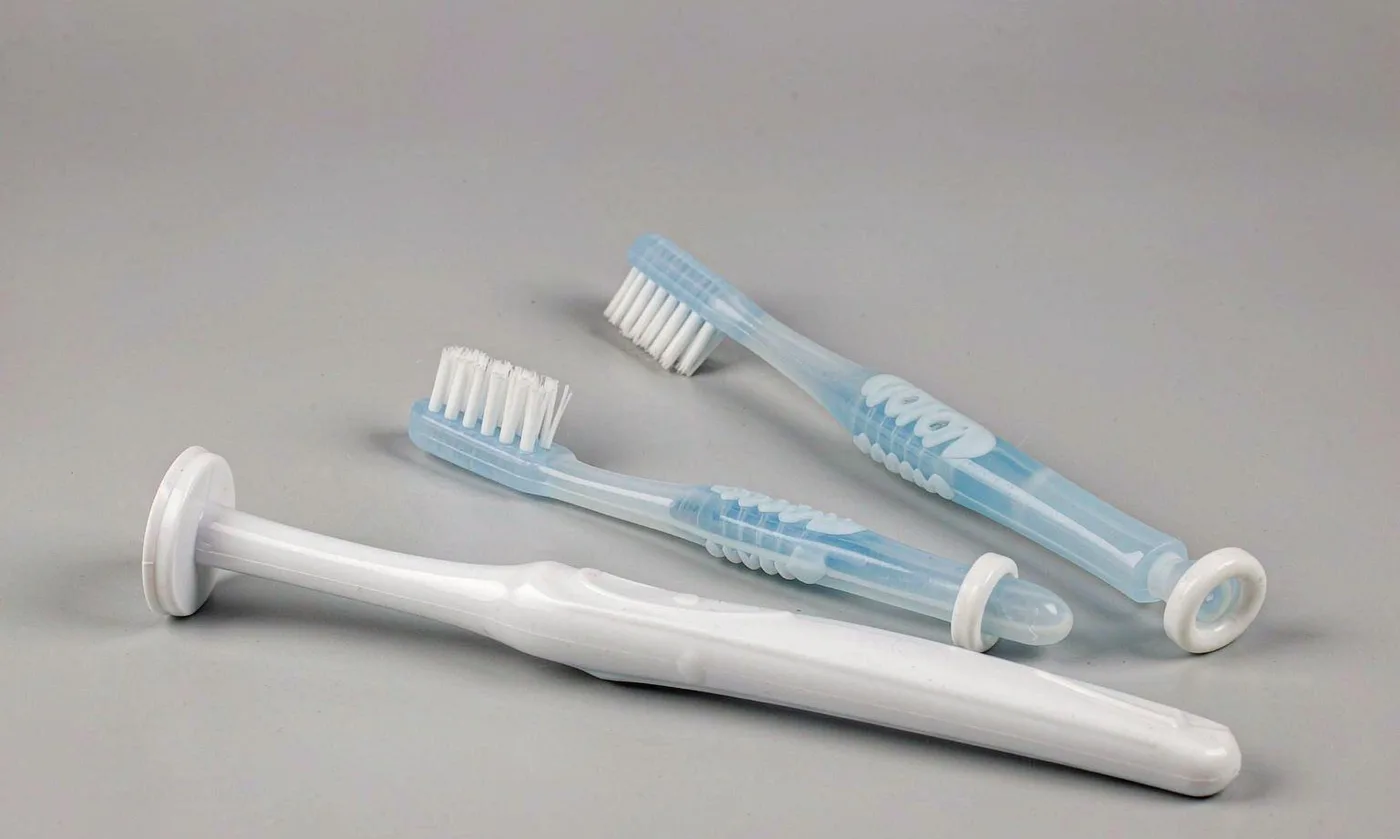
Handle Geometry for Reach and Control
Reach is the defining ergonomic problem. The back teeth are the ones that matter most and the hardest to get to, which means the handle has to be long enough to reach past the front of the mouth and slim enough not to force the jaw open uncomfortably.
Length should therefore be greater than intuition suggests. A handle that feels too long in the hand is usually correct in the mouth, and this is the most common place where a product designed on a desk fails in use. Test the sample on a real animal rather than judging proportion visually.
Cross-section matters for control. A slim, slightly flattened section allows a pencil grip and precise movement; a thick round section fills the hand and reduces control where it is needed most. For this application slim and flattened is consistently the better answer.
Grip surface should support a wet hand. Brushing happens with saliva and water present, and a gloss handle becomes slippery. A matte texture, moulded grip pattern or soft overmould solves it and costs very little.
Neck flexibility is worth specifying. A slightly flexible neck reduces the pressure transmitted when the user presses too hard, which protects gum tissue and makes the tool more forgiving for a first-time user. It is a small design detail with a real effect on comfort.
Balance and weight should favour the head slightly, so the tool feels directed rather than heavy. A brush that is heavy at the grip feels imprecise at the teeth, which is exactly where precision is needed.
Storage features support the habit. A hanging hole, a flat base that stands upright, or a cap that protects the head all make the product easier to keep somewhere reachable, and reachable is what makes a routine happen.
Format Options: Brush, Finger Brush, Dual Head
Format choice determines who will use the product and how often, and it should follow the audience rather than the novelty. Three formats cover the market, and each has a clear best application.
A conventional handled brush is the volume answer and the one most owners expect. It offers the best reach, the most control and the clearest value story, and it is the format to lead with for a range that has to sell to a broad audience.
A finger brush suits owners who are nervous or who are starting a routine with a young animal. It gives a sense of control and gentleness that a handled brush does not, and it converts nervous first-time buyers. Its weakness is reach and durability, which is why it works best as a companion product rather than as the core.
| Format | Reach | Control | Audience | Cost index | Role in range |
|---|---|---|---|---|---|
| Handled brush, angled head | Excellent | High | General | 1.15 | Core product |
| Handled brush, straight head | Good | High | General | 1.0 | Entry price |
| Dual-ended, two head sizes | Excellent | High | Mixed households | 1.25 | Value hero |
| Finger brush | Limited | Medium | Nervous, first-time | 0.8 | Companion product |
| Brush with integrated paste cap | Good | High | Convenience-led | 1.4 | Travel and trial |
A dual-ended brush with two head sizes is the strongest single product for a mixed household, and it makes a compelling value argument on pack. It is the recommended hero product for a range that wants one item rather than three.
Consider a starter structure. A handled brush plus a finger brush sold together lets a nervous owner begin gently and progress, and it is one of the few bundles in the category that genuinely improves the outcome rather than just raising the basket value.
Keep the format count low. Two formats cover the market; four fragment the range, multiply resin runs and packaging variants, and make the shelf story harder to read. Restraint here is a merchandising advantage.
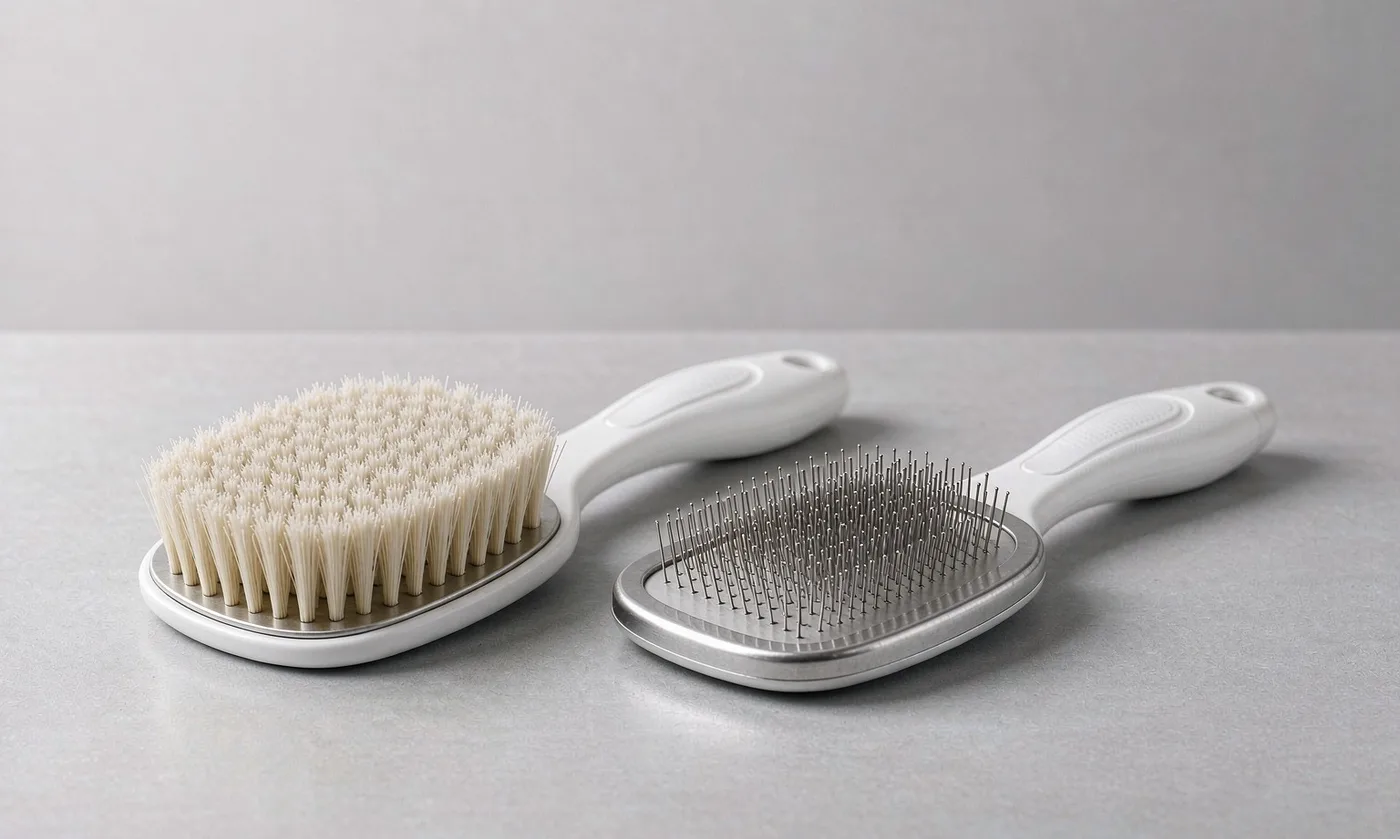
Colour as a Functional System
Colour does more work on this product than on almost any other in a pet range, because it can encode things that matter: size, household member, and replacement timing. Designing colour as a system rather than as decoration is the most useful decision available.
Colour-coding by size is the clearest application. A small head in one colour and a large head in another lets a customer choose correctly at a glance, and it removes the most common cause of returns in the category - buying a brush that is wrong for the animal's mouth.
Colour-coding by household matters in multi-pet homes. Two animals should not share a brush, and a palette of distinct colours makes that obvious without instruction. It also creates a legitimate reason for a customer to buy two units instead of one.
Replacement timing can be built into the system. A colourway released per quarter, or a pack that states a replacement interval, turns the brush into a scheduled purchase rather than an occasional one, and scheduled purchases are what make the category commercially durable.
Palette discipline still applies. Three or four colours that work together read as designed; six unrelated colours read as accumulated. Limit the range and hold the core constant across seasons so reorders stay simple.
Approve colour per material. A Pantone reference moulded in handle resin, the same reference on filaments and the same reference printed on the card will not match exactly. Approve a physical chip for each substrate, accept different tolerances per material, and inspect reorders against the retained chips.
Colour consistency across the set should be checked as a combination rather than component by component, because that is how the customer sees it on the shelf.
Branding on a Small Hygiene Product
A toothbrush offers a narrow handle and a small head, and it is a hygiene product where any applied mark has to be safe, durable and unobtrusive. The methods that work are few and each has a clear place.
A moulded relief logo is the best answer for a plastic handle. The mark is formed with the part, it cannot wear off, it cannot leach, and it reads as designed rather than printed. It requires the mark to be cut into the mould, which adds fixed cost and suits a stable brand identity.
Laser marking works on moulded handles and on any metal component, and it is permanent and precise at small scale. It produces a single-tone mark, which suits the understated branding appropriate to a hygiene product.
Pad printing is the volume answer where colour is needed, tolerating up to four spot colours and curved surfaces. Its weakness is durability at the grip, so placement should avoid the area the hand covers.
Placement should follow how the product is held and displayed. On a hanging card the mark must read from the front of the handle; in use it should sit above the grip where the thumb does not cover it. Approve placement on a physical sample in both states.
One mark is the right number. A second mark on a tool this small reads as clutter, and on a hygiene product clutter reads as careless rather than as thorough.
The packaging carries the rest of the identity. On a product with this little surface area, the card or sleeve is the real brand canvas, and the budget for design should sit there rather than on the handle.
Hygiene, Packaging and Shelf Life
Oral care products are judged on cleanliness before anything else. A brush that arrives looking unprotected fails immediately, regardless of how well it performs, and packaging has to make hygiene visible rather than merely claim it.
Sealed packaging is the expectation. A blister, a sealed sleeve or a capped head that clearly has not been touched communicates hygiene at a glance, and it protects the filament during transit and storage. An open card with a bare head reads as unfinished.
A head cover or cap is a functional addition worth considering. It protects filaments between uses, it makes the product travel-friendly, and it extends the period during which the brush looks new - which supports the replacement cycle rather than shortening it.
Material choice affects perceived hygiene. Clear, crisp packaging with minimal printed area reads cleaner than a busy printed card, and a white or very pale ground reinforces the association. Resist the temptation to fill every panel with copy.
Shelf life is not a real constraint for an unopened brush, but the replacement interval is a commercial one and it belongs on the pack. Stating an interval converts an occasional purchase into a scheduled one, and it gives the customer a reason to return.
Sustainability should be decided deliberately rather than left to the retailer. Recycled and recyclable card, mono-material structures and minimal plastic are all achievable, and they are increasingly a condition of listing rather than a nice-to-have.
Multi-packs need to solve hygiene individually. A multi-pack of brushes should keep each unit protected rather than presenting them loose together, because a pack that looks unhygienic undermines the entire category proposition.
Compliance, Materials and Documentation
Anything that goes into a mouth attracts scrutiny, and the documentation burden is higher than the simplicity of the product suggests. Collecting it during development is far cheaper than assembling it at shipment.
Material declarations should cover the handle resin, the filament material, any colourant and any coating, with supporting test reports where they exist. This is what a retail compliance team asks for, and having it ready is often the difference between a listing and a delay.
Consumer product rules apply differently depending on how the item is positioned and marketed, and the applicable guidance for the American market is published by the U.S. Consumer Product Safety Commission. Settle the positioning before documentation is requested, because the classification follows the marketing.
Claims need to be defensible and specific. Statements about plaque or dental health should be framed carefully and aligned with recognised professional guidance rather than asserted; overclaiming in an oral care context is the fastest route to a delisting and to a trust problem that outlasts the product.
Filament retention and finish quality should be tested on the pre-production sample. Shedding filaments and burrs on moulded parts are the two defects that generate complaints, and both are found by inspection rather than by specification alone.
Process discipline underpins the documentation. Working through partner facilities that operate to a recognised quality management standard - the framework is published by ISO - means inspection and traceability are systematic, and inspection to AQL 2.5 with a written report keeps reorders consistent.
Retain the approved sample, the colour chips, the material declarations and the test reports together. When the reorder happens, that file is what allows it to ship without reopening the entire compliance conversation.
Planning an Oral Care Range and Refill Cycle
The commercial case for this category rests on the replacement cycle rather than on the first sale. Brushes wear, hygiene demands replacement, and multi-pet homes need more than one - which together produce a predictable repeat that most pet products cannot match.
Design the range around that cycle from the first order. A core brush in two colours, a companion finger brush, and a stated replacement interval on the pack together turn a single product into a subscription-like pattern without requiring any subscription infrastructure.
Sequence development from the core brush outward. Approve the handle geometry, the bristle specification and the palette once, then extend into a second format and a bundle. One approval round then produces a range that reads as designed rather than assembled.
Bundle partners matter here. A brush paired with a dentifrice or a dental treat reaches customers who were not shopping for a brush, and it is one of the highest-conversion pairings in the pet aisle. Design the brush packaging so it fits the bundle rather than the other way round.
Plan the range on a stable core plus a refresh. Keep the tooling, the bristle specification and the palette constant, and introduce a new colour or a bundle configuration each year. Hold the retained sample, the colour chips and the declarations, and that refresh becomes a variation rather than a new project.
Retail presentation should be planned as a block rather than left to the retailer. A small counter unit holding the core brush, the companion format and the bundle in one palette takes a defined shelf section and gets featured; the same products distributed across an aisle do not. Specify the display unit alongside the product rather than after it.
Measure the range on repeat rate rather than on first-season sell-through. A brush that performs and is replaced on schedule generates value for years, and the repeat signal is the clearest available evidence that the specification was right.
Production capability
- SGS-verified production space of 4,950 m², 149 machines, 7 assembly lines
- Pet carrier and pet bag output since 2014 from a 137-person team
- 200,000 units shipped monthly under BSCI and ISO 9001 systems
People Also Ask
What is the MOQ for custom pet toothbrushes?
MOQ 500 pieces per colourway. That covers the resin colour match, the tufting setup and the packaging run, and it is the level at which unit cost stops falling steeply with quantity.
How long does a custom pet toothbrush take to produce?
Samples take 6-10 working days from approved artwork and specification. Tooling and bulk production run 35-50 days after sample sign-off, with inspection to AQL 2.5 before shipment.
What bristle specification should a pet toothbrush use?
Fine, soft nylon filaments specified by diameter rather than by description, with a rounded or tapered tip. Tapered tips reach slightly below the gum line and are the one upgrade with a measurable effect on comfort and cleaning.
Which format sells best, a handled brush or a finger brush?
A handled brush for reach and control, and it is the format to lead with. A finger brush suits nervous or first-time owners and works best as a companion product rather than as the core.
How do you brand a toothbrush handle?
By a moulded relief logo where volumes justify it, or laser marking for a permanent single-tone mark. Pad printing suits colour at volume but should be placed away from the grip.
Should the packaging be sealed?
Yes. A blister, sealed sleeve or capped head communicates hygiene at a glance and protects the filaments. An open card with a bare head reads as unfinished and undermines the category proposition.
Can colour be used to indicate size?
Yes, and it is the most useful thing colour can do here. A small head in one colour and a large in another lets a customer choose correctly at a glance and removes the most common cause of returns.
Frequently Asked Questions
What artwork format should we supply for handle branding?
Vector artwork with all text converted to outlines, plus a simplified one-colour version for laser marking. Fine detail and gradients do not survive either method at handle scale.
Can we mix colours within one order?
Yes, provided each colourway reaches 500 pieces. Resin colour changes require a purge between runs, which is why the minimum applies per colour rather than per order.
How is colour consistency maintained between reorders?
Colour is approved on a physical chip moulded in the production resin, retained on file, and reorders are inspected against that standard rather than against a screen reference.
What causes bristles to shed?
Tufts held only by adhesive. Filaments should be pulled through the head and retained by an anchor; specify the retention method and test it on the pre-production sample.
Should the handle be long or short?
Longer than intuition suggests, because the back teeth are the ones that matter and the hardest to reach. A handle that feels too long in the hand is usually correct in the mouth.
Do we need a head cover or cap?
It is worth considering. A cap protects the filaments between uses, makes the product travel-friendly, and extends the period during which the brush looks new, which supports the replacement cycle.
What material documentation can you provide?
Material declarations for the handle resin, filament material, colourants and any coating, collected during sampling rather than at shipment, with supporting test reports where they exist.
How should dental claims be worded?
Carefully and in alignment with recognised professional guidance rather than asserted. Overclaiming in an oral care context is the fastest route to a delisting and to a trust problem that outlasts the product.
Should we offer a starter bundle?
Yes. A handled brush plus a finger brush lets a nervous owner begin gently and progress, and it is one of the few bundles in the category that genuinely improves the outcome rather than only raising basket value.
How many formats should a first range include?
Two. More fragment the range, multiply resin runs and packaging variants, and make the shelf story harder to read. Restraint is a merchandising advantage.
How often should a pet toothbrush be replaced?
Stating an interval on the pack converts an occasional purchase into a scheduled one. The exact interval depends on filament wear and hygiene expectations, and it should be printed rather than assumed.
What payment and shipping terms apply?
T/T 30/70 with FOB Xiamen and a full document set per shipment. Our partner facilities operate under BSCI and ISO 9001 systems, with 149 machines across 7 lines at an SGS-verified production base.
Talk to QUANZHOU JUNYUAN BAGS about a pet carrier program: MOQ 500 pieces per colourway, samples in 6-10 working days, bulk production in 35-50 days under AQL 2.5 inspection.
Get a free quote Request a sample