Backpack Shape Pet Carrier: Backpack Style Design
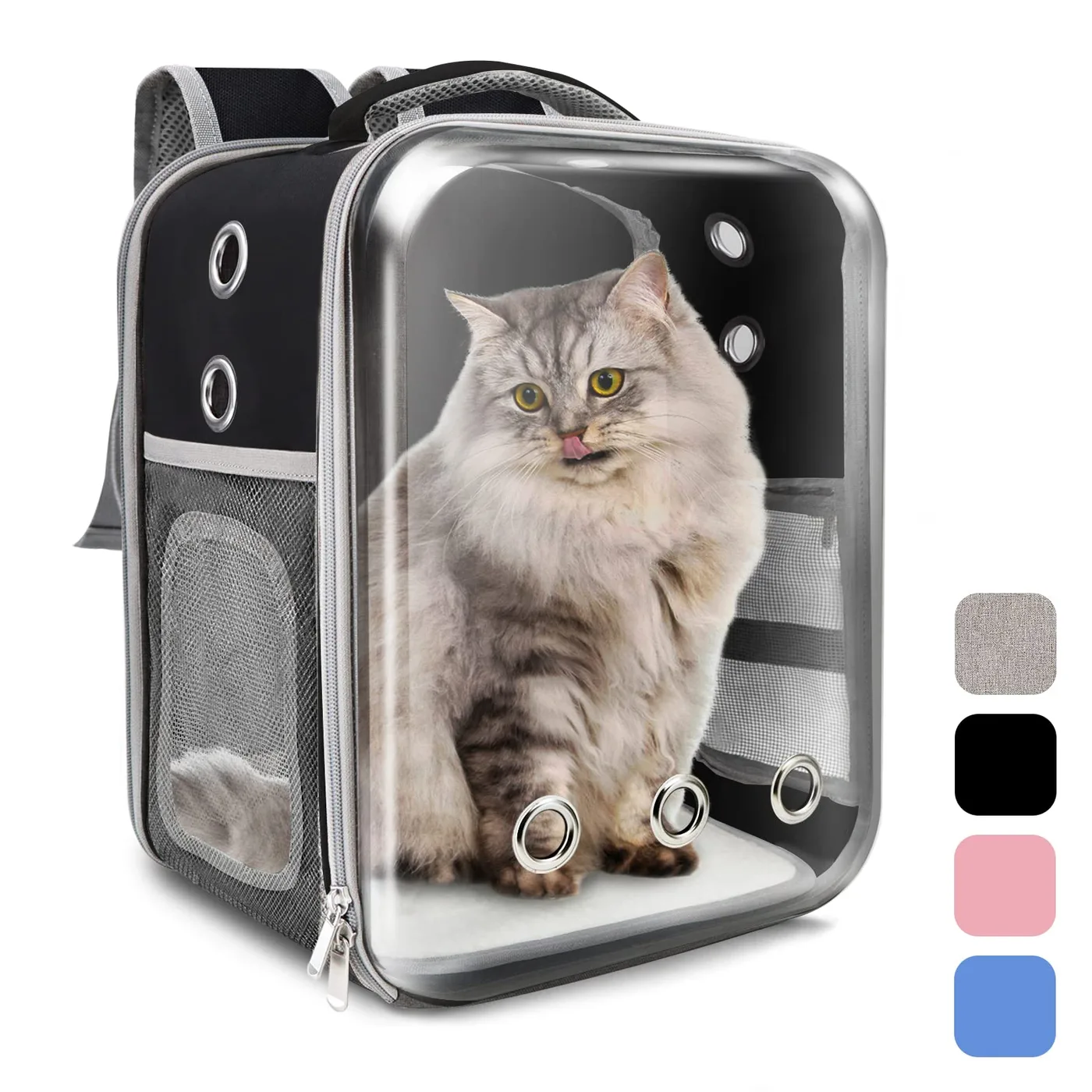
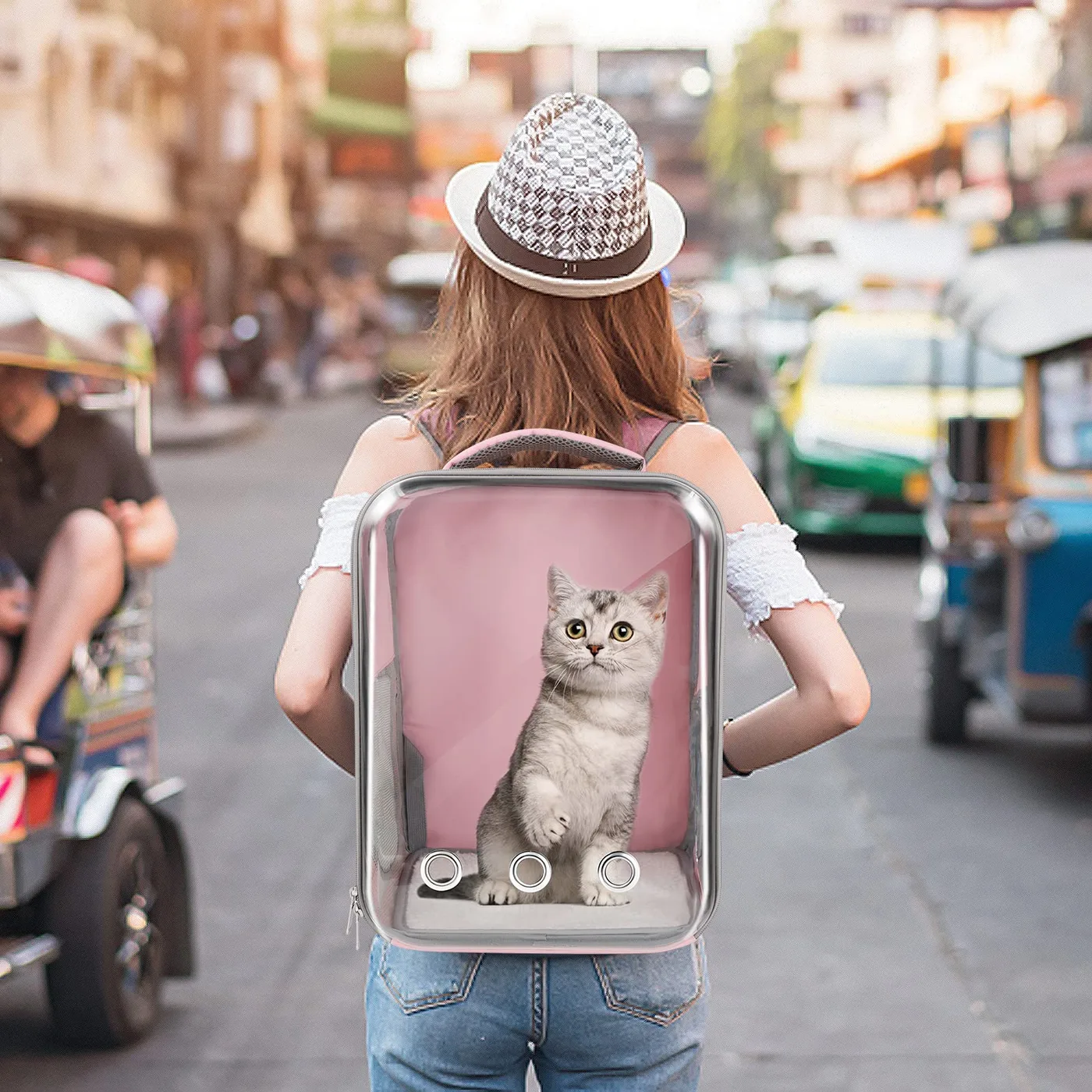
A backpack pet carrier is a worn carrier that sits against the user's back on two shoulder straps, typically 34-42 cm tall with a 6-9 kg load rating and an empty weight kept under 1.4 kg. It needs a contoured back panel, S-curve straps and a load-lifter geometry, and at MOQ 500 the harness system adds roughly USD 2.40-4.80 per unit over a hand-carried shell of the same volume.
A backpack carrier solves the oldest problem in the category: hands. Once the weight is on the shoulders rather than in a hand, distance stops being the constraint, and a product that was a short-trip accessory becomes a genuine travel format. That shift is why backpack programmes command the highest repeat purchase in shaped carriers - and also why they carry the harshest reviews when the harness is wrong. Comfort here is not a finish; it is engineered from strap geometry, back panel shape and where the animal's weight sits relative to the wearer's spine, and it cannot be added at the end of a design process that started with the silhouette.
- Sampling: pattern plus a loaded wear-test harness prototype in 6-10 working days.
- Minimums: MOQ 500 pieces per colourway; strap webbing and moulded back panel sourced to the same specification.
- Schedule: bulk runs 35-50 days from approved sample, with hardware the longest-lead component.
- Quality: strap anchorage, back panel attachment, buckle strength and zip function inspected to AQL 2.5.
- Terms: T/T 30/70, FOB Xiamen, harness straps tucked and protected so they are not creased in packing.
Customised pet carrier work differs from stock buying in one respect: the pattern is graded to your size ladder and held on file for reorders.
What changes when the carrier is worn rather than carried
Everything about the specification changes, and the first change is that gravity stops being symmetrical. A hand-carried carrier hangs from a handle and the load is vertical and predictable. A worn carrier has mass sitting behind the wearer's centre of gravity, moving independently of it, and every step applies a small impulse that the harness has to absorb.
That means the design brief is closer to a technical daypack than to a pet bed with handles. Three systems matter: the back panel, the shoulder harness and the load path between them. Get those right and a 9 kg pet is comfortable for an hour; get one wrong and the same pet is uncomfortable in ten minutes, and the review says so.
The second change is that the wearer's body becomes part of the product. The back panel is pressed against a human spine, so ventilation, pressure distribution and sweat management are design requirements, not luxuries. A backpack carrier that leaves the wearer's back soaked is a product people own and do not use.
The third change is dimensional. A worn carrier is constrained by torso length rather than by shelf space, so the vertical dimension is set by human ergonomics - around 40-48 cm of contact height for an adult - while the depth is limited by how far the load can sit from the back before it starts to lever. Depth beyond about 22-26 cm begins to pull the wearer backwards.
The consequence is that backpack carriers are naturally tall and shallow, which is a different box from every other shape in this series and the reason the interior planning has to be done separately rather than adapted from a tote or a duffle.
Our production team treats these as a distinct product class for that reason: the pattern, the reinforcement and the test protocol are all different, and programmes that try to derive a backpack from an existing hand-carried shell almost always end up redesigning it after the first wear test.
Back panel: pressure, airflow and the spine channel
The back panel does three jobs at once. It distributes pressure across the wearer's back, it channels air so the contact area does not become a sweat patch, and it provides the rigid plane the whole harness pulls against.
Pressure distribution comes from a semi-rigid panel with a shaped foam face. Two or three vertical channels - typically 12-20 mm deep - create airflow paths and simultaneously reduce contact area, which is what stops a flat padded panel from feeling like a wet blanket after twenty minutes. The channels should run vertically and be continuous top to bottom, because interrupted channels trap warm air in pockets.
The spine channel deserves specific attention. A raised foam face pressing directly on the spine is the single most common comfort complaint in worn carriers; a recessed channel of 30-50 mm width down the centre line removes it. This is a shaping decision in the foam, not an added component, so it costs nothing beyond the mould.
Foam specification matters: a density that is too low bottoms out under load and the wearer feels the pet's shape, which is unsettling; too high and the panel does not conform. A mid-density foam of 8-12 mm over the panel, with a softer face layer, is the usual resolution.
Covering fabric should be a spacer mesh or an air-mesh laminate rather than a flat woven. It is the same principle applied in breathable strap construction, and it is the cheapest comfort upgrade available on the whole product - a few cents per unit for a difference the wearer notices in the first five minutes.
Finally, the panel must be attached to the shell across its full width, not at four points. Load travels from the harness into the panel and then into the shell; a panel attached only at corners will eventually tear away from the body fabric under a moving animal. Programmes operating under ISO 9001 frameworks keep that attachment specification documented, which is what makes the second season repeatable rather than rediscovered.
Harness geometry: the three adjustments that matter
A pet carrier harness has three functional adjustments - shoulder strap length, sternum strap position and load lifter angle - and a fourth element, the hip belt, which is usually optional at this size. Each does something different and none of them is decoration.
Shoulder straps should be S-curved rather than straight. An S-curve wraps the trapezius and keeps the strap from sliding off the shoulder; a straight strap concentrates load on a narrow line and digs in. The curve is cut into the strap foam, not achieved by sewing, and it is the difference between a strap that costs one dollar and one that costs four.
Strap width follows load. For a 6-9 kg total, straps of 55-75 mm with 8-10 mm foam carry comfortably; narrower straps concentrate pressure and wider ones interfere with arm movement. Padding should taper at the top where it crosses the collarbone, because a constant-thickness strap rubs there.
The sternum strap is the adjustment most often omitted and most often missed. It holds the two shoulder straps at the correct spacing, it stops them sliding outward, and it materially improves comfort for very little cost. It should be adjustable over about 100 mm of vertical travel so it suits different torso shapes.
Load lifters - the small straps running from the top of the shoulder straps to the top of the panel - pull the load toward the wearer's back and stop it sagging away. On a pet carrier they matter more than on a daypack, because the load is low and dense and it wants to swing. They are the least understood element in the whole harness and the one that most improves a wear test.
| Element | Specification | Cost add at 500 (USD) | Comfort effect |
|---|---|---|---|
| Straight padded strap | 50 mm, 6 mm foam | baseline | Digs at collarbone |
| S-curve strap | 65 mm, 10 mm foam | +0.85 - 1.40 | Stays on shoulder |
| Sternum strap | Adjustable 100 mm | +0.35 - 0.60 | Stops outward slide |
| Load lifters | 15 mm webbing pair | +0.25 - 0.45 | Pulls load to back |
| Hip belt | Removable, padded | +1.10 - 1.80 | Transfers 20-30 percent |
A hip belt is worth considering above 8 kg. It transfers a fifth to a third of the load to the hips and it stops the unit swinging on uneven ground, but it adds bulk and it is rarely used at lower weights, so it is usually offered on the large size of a range rather than across the whole family.
Where the pet sits, and why height matters more than depth
Load position is the variable that decides whether a backpack carrier feels good. The governing principle from technical pack design is that weight should sit high and close: high because weight low in the pack levers the wearer backwards, and close because every centimetre of depth multiplies the lever arm.
For a pet carrier this translates into a specific instruction - the animal's mass should sit in the upper-middle of the shell, not at the bottom. In practice that means a raised internal floor or a shaped base that lifts the pet above the lowest few centimetres, and a back panel that positions the whole unit high on the torso rather than hanging at the lumbar.
Depth should be held to 22-26 cm. It is tempting to increase depth for interior volume, but depth is the dimension that hurts most: a 30 cm deep carrier with 8 kg in it pulls the wearer's shoulders back and makes stairs genuinely awkward. If more volume is needed, go taller rather than deeper.
The pet's own position inside also matters. Animals naturally settle toward the front of a dark enclosure and toward the back if it is lighter, so a single large window at the top rear gives the pet something to look at and keeps its weight where the designer wants it. That is a rare case where an aesthetic decision and a load decision point the same way.
Movement is the complicating factor. Unlike a rucksack, the load shifts. A pet that turns around moves the centre of mass by several centimetres, so the harness has to tolerate asymmetry - which is an argument for a slightly wider strap and a slightly stiffer panel rather than for a perfectly optimised minimalist one.
Finally, specify an interior tether anchored to a structural point. On a worn carrier, a pet that moves unexpectedly is a balance event for the wearer, and containment is a safety feature rather than an accessory.
Ventilation on a worn carrier is a different problem
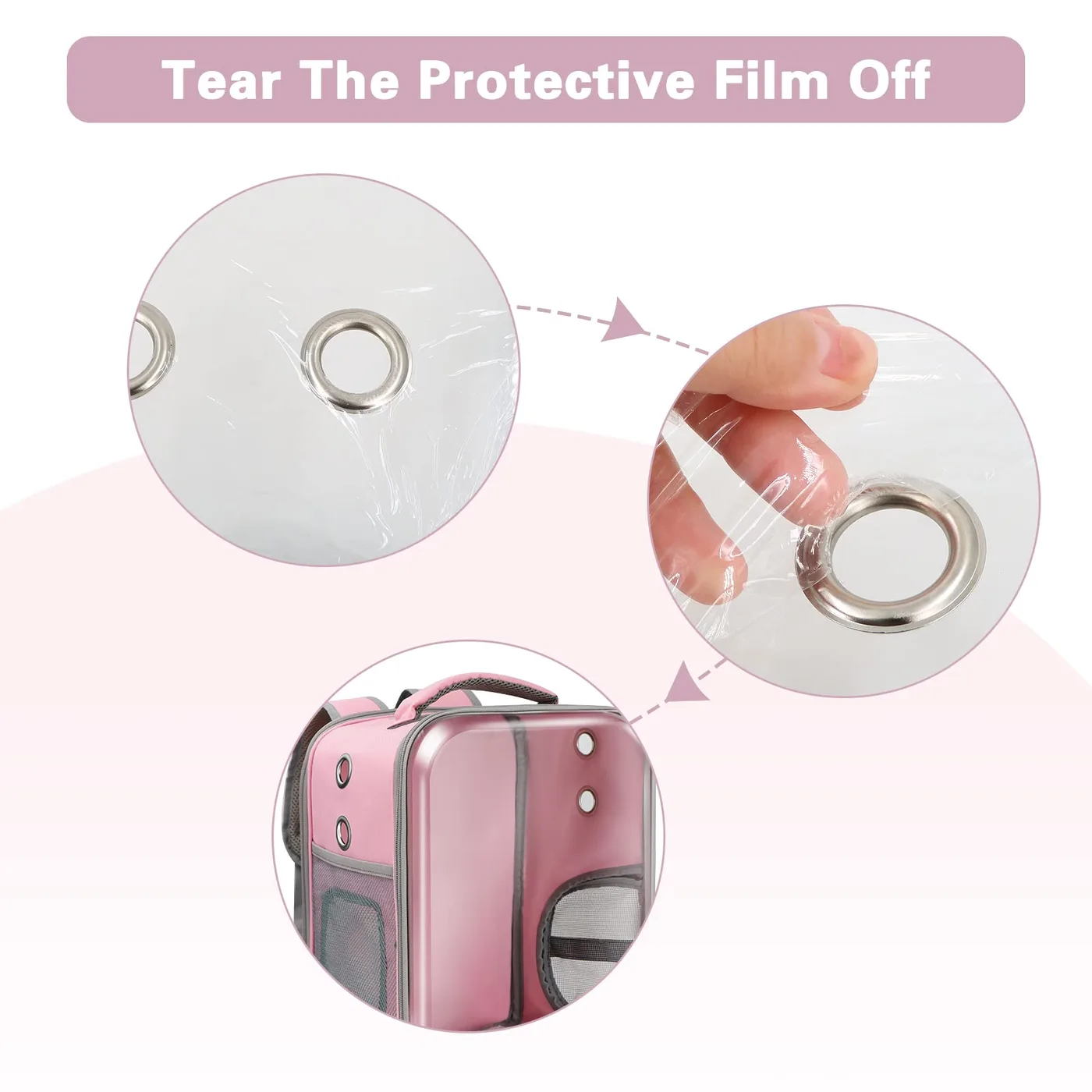
On a hand-carried carrier, ventilation means open area on the sides. On a worn carrier, two of those faces are against a human body and against the wearer's own heat, so the airflow problem is three-dimensional rather than a matter of mesh percentage.
The back face is effectively sealed. Whatever mesh is specified there is pressed against clothing, so it should be treated as a structural panel with airflow channels rather than as ventilated area - which is exactly what the channelled foam described earlier provides.
That leaves the sides, top and front as the working ventilation surfaces. A practical target is 30-40 percent open area across those three, with the largest single panel at the top rear where air rises and where the pet is most likely to face.
Heat load is the real constraint, and it comes from two animals rather than one. The pet generates heat, the wearer generates more, and the panel between them traps it. Cross-ventilation matters more than total area: an inlet low on one side and an outlet high on the other produces a convective flow that a symmetric arrangement does not.
Shade is underrated. A light-coloured shell on a worn carrier reduces solar gain substantially compared with a dark one, and since the wearer's back already warms the interior, dark fashion colourways should be balanced with larger mesh panels or a reflective finish.
Materials should be specified with content declarations rather than by feel alone. Body-contact fabrics on a product worn for an hour at a time are exactly what substance declarations are for, and certification through OEKO-TEX standards answers the retailer questionnaire before it is asked.
Entry, access and the zip that has to work while worn
Access on a worn carrier has a constraint no other shape has: the product cannot be put on the ground easily when the wearer is standing, and the pet may need to be reached while it is being worn. That changes zip specification and placement.
Side entry is the most practical. A curved zip running down one side lets the wearer swing the unit around to the front, open it partially, and reach the pet without setting it down. It also keeps the back panel uninterrupted, which protects the comfort work described above.
Top entry is common and works, but it requires the unit to be removed and set down for anything more than a quick check, and on a tall carrier the opening is further from the pet. Rear entry - through the back - should be avoided entirely: it cuts the panel that the harness depends on.
Zip hardware needs to be sized for the load. A side zip on a loaded shell is under tension as the fabric curves, and a light-gauge chain will separate. Specify a heavier gauge with a locking slider, and test the zip under load rather than flat, because a zip that works on a table and opens under tension is the most common field failure in this shape.
One-handed opening is worth designing for. A wearer holding a lead or a door needs to open the carrier with one hand, which argues for a grab loop on the slider and for a zip route that does not require two hands to start.
Finally, consider a mesh roll-back panel under the main opening, so the carrier can be opened for air without providing an escape route. It costs one panel and it is the feature experienced owners mention first.
Weight, materials and the empty-weight target
Empty weight is the specification most often ignored and most keenly felt. A backpack carrier is worn, so every gram is carried on the body, and unlike a rucksack the wearer is also carrying an animal whose weight they cannot reduce.
A working target is under 1.4 kg empty for a 6-9 kg class unit. Above roughly 1.8 kg, reviews start mentioning weight, and they mention it before they mention any feature. Getting under the target is mostly a matter of three decisions: shell fabric weight, hardware choice and how much decorative structure the design carries.
Shell fabric is the largest lever. A 420D polyester is adequate for most programmes and is markedly lighter than a 900D or a canvas; reinforcement can be placed locally at the base and strap anchors rather than applied across the whole shell. Local reinforcement is the single most useful weight technique in the category.
Hardware is second and where cheap programmes go wrong twice - first by choosing heavy zamac fittings, then by choosing light plastic ones that fail. Moulded acetal buckles are light and strong and are the correct default; metal looks premium and is worth it only on the one or two visible fittings where the customer sees it.
Decorative structure is third. Piping, binding, applique panels and moulded logos each add grams, and on a worn product they add discomfort as well. Keep them on surfaces that do not contact the body.
The back panel is the exception where weight is worth spending. A moulded or laminated panel costs more than a padded fabric panel, and it is the difference between a comfortable hour and an uncomfortable twenty minutes - the best weight-for-comfort trade in the entire specification.
Testing a worn carrier properly
Bench tests do not predict comfort, so a backpack programme needs a wear test as well as a component test. The two together take a day and prevent almost every failure that reaches a review.
The wear test is simple and should be done at rating. Load the carrier to its quoted weight with a sandbag or a weight plate, wear it for thirty minutes including stairs, and record four things: whether the straps stayed in place, whether the load sagged away from the back, whether the panel stayed comfortable, and whether any zip or seam showed strain. Three different body types should do it, because a harness tuned to one torso often fails another.
Component testing covers what the wear test cannot: strap anchorage pull strength, buckle tensile strength, panel attachment strength, and zip separation under load. Published methods are available through ASTM for the material and component procedures, and independent verification through SGS is available where an account requires a named laboratory.
Movement testing deserves a line of its own, because a live animal is not a sandbag. A thirty-minute test with a compliant pet - or failing that, with a shifting weight - reveals whether the harness tolerates asymmetry, and it is the only way to find out before customers do.
Production inspection then verifies the same set to AQL 2.5, with critical defects defined as strap anchorage failure, buckle failure, panel separation and zip separation under load. Those are the four that produce injury and returns, and they are worth defining as critical rather than major.
Positioning and building a worn-carrier range
Backpack carriers sell to a different buyer from the shaped novelty products in this series: someone who walks, commutes or travels and wants their hands free. That buyer reads specifications, compares weights and will not forgive discomfort - which is good news for a brand, because it means quality is visible and defensible.
Copy should lead with load rating, empty weight and harness features rather than with cuteness. Strap width, back panel construction and ventilation area are the three facts that convert this buyer, and they cost nothing to state accurately.
A range builds naturally in two directions. By size - a small unit for cats and toy breeds and a large one up to 9 kg, sharing the harness system and the panel construction - and by carry mode, where a backpack shares a shell with a shoulder-carry variant. Both directions share the expensive development, which is why the second and third SKUs are far cheaper to launch than the first.
Colourways should be restrained at the top of the range and bolder lower down, because the practical buyer tends to prefer neutral colour that does not show city grime. Two neutrals and one seasonal accent per year is a workable rhythm at MOQ 500 per colourway.
The most durable commercial asset here is not the shape at all: it is a harness that reviews well. Programmes that invest in strap geometry and panel construction build a reputation that carries into every other carry form in the range, and that reputation is the only thing in this category that competitors cannot copy from a photograph.
Production capability
- SGS-verified production space of 4,950 m², 149 machines, 7 assembly lines
- Pet carrier and pet bag output since 2014 from a 137-person team
- 200,000 units shipped monthly under BSCI and ISO 9001 systems
People Also Ask
Is a backpack carrier better than a hand-carried one?
For distance, yes - hands-free changes how far people will walk. For short trips and quick access, a hand-carried shape is still easier, which is why many ranges offer both.
Why does my back get sweaty in a pet backpack?
The back face is sealed against the body and two animals are generating heat. Channelled foam with a recessed spine channel and an air-mesh cover is the fix.
Are load lifters worth including?
Yes, more than on a daypack. Pet loads are low and dense and want to swing away from the back; load lifters are the cheapest correction available.
Should I use metal hardware for a premium feel?
Only on the one or two visible fittings. Moulded acetal is lighter and stronger, and on a worn product weight is felt directly.
Can a pet move around safely inside a backpack?
Yes, but design for it. Use a slightly wider strap and a slightly stiffer panel so the harness tolerates a shifting centre of mass, and anchor the tether structurally.
Does a dark colourway cause problems?
It adds solar gain on top of the wearer's own heat. If a dark colour is required, increase mesh area or use a reflective finish to compensate.
What is the most valuable thing to invest in?
The back panel and strap geometry. They determine comfort, they generate the reviews, and they cannot be copied from a photograph the way a silhouette can.
Frequently Asked Questions
How much does a backpack pet carrier cost to develop?
Expect roughly USD 14.20-19.60 per unit at MOQ 500 depending on harness specification, moving toward USD 9.60-13.40 at 5,000. The harness system adds USD 2.40-4.80 over a hand-carried shell.
What weight rating should I specify?
6-9 kg is the commercial range for a worn carrier. Above that, wearer comfort becomes the limiting factor rather than product strength, and a hip belt becomes worth including.
How heavy should the empty carrier be?
Under 1.4 kg for a 6-9 kg class unit. Above about 1.8 kg, customer reviews start mentioning weight before they mention any feature.
Why do straps slide off the shoulders?
Straight straps with constant padding. An S-curve cut into the strap foam, plus an adjustable sternum strap to hold spacing, solves it.
How deep can a backpack carrier be?
22-26 cm. Depth multiplies the lever arm and pulls the wearer backwards; if more volume is needed, increase height instead.
Should the pet sit high or low in the pack?
High and close. A raised internal floor keeps mass in the upper-middle of the shell, which reduces the backward lever on the wearer's shoulders.
Which entry direction is best?
Side entry. It allows the wearer to swing the unit forward and reach the pet without setting it down, and it leaves the back panel uninterrupted.
Do I need a hip belt?
Usually only above 8 kg or on the large size of a range. It transfers 20-30 percent of the load but adds bulk that smaller programmes do not need.
How much mesh area is needed?
Around 30-40 percent open area across the sides, top and front, since the back face is sealed against the wearer. Cross-ventilation matters more than total area.
What breaks first on a backpack carrier?
Strap anchorage, then zips separating under load, then back panel attachment. Define all three as critical defects at inspection.
Can the harness be shared across sizes?
Yes, and it should be. One harness system and one panel construction across a small and a large size is the cheapest way to build a worn-carrier range.
How should comfort be tested?
Load to rating and wear for thirty minutes including stairs, with three different body types, recording strap slip, load sag, panel comfort and seam strain.
How long does development take?
Samples including a wear-test harness prototype in 6-10 working days, then 35-50 days bulk from approved sample, with hardware the longest-lead item.
Talk to QUANZHOU JUNYUAN BAGS about a pet carrier program: MOQ 500 pieces per colourway, samples in 6-10 working days, bulk production in 35-50 days under AQL 2.5 inspection.
Get a free quote Request a sample