Custom Training Clicker: Behaviour Range Design
Yes: a custom training clicker can be developed from MOQ 500 units per colourway, with acoustic samples ready in 6-10 working days. Three variables decide whether it becomes a hero accessory — consistent sound signature, tactile shell finish, and how it attaches to the handler.
Clickers are the cheapest product in a training range and frequently the most strategically useful. They are carried daily, they are shown to friends, they appear in countless training videos, and they are repeatedly lost — which produces the repeat purchase rate most accessories never achieve.
This guide addresses the category from a design and brand consultancy perspective rather than as user advice. It covers acoustic specification, shell engineering, branding miniature surfaces, wearable attachment options, multi-pack colour systems, display formats for both peg and box channels, and the consistency checks needed to keep reorders identical. Standard terms are MOQ 500 units per colourway, prototyping in 6-10 working days, bulk production in 35-50 days, and inspection to AQL 2.5 against your approved golden sample. Everything below reflects live programmes developed with our production team rather than generic sourcing guidance, and every tolerance quoted here is one we actually hold on repeat orders rather than an ideal target.
When a custom pet bag has to ship flat, the pattern changes: removable stiffeners and a fold line that does not crease the coated face.
Why the Smallest Accessory Carries Serious Weight
In range planning, small accessories are usually afterthoughts, and that is precisely why they represent opportunity. A well-executed clicker costs a fraction of a harness yet appears in far more customer photographs, because it lives in a pocket or hangs at the wrist rather than being stored away after use.
Recognition follows repetition. Familiar small objects accumulate mental association faster than large rarely-used ones, and because this item is handled dozens of times per session, its tactile qualities become inseparable from how customers feel about the brand. That is an unusual and valuable position for a low-cost SKU.
Commercially, the replacement cycle matters more than the initial sale. These items are misplaced constantly, and customers who own one usually buy several; offering multi-packs converts that behaviour into higher basket value rather than leaving it to chance. The most profitable programs in this category are almost always those offering sets rather than singles.
There is also a merchandising argument. Small hanging products occupy the most flexible space in any store: peg walls, counter bins, checkout zones, and bundled gift sets. Few products qualify for all four, and that flexibility repeatedly earns additional facings during range reviews.
The critical caveat is that competitors treat this as commodity territory, which means quality differences are immediately noticeable. A clicker that sounds inconsistent, feels flimsy, or loses its print within weeks damages perception of everything else carrying the same logo. Treat the specification seriously and the upside is disproportionate; treat it casually and it becomes the weakest link in your range.
One caution on positioning deserves to be stated directly, because it saves programmes real money. Do not attempt to make this item the technological hero of the range. Its value lies in reliability, tactile quality, and constant presence rather than in novelty, and brands that over-engineer features into it generally raise cost without raising perceived value.
Finally, plan its relationship to companion categories deliberately. Training accessories sell as systems, and customers building a kit expect coordinated colour and consistent branding across every piece. Designing items together, rather than assembling them later, is what makes a training line read as professional rather than assembled.Sound Design: Frequency, Attack, and Volume Consistency
The defining functional characteristic here is sound, and it is the specification almost never written down. Without measurable acoustic criteria, every batch differs, customers notice immediately, and there is no way to adjudicate whether a shipment is acceptable.
| Acoustic parameter | Target range | Measured by | Impact on perception |
|---|---|---|---|
| Peak frequency | 2,000 - 4,500 Hz | Spectrum analysis | Sharpness |
| Attack time | Under 8 ms | Oscilloscope | Precision feel |
| Peak level at 1 m | 70 - 85 dB | Sound level meter | Perceived quality |
| Unit-to-unit variance | Within 3 dB | Batch sampling | Consistency |
| Decay | Under 120 ms | Oscilloscope | Clean, non-rattly |
Peak frequency determines character. Lower readings sound muffled and are frequently described as cheap; higher readings sound sharp and carry better outdoors. Most successful consumer versions sit in the two to four kilohertz band, which reads as crisp without being harsh, and specifying this band numerically gives every downstream decision a reference point.
Attack time matters more than designers expect, because the perceived precision of the entire product relates to how instantaneously the sound begins. Anything above roughly eight milliseconds starts to feel sluggish even when listeners cannot articulate why. Verify it on a prototype rather than trusting the geometry alone.
Volume level then governs usability outdoors, where background noise competes. Seventy to eighty-five decibels covers most consumer situations; anything louder risks discomfort for handlers working in enclosed spaces. Since this product is used indoors and out, choose mid-band rather than maximising.
Holding the signature across batches
Unit-to-unit variance is where quality programmes succeed or fail. A batch averaging the correct frequency but varying widely still sounds wrong to any customer buying two units. Specifying variance rather than average — typically within three decibels — is what separates professional-grade programs from commodity ones.
The mechanism delivering this is usually a metal or engineered polymer reed within the shell, and its tolerance is what determines consistency. Specify reed flatness and thickness tolerance in writing, since this small component governs nearly all acoustic behaviour and is the first place cost-cutting shows up.
Cycle life is the durability metric that matters most, and it is easy to specify. Written as a minimum number of actuations before acoustic or tactile degradation appears, it becomes both a development target and an inspection criterion. Most quality failures in this category involve springs or reeds losing tension gradually, which is exactly what a properly specified life test detects early.
Testing should then be simple but real: random sampling per lot, measured under identical conditions against your retained golden sample rather than against a generic reference.
Shell Engineering: Material, Two-Shot Moulding, and Finish
The shell does three jobs simultaneously: it produces resonance, it determines tactile impression, and it carries whatever branding exists. Balancing those jobs is the core engineering task of this product, and each material family resolves them differently.
ABS is the default and remains the best compromise. It is rigid enough for a clean acoustic result, it moulds to tight tolerance, it accepts nearly every decoration method, and it is inexpensive. Its weakness is purely perceptual: untreated ABS can read as lightweight, which is why finish choices carry so much weight.
Polypropylene is cheaper and more flexible but tends to produce a duller sound and poorer wear characteristics. It suits disposable-price programs and rarely anything positioned as quality. Polycarbonate delivers excellent sound and superb perceived quality but costs more and is harder to justify at typical consumer price points.
Two-shot moulding is the highest-value upgrade available here. Combining a rigid core with a soft over-moulded grip produces a dramatic perceived-quality improvement for a modest cost increase, and it simultaneously solves two problems: grip in wet or cold conditions and visible differentiation from every competitor using single-material bodies. It also creates an obvious premium tier without any tool change beyond the second shot.
Finish decisions that change everything
Surface finish deserves its own paragraph because it influences perception enormously. A matte textured finish reads as considered and hides fingerprints; gloss reads as cheap plastic unless executed beautifully; a soft-touch coating delivers the strongest premium impression but adds cost and can degrade over years. For a product handled dozens of times daily, matte texture is usually the correct answer.
Radii matter functionally. Sharp edges feel unpleasant in the hand and create stress concentrations that lead to cracking when dropped. Specifying minimum edge radii throughout costs nothing and prevents the most common physical failure in the category.
Weight deserves specification too, despite seeming trivial. Customers associate density with quality in small objects, and a body that feels unexpectedly light undermines otherwise good material choices. Specifying target mass with a tolerance band, then checking it per lot, keeps that impression stable across reorders without adding meaningful cost.
Finally, consider the internal volume deliberately, since it shapes resonance. Slight internal geometry changes alter the acoustic signature substantially, which is another reason acoustic testing should follow any tooling revision rather than assuming the result carries over.Branding a Very Small Surface: Methods Ranked
Space available here is genuinely tiny, and the temptation is to squeeze too much onto too little. Discipline produces better results than ambition: one clear mark beats three competing elements every time.
| Method | Minimum legible size | Durability | Tooling impact | Best use |
|---|---|---|---|---|
| Pad printing | Approx. 5 mm | Medium | Plate only | Multi-colour logos |
| Laser marking | Approx. 3 mm | Very high | None | Two-shot bodies |
| Moulded deboss | Approx. 4 mm | Highest | Tooling inscription | Permanent identity |
| Screen printing | Approx. 8 mm | Medium-high | Screen per colour | Flat large fields |
| Decal insert | Approx. 6 mm | High | Insert pocket | Protected artwork |
Pad printing remains the most flexible option and handles multi-colour marks at reasonable cost, though it is a surface layer and will eventually abrade on an item carried loose in a pocket. Where possible, position printed artwork in a recessed area so contact wear lands elsewhere.
Laser marking is the most elegant solution available and rewards volume programs, because there are no consumables and no registration issues. It works best on two-shot configurations where a dark core sits beneath a lighter shell, producing high contrast without any added material.
Moulded debossing is the most durable and costs nothing per unit, though it requires tooling inscription and cannot be altered cheaply. It is the right choice when identity is settled and the product will run unchanged for years, and it pairs naturally with products expected to live outdoors.
Whatever route you choose, prepare a compact lockup specifically for this scale. Most full brand lockups fail utterly below ten millimetres, so commissioning a simplified version — often the monogram alone — is a modest investment that pays across every small accessory in your range.
Wearable Hardware: Wrist Coil, Finger Ring, and Clip
Attachment style is both the most practical decision and one of the most overlooked. Because hands are occupied during training, the product either becomes wearable or becomes lost, and every return relating to loss traces back to this choice.
Wrist coils are the most popular solution and are also the strongest merchandising asset, since the coiled form photographs attractively and displays well on a card. Polyurethane coils recover their shape reliably and cost little; PVC coils are cheaper still but take a permanent set over time and look poor within a season. Specify PU whenever the product is positioned above entry price.
Finger rings are compact, inexpensive, and suit handlers who prefer working with both hands free. They are also the easiest to lose, so they pair better with multi-pack strategies than with premium singles. Their major advantage is that they fit comfortably inside pocket-friendly packaging.
Clips and carabiner-style fittings attach to belts, leads, or bags, and they read as professional equipment rather than as toys. This suits range positioning aimed at serious handlers and supports higher pricing, particularly if you also sell coordinated items in the same hardware family.
Split rings and lanyard holes are the minimal version and cost almost nothing, letting customers choose how to carry the item. They are a sensible default for cost-led ranges and work well where sets are sold with separate attachment accessories.
Attachment credibility is easier to evaluate than it first appears. Ask suppliers to cycle-test the finished assembled product rather than its individual parts, because failures almost always occur where the two meet rather than within either component. Testing assembled units for several thousand cycles reveals joint problems that component-level testing cannot show.
Whichever you select, consider offering two configurations as a tiering mechanism. A base version with a simple ring and a premium version with a wrist coil costs almost nothing to differentiate and creates an obvious upgrade path inside the same tooling investment.Colour Systems for Multi-Pack Sets
Because this product is frequently bought in multiples, colour strategy here differs from most categories. The question is not which colour sells best but which combination reads as intentional when several are bought together, since most customers will own more than one.
Start with a defined family rather than open selection. Three to five hues that share saturation and value read as designed; adding a sixth usually dilutes the effect. Using aspirational colour names or a numbered system also helps customers collect deliberately, which converts single purchases into set-building behaviour.
Two-shot configurations add a second dimension. Holding the core colour constant while varying the grip creates apparent variety at low material cost, because only one of two material streams changes between colourways. This is the most economical way to look broader than you actually are.
Reference every colour numerically using the standards maintained by Pantone, and keep physical chips for each approved shade. With small parts moulded in possibly three material streams, numeric references are the only reliable way to keep a multi-pack looking consistent across future reorders.
Visibility matters outdoors
Practical colour considerations apply too. Handlers drop these constantly in grass or on wood chips, so low-contrast earth tones create avoidable frustration. Including at least one high-visibility option per set is functionally helpful and commercially interesting, because customers who lose one come back specifically for the bright replacement.
A final recommendation concerns the early ranges most brands build: resist the urge to launch every colourway at once. Opening with three gives clearer demand signals than opening with six, and it concentrates volume enough to reach better material pricing on the shades that survive. Additional colours can be added in a later order once evidence supports them.
Finally, keep the product palette linked to the wider range. Where you also produce handler gear such as treat-carrying accessories, coordinating hues across the family turns individual items into a coherent kit that photographs far better than mismatched pieces.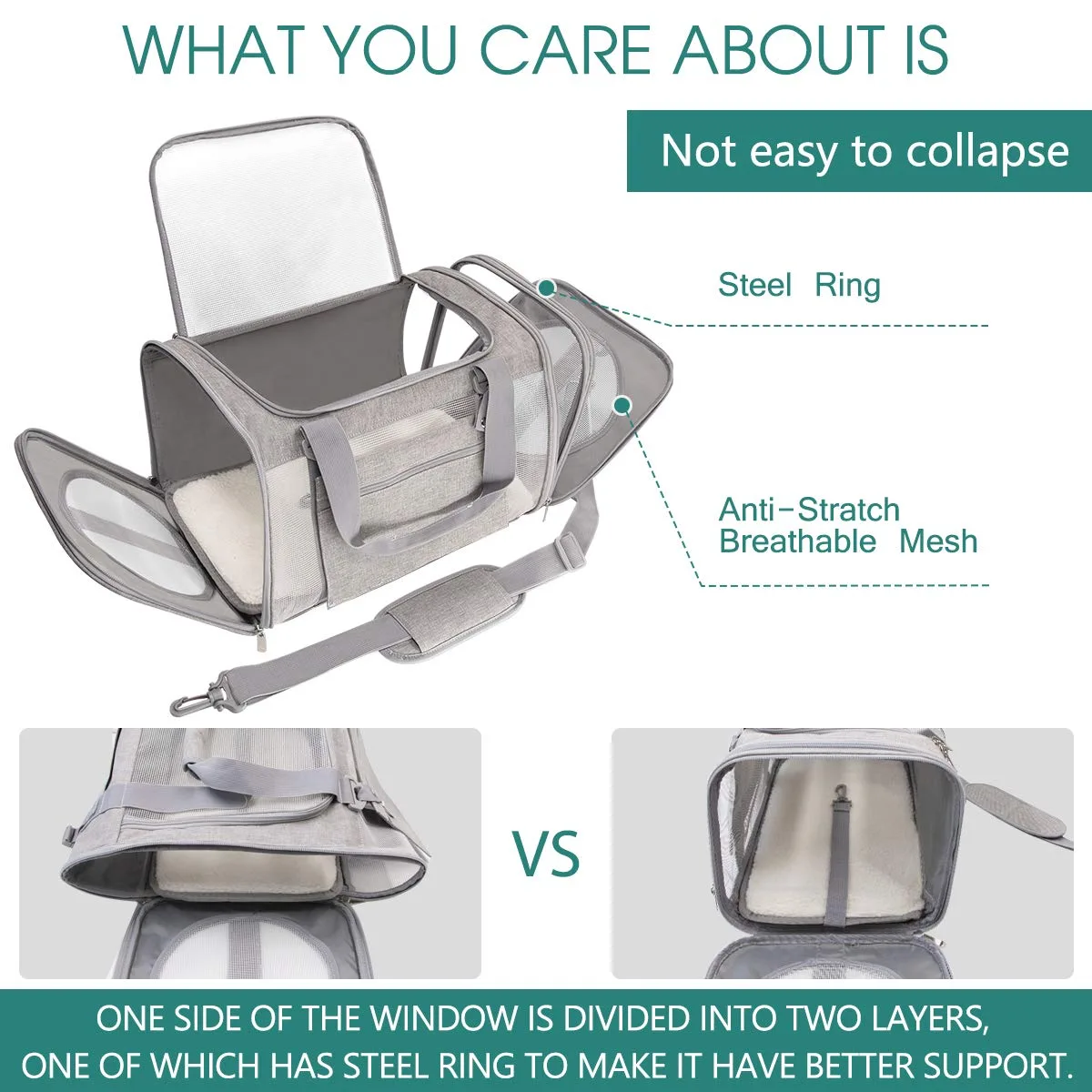
Display Formats: Blister Card, Boxed Kit, and Bundle Sets
Small products are usually sold from hanging displays, which makes the card itself the primary communication surface. Card design therefore deserves more attention than the product's packaging often receives, since it does the merchandising work.
Blister packaging is the channel standard and allows customers to test the sound in store, which is the single strongest sales mechanism available for this product. A try-me window in the card costs little and converts noticeably better than sealed formats, because nobody buys this product sight — or sound — unseen.
Printed cards with a hanging euro slot give nearly unlimited print area, support tiered messaging, and cost fifteen to thirty-five cents depending on board and print passes. Full-colour cards also let you present multi-packs attractively, which is where much of the category's margin lives.
Boxed kits suit training bundles. Combining a clicker with complementary items lets you sell a system rather than a component, and it supports considerably higher basket values. Rigid boxes add meaningful cost and cube, so reserve this format for genuine gift or starter configurations rather than everyday singles.
Freight treatment of small parts also rewards a little forethought. Bulky air in export cartons is expensive, so agreeing economical inner pack counts with your supplier can reduce per-unit landed cost more reliably than negotiating unit price. Over a multi-season programme, those accumulated freight savings frequently exceed the entire tooling investment for the item.
Bundling deserves strategic thought. Pairing this item with recall whistles creates a logical starter kit, whereas pairing with treat pouches creates a field kit. Both work; what matters is that the bundle tells a coherent story rather than merely grouping inventory.Carton strategy often determines profitability more than unit cost does in this category. Because single units are low-value, shipping them efficiently matters disproportionately. Planning export cartons around standard inner pack quantities — typically twenties or fifties rather than arbitrary numbers — reduces picking errors, simplifies retail allocation, and reduces per-unit handling across every future order.
Finally, plan peg compatibility early. Slot position affects how the product hangs, hangs badly-designed cards droop, and drooping cards get pulled from displays. Confirming slot placement against your card printer's template prevents a problem that appears only after units have shipped.Consistency, Compliance, and Building a Reorderable Program
Small moulded items are simple to specify properly and easy to lose control of, because every requirement is cheap individually and essential collectively.
Specification review is the cheapest insurance available in a small-parts programme, and it takes one focused hour. Read the completed tech pack as though you were quoting it cold: every dimension needs a tolerance, every component needs a material grade, and every surface needs a stated finish. Anything left to interpretation will eventually be interpreted differently, and on items produced by the thousand those differences accumulate quickly.
The checklist below is short by design, since anything longer tends to get ignored.Acoustic sampling comes first: random units per lot measured against your retained golden sample, with variance rather than average as the acceptance criterion. Second is visual finish, checked for flash at parting lines, since small parts show imperfections proportionally more than large ones. Third is mechanical — the actuation should complete its cycle a defined number of times without degradation, which is easily tested on a fixture and catches nearly every fatigue-related defect.
Decoration adhesion is fourth and should be verified by a standardised rub test rather than by hand. Fifth is colour agreement against retained chips, since multi-packs make colour mismatches extremely visible when three units sit side by side in one blister.
Compliance obligations for this category are comparatively light but not absent. The object is handled constantly and may contact mouths, so material declarations aligned with applicable consumer product expectations should be available, and general guidance published by the Consumer Product Safety Commission is the reference most United States retailers expect to see. Where heavy metals testing is requested, verification through bodies such as SGS provides familiar documentation.
On timing, the pattern is consistent and predictable: prototype delivery in 6-10 working days, bulk in 35-50 days depending on tooling and decoration complexity, with MOQ 500 units per colourway. Where several colourways share one tooling platform and one decoration setup, that opening quantity can usually be distributed across them.
The most profitable habit remains documentation written at first order. Recording reed tolerances, material references, the agreed acoustic targets, and retained physical samples converts all future seasons into reliable reorders rather than hopeful renegotiations — and it is what lets a fifteen-cent accessory perform like a considered piece of equipment.
Order and quality terms
- MOQ 500 pieces per colourway; samples in 6-10 working days
- Bulk production 35-50 days after approval; AQL 2.5 inspection standard
- T/T 30/70 terms, FOB Xiamen, full document set per shipment
People Also Ask
What makes one clicker sound better than another?
Tolerance on the internal reed plus internal resonance geometry. Small variations change attack time and frequency noticeably, which is why acoustic parameters are specified numerically and tested per lot.
How loud should a training clicker be?
Between 70 and 85 decibels at one metre suits most situations. Louder versions cause discomfort indoors, while quieter ones are unusable outdoors, so the middle of the band is generally the correct choice.
Which material gives the best sound?
Polycarbonate delivers the cleanest acoustic result, though ABS is nearly as good and considerably cheaper. Two-shot construction improves grip without materially changing resonance.
Why buy multi-packs rather than singles?
Because the item is frequently misplaced, and sets turn that reality into higher basket value while giving customers spare units kept in different locations.
What finish survives daily handling?
Matte texture. It hides fingerprints, resists visible scratching better than gloss, and reads as considered rather than cheap on an item handled dozens of times each session.
Can branding be added without raising unit cost?
Moulded debossing does exactly that. It requires tooling inscription but adds nothing per unit, cannot abrade, and suits products expected to run unchanged across multiple seasons.
Frequently Asked Questions
What is the minimum order for a custom clicker?
MOQ 500 units per colourway is standard. When multiple colourways share one tooling platform and one decoration setup, that opening quantity can usually be distributed across the colour set rather than committed to one shade.
How long does sampling take?
Acoustic and finish samples take 6-10 working days after the specification is approved. Two-shot or debossed versions may need one extra round, since tooling inscription and second-shot registration are verified on physical parts.
How is the sound specified?
By numeric targets for peak frequency, attack time, peak volume, and unit-to-unit variance. Those four parameters turn a subjective impression into a testable specification that every lot can be checked against.
Which shell material should I use?
ABS for the best balance of acoustics, tolerance, and cost; polycarbonate for superior sound at higher cost; polypropylene only for price-led programs. Two-shot construction materially improves grip and perceived quality.
Can we brand such a small surface?
Yes. Pad printing handles multi-colour marks around five millimetres, laser marking achieves finer detail on two-shot bodies, and moulded debossing gives permanent identity with no unit cost. A simplified monogram usually reads best.
Which attachment is most popular?
Wrist coils, because they are convenient, photograph well, and display nicely on a card. Polyurethane coils are worth specifying over PVC, which takes a permanent set and looks poor within a season.
How do multi-packs influence design?
They make consistency paramount, since customers compare units side by side. Keep a defined colour family, vary only one material stream at a time, and check colour agreement against retained chips rather than numbers alone.
Is it possible to let customers test sound in store?
Yes, with a try-me window in a blister card. This is the strongest conversion mechanism available in the category, as the sound is the defining feature and sealed packaging removes the deciding factor.
What typically fails first in this product?
Decoration abrasion and spring fatigue. A standardised rub test plus cycle testing for several thousand actuations catches both during development rather than after launch.
How do you keep sound consistent across reorders?
By documenting reed tolerances, internal geometry, and acoustic targets, then testing random units per lot against a retained golden sample rather than against the original design intent.
What compliance documentation should we request?
Material declarations aligned with consumer product expectations for your market, plus heavy-metals testing where requested. Most retailers in the United States reference published consumer product safety guidance during vendor onboarding.
Can the clicker be bundled with other training items?
It should be. Bundling with whistles, pouches, or lead accessories raises basket value and positions the range as a system. The key is telling one coherent story rather than simply grouping spare inventory.
Talk to QUANZHOU JUNYUAN BAGS about a pet carrier program: MOQ 500 pieces per colourway, samples in 6-10 working days, bulk production in 35-50 days under AQL 2.5 inspection.
Get a free quote Request a sample