Adjustable Straps: Custom Fit Engineering for Pet Carrier Brands
Adjustable straps let one pet carrier fit wearers from roughly the 5th to the 95th percentile by providing 300-450 mm of usable webbing travel through a ladder lock, cam buckle or slide adjuster. The hardware adds USD 0.60-2.40 per strap at MOQ 500, and it is the cheapest single change that removes fit complaints from a carry programme.
Fit is the most common source of avoidable returns in worn pet products, and it is almost never a sizing problem with the animal - it is a sizing problem with the person. Bodies vary far more than pets do within a size band, and a strap with too little travel will be genuinely unusable for a meaningful share of buyers. Adjustment is therefore not a comfort feature; it is coverage, and coverage is a commercial argument about how much of the market a single SKU can serve.
- Sampling: engineered strap sets with production adjuster hardware and webbing in 6-10 working days.
- Minimums: MOQ 500 units per colourway; custom-coloured or custom-moulded adjusters carry separate lot minimums.
- Schedule: bulk production in 35-50 days after sample approval and deposit.
- Quality: adjuster slip resistance, webbing tensile, stitch integrity and fit range inspected to AQL 2.5.
- Terms: T/T 30/70, FOB Xiamen, straps packed flat with adjusters set to a consistent mid-range position.
Private label pet bags and carrier programmes share one packaging standard here, so a mixed order does not add a second carton size or handling charge.
Fit is a coverage problem before it is a comfort problem
Most range planning treats fit as a refinement - something to be improved once the product works. That ordering is backwards, and it produces products that are comfortable for a median wearer and unusable for everyone else. The relevant variation is not small: shoulder width, torso length and chest depth across an adult population differ by considerably more than the dimensions of any pet size band, which means the human half of the fitting equation is the harder half.
The commercial framing is straightforward. A strap with 300 mm of usable travel covers a wide share of adult wearers with one SKU. A strap with 120 mm covers a narrow band and quietly excludes everyone outside it - who then find out after purchase, which is the worst possible moment. Returns generated this way are expensive, they are attributed to the brand rather than to the specification, and they are entirely preventable with hardware that costs well under a dollar.
There is a second, subtler argument. Adjustability changes how the product is sold. A strap that visibly adjusts communicates that the product will fit, and that reassurance functions at the point of purchase even for customers who never actually move the adjuster. In this sense adjustment is as much a merchandising device as an engineering one, and it is worth specifying for what it signals as well as for what it does.
Our production team evaluates fit coverage by testing a loaded sample on wearers at the extremes rather than at the middle. A strap that fits the middle will almost always fit the middle; the information is at the ends, and that is where approval decisions should be made.
The commercial arithmetic is worth stating directly. Fit exclusion rarely surfaces as a complaint; it surfaces as a return with a reason code that reads unsuitable or too small, and those codes get aggregated into a category rather than traced back to a strap specification. A programme that adds two hundred millimetres of adjustment travel for well under a dollar per unit is buying down a return rate it cannot otherwise see, which is why the change usually pays for itself even when nobody attributes the saving to it.
Adjuster hardware: ladder lock, cam buckle and slide
Three hardware families dominate, and they differ far more in feel than in cost - which is why the choice should be made on the brand's intended user experience rather than on the quotation.
A ladder lock, also called a tri-glide, is a flat rectangular frame with a centre bar. Webbing threads through it and friction holds position. It is the cheapest option, it lies flattest against the body, and it is nearly invisible under a strap pad. Its weakness is adjustment effort: changing length means unthreading and re-threading or working the webbing through with both hands, which is awkward while wearing a loaded carrier. It suits products where the fit is set once and rarely changed - a strap adjusted at home before a walk, for example.
A cam buckle uses a spring-loaded or toothed cam that grips the webbing and releases when lifted. It adjusts one-handed, under load, in about a second, and that capability is genuinely transformative on a worn product: the wearer can tighten or loosen while walking without setting anything down. The cost is a bulkier profile and a more technical appearance, and cam buckles can slip if the webbing is too smooth or too narrow for the cam geometry.
A slide adjuster with a locking gate sits between the two - flatter than a cam, easier than a ladder lock - and is the right answer when the strap needs to be adjusted occasionally and the silhouette needs to stay clean. It is also the easiest option to hide behind a pad, which matters on design-led products.
Whichever is chosen, two specifications should be written down. Slip resistance: the adjuster must hold position under a defined pull, typically tested at 1.5-2 times rated load, with acceptance defined as no measurable movement rather than no catastrophic failure. And webbing compatibility: adjusters are cut for specific webbing widths and thicknesses, and mixing a 25 mm adjuster with a nominally 25 mm webbing of unusual thickness is a reliable source of creep.
Calculating the fit range you actually need
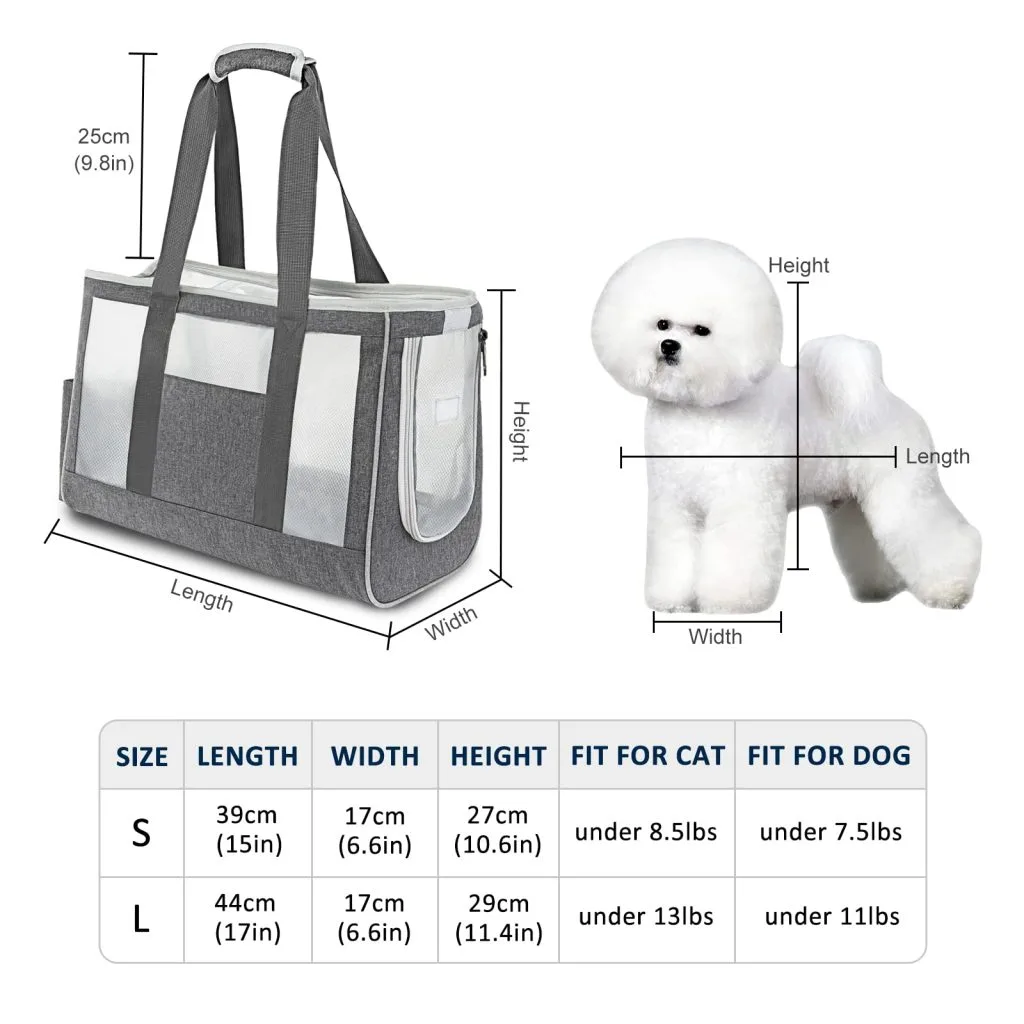
Fit range is derivable, and doing the arithmetic is much cheaper than discovering the shortfall in returns. The method is simple: establish the shortest and longest strap path length the product will encounter, and ensure the adjustment travel plus the fixed strap length spans both with margin.
The shortest case is a small-framed wearer in light clothing carrying the product high on the back. The longest case is a large-framed wearer in winter clothing carrying it low. In practice this spans roughly 280-340 mm of strap path variation for adult wearers, before any allowance for how the product is worn. Add margin for preference - some people like a carrier high and tight, others low and loose - and the working target of 300-450 mm of usable travel becomes clear.
Usable travel is the operative phrase, and it is not the same as webbing length. A strap with 450 mm of webbing but only 200 mm of adjustment range delivers 200 mm of fit. The distinction matters because quotations are often built on webbing length, which is cheap, while the value is in the adjustment range, which is a hardware and construction decision.
Two geometric choices increase usable travel without adding webbing. The first is placing the adjuster at the lower end of the strap, near the chest rather than at the shoulder, which gives the wearer more reachable travel and puts the bulky hardware away from the shoulder contact point. The second is a doubled-back configuration, where the webbing passes through the adjuster and returns, effectively doubling travel for the same hardware footprint.
Finally, specify where the adjuster sits at the midpoint of its range when the product ships. It sounds trivial; it means the product arrives capable of adjustment in both directions, and it prevents the customer's first impression being a strap that is already at its limit.
One-handed operation and the reality of a loaded carrier
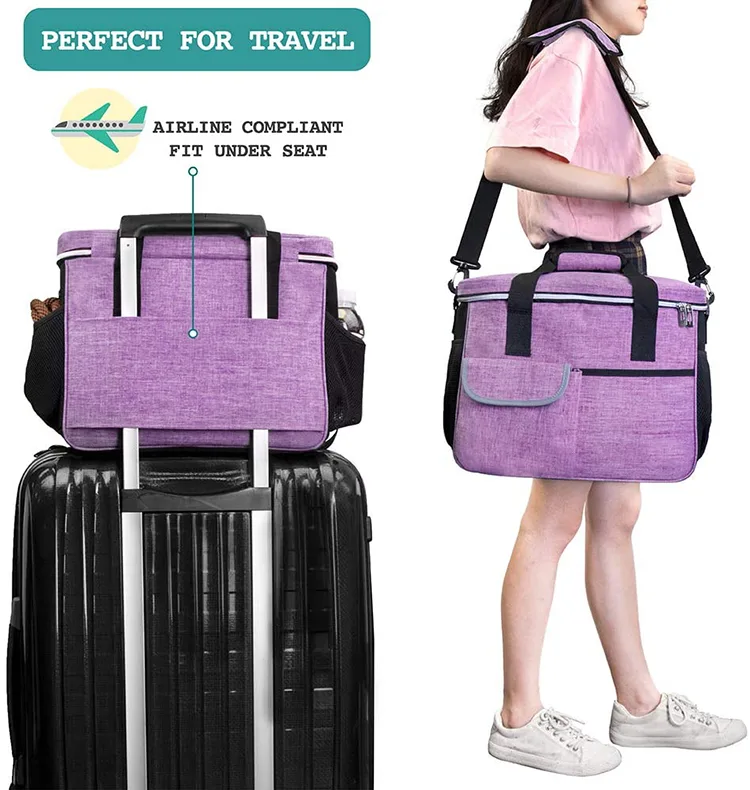
Every adjustment decision should be evaluated against the same scenario: the wearer has a loaded pet carrier on their back, possibly an animal that is moving, and one hand free. Design decisions made on a bench with the product on a table do not survive contact with that scenario.
This is where cam buckles earn their cost. A ladder lock requires the webbing to be relieved of tension before it will move, which on a loaded carrier means shrugging the product off one shoulder - awkward, and enough of a deterrent that most owners will simply live with a poor fit. A cam releases under load with a thumb and forefinger. That difference is the whole comfort story of an adjustable strap, and it is worth roughly a dollar.
Position matters as much as mechanism. An adjuster sitting behind the shoulder blade is unreachable while wearing the product; one at the front of the strap, roughly at chest height, is directly under the hand. The rule is simply that adjustment hardware belongs where the hand naturally falls - which is low and forward, not high and back.
Tail management is the second half of one-handed operation. If adjusting produces a long loose end that flaps or has to be re-threaded, the wearer will not adjust. A keeper loop - a short elastic or webbing band - holds the excess flat and is the cheapest single component that makes an adjustable strap actually get used. Our production team specifies one on every adjustable strap above 25 mm width.
And a detail that separates considered products from assembled ones: the tail end should be heat-cut and turned rather than cut raw. A raw webbing end frays within weeks, looks cheap in close-up photography, and is one of the most common small complaints in the category.
Webbing behaviour: creep, stiffness and how it changes with load
Webbing is often treated as a commodity, and it is not. Two straps of nominally identical width and strength can behave very differently in an adjuster, and the differences show up as creep - the slow lengthening of a strap under sustained load that leaves the wearer re-tightening every few minutes.
Surface finish is the main variable. A smooth, tightly woven polyester will slide easily through an adjuster, which makes adjustment pleasant but increases creep. A coarser weave grips better and holds position but is harder to adjust. The resolution is usually to pair a smooth webbing with a cam buckle - the cam does the holding, so the webbing can be optimised for easy movement - or a coarser webbing with a ladder lock, where the friction is doing the work.
Stiffness matters more than strength at these loads. A strap rated far above what it will ever see is not better; if it is stiff it will not conform to the shoulder and it will fight the adjuster. Selecting webbing for hand and drape at the working load, rather than solely for a tensile number, produces a strap that feels better and still has an enormous safety margin.
Environmental behaviour is the third variable and the one most often missed. Polyester webbing absorbs very little water and holds its dimensions; nylon absorbs more and can lengthen slightly when wet, which is a real consideration for a product used in rain. Polypropylene is cheap and floats but creeps more under sustained load and is the weakest of the three in abrasion. For most pet carrier programmes, polyester is the correct default and nylon is the choice only where a softer hand is the priority.
Colour fastness on webbing that sits against clothing should be specified explicitly against published AATCC test methods, for both rubbing and perspiration, because a strap is the part of the product most likely to transfer dye onto a coat.
Specification and cost comparison for adjustable systems
The table below sets out the practical combinations of adjuster hardware and webbing. The useful reading is the relationship between adjustment effort and cost: the difference between the cheapest and most expensive option is under two dollars per strap, and it buys the difference between a strap that gets adjusted and one that does not.
| Adjuster type | Webbing | Usable travel | Adjusts under load | Cost at MOQ 500 |
|---|---|---|---|---|
| Ladder lock, flat | 25 mm coarse polyester | 150 mm | No | USD 0.60-1.00 |
| Ladder lock, doubled-back | 32 mm coarse polyester | 260 mm | No | USD 0.90-1.40 |
| Slide adjuster with locking gate | 32 mm smooth polyester | 300 mm | With effort | USD 1.20-1.80 |
| Cam buckle, moulded | 38 mm smooth polyester | 380 mm | Yes | USD 1.60-2.40 |
| Cam buckle, alloy with branded face | 45 mm smooth polyester | 450 mm | Yes | USD 2.20-3.40 |
Two observations carry most of the decision weight. First, the doubling trick in row two delivers nearly three times the travel of row one for about thirty cents, which makes it the best value option wherever the ladder lock's adjustment effort is acceptable. Second, the alloy cam buckle in the last row is the only option that combines full travel, one-handed operation under load and a brandable surface - and at under three dollars and forty cents it is a modest premium for a component the customer touches every time they use the product.
That branded face is worth a note. An alloy cam can carry a debossed or laser-marked logo on the lever the wearer presses, which puts the mark in the hand and in the eyeline simultaneously. It is the highest-value branding position on any strap system and it costs nothing beyond the hardware choice.
Testing adjustment before production
Adjustable strap testing is unusual because the failure mode is not breakage - straps almost never break - but gradual loss of function. Three checks capture it.
Slip resistance. The assembled strap is loaded to 1.5-2 times rated pet weight and held, with acceptance defined as no measurable movement of the adjuster over a defined dwell. Measuring rather than eyeballing matters, because the creep that annoys users is in the range of one to three millimetres per minute, which is invisible in a quick check and obvious over a twenty-minute walk.
Cycle adjustment. The adjuster is operated through its full range several hundred times and re-checked for slip resistance and for wear on the webbing contact surface. Hardware that abrades the webbing will progressively reduce the strap's strength, and this is the test that finds it.
Wet and cold behaviour. Adjustment should be verified after the strap has been soaked and again at low temperature, because a wet stiff webbing and a cold polymer cam behave differently from the same parts on a warm bench. Our partner facilities run these at the extremes of the intended distribution climate rather than at room conditions only.
Materials documentation. All webbing and hardware is documented against REACH requirements for Europe and Proposition 65 awareness for California, with hardware finishes assessed for abrasion and corrosion to recognised methods maintained by ASTM International. Inspection at goods-in follows the AQL 2.5 plan, with adjuster slip checked on every sampled unit rather than on a subset, because it is the function most likely to vary.
Making adjustment part of the product story
Adjustability is one of the few engineering features that customers genuinely understand and value, which makes it worth using in the merchandising rather than leaving it implicit. Three devices work.
The first is naming the fit range on packaging and product pages. A strap length range stated in centimetres, or better, an indication of the wearer sizes covered, converts an invisible capability into a reason to buy. It also pre-empts the question that otherwise becomes a return.
The second is showing the adjustment in photography and video. A short clip of a strap being tightened one-handed communicates both the mechanism and the comfort promise in a few seconds, and it is a strong performer in paid social where demonstration reliably beats description.
The third is treating the adjuster as a design element rather than hiding it. A cam buckle in a matched or contrast finish, carrying a debossed mark, reads as a considered detail - the same way a branded zipper pull does on a fashion bag. Hiding the hardware under a pad is sometimes the right call for a minimal design language, but it should be a decision rather than a default.
One caution: do not overclaim. Stating that a product fits everyone, or that adjustment is effortless when it is not, generates the exact returns the feature was specified to prevent. An honest fit range, plainly stated, is both more credible and more effective.
It is also worth stating the fit range in a unit the customer can use. Centimetres of strap travel mean very little to a shopper; an indication of the body sizes or torso range covered means a great deal. Where packaging space allows, a simple graphic - a small figure with an arrow showing the adjustment - communicates the same thing without any text at all, and it survives translation into markets where the copy will be localised.
Standardising adjustment across the range
The final recommendation is structural rather than technical, and it is the one that pays back over years. Choose one adjuster family, one webbing width and one construction standard, and apply them across every worn product in the range.
The benefits compound. Purchasing consolidates, so hardware is bought in fewer, larger lots at better prices. Development shortens, because fit is a solved problem rather than a question reopened on each product. Spare parts and accessories become interchangeable, which is what makes an accessory line viable. And quality history accumulates on one known construction instead of being scattered across variants, so problems get found faster.
The discipline required is to resist per-product variation. A designer who wants a slightly different adjuster on a new SKU is trading a small aesthetic gain for a fragmented platform, and the trade is rarely worth making. Our production team keeps the strap construction as a controlled standard for exactly this reason, so the argument can be settled by reference rather than by preference.
Where a range genuinely needs two tiers - a value strap and a premium one - the right approach is two documented standards, not a continuum. Two is manageable; six is not. And the two should differ in a way the customer can see and feel, so the premium tier has a reason to exist rather than being an internal distinction nobody understands.
The standard should also cover the things that are easy to leave undocumented: tail finish, keeper style, stitch pattern at the load-bearing end and the shipping position of the adjuster. These are the details that vary between production runs when they are not written down, and variation in them is exactly what makes two batches of the same product feel different to a customer. Documenting them is a few lines on a specification sheet and it removes a recurring source of inconsistency.
Finally, review the standard annually rather than never. Hardware availability, webbing options and customer expectations all move, and a standard that is frozen permanently eventually becomes a constraint rather than an asset. The discipline is to change it rarely and deliberately, on a scheduled review, rather than opportunistically product by product.
Order and quality terms
- MOQ 500 pieces per colourway; samples in 6-10 working days
- Bulk production 35-50 days after approval; AQL 2.5 inspection standard
- T/T 30/70 terms, FOB Xiamen, full document set per shipment
People Also Ask
Why do pet carrier straps need to be adjustable?
Because human body variation is larger than pet size variation. Without roughly 300-450 mm of usable travel, a single SKU excludes a meaningful share of wearers, and the resulting fit complaints become returns.
What is the best adjuster for a pet carrier strap?
A cam buckle for any product that gets adjusted while worn, because it releases under load with one hand. A ladder lock is acceptable where the fit is set once at home and never changed.
How do I stop a strap from slipping?
By matching webbing surface finish to the adjuster: coarse webbing with a friction adjuster, smooth webbing with a mechanical cam. Slip resistance is then verified by a loaded dwell test rather than by feel.
Can adjustable straps be branded?
Yes. Alloy cam buckles accept a debossed or laser-marked logo on the lever, which places the mark in the hand and the eyeline at the same time.
Are adjustable straps less strong than fixed ones?
Not meaningfully. Correctly specified assemblies retain a large safety margin and are pull tested to a multiple of rated load; the real risk is creep at the adjuster, not failure of the webbing.
Should straps be adjustable at the top or bottom?
At the bottom, near the chest. It puts hardware where the hand naturally falls, away from the shoulder contact point, and gives more reachable travel.
How much adjustment should a crossbody strap have?
At least 300 mm, and ideally closer to 400 mm, because crossbody wear spans a wider range of body positions than shoulder wear and needs more slack to work comfortably.
Frequently Asked Questions
How much adjustment range does a pet carrier strap need?
Around 300-450 mm of usable travel to cover adult wearers across clothing seasons. Usable travel is the adjustment range, not the total webbing length, and the two are often confused on quotations.
What is the difference between a ladder lock and a cam buckle?
A ladder lock holds by friction and requires the webbing to be slack before it will move, so it cannot be adjusted while wearing a loaded carrier. A cam buckle releases under load with one hand and is the right choice whenever fit changes during use.
Why does my strap keep loosening during a walk?
Usually creep - slow movement of the webbing through the adjuster under sustained load. It is fixed by matching webbing surface finish to the adjuster type, or by specifying a cam buckle that does the holding mechanically.
Where should the adjuster be positioned?
Low and forward, at roughly chest height. Adjusters behind the shoulder blade cannot be reached while wearing the product, and hardware at the shoulder contact point creates a pressure point under load.
Should the strap ship at the middle of its adjustment range?
Yes. It means the product arrives adjustable in both directions, and it prevents a first impression of a strap already at its limit. It costs nothing and is specified as standard.
What webbing material is best for adjustable straps?
Polyester for most programmes: it absorbs very little water, holds dimensions when wet and wears well. Nylon is softer in the hand but lengthens slightly when wet; polypropylene is cheapest but creeps and abrades more.
Can the adjuster carry our logo?
Yes, particularly on alloy cam buckles, where the lever the wearer presses offers a debossed or laser-marked surface. It is the highest-value branding position on any strap system.
How much does adjustable hardware add to unit cost?
Between USD 0.60 and 3.40 per strap at MOQ 500 depending on mechanism, width and finish. The difference between the cheapest and most capable option is under three dollars and determines whether the strap gets adjusted at all.
What are the minimums and lead times?
MOQ 500 units per colourway, with separate minimums for custom-coloured or custom-moulded adjusters. Engineered samples take 6-10 working days and bulk runs 35-50 days after approval and deposit.
How is slip resistance tested?
The assembled strap is loaded to 1.5-2 times rated pet weight and held, with acceptance defined as no measurable adjuster movement over a set dwell. It is re-checked after several hundred adjustment cycles and after wet and cold conditioning.
Is a keeper loop really necessary?
Yes. It holds excess webbing flat so the strap stays tidy and the tail does not flap or need re-threading, and it is the cheapest component that makes an adjustable strap actually get used.
Can an adjustable strap be added to a non-adjustable design?
Usually yes, because adjustment sits in the strap rather than the body. The constraint is anchor strength: if the anchors were not built for a worn load, adding adjusters will not make the product wearable.
Does adjustment work in wet or cold conditions?
It should, and it is tested that way. A wet stiff webbing and a cold polymer cam behave differently from the same parts on a warm bench, so conditioning at climate extremes is part of the approval protocol.
Talk to QUANZHOU JUNYUAN BAGS about a pet carrier program: MOQ 500 pieces per colourway, samples in 6-10 working days, bulk production in 35-50 days under AQL 2.5 inspection.
Get a free quote Request a sample